Rhyming skills development Normal Rhyming Words Worksheets for Ages 4-9
3 filtered results
-
From - To
Enhance your child's phonemic awareness with our engaging Rhyming Skills Development Worksheets, specifically designed for ages 4-9. These printable resources promote essential literacy skills by introducing normal rhyming words in a fun and interactive way. Children will enjoy exploring patterns and sounds while improving their reading abilities. Each worksheet features age-appropriate activities that encourage recognition and production of rhyming words, fostering both language development and creativity. Perfect for home or classroom use, these worksheets not only make learning enjoyable but also build a strong foundation for future reading success. Start your child's rhyming adventure today with our delightful worksheets!
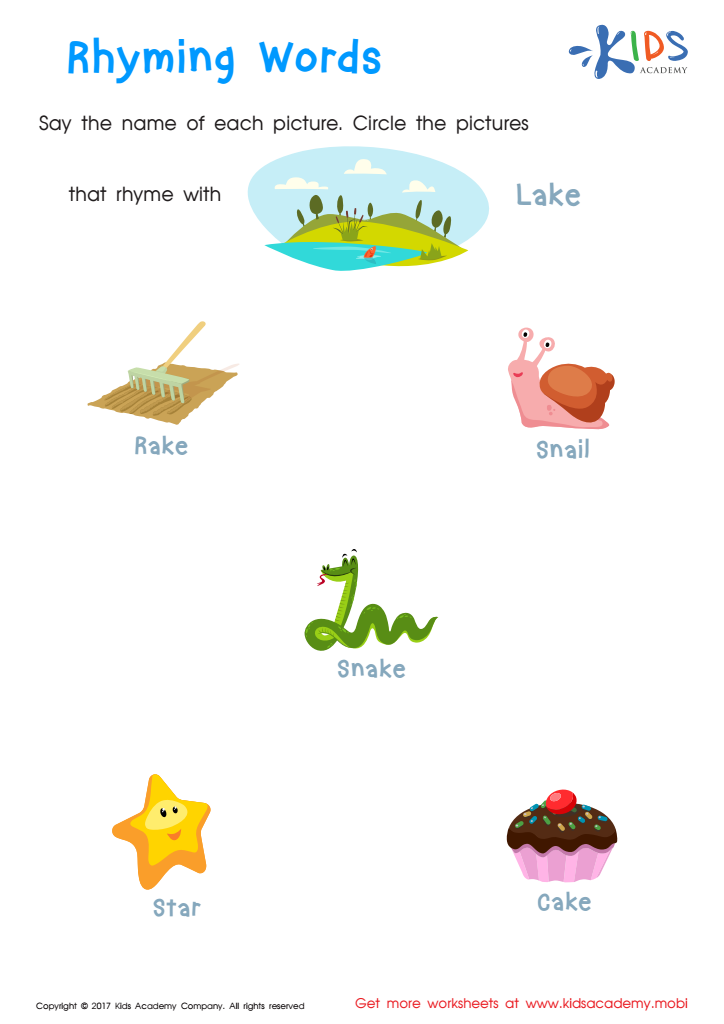
Rhyming Words Rhyming Worksheet
 Assign to My Students
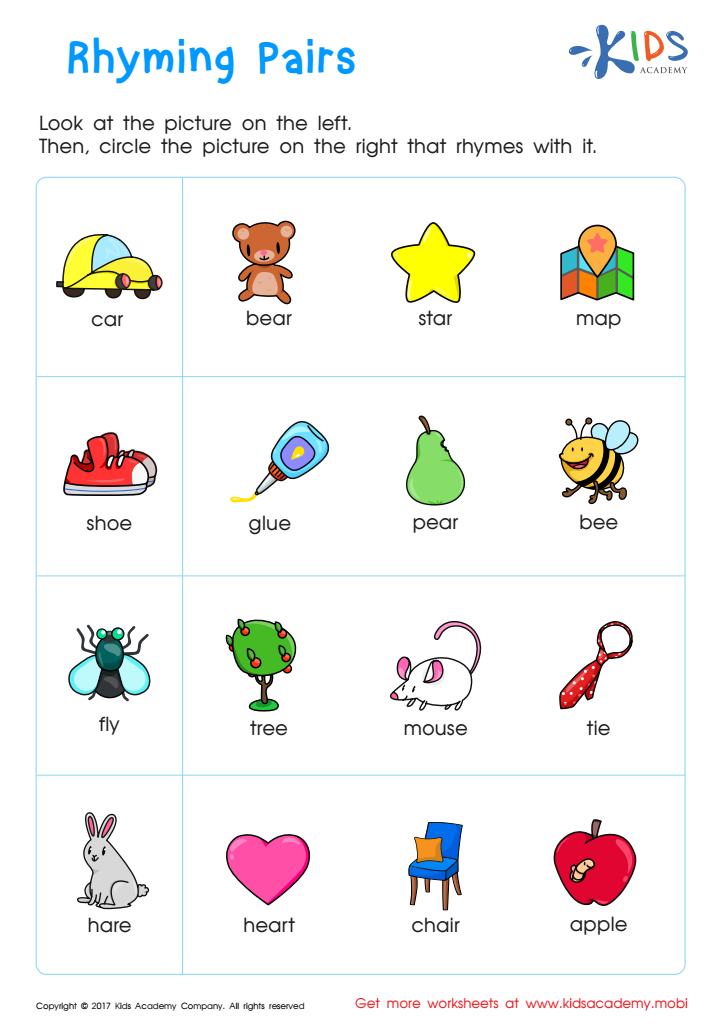
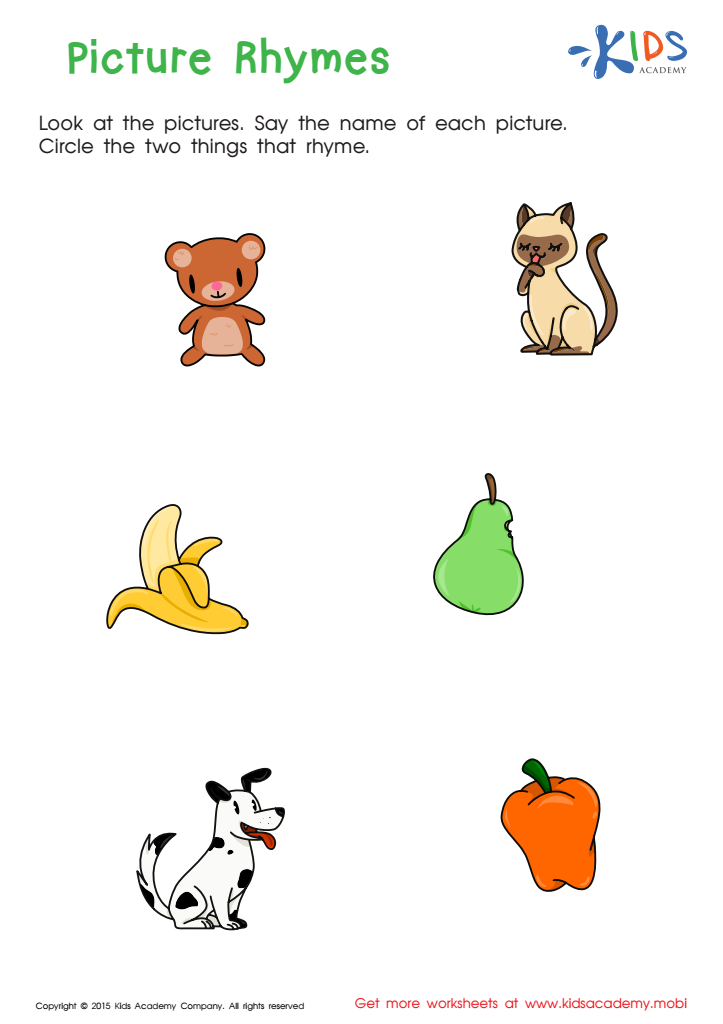
First Words: Picture Rhymes Worksheet








Rhyming skills play a crucial role in early literacy development, particularly for children ages 4-9. Understanding, identifying, and producing rhymes enhances phonemic awareness, one of the foundational skills essential for reading. When children recognize rhyming words, they become more attuned to the sounds in language, which reinforces their ability to decode and spell words. This phonemic awareness also fosters vocabulary development, as children are often exposed to new words through rhyming texts and playful activities.
Moreover, rhyming activities can significantly boost memory and language skills, encouraging children to participate in storytime, songs, and games designed around rhyme. This exploration into rhythm and sound also enhances listening skills and comprehension, as children learn to predict and anticipate words based on familiar patterns.
Engaging in rhyming lessons helps nurture creativity and expression, allowing children to play with language. This can also strengthen self-confidence as they share their own rhymes and participate in similar activities with peers.
By emphasizing rhyming skills in educational settings and at home, parents and teachers can significantly contribute to a child’s overall language development, laying a strong foundation for their ongoing academic success and love for reading.








