Observational skills development Normal Science Worksheets for Ages 4-9
3 filtered results
-
From - To
Unlock your child's potential with our "Observational Skills Development Normal Science Worksheets" tailored for ages 4-9. These engaging and interactive worksheets are designed to enhance your child's ability to observe, analyze, and understand the world around them. With a variety of fun activities, children explore natural phenomena, identify patterns, and draw connections, fostering critical thinking and scientific inquiry. Each worksheet is aligned with educational standards, ensuring a seamless learning experience. Perfect for classrooms or at-home learning, our resources promote curiosity and confidence in young learners. Encourage your child's love for science today with our comprehensive observational skills worksheets!
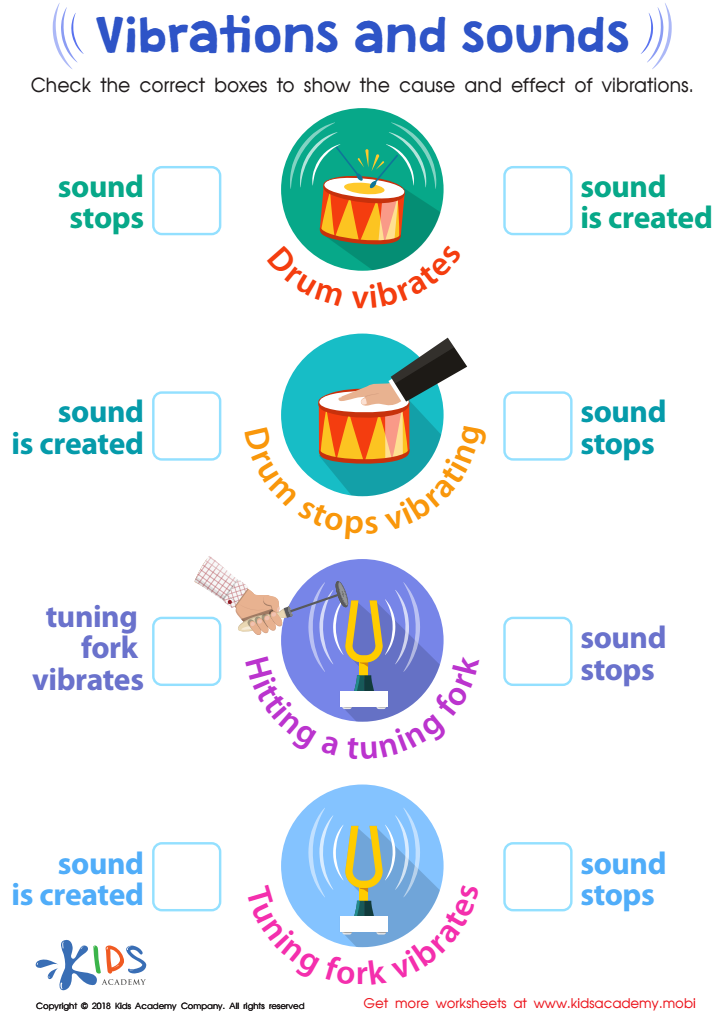
Vibrations and Sounds Worksheet
 Assign to My Students
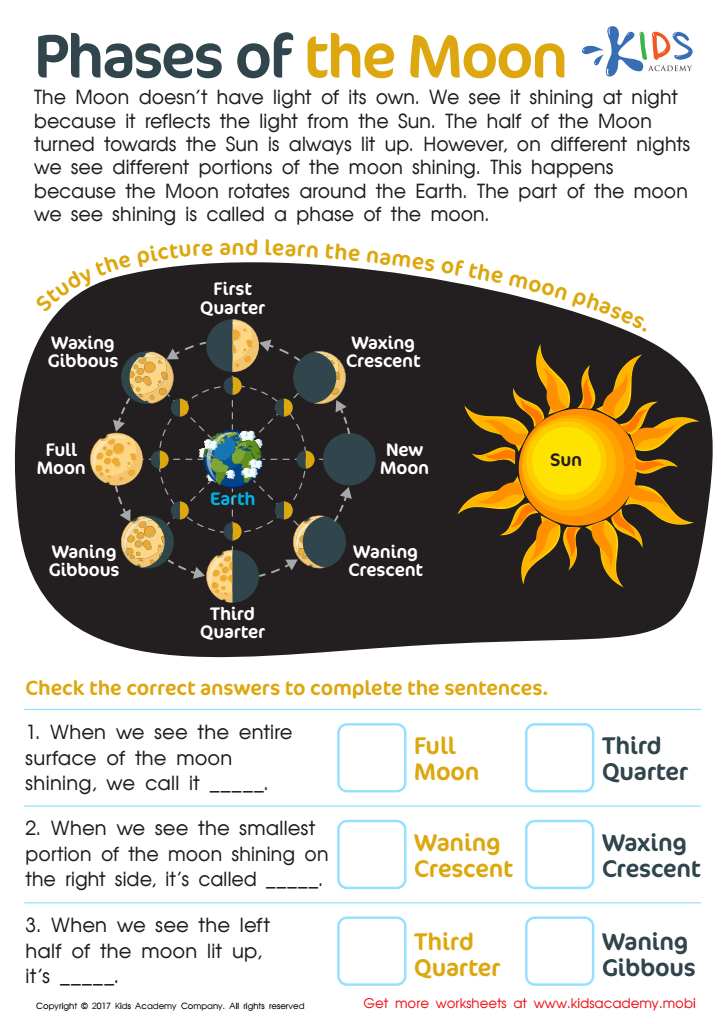
Phases of The Moon Worksheet
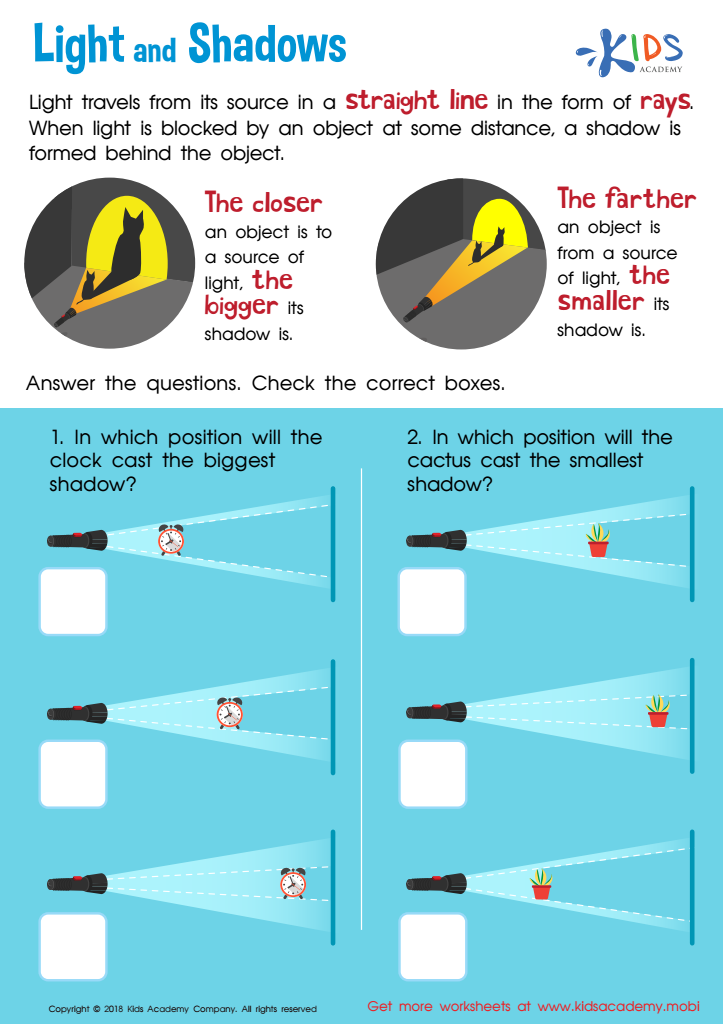
Light and Shadow Worksheet for Grade 3








Parents and teachers should prioritize the development of observational skills in children aged 4-9, particularly in the context of Normal Science, as these skills lay the foundation for critical thinking and scientific inquiry. At this age, children are naturally curious and eager to explore their surroundings. Encouraging them to observe closely enhances their ability to notice details, make connections, and ask relevant questions.
Observational skills enable children to gather information and evidence about the world around them, fostering a deeper understanding of scientific concepts. Through careful observation, children learn to describe, classify, and analyze information, which are essential components of the scientific method. These skills are not only vital for STEM education but also contribute to broader cognitive development, helping children excel in other subjects.
Moreover, developing strong observational skills nurtures creativity and problem-solving abilities, allowing children to approach challenges with an open mind. Parents and teachers who emphasize this skill set will prepare children not just for academic success, but also for real-world situations where observation plays a crucial role in decision-making. Ultimately, investing in these skills cultivates a sense of wonder and encourages lifelong learning, essential attributes for future success in any field.







