Weather identification Normal World Around Us Worksheets for Ages 4-9
3 filtered results
-
From - To
Explore the fascinating world of weather with our "Weather Identification Worksheets" designed for children aged 4-9! These engaging activities help young learners recognize and understand various weather patterns and phenomena. From sunny days to rainy weather, your child can enhance their observational skills and vocabulary through colorful illustrations and interactive exercises. Each worksheet is tailored to promote critical thinking and creativity, fostering a love for nature and the environment. Ideal for classroom use or home learning, our printable worksheets make understanding the world around us enjoyable and effective. Let your child's adventure in weather exploration begin today!
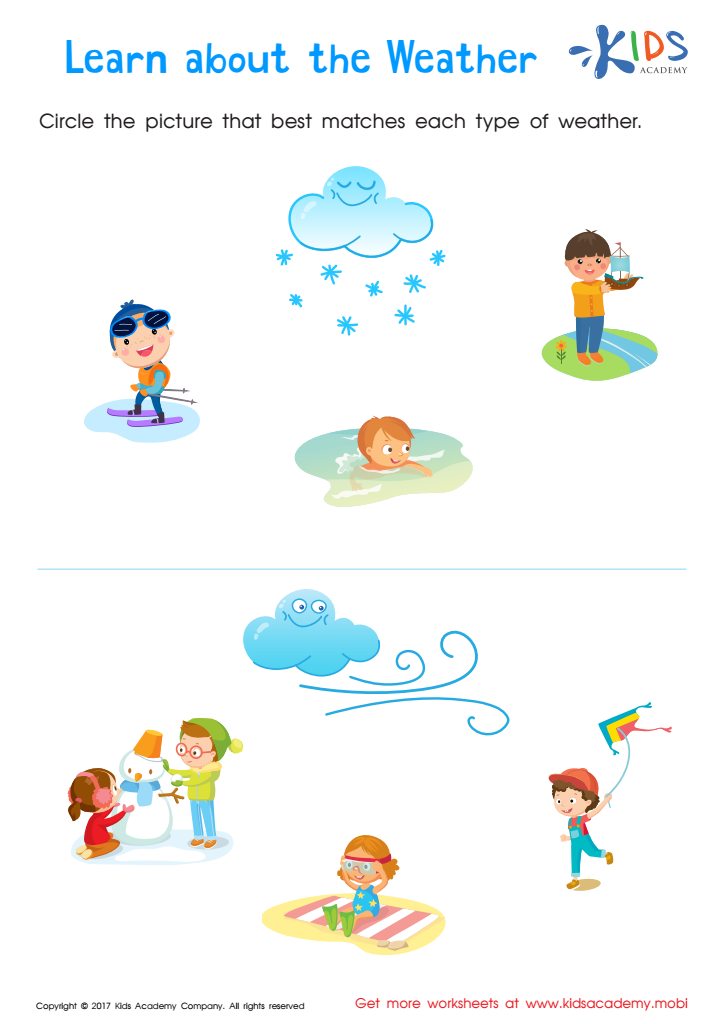
About the Weather Printable
 Assign to My Students
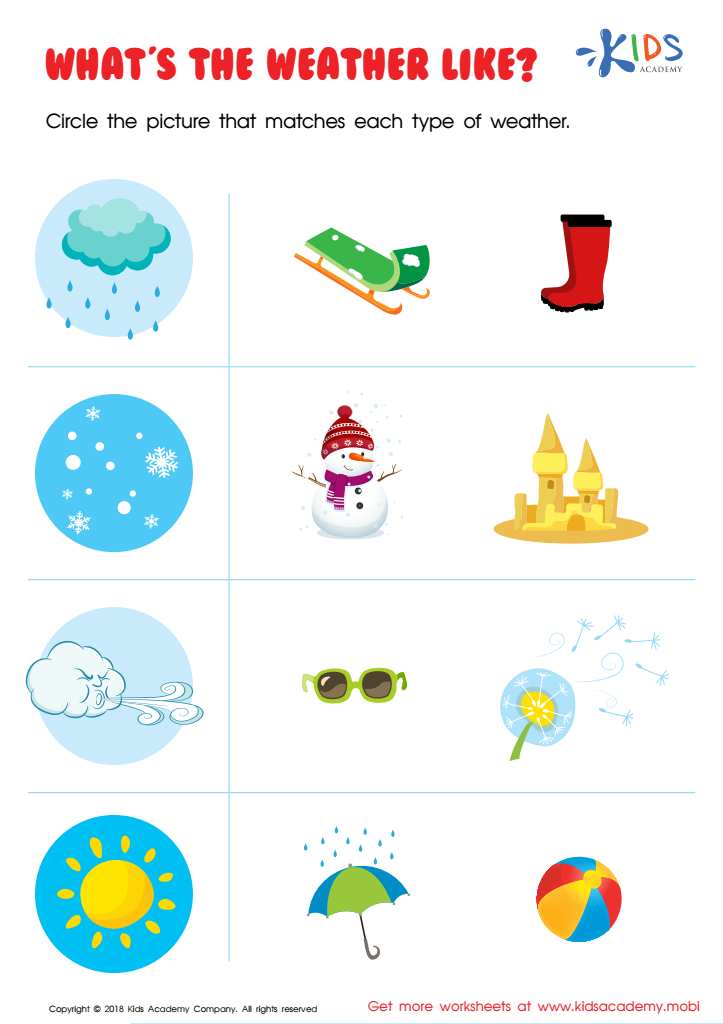
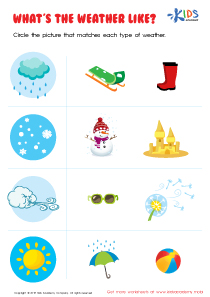
What's the Weather Like? Worksheet
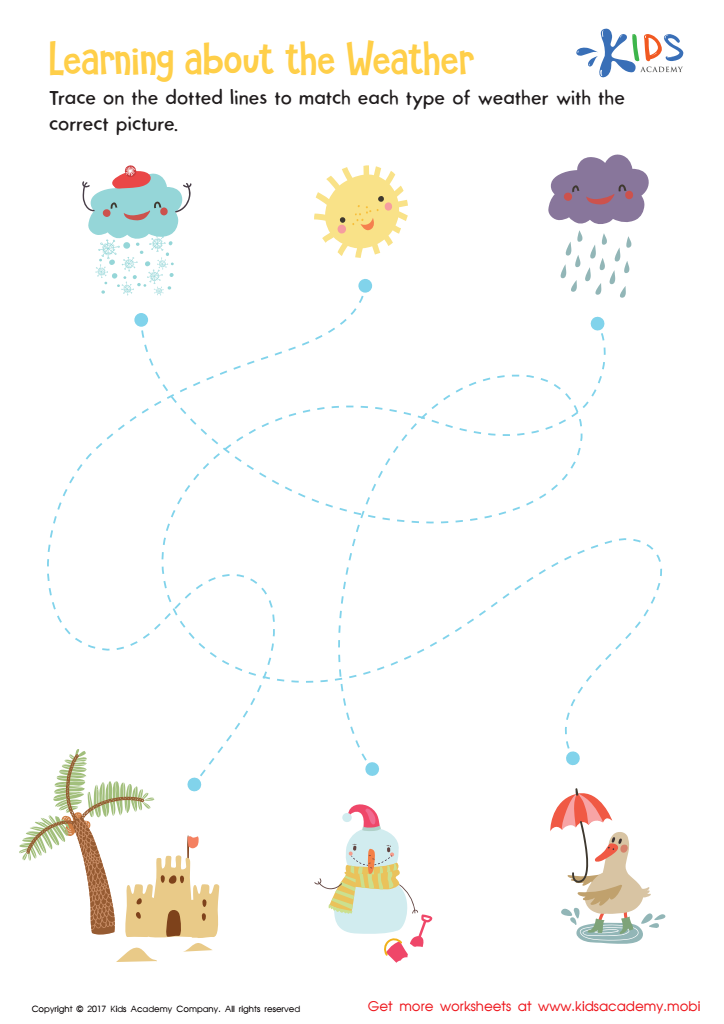






.jpg)

Teaching young children about weather identification is essential for their cognitive and social development. For ages 4-9, children are naturally curious about their environment, and understanding the weather encourages this curiosity while enhancing critical thinking skills. By learning to identify different weather patterns—sunny, rainy, windy, snowy—children can better understand their world, which fosters a sense of safety and preparedness.
Furthermore, weather identification activities promote language development. When children describe what they see or experience, they expand their vocabulary and enhance their communication skills. For parents and teachers, this provides an excellent opportunity for interactive learning experiences, such as nature walks or weather charting, which can make learning enjoyable and memorable.
Additionally, understanding weather contributes to children's emotional intelligence. They learn how different weather conditions can affect their feelings and activities. For example, they may associate sunny days with happiness and play, while rainy days can lead to coziness and indoor creativity. By connecting weather with emotions, children develop empathy and awareness of their own feelings.
Ultimately, engaging children in weather observation helps to build a foundational understanding of science, social studies, and environmental responsibility—all vital for their holistic development.