Pronoun identification Normal Writing Worksheets for Ages 4-9
3 filtered results
-
From - To
Introducing our Pronoun Identification Normal Writing Worksheets designed specifically for children aged 4-9! Developed to foster early language skills, these engaging worksheets help young learners identify and use pronouns correctly in sentences. Through a variety of fun activities, kids enhance their understanding of language mechanics, ensuring a solid foundation for future writing competencies. Each worksheet features age-appropriate exercises that make learning enjoyable and effective. Perfect for both classroom and home use, these resources guide children toward mastering pronouns while developing their writing and reading skills. Download today to support your child’s linguistic journey!
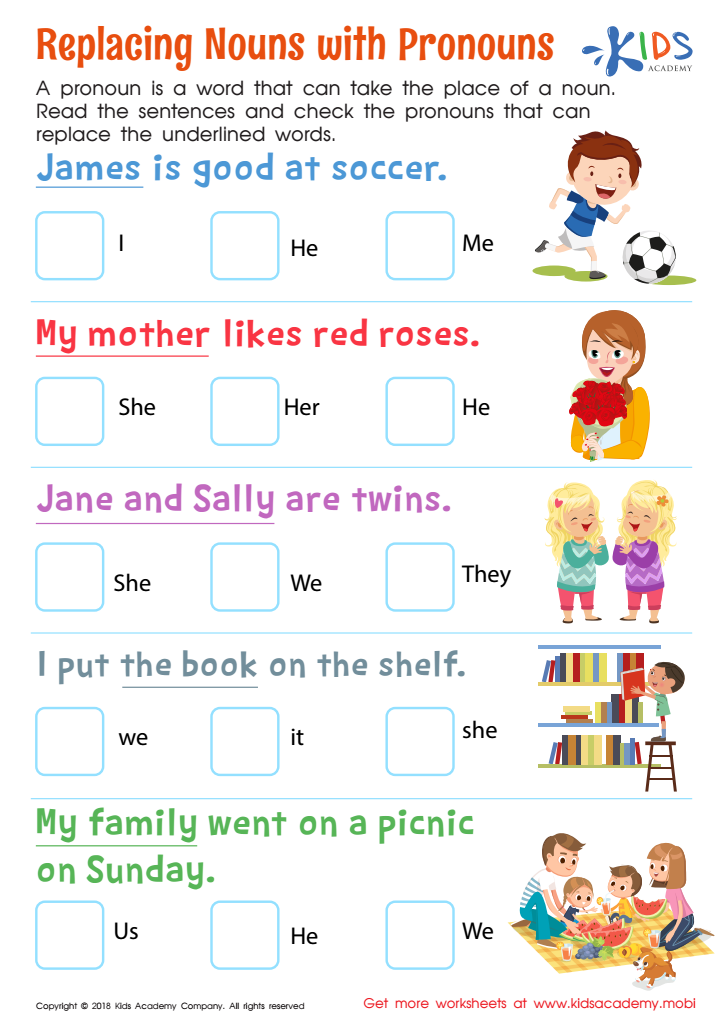
Replacing Nouns with Pronouns Worksheet
 Assign to My Students
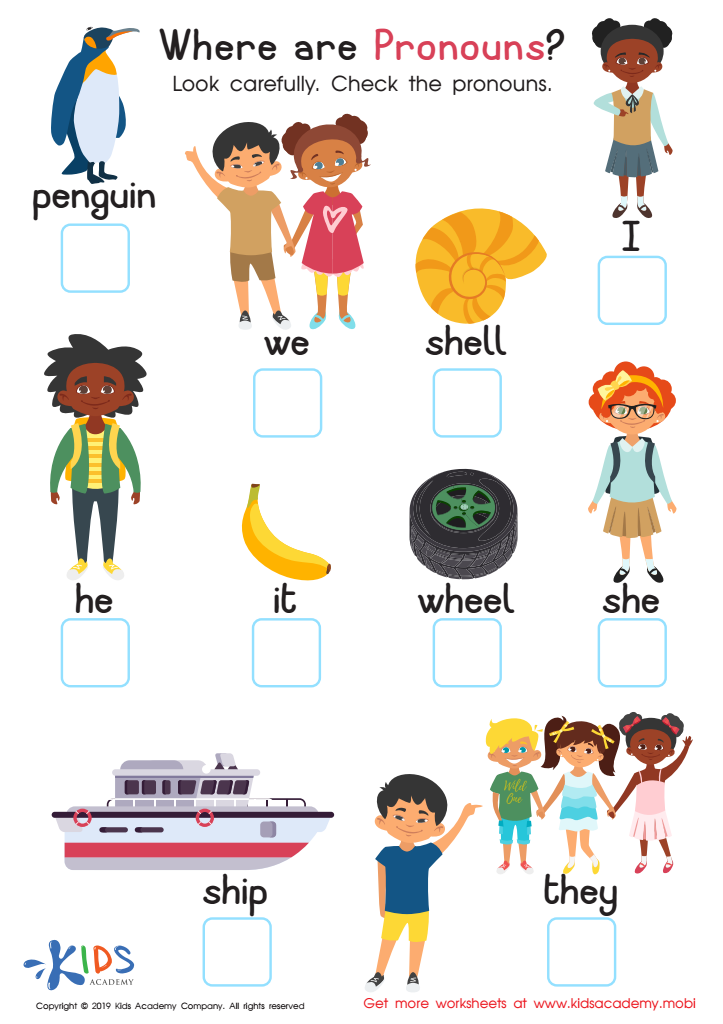
Where Are Pronouns? Worksheet
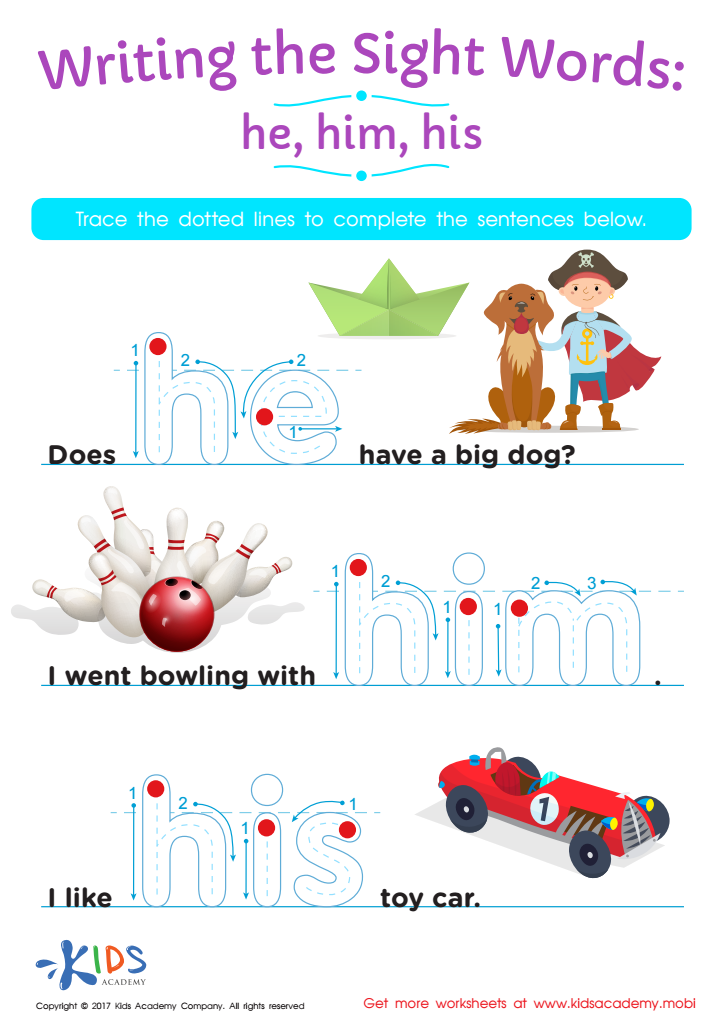
He, Him, His Printable Sight Words Worksheet


.jpg)





Pronoun identification is a crucial skill for children ages 4-9 as it significantly aids in their language development and communication abilities. At this stage, understanding how to correctly use pronouns helps youngsters form coherent sentences, improving their overall speaking and writing fluency. It is important for parents and teachers to emphasize this skill because pronouns like "he," "she," "they," "it," "we," and "us" are foundational elements of English grammar that simplify communication by replacing nouns.
Knowing how to properly identify and use pronouns also enhances reading comprehension. When children can seamlessly follow who or what the pronoun is referring to in a sentence or story, they better understand the text. This understanding fosters greater enjoyment of reading and learning, leading to academic success.
Moreover, correctly using pronouns promotes social interaction. Effective communication is critical for making friends and expressing needs or feelings. Misusing pronouns can lead to misunderstandings and cause social friction.
In sum, proficiency in pronoun identification bridges verbal and written communication gaps, nurtures academic skills, and enhances social interactions. Ensuring children grasp this fundamental aspect of grammar is essential for their holistic growth and development, making it a top priority for both parents and teachers.