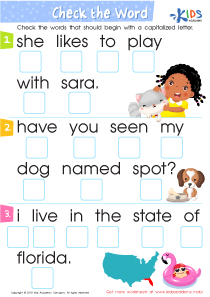
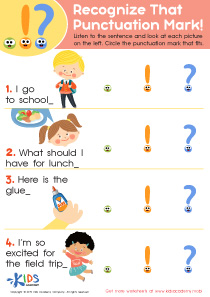
Reading skills improvement Normal Writing Worksheets for Ages 4-9
3 filtered results
-
From - To
Enhance your child's reading skills with our engaging Normal Writing Worksheets designed for ages 4-9. These worksheets provide interactive activities that make learning fun and effective. Children will practice phonics, vocabulary, and comprehension through a variety of exercises tailored to their developmental stage. Our user-friendly format encourages independence and boosts confidence, allowing kids to explore reading at their own pace. Whether at home or school, these resources serve as a valuable tool for parents and educators aiming to foster a love for reading. Help your young learners strengthen their reading abilities while developing essential writing skills today!
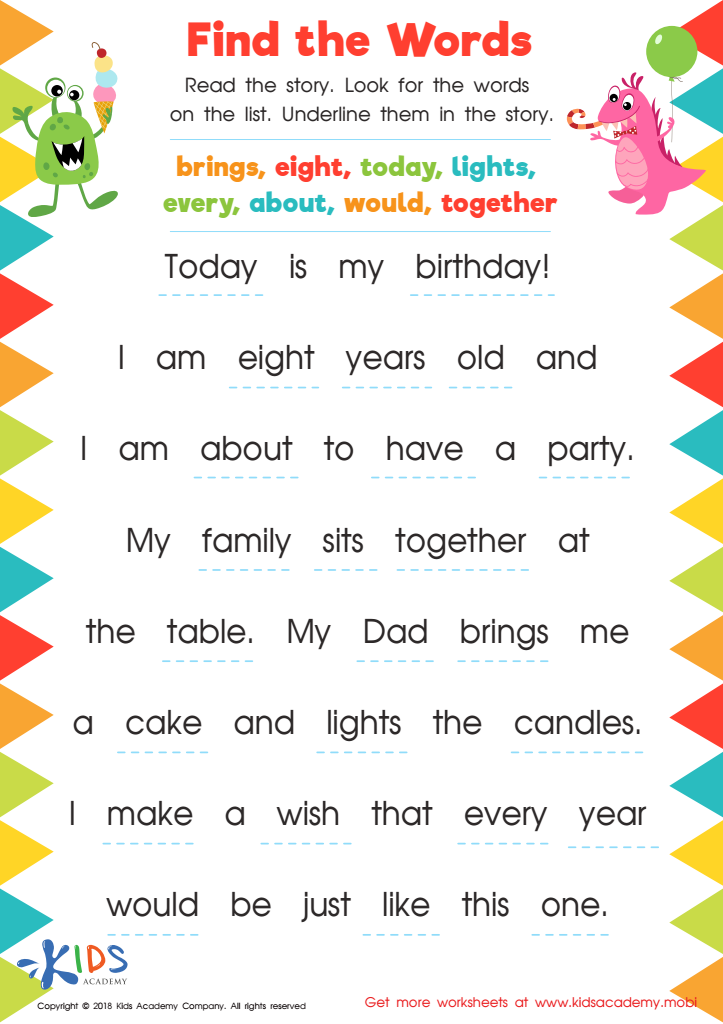
Find The Words Printable Worksheet
 Assign to My Students
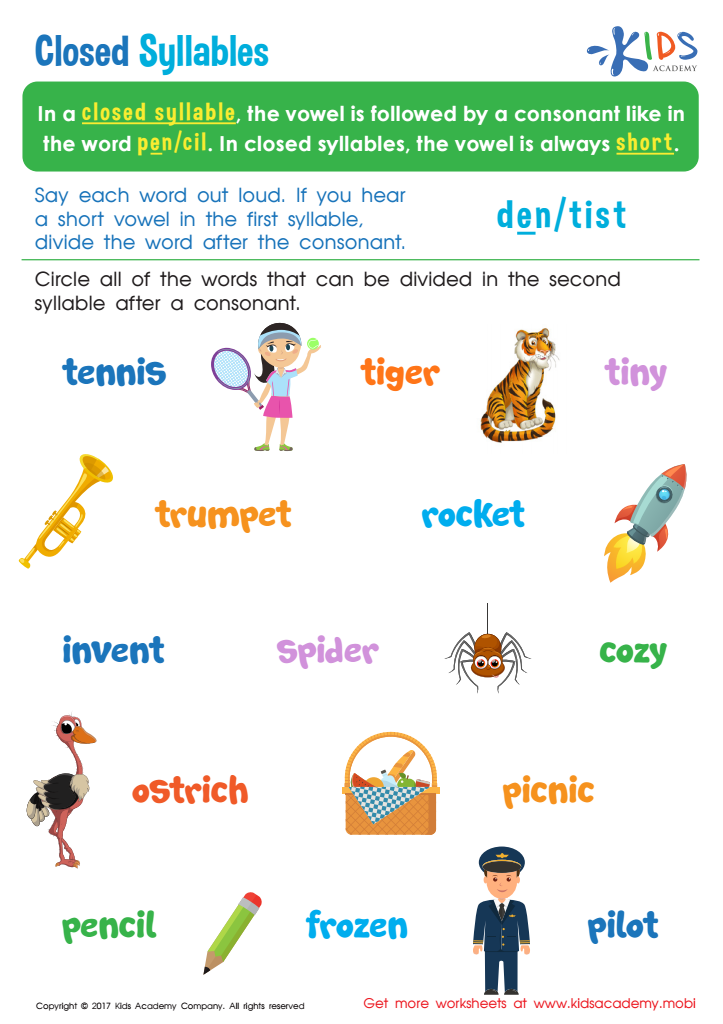
Closed Syllable Spelling Worksheet
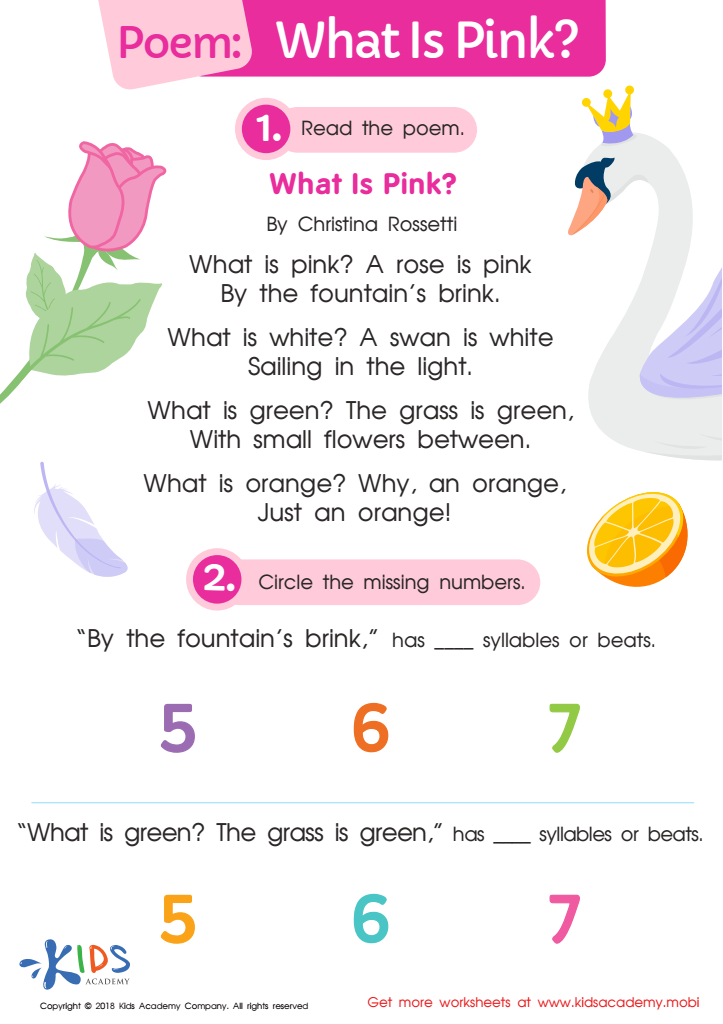
Poem: What Is Pink? Worksheet








Reading skills are crucial for children ages 4-9 as they lay the foundation for academic success and lifelong learning. During these formative years, children are naturally curious, making it an ideal time to nurture their reading abilities. Improved reading skills enhance comprehension, vocabulary, and cognitive development, enabling children to better understand the world around them.
For parents and teachers, fostering strong reading skills can lead to improved performance in other subjects, as reading is integral to learning in math, science, and social studies. Children who read well are often more engaged and motivated in their studies, setting a positive tone for their educational journey.
Additionally, reading is linked to social and emotional development. Books can help children empathize with others, stimulating their imagination and creativity while sharing diverse perspectives. Cultivating a love for reading fosters critical thinking and problem-solving skills, preparing children for future challenges.
Moreover, encouraging consistent reading practice creates a healthy routine and a sense of responsibility. As children develop their reading skills, their confidence grows, leading to better communication and expression abilities. In summary, prioritizing reading skill improvement in young children is essential for overall development and academic achievement.