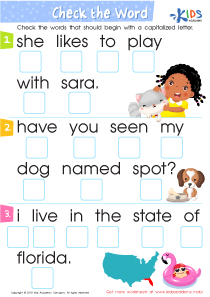
Reading comprehension Normal Punctuation Worksheets for Ages 4-9
5 filtered results
-
From - To
Enhance your child's reading comprehension skills with our engaging Normal Punctuation Worksheets, specially designed for ages 4-9. These worksheets focus on developing essential punctuation knowledge while promoting comprehension through interactive exercises. Kids will explore various punctuation marks, learn their functions, and practice them within the context of fun, age-appropriate reading activities. Our user-friendly worksheets make learning enjoyable, encouraging kids to read thoughtfully and understand the connection between punctuation and meaning. Perfect for both classroom and home use, these resources empower young learners to build confidence in their reading and writing abilities. Start fostering your child's literacy skills today!
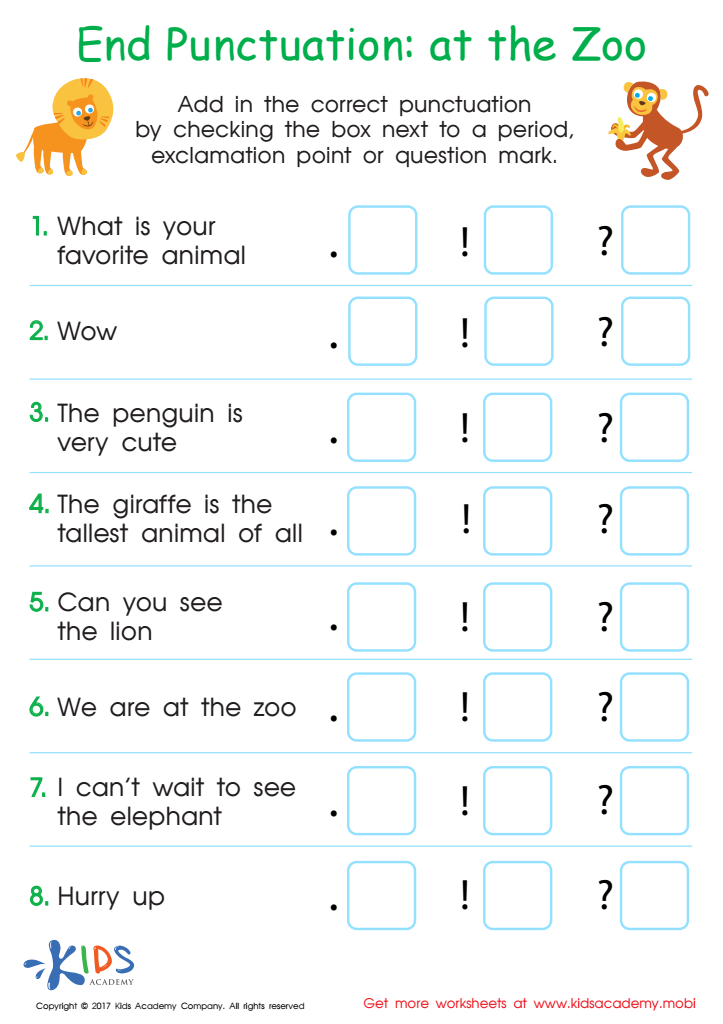
End Punctuation: At the Zoo Worksheet
 Assign to My Students
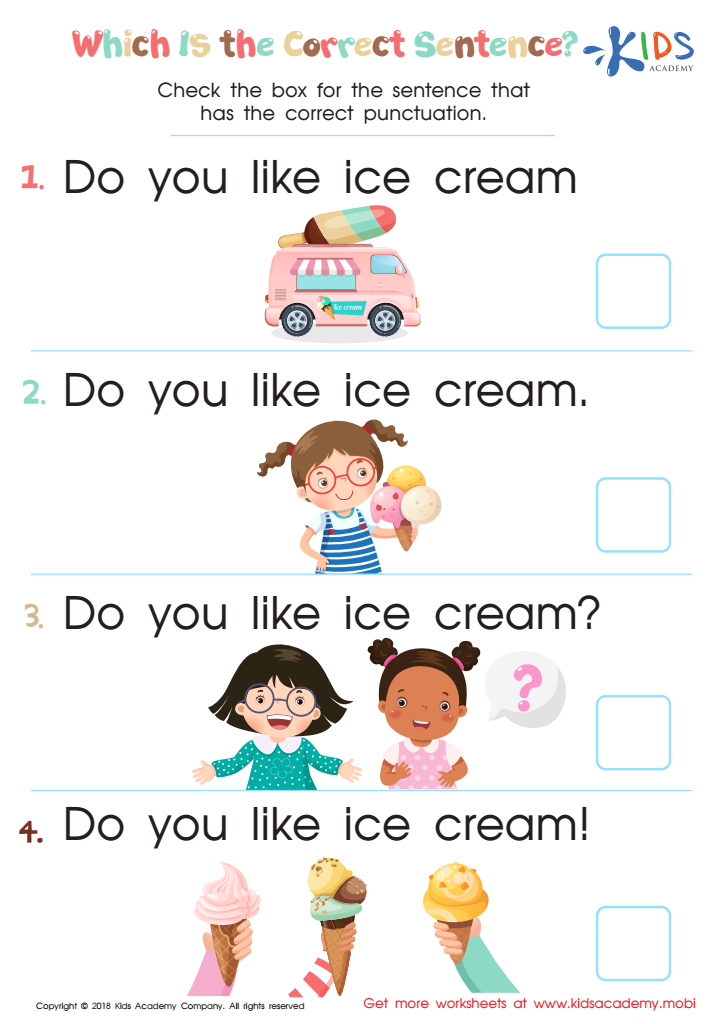
Which is the Correct Sentence? Worksheet
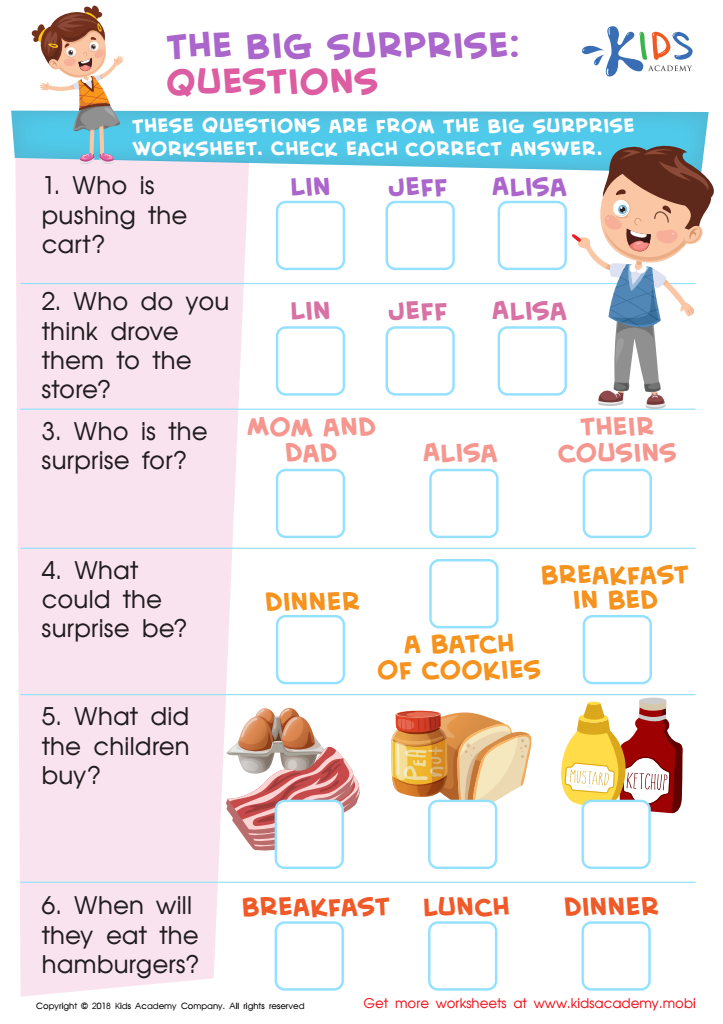
The Big Surprise: Questions Worksheet
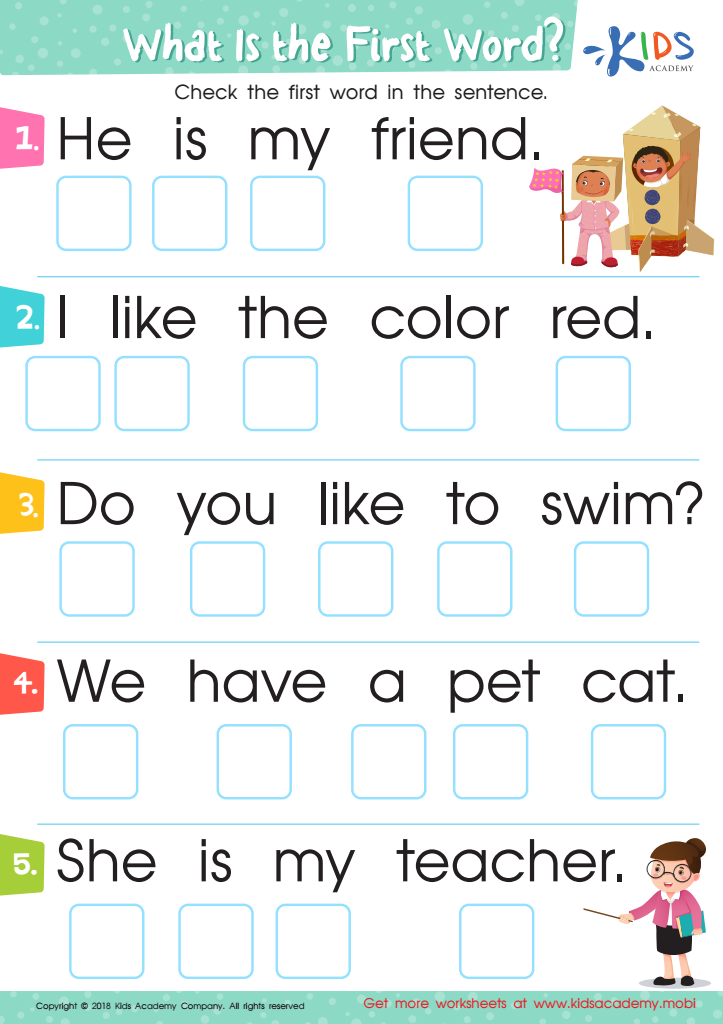
What is the First Word? Worksheet
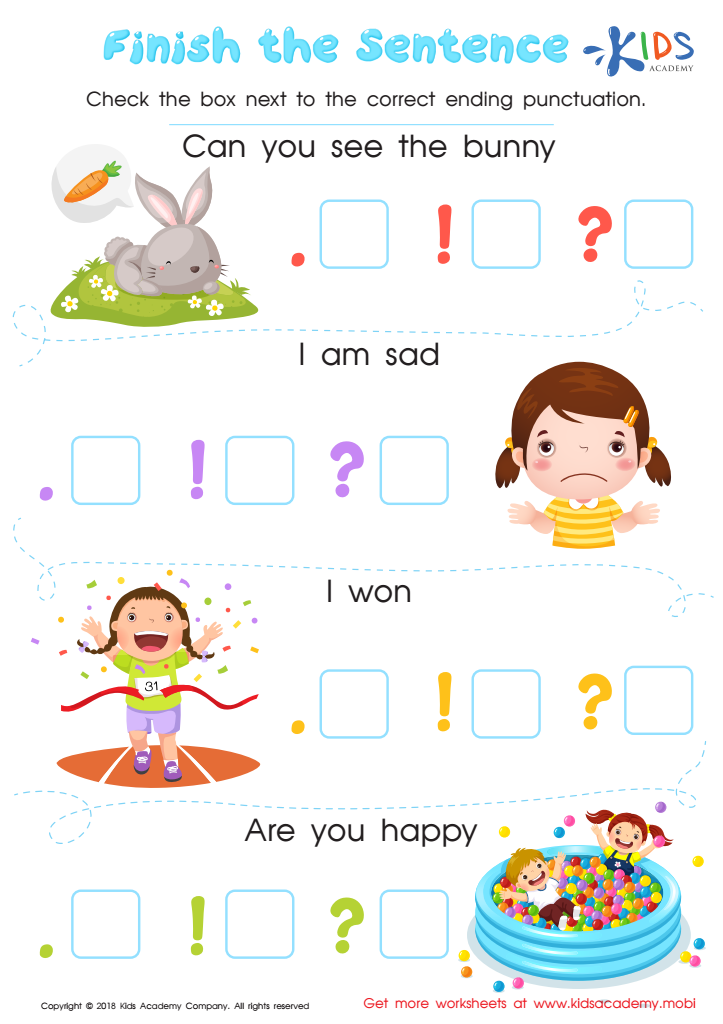
Finish the Sentence Worksheet







Reading comprehension is crucial for children aged 4-9 as it forms the foundation for their academic development and lifelong learning. At this stage, children not only learn to read but also read to learn. Parents and teachers should prioritize reading comprehension to ensure children can grasp the meaning of texts, connect ideas, and engage critically with content. Strong reading comprehension skills enhance vocabulary, improve language development, and foster a love of reading.
Moreover, this ability impacts overall academic performance and can influence children’s confidence in their educational journey. Poor comprehension skills can lead to frustration, disengagement, and lower achievement across subjects. By focusing on reading comprehension, adults can help children develop essential skills like summarizing, inferring, and predicting, which are vital for understanding more complex materials later on.
Engaging children in discussions about stories, asking open-ended questions, and providing diverse reading materials can greatly enhance their comprehension skills. When parents and teachers take an active role in supporting literacy, children are more likely to develop a positive attitude towards reading, which will benefit them both academically and personally throughout their lives. Ultimately, investing time and effort in reading comprehension pays off in shaping enthusiastic, informed, and capable learners.