Filters

6 filtered results

Clear all filters
Favorites
With answer key
Interactive

6 filtered results

Difficulty Level

Grade


Unlock your child's creativity and enhance their fine motor skills with our delightful "Normal Tracing Words Worksheets" designed for ages 4-9. These engaging worksheets provide an enjoyable way for young learners to practice letter recognition and enhance handwriting dexterity. Each worksheet features fun, age-appropriate words that children can trace, helping them develop essential writing skills while boosting their confidence. Perfect for home or classroom use, our worksheets engage kids and support their educational growth through interactive learning. Download your free worksheets today and inspire a love for learning while building important fine motor skills!

Check out this FREE Trial Lesson on Tracing Words for age 4-9!

Tracing Lowercase Letters a-i

Favorites
With answer key
Interactive
  • 4-9
  • Fine Motor Skills
  • Tracing Words
  • Normal
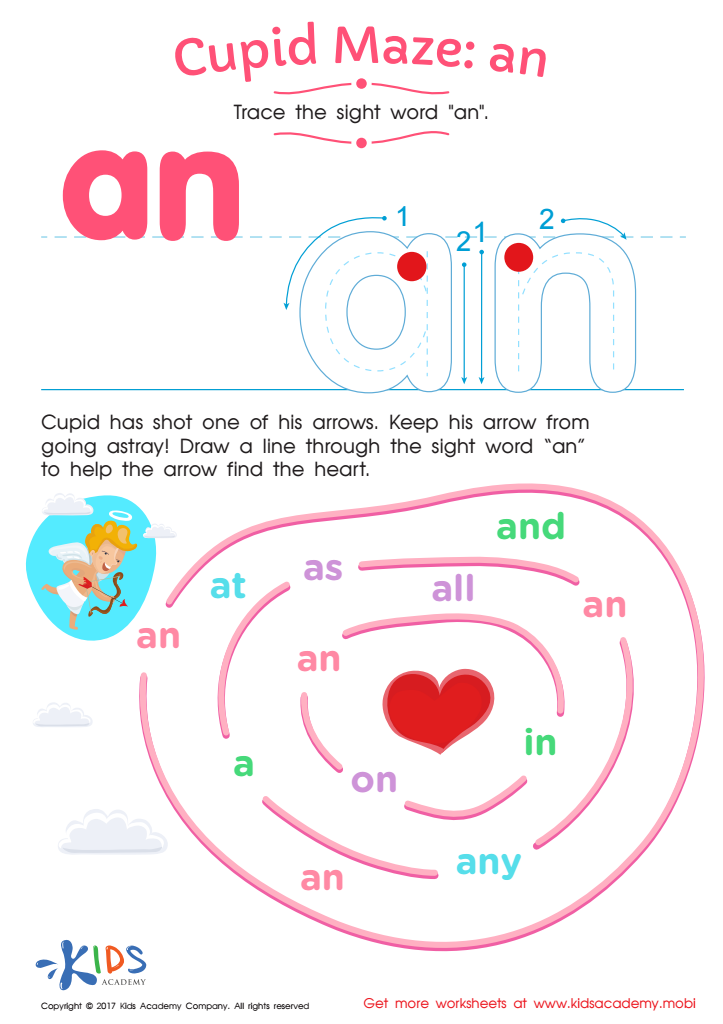
Sight Word Worksheet: An

Cupid Maze: An Printable

Get a cute and creative way to boost their reading with this Valentine's Day-themed sight word worksheet. Perfect for kids, it features a fun maze and the article "an".
Cupid Maze: An Printable
Worksheet
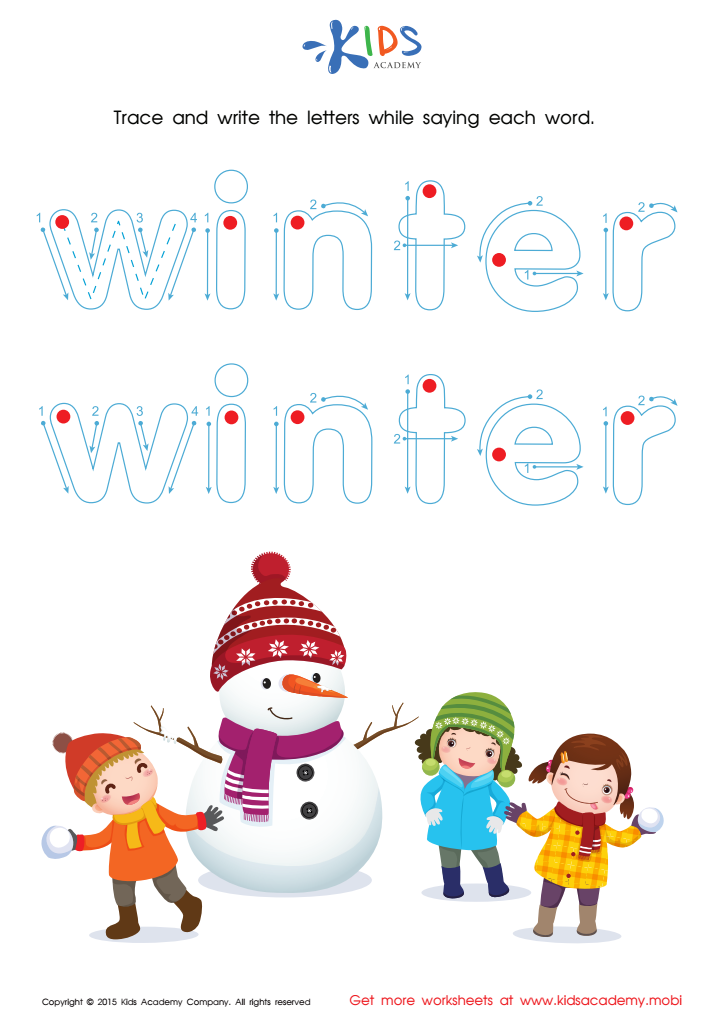
Tracing Winter Words : Snowman

Snowman Tracing Winter Words Worksheet
This free winter printable teaches handwriting and spelling with the word "snowman". It's a fun way to get your kid ready for Christmas cheer! Want more tracing worksheets? Check out here.
Snowman Tracing Winter Words Worksheet
Worksheet
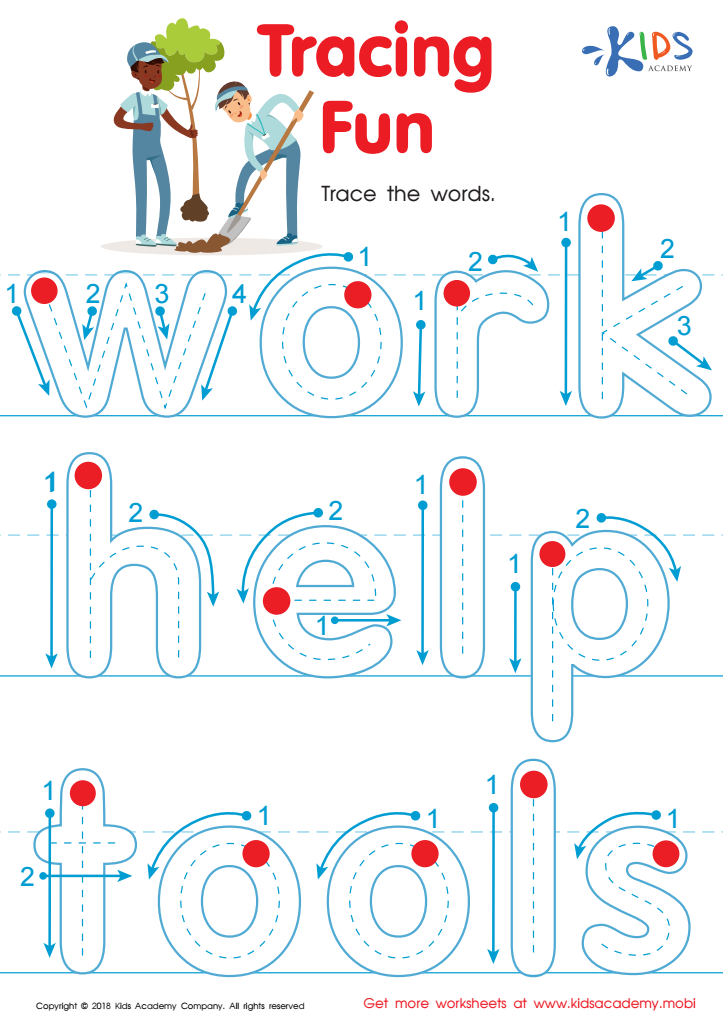
Tracing Fun Worksheet

Tracing Fun Worksheet

Believe it or not, good handwriting helps with reading! Starting at the top left and writing legibly builds reading skills. This free worksheet helps little learners practice basic sight words. Red dots show them where to start and the words provide reinforcement without them realising. An enjoyable way to boost their reading and writing.
Tracing Fun Worksheet
Worksheet
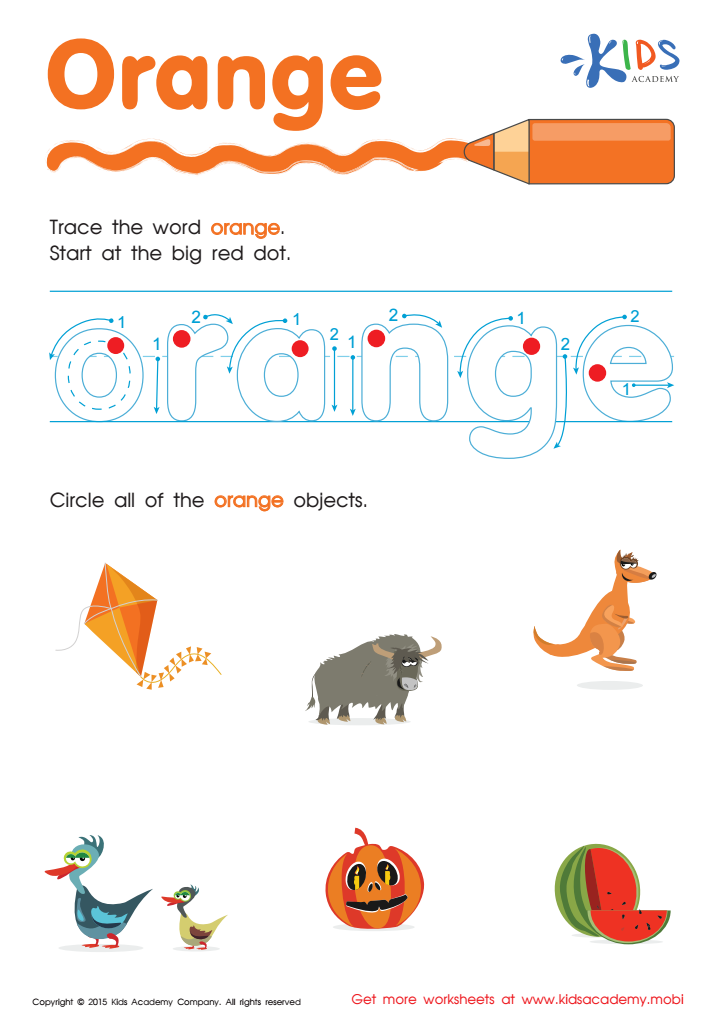
Handwriting PDF Worksheets | Tracing Color Words | Orange

Orange Tracing Color Words Worksheet

This worksheet will surely bring a smile to your kid's face, even if orange isn't their favorite color. Let them trace the word "orange" and use an orange crayon. Ask them to find orange objects in their room for even more fun. Handwriting practice has never been more fun and exciting!
Orange Tracing Color Words Worksheet
Worksheet
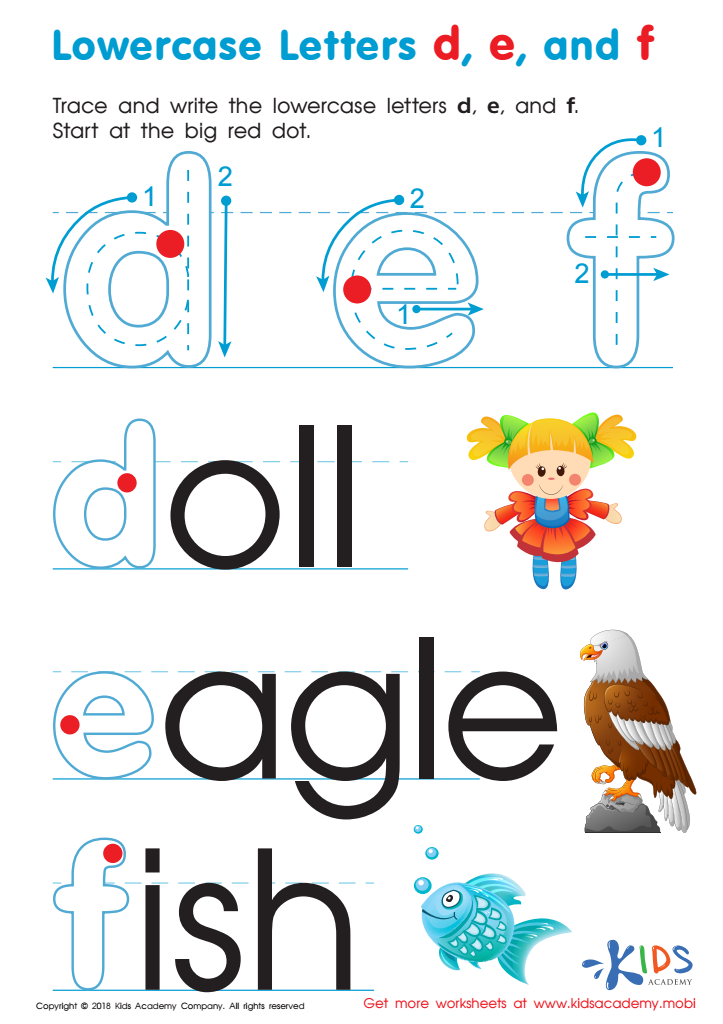
Lowercase Letters d e f Worksheet

Lowercase Letters d e f Worksheet

Help your child learn the alphabet letters by tracing and writing the lowercase letters d, e, and f. Begin at the big red dot and follow the dots. This worksheet will help your little one gain a better understanding of the letters.
Lowercase Letters d e f Worksheet
Worksheet
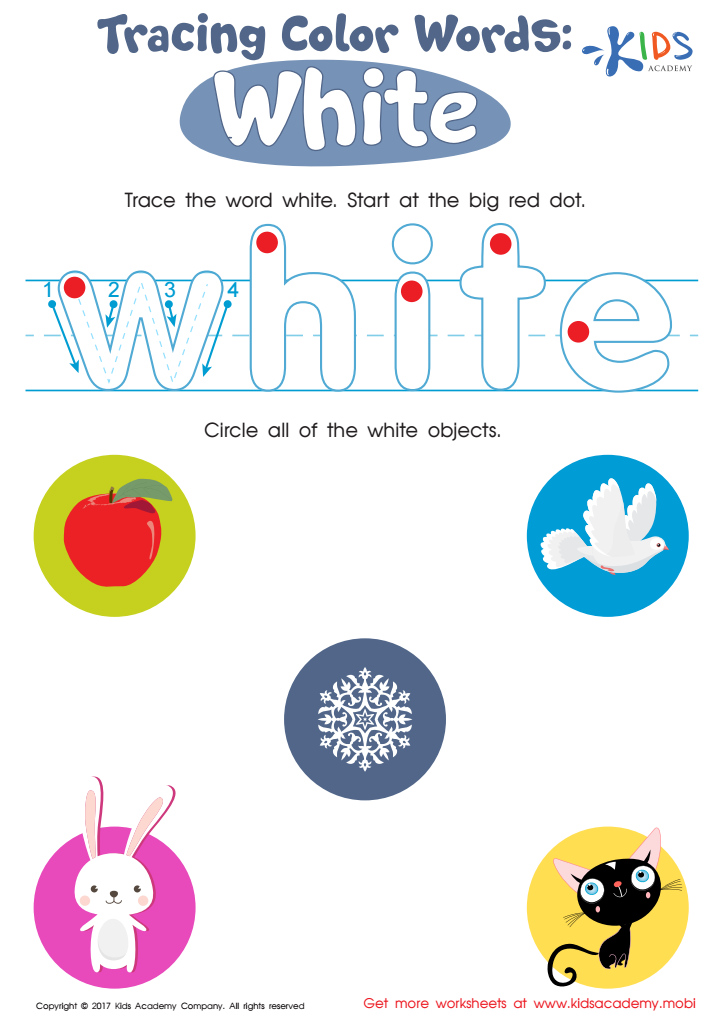
White Tracing Color Words Worksheet


White Tracing Color Words Worksheet

This fun worksheet helps children learn color words quickly. They trace the letters and circle pictures of the color. This helps them practice reading and identifying objects, and they can do it without needing to read phonetically. Download it now and watch your child's skill grow!
White Tracing Color Words Worksheet

Worksheet


Fine motor skills are essential for children aged 4-9 as they form the foundation for various academic and daily life tasks. Tracing words helps young learners refine their fine motor abilities, enabling them to hold and control writing instruments more effectively. By practicing these skills, children enhance their hand-eye coordination, dexterity, and muscle strength in their hands and fingers, which are crucial for writing, drawing, and even activities like buttoning clothes.

Parents and teachers should prioritize fine motor skill development through tracing, as it encourages cognitive growth and reinforces letter recognition and literacy skills. Engaging in tracing activities facilitates the connection between visual input and motor output, helping children better understand the shape and structure of letters and words.

Moreover, children gain confidence in their writing abilities, which is pivotal for their self-esteem and motivation in school. If they struggle with fine motor skills, they may experience frustration in academic settings, leading to disengagement. By maintaining an environment that nurtures fine motor development, parents and teachers lay the groundwork for successful learning, ensuring that kids are well-equipped to tackle future educational challenges.