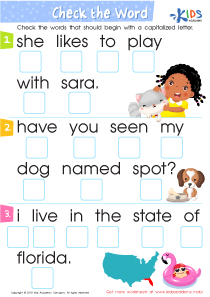
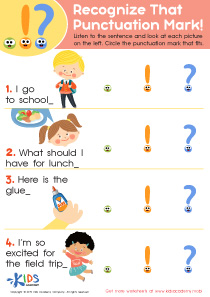
Vocabulary expansion Normal Tracing Words Worksheets for Ages 4-9
3 filtered results
Difficulty Level
Grade
Age
-
From - To
Subject
Activity
Standards
Enhance your child's vocabulary with our engaging Vocabulary Expansion Normal Tracing Words Worksheets, specifically designed for ages 4-9. These printable resources promote early literacy by helping children learn and reinforce essential vocabulary through tracing. Each worksheet features a variety of words tailored to expand knowledge while developing writing skills. As kids trace letters and words, they improve fine motor skills and gain confidence in their reading and writing abilities. Perfect for at-home learning or classroom activities, these fun and educational worksheets make vocabulary building an enjoyable experience for young learners. Unlock your child's potential with our dynamic tracing word worksheets!
Favorites
With answer key
Interactive
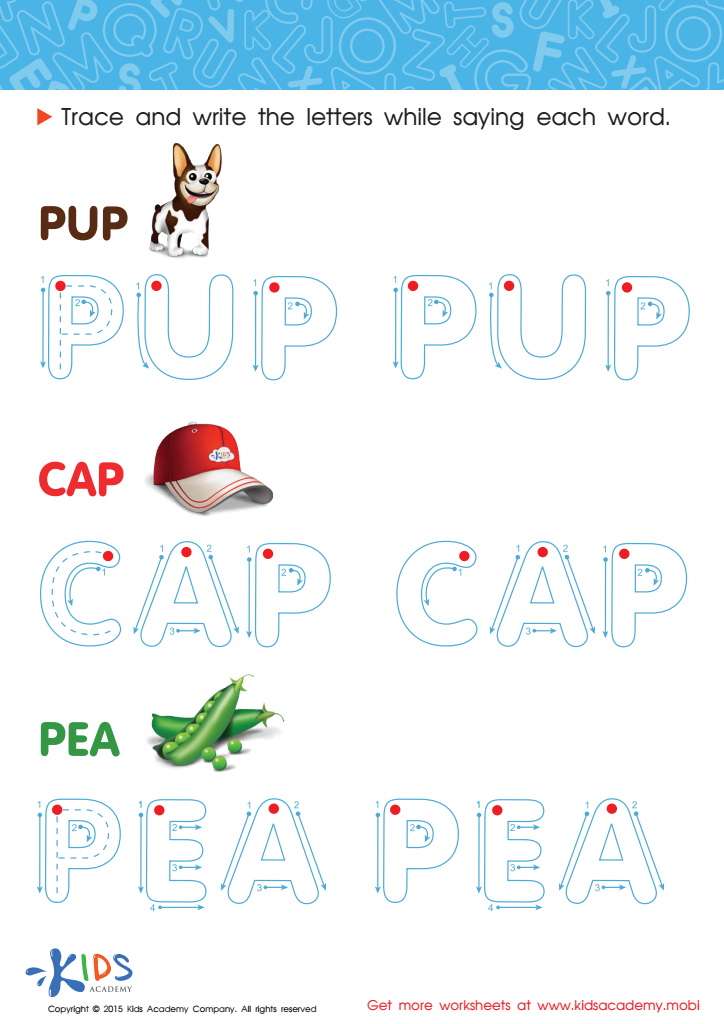
A Pup, a Cap and a Pea Spelling Worksheet
Practice tracing and writing with three new words. Carefully trace each word and try to remember it, then move on to the next one. Head to Kids Academy for more tracing worksheets!
Get your pencils ready! Let's practice tracing and writing three new words on Kids Academy's spelling worksheets. Carefully trace each line and remember the words. Pick more great worksheets on their website to continue practicing. Have fun!
 Assign to My Students
A Pup, a Cap and a Pea Spelling Worksheet
Worksheet
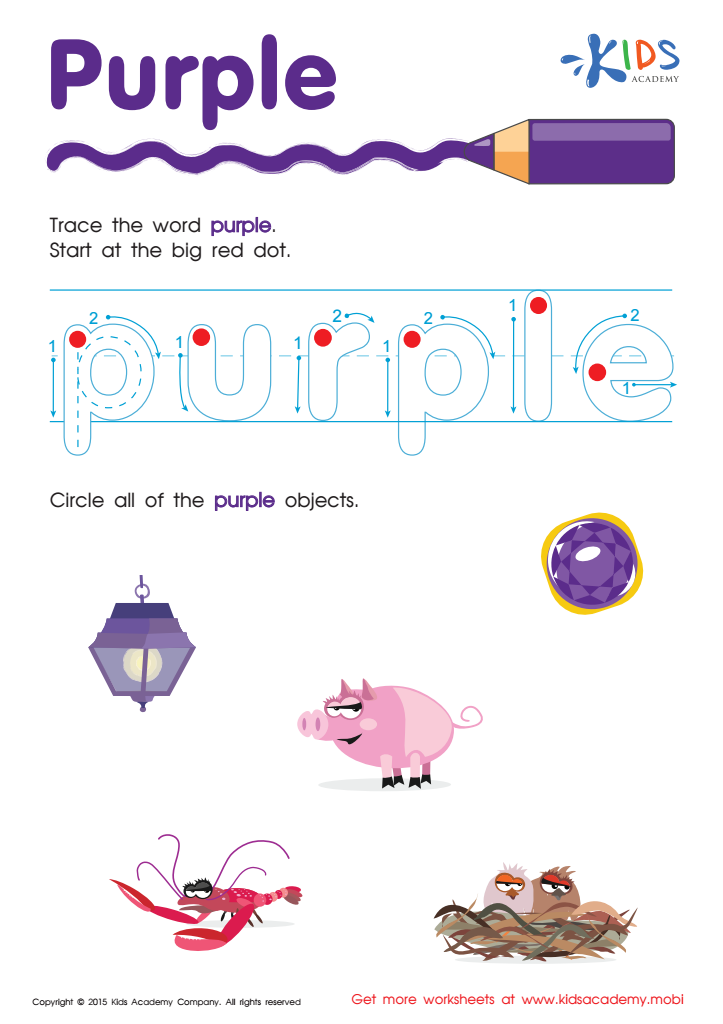
Purple Tracing Color Words Worksheet
Help your kindergartener practice their handwriting with this fun, free printable. They'll trace and color the word “purple”, starting at the big red dots, and pick out and circle all the purple objects they see. They'll get to train their fine motor muscles while having fun! Check out here for more handwriting practice.
Purple Tracing Color Words Worksheet
Worksheet
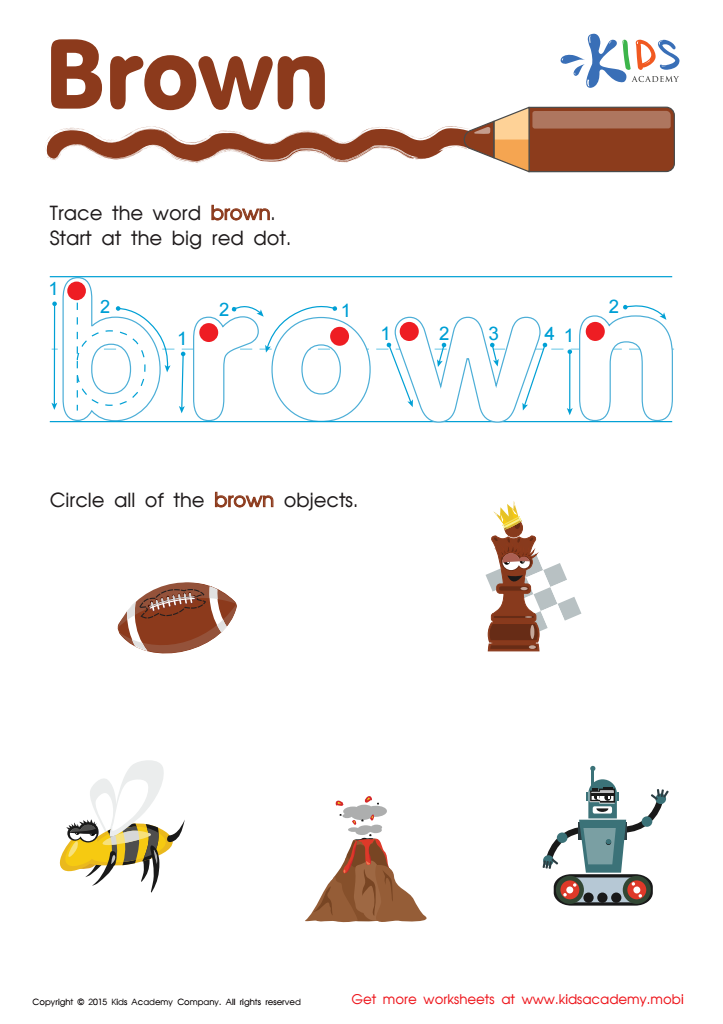
Brown Tracing Color Words Worksheet
This worksheet helps kids develop fine motor muscles and practice writing. Have them trace the word "brown" with a crayon, then find the brown objects in the picture. Ask them to look around and say what's brown in their room to make it more fun. Writing basics and a bit of fun - check out this free printable handwriting worksheet! For more tracing color words, check out here.
Brown Tracing Color Words Worksheet
Worksheet
Join Kids Academy for Free
Who is primarily going to use this learning content?







Vocabulary expansion, particularly through Normal Tracing Words for ages 4-9, is crucial in early education for several reasons. First, a robust vocabulary enables children to express their thoughts and feelings more clearly, fostering effective communication skills. As children trace and engage with words, they develop fine motor skills, vital for handwriting and related tasks.
Moreover, vocabulary acquisition during these formative years lays the foundation for academic success. A rich vocabulary is linked to better reading comprehension, enabling children to understand and enjoy texts throughout their schooling. By encouraging vocabulary growth through tracing activities, parents and teachers also promote a love for learning, as exploring new words can be an exciting and enjoyable experience.
In addition, enhanced vocabulary supports cognitive development. As children learn new words, they also learn to categorize and relate concepts, improving their critical thinking skills. This broadens their worldview and aids in their social communication, helping them connect with peers and navigate social interactions more effectively.
Overall, prioritizing vocabulary expansion via Normal Tracing Words enriches a child's linguistic capabilities, fostering a thriving educational environment and preparing them for future academic challenges. Engaging in vocabulary-rich activities early on sets the stage for lifelong learning and confidence in communication.