Basic geometry understanding Normal Worksheets for 4-Year-Olds
3 filtered results
-
From - To
Explore our “Basic Geometry Understanding Normal Worksheets” designed specifically for 4-year-olds! These engaging worksheets introduce young learners to essential geometric concepts using colorful images and interactive activities. Children will easily recognize shapes, enhance their spatial awareness, and develop foundational math skills through fun exercises. Each worksheet is carefully crafted to encourage exploration and creativity, ensuring that learning is both enjoyable and effective. With a variety of activities such as tracing, coloring, and shape identification, kids will build confidence in their understanding of basic geometry. Perfect for at-home learning or classroom activities, let’s help young minds shine with geometry today!
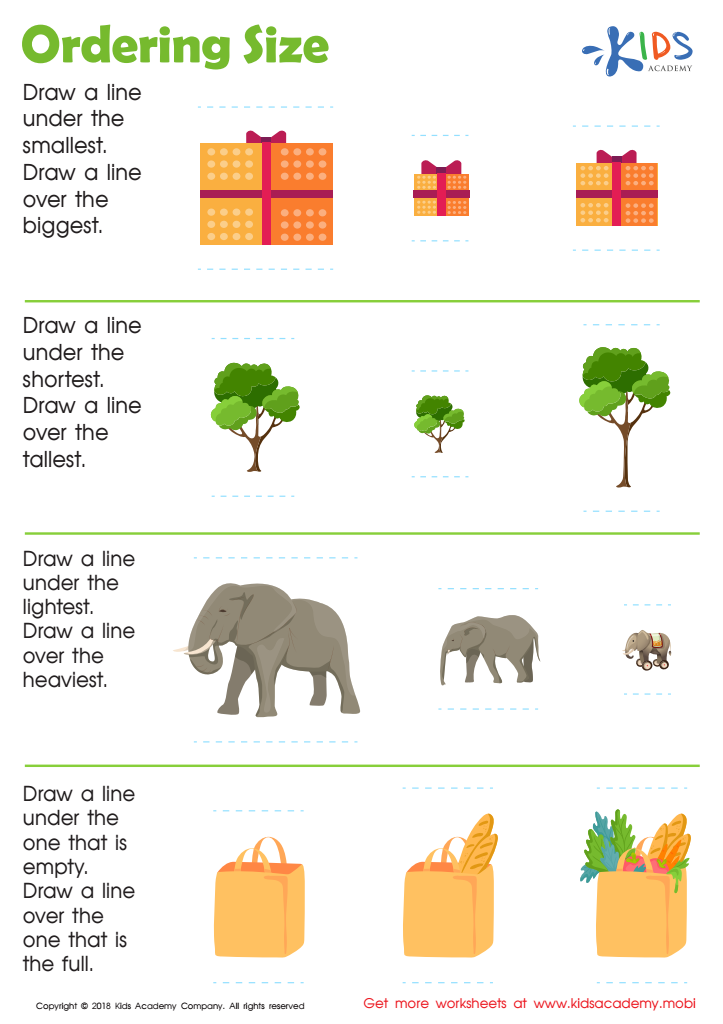
Ordering Size Worksheet
 Assign to My Students
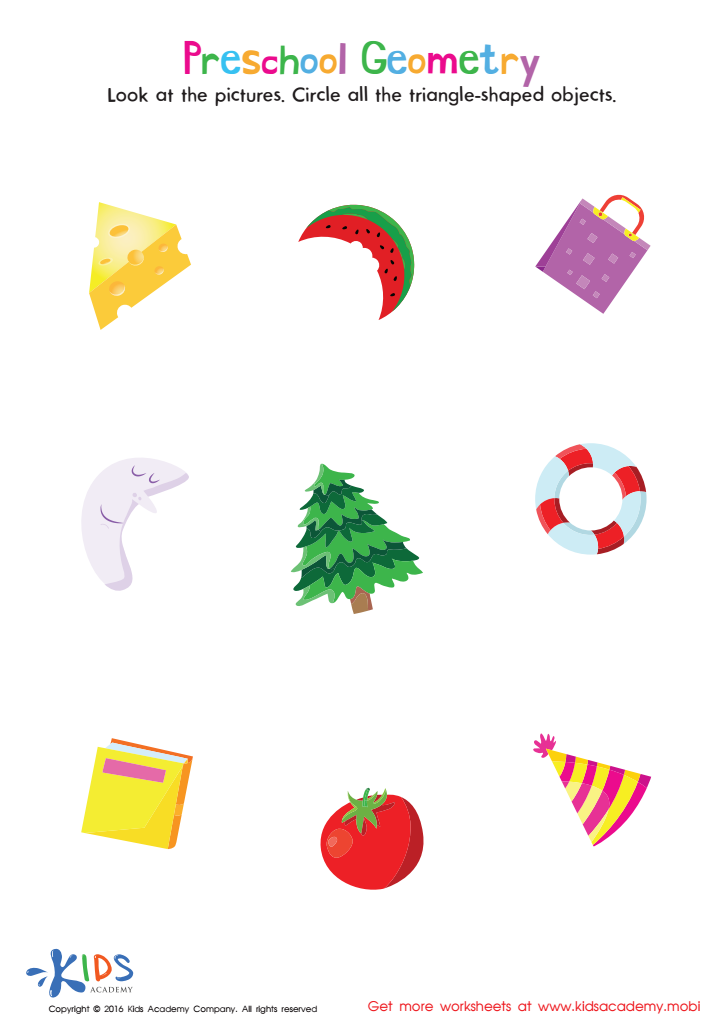
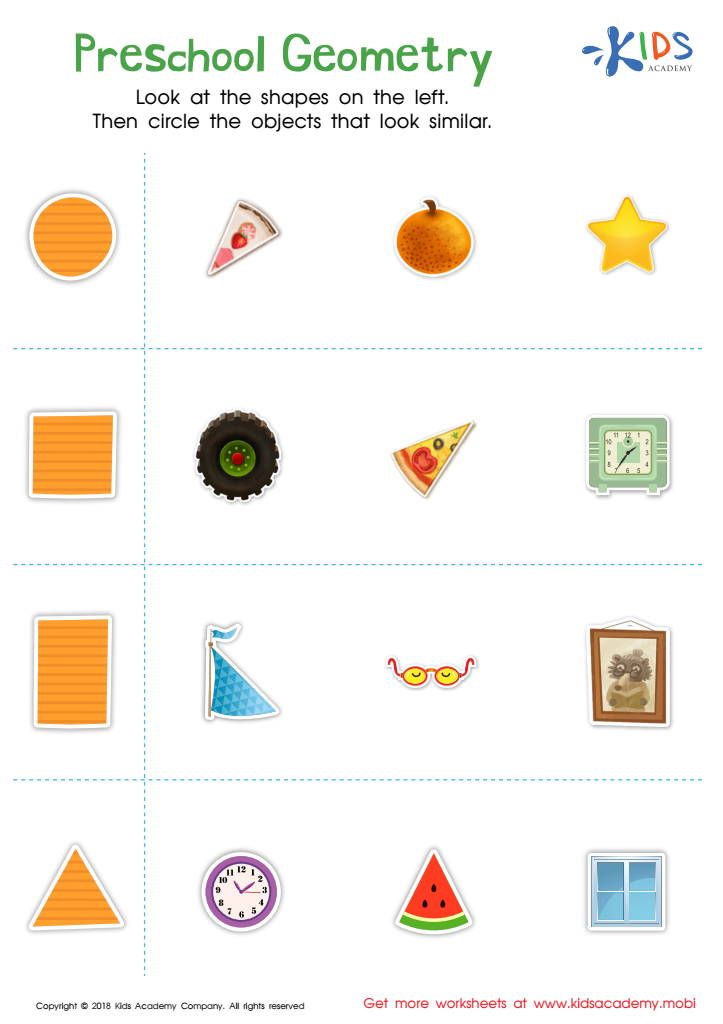
Preschool Geometry Worksheet








Understanding basic geometry is crucial for 4-year-olds as it lays the foundation for their cognitive, spatial, and problem-solving skills. At this age, children are naturally curious and begin to explore the world around them through shapes and spatial relationships. When parents and teachers introduce concepts like shapes (circles, squares, triangles) and the basics of measurement, children enhance their ability to categorize and differentiate objects.
This foundational knowledge cultivates mathematical reasoning and critical thinking. Recognizing and describing shapes help develop early logic skills that are essential for future math learning. Moreover, geometry encourages creativity and imagination as children learn to visualize and manipulate objects, fostering skills that are not only academic but also practical in real-life situations.
Furthermore, understanding geometry promotes communication skills as children learn to express their thoughts about space and shape. This knowledge supports their academic success in later grades, as geometry concepts become integral in varying subjects, especially math and science. Ultimately, engaging children in geometry prepares them for more complex topics in education, making it an essential focus for both parents and teachers in the early developmental years.








