
Phonological awareness Normal Worksheets for 4-Year-Olds
3 filtered results
Difficulty Level
Grade
Age
-
From - To
Subject
Activity
Standards
Explore our engaging "Phonological Awareness Normal Worksheets" designed specifically for 4-year-olds! These worksheets are essential for helping young learners develop critical phonological skills, laying the foundation for reading success. With fun illustrations and interactive activities, children will enjoy identifying sounds, rhymes, and syllables. Our curriculum-aligned resources cater to various learning styles, ensuring a comprehensive approach to phonemic awareness. These worksheets not only make learning enjoyable but also empower educators and parents to track progress effectively. Dive into the world of sounds with activities that stimulate creativity and foster a love for language, making early literacy an exciting adventure!
Favorites
With answer key
Interactive
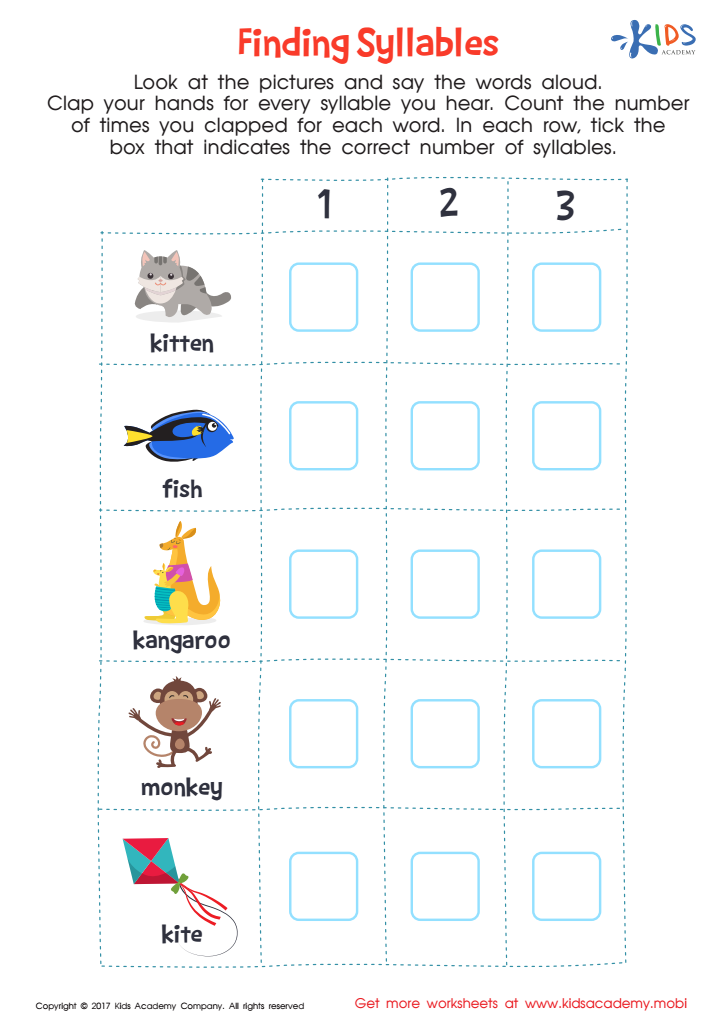
Finding Syllables Word Structure Worksheet
Have your kid clap and count syllables in words to improve their reading and spelling! Use this word structure worksheet for a fun activity - syllables!
 Assign to My Students
Finding Syllables Word Structure Worksheet
Worksheet
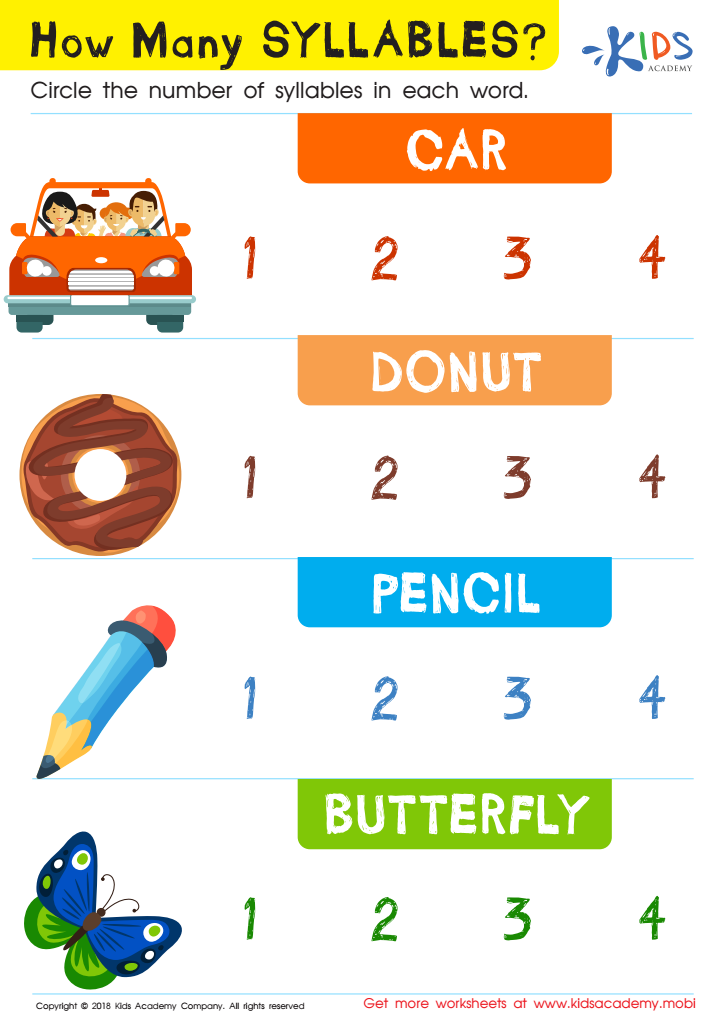
How Many Syllables? Worksheet
Syllabication or 'chunking' helps students decode words more quickly and increase fluency. This traceable worksheet is great for emerging readers, combining fun and fine motor practice with chunking words and counting syllables.
How Many Syllables? Worksheet
Worksheet
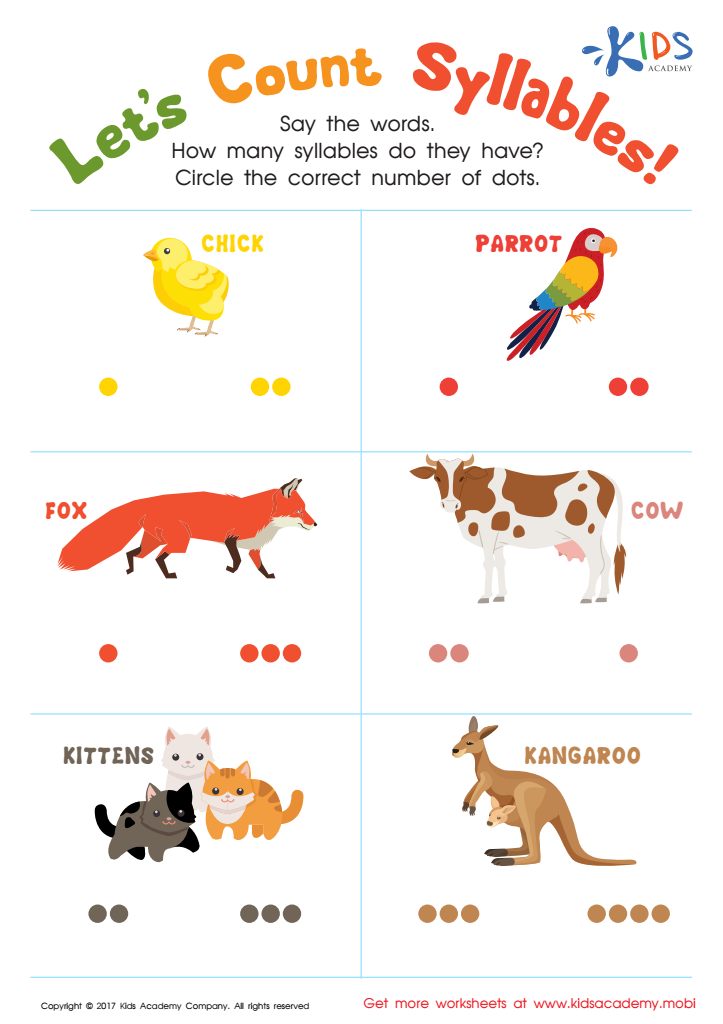
Lets Count Syllables Worksheet
This fun animal worksheet makes learning to read easier by breaking words into syllables. Bright, cheery pictures give context and help kids choose the right syllable count. Count together and enjoy as your child learns and gains success!
Lets Count Syllables Worksheet
Worksheet
Join Kids Academy for Free
Who is primarily going to use this learning content?






Phonological awareness is a crucial skill for 4-year-olds, laying the groundwork for literacy development. It refers to the ability to recognize and manipulate sounds in spoken language. Parents and teachers should prioritize this skill because it significantly impacts a child's reading and writing abilities later on. Children proficient in phonological awareness can identify sounds in words, which helps them decode and spell effectively when they learn to read.
The early years of a child’s life are vital for cognitive and language development. Engaging in activities that promote phonological awareness, such as rhyming games and sound segmentation, nurtures listening skills and enhances vocabulary. These activities not only make learning fun but also stimulate critical thinking.
Moreover, children with strong phonological awareness typically experience fewer difficulties in their later schooling, reducing the likelihood of reading difficulties or special education placement. By fostering these skills early, teachers and parents can help children build confidence in their literacy abilities. Lastly, cultivating phonological awareness enhances overall communication skills, allowing children to express themselves more clearly. Investing in this foundational skill sets the stage for a lifetime of learning and academic success.








