Critical Thinking Normal 2D Shapes Worksheets for 4-Year-Olds
5 filtered results
-
From - To
Welcome to our engaging Critical Thinking Normal 2D Shapes Worksheets designed specifically for 4-year-olds! These interactive worksheets encourage young learners to explore and understand basic 2D shapes, fostering essential cognitive skills. Through fun activities, children will identify, compare, and categorize shapes while enhancing their problem-solving abilities. Our materials are tailored to support early childhood development, making learning both enjoyable and effective. Perfect for home or classroom use, these worksheets will help your little ones gain confidence and a solid foundation in geometry. Discover the joy of learning with our critical thinking worksheets today and watch their curiosity flourish!
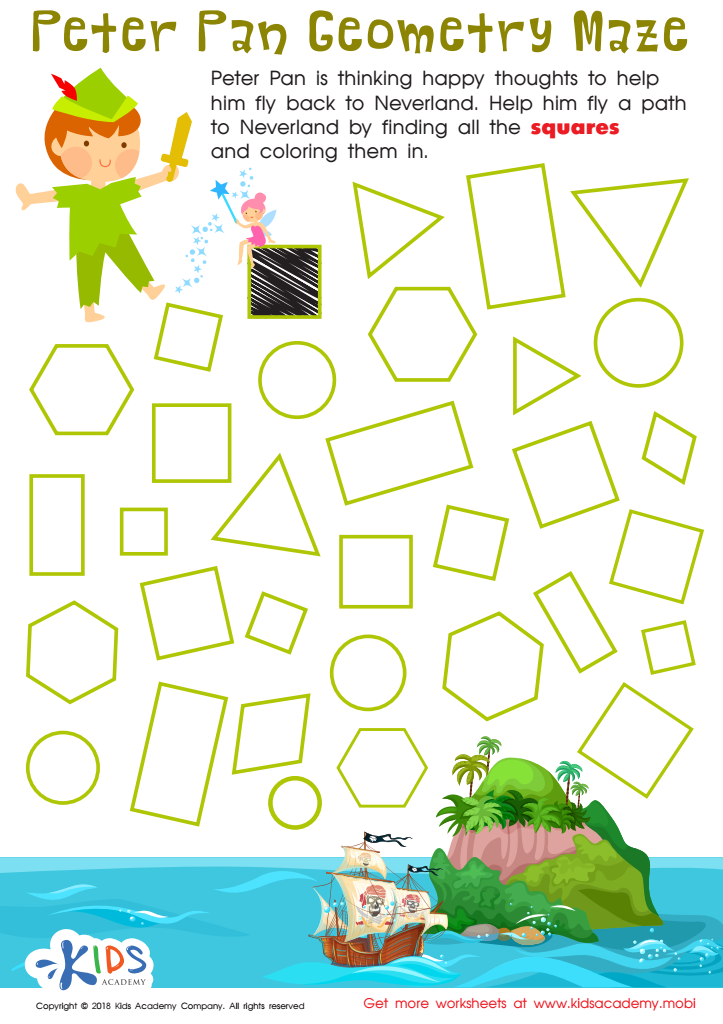
Peter Pan Worksheet
 Assign to My Students











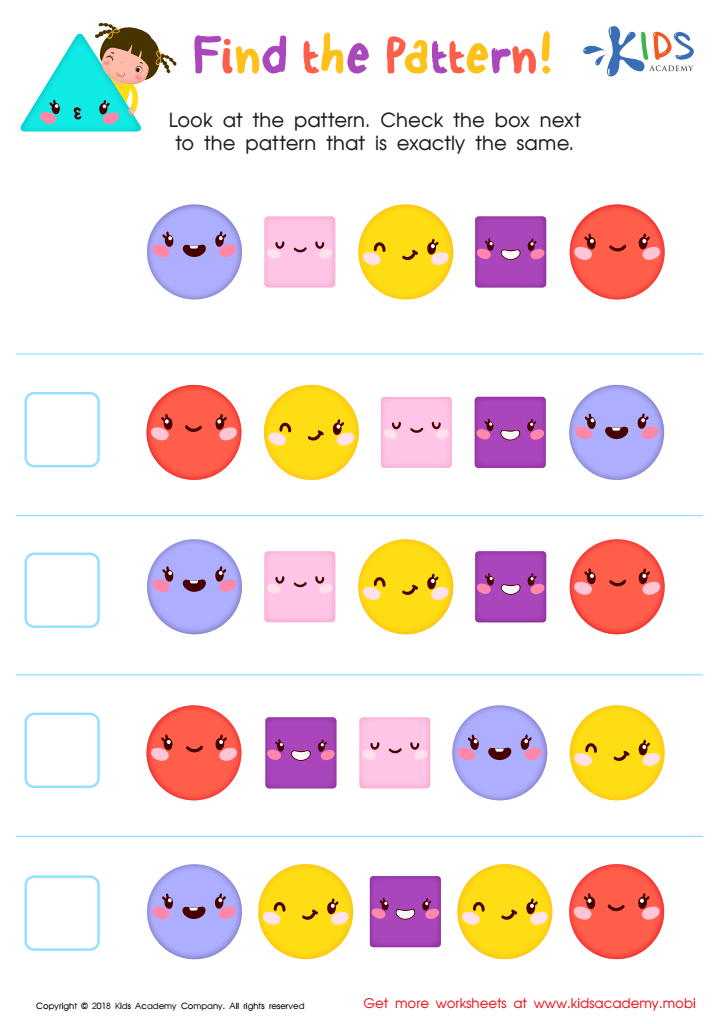
Find the Pattern Worksheet
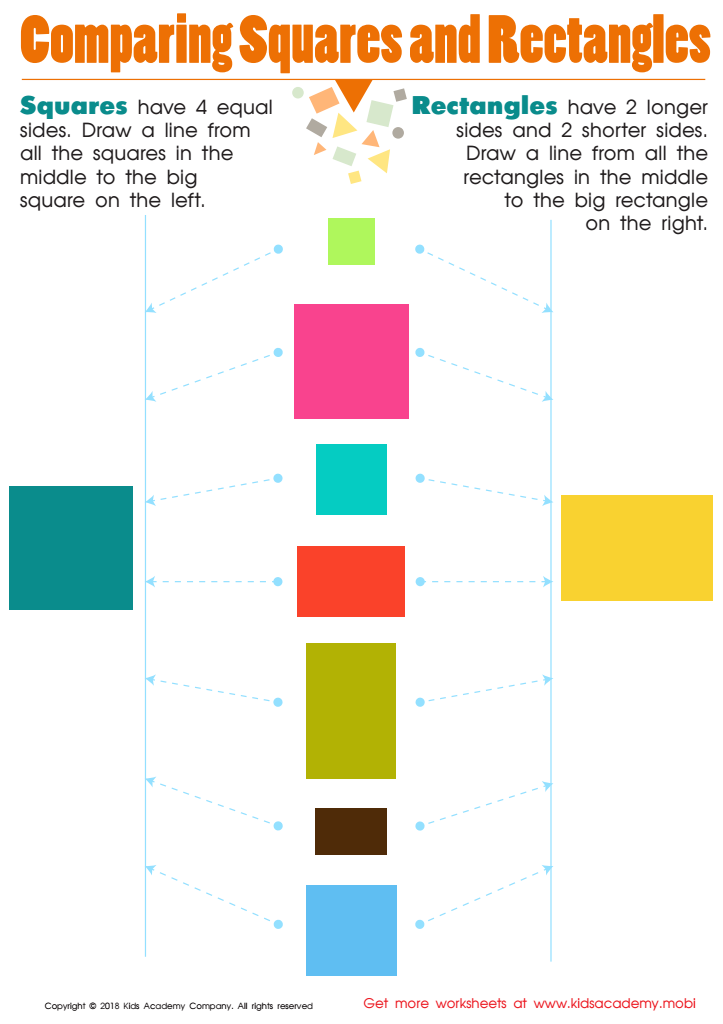
Comparing Squares Rectangles Worksheet
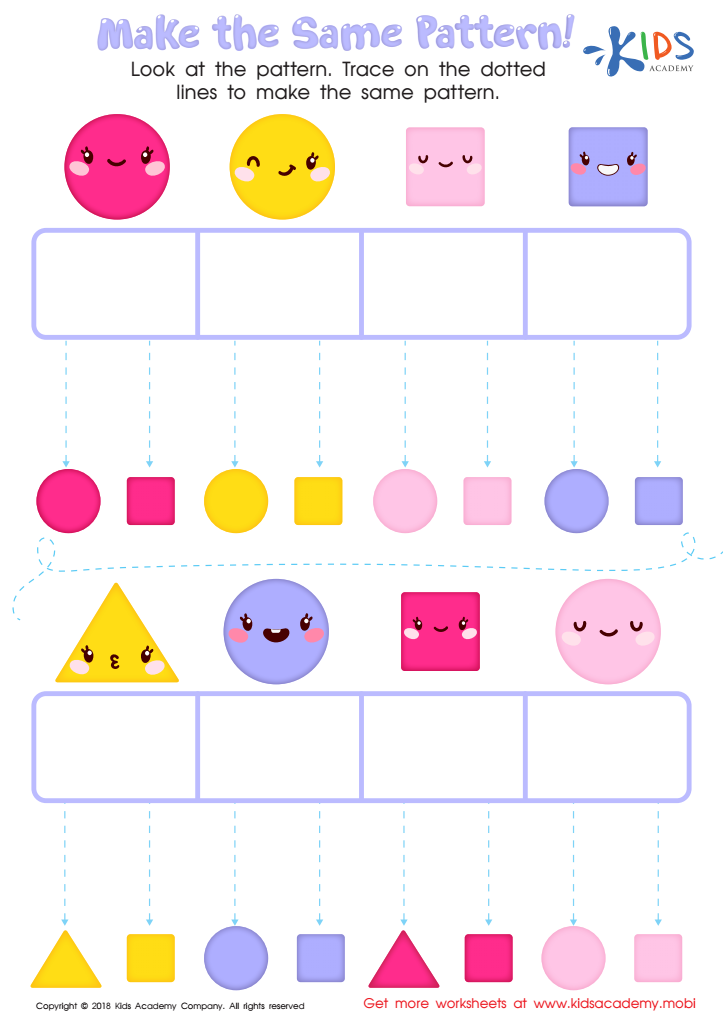
Make the Same Pattern Worksheet
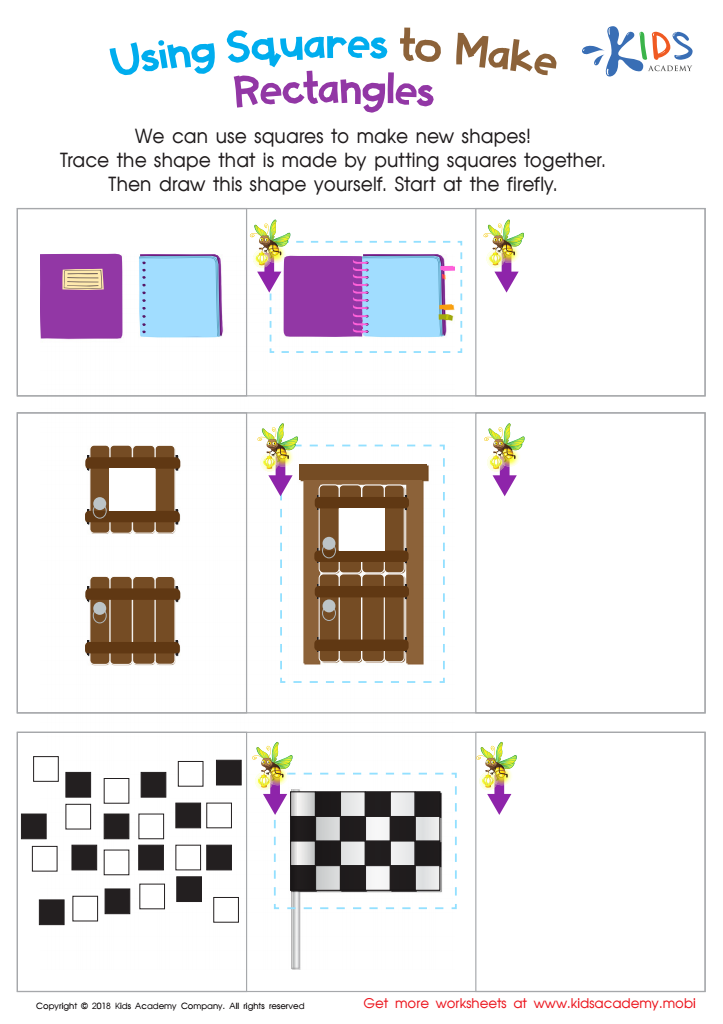
Using Squares to Make Rectangles Worksheet








Parents and teachers should prioritize critical thinking in early childhood education, particularly regarding the understanding of normal 2D shapes for 4-year-olds. Engaging in activities centered on shapes fosters essential cognitive skills. When children learn about shapes, they develop the ability to recognize, compare, and categorize objects, which lays the groundwork for critical thinking.
Furthermore, activities involving shapes encourage problem-solving; for instance, when children figure out how to construct a specific shape using building blocks, they practice logical reasoning and spatial awareness. These skills are crucial not only in math but in everyday decision-making.
Also, integrating shape recognition with creative play can enhance a child's imagination and inventiveness. Questions such as “How can we use these shapes to create a new picture?” stimulate curiosity and exploration.
Promoting an understanding of 2D shapes in a fun, interactive manner helps establish a strong foundation in mathematics and enhances overall academic achievement. By supporting critical thinking through shape activities, parents and educators do not merely teach geometry; they nurture inquisitive, thoughtful individuals who are prepared to tackle complex concepts as they grow.
Ultimately, prioritizing these skills sets children on a path to lifelong learning and success.