Problem-Solving Skills Normal 2D Shapes Worksheets for 4-Year-Olds
5 filtered results
-
From - To
Enhance your 4-year-old's learning journey with our engaging Problem-Solving Skills Normal 2D Shapes Worksheets. These printable resources are thoughtfully designed to help young learners explore basic geometric shapes, promoting critical thinking and creativity through fun activities. Children will enjoy identifying, sorting, and manipulating shapes, which supports their spatial awareness and cognitive development. Our worksheets emphasize interactive problem-solving, making math enjoyable and impactful. Perfect for home or classroom use, these thoughtfully crafted activities will empower children to build essential skills while fostering a love for learning. Watch as your little one develops confidence and capability in their mathematical knowledge with our engaging worksheets!
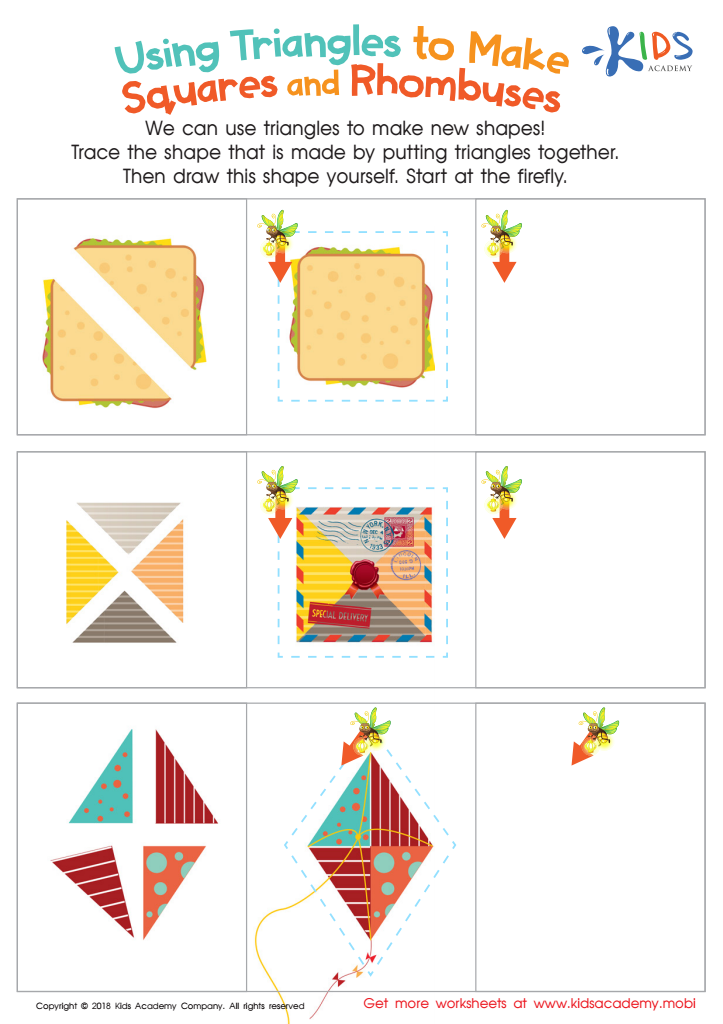
Using Triangles to Make Squares and Rhombuses Worksheet
 Assign to My Students





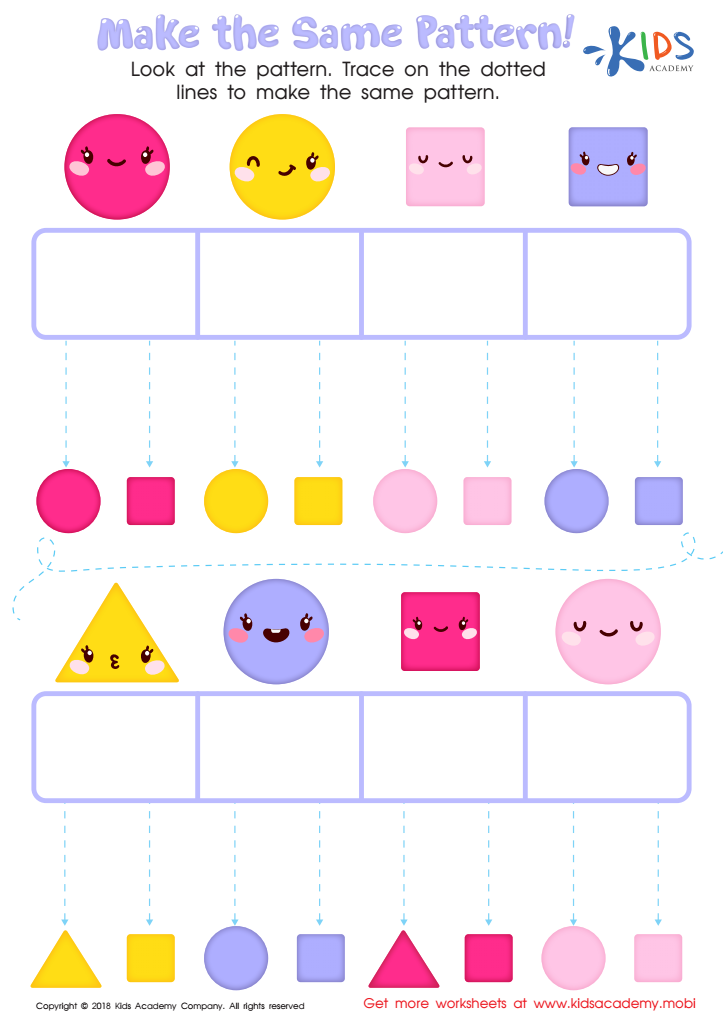
Make the Same Pattern Worksheet
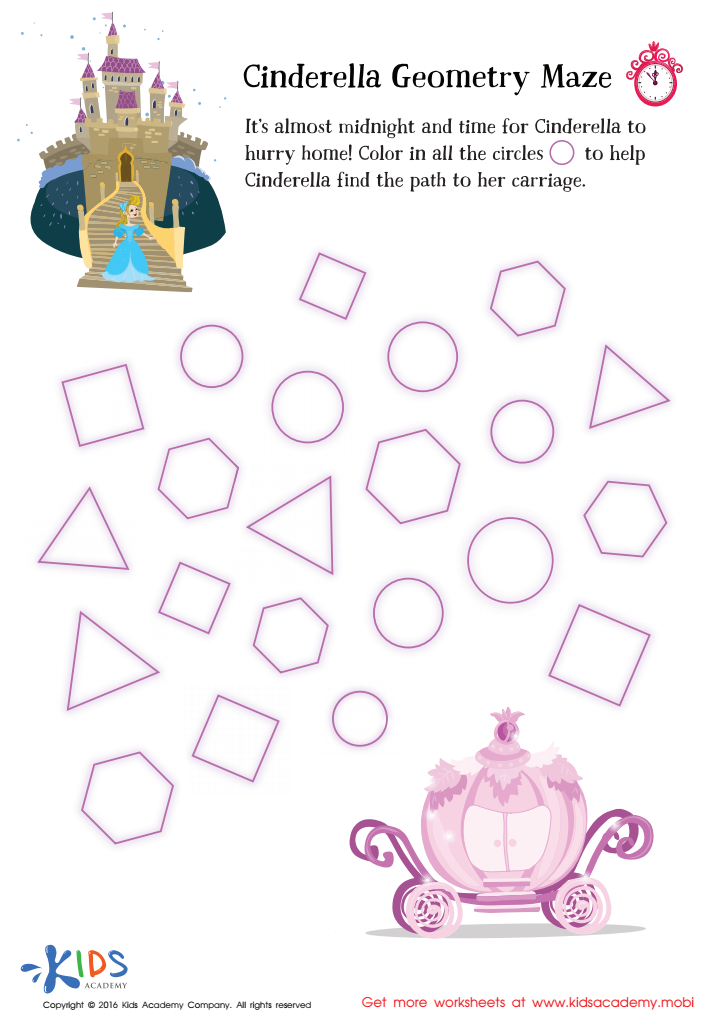
Cinderella Geometry Maze Worksheet
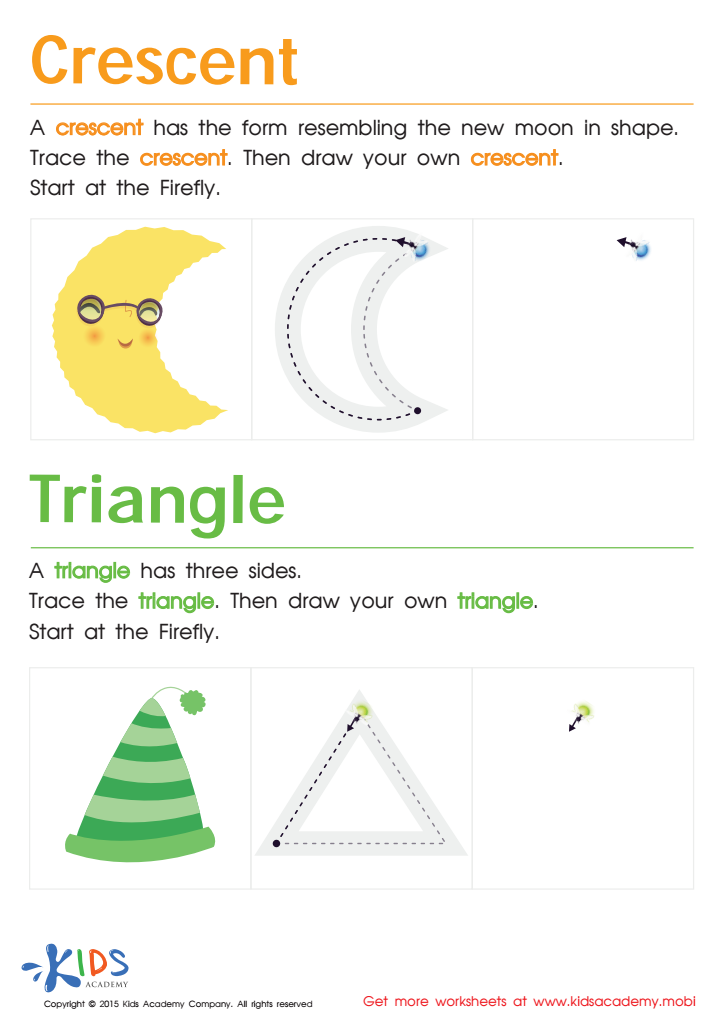
Learning to Draw Crescents And Triangles Worksheet
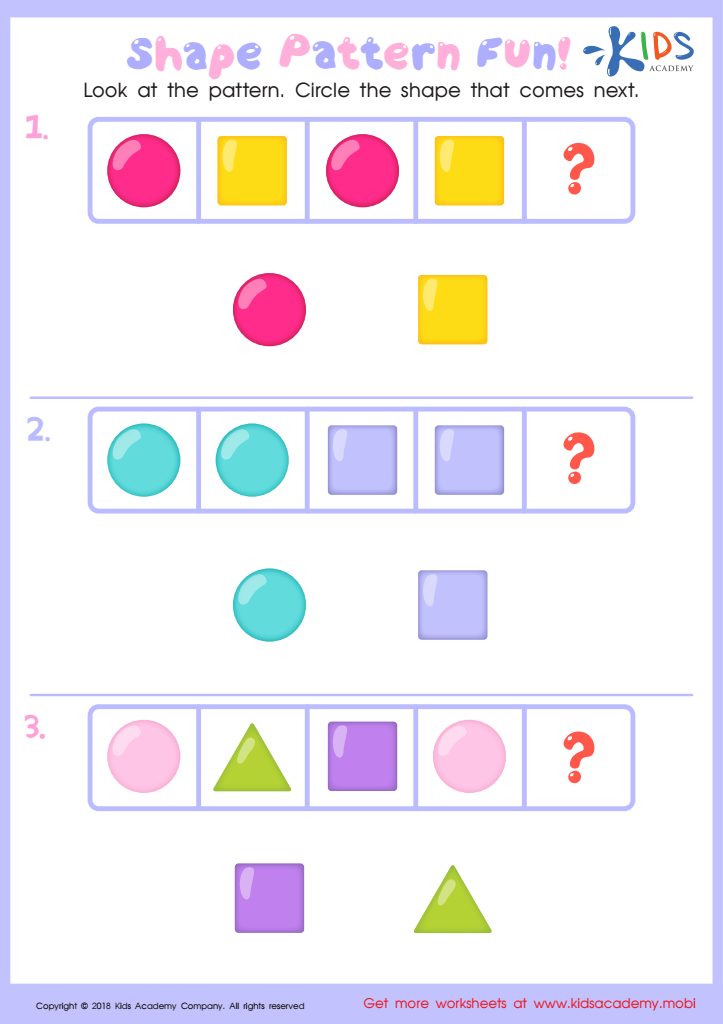
Shape Pattern Fun Worksheet








Parents and teachers should prioritize teaching problem-solving skills related to normal 2D shapes for 4-year-olds for several reasons. Firstly, engaging with shapes helps lay the foundation for critical thinking. When children identify, sort, and manipulate shapes like circles, squares, and triangles, they begin to develop logical reasoning abilities as they determine shapes' attributes and relationships.
Moreover, early exposure to shapes fosters mathematical skills. Recognizing and understanding 2D shapes are essentials that lead to more complex concepts, such as geometry, which children will encounter later in school. This exposure makes subsequent learning smoother and more intuitive.
Problem-solving with shapes also enhances fine motor skills. Activities like drawing, cutting, and assembling shapes enable children to strengthen their hand-eye coordination and dexterity, critical for numerous tasks.
Additionally, such activities promote creativity and spatial awareness as children explore how shapes fit together or relate to one another. These foundational skills are essential not only for academic success but also for everyday life situations.
Involving parents and teachers in this aspect of early childhood education ensures that children gain comprehensive support, building confidence in both their mathematical abilities and overall problem-solving skills. Ultimately, this holistic approach contributes to well-rounded cognitive development.