Reading comprehension Normal Addition and Subtraction Word Problems Worksheets for 4-Year-Olds
6 filtered results
-
From - To
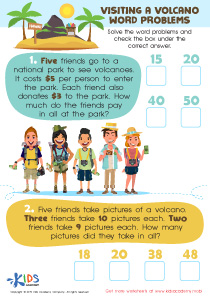
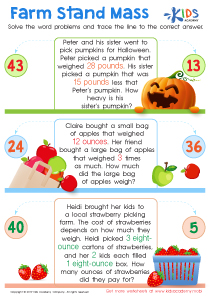
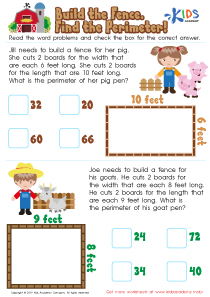
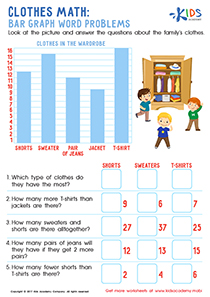
Enhance your child's math skills with our engaging Reading Comprehension Normal Addition and Subtraction Word Problems Worksheets for 4-Year-Olds. Designed to develop both literacy and numeracy, these worksheets invite young learners to solve simple math problems by reading and understanding short, easy-to-follow stories. Each worksheet features colorful illustrations that capture kids' imaginations and help them make sense of the problems. By merging reading practice with basic math exercises, these printable worksheets ensure a fun and educational experience, fostering critical thinking and problem-solving skills from an early age. Download now to support your child's early learning journey!
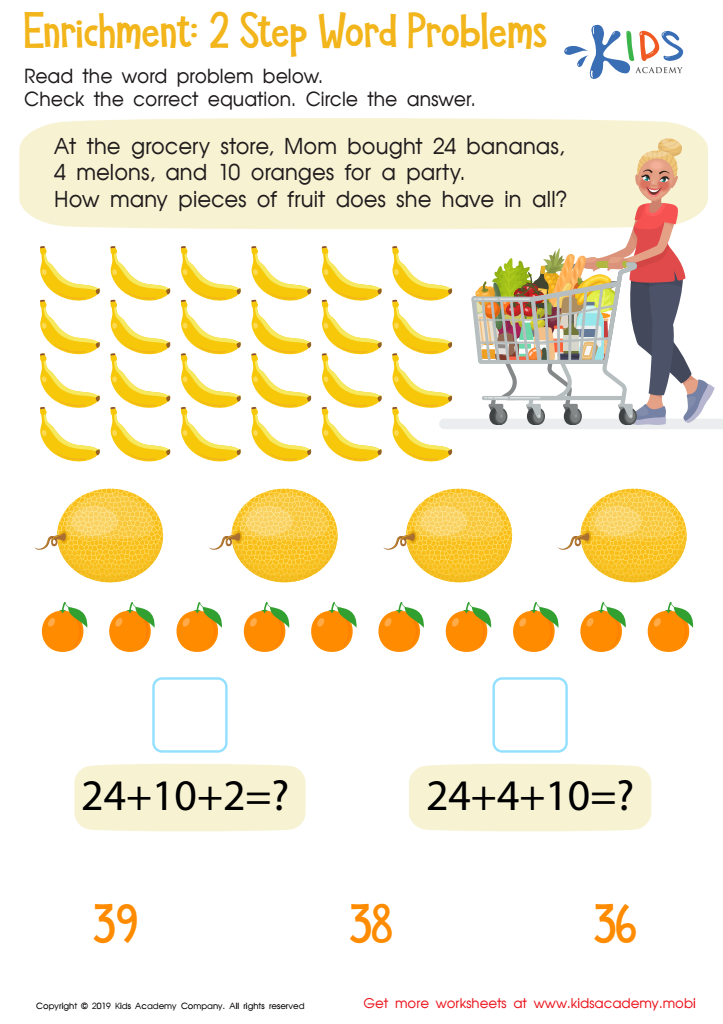
Enrichment -2 Step Word Problems Worksheet
 Assign to My Students
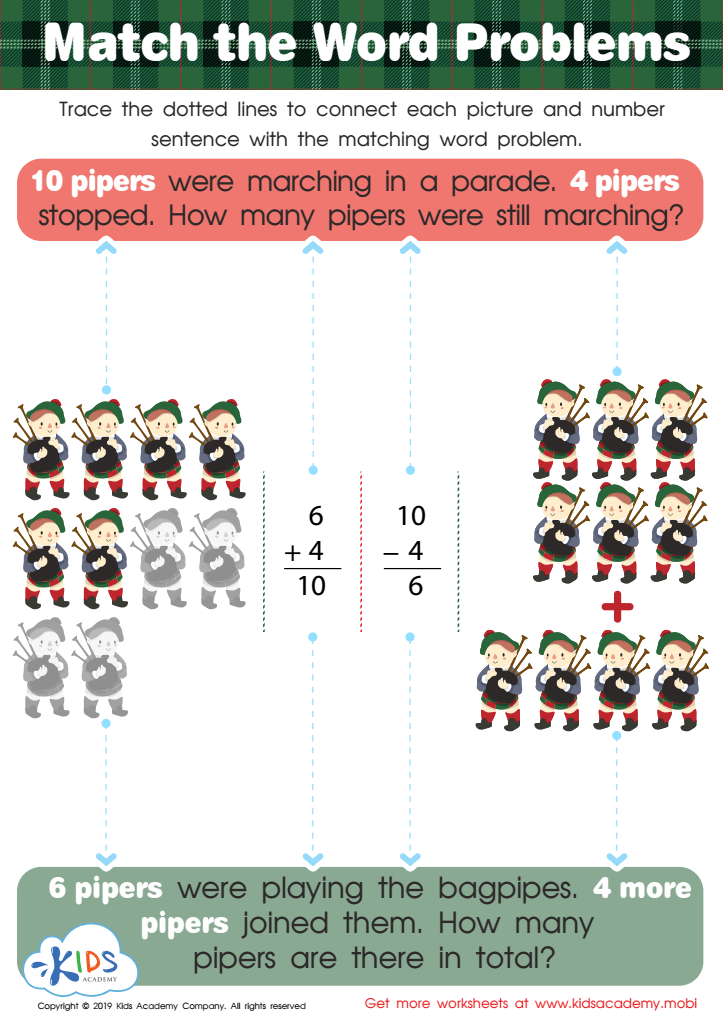
Match the Word Problems Worksheet
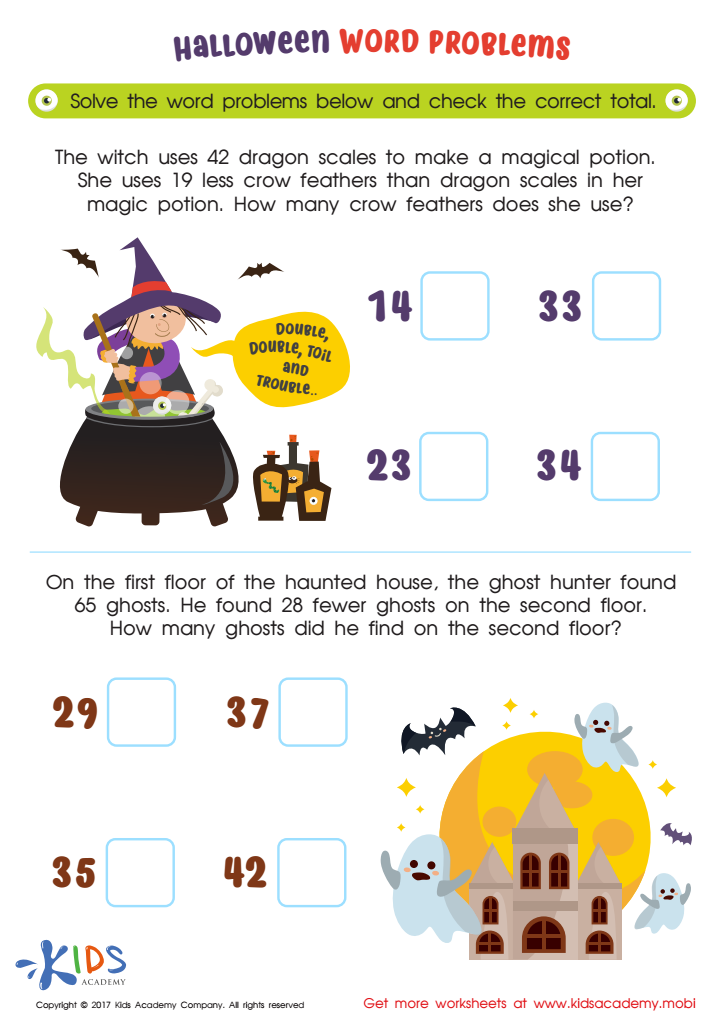
Halloween Word Problems Printable
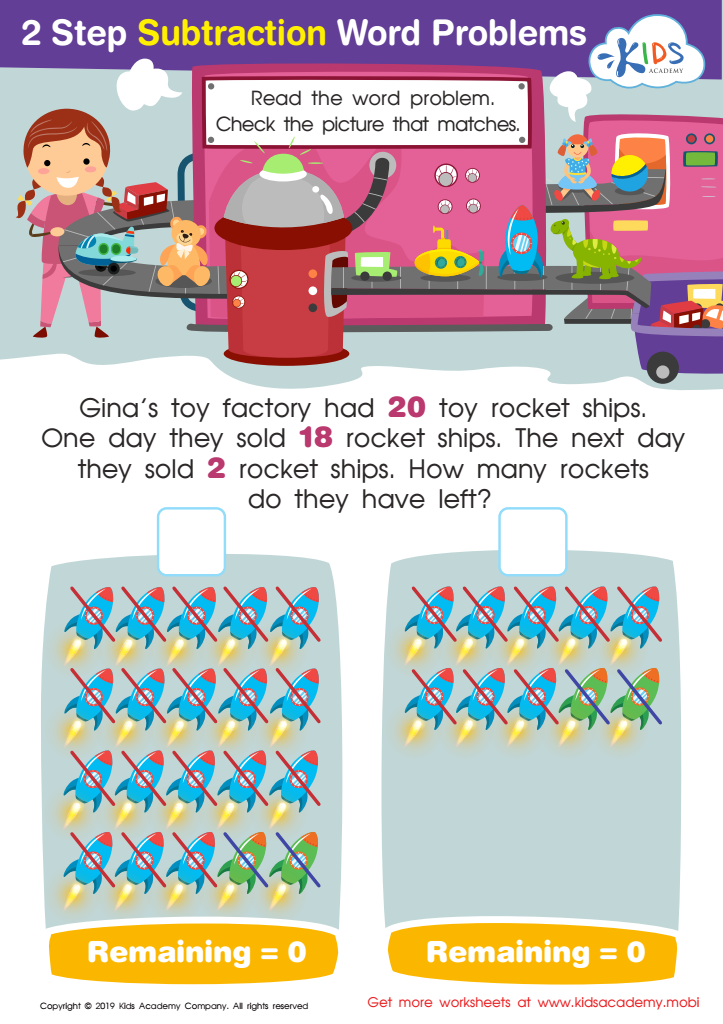
Step Subtraction Word Problems Worksheet
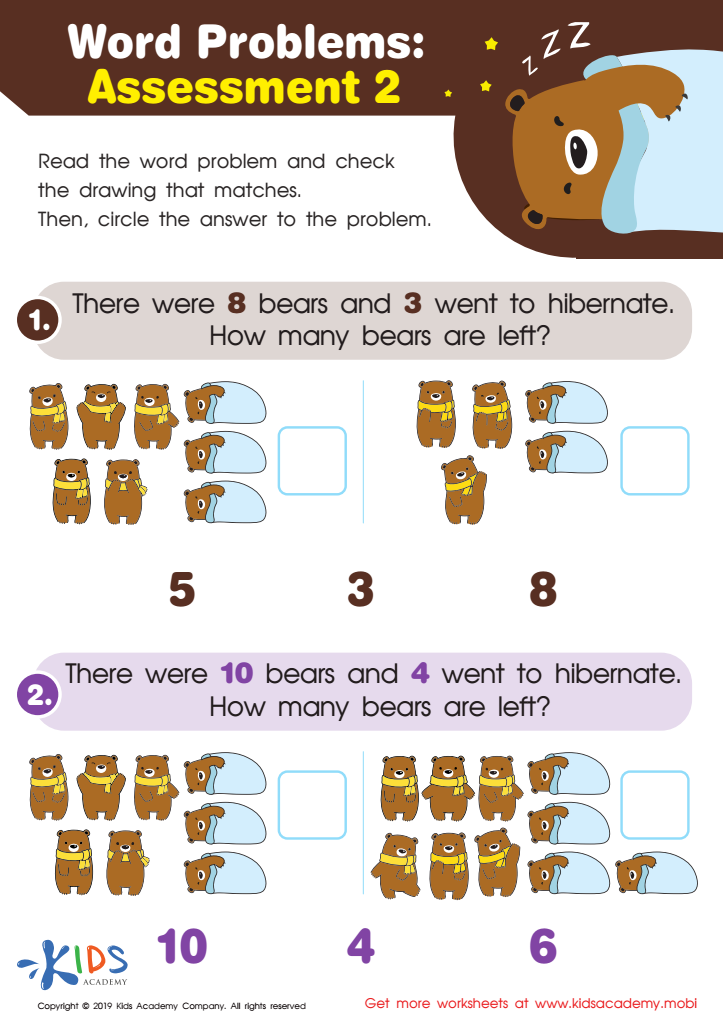
Word Problems: Assessment 2 Worksheet
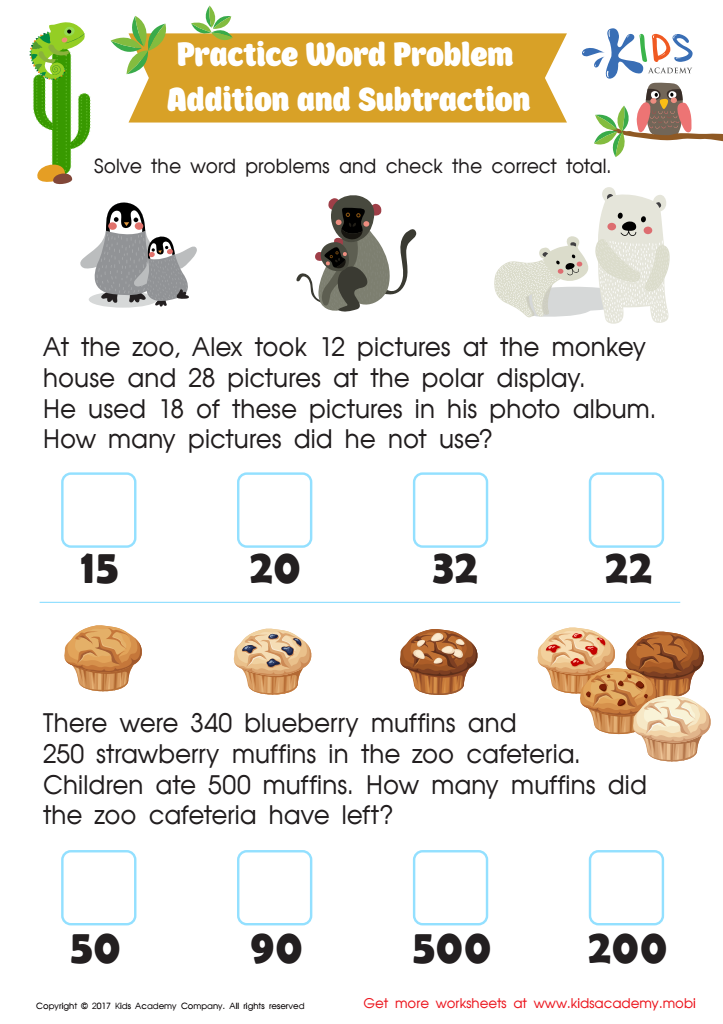
Addition and Subtraction: Word Problems Worksheet








Parents and teachers should care about reading comprehension and normal addition and subtraction word problems for 4-year-olds because these foundational skills are critical building blocks for later academic success and cognitive development. At this young age, children’s brains are particularly receptive to new information, and introducing them to reading comprehension and basic math problems helps activate neural pathways related to logical reasoning, problem-solving, and critical thinking.
Engaging young minds with word problems helps develop critical listening and comprehension skills as kids have to parse the scenario presented to them. This practice enhances their understanding of language structure and vocabulary, which directly translates to improved reading abilities. When children grasp the concept of simple word problems, it also lays the groundwork for understanding more complex mathematical concepts in the future.
Furthermore, solving normal addition and subtraction word problems in a way that’s relatable and fun bolsters a positive attitude towards learning and mathematics. Children who approach math with confidence frequently exhibit higher participation levels in class, better engagement, and a growth mindset. Early exposure allows skill development at their own pace within a nurturing environment.
In conclusion, nurturing these skills at an early age not only tailored growth in specific academic areas but also encourages broader intellectual and social abilities essential for lifelong success.