Logical Reasoning Normal Addition & Subtraction Worksheets for 4-Year-Olds
4 filtered results
-
From - To
Enhance your child's early math skills with our engaging Logical Reasoning Normal Addition and Subtraction Worksheets designed specifically for 4-year-olds. These worksheets not only introduce fundamental math concepts but also promote logical thinking through age-appropriate activities. Children will develop problem-solving skills as they tackle fun and interactive exercises related to basic addition and subtraction. With colorful illustrations and carefully curated exercises, your little learners will stay motivated and excited about numbers. Visit our site to access these printable worksheets, providing a perfect blend of learning and playtime, leading to confident and skilled young mathematicians!
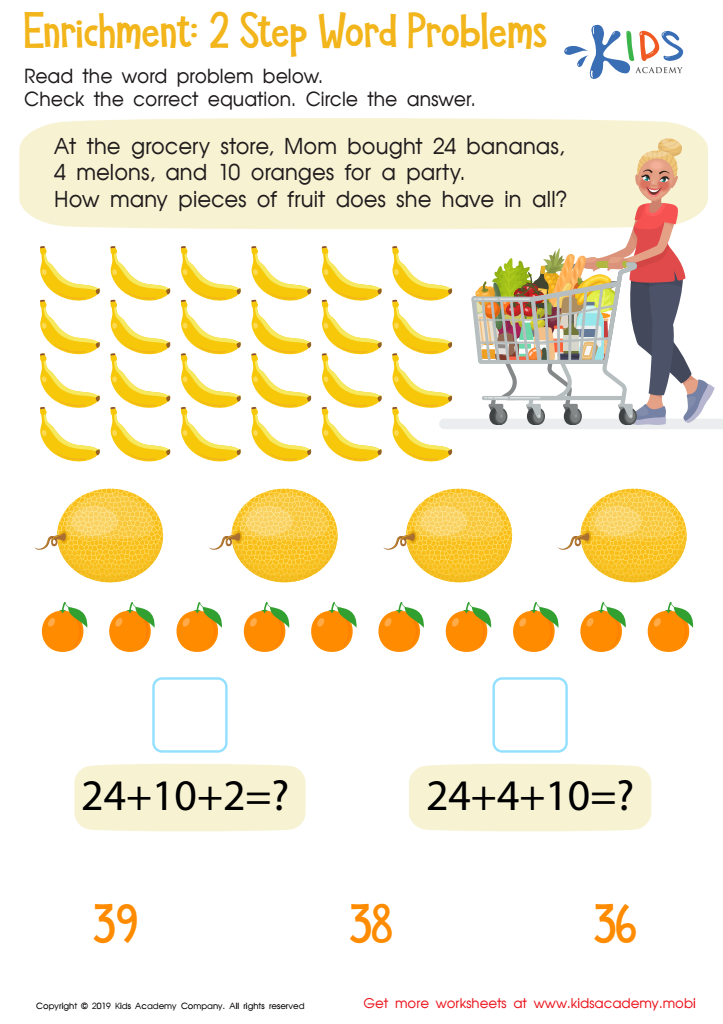
Enrichment -2 Step Word Problems Worksheet
 Assign to My Students
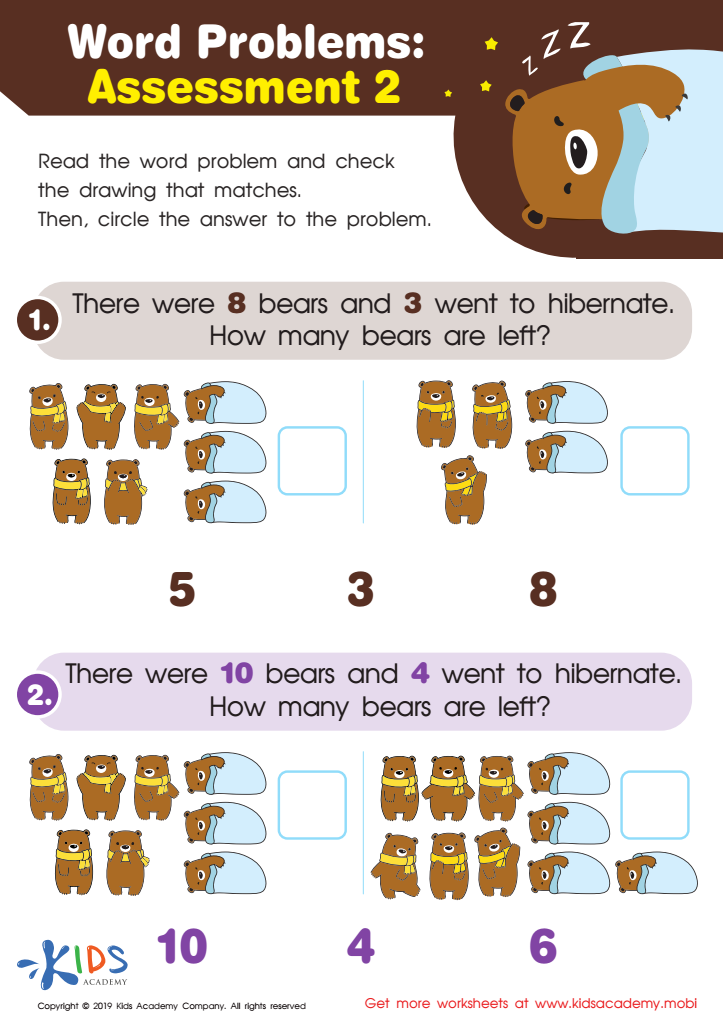
Word Problems: Assessment 2 Worksheet
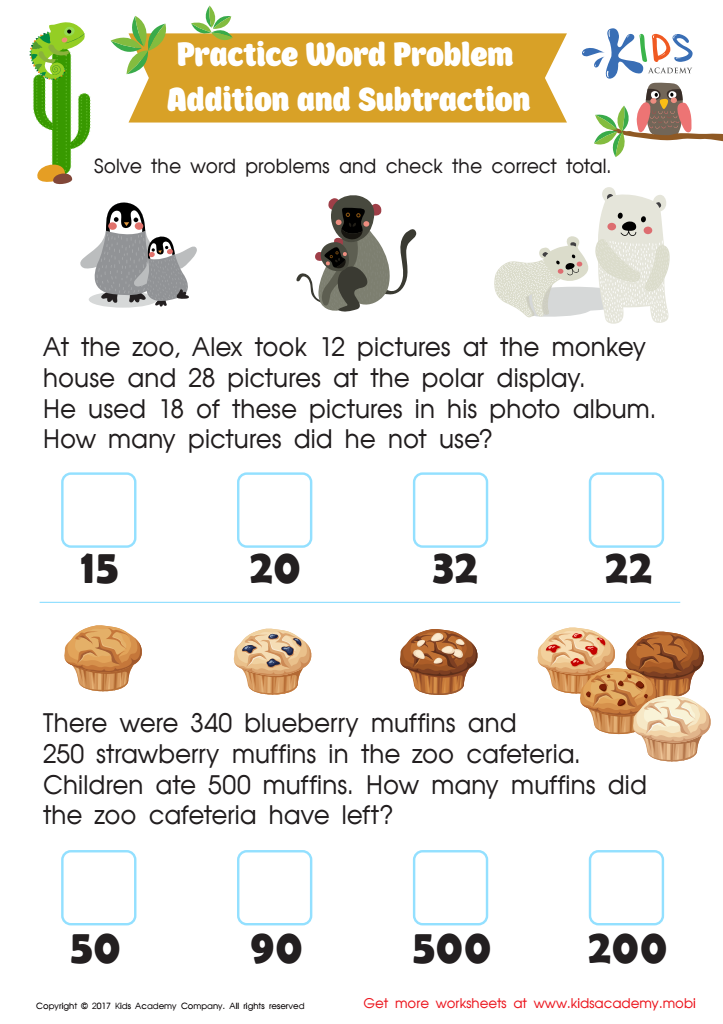
Addition and Subtraction: Word Problems Worksheet
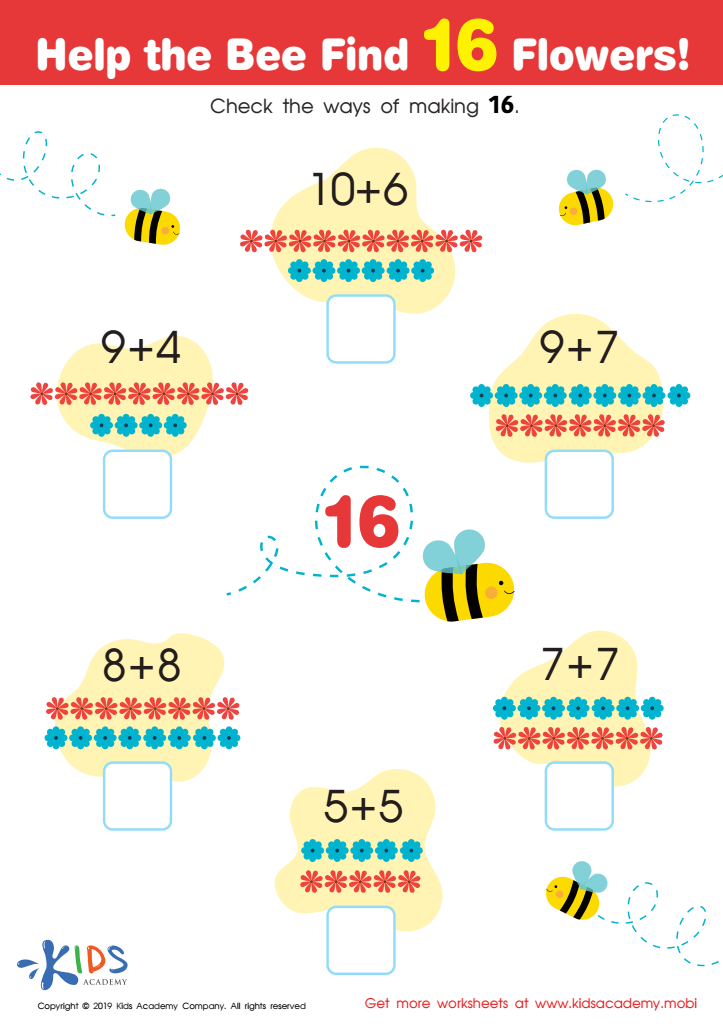
Help the Bee Find 16 Flowers Worksheet








Logical reasoning, along with basic addition and subtraction, are foundational skills that foster critical thinking and problem-solving in young children. For 4-year-olds, engaging with these concepts can significantly enhance cognitive development. When parents and teachers prioritize logical reasoning activities, such as puzzles or pattern recognition, children learn to identify relationships between objects, classify them, and understand sequences. These skills are essential as they promote analytical thinking and the ability to make connections in various subjects.
In addition to logical reasoning, normal addition and subtraction introduce essential mathematical concepts in a concrete manner. Using everyday contexts, such as sharing snacks or counting toys, allows children to grasp the idea of quantity and basic mathematical operations. This hands-on approach not only makes math fun but also promotes persistence and resilience as they encounter challenges in learning.
Moreover, fostering these skills early on helps build a strong foundation for academic success. Studies show that children with early exposure to logical reasoning and basic math are better prepared for future learning in both math and literacy. By nurturing these skills, parents and teachers can empower young children to think critically and approach problems with confidence, laying the groundwork for a lifelong love of learning.








