Basic geometry understanding Normal Math Worksheets for 4-Year-Olds
3 filtered results
-
From - To
Welcome to our Basic Geometry Understanding Math Worksheets for 4-Year-Olds! Designed to make learning fun and engaging, these worksheets introduce young learners to foundational geometric concepts. Children will explore shapes, recognize patterns, and develop spatial awareness through a variety of interactive activities. Our worksheets encourage hands-on learning, promoting skills such as sorting, matching, and drawing shapes. Ideal for parents and educators, each worksheet is tailored to enhance creativity while reinforcing essential math skills. Give your child the building blocks for mathematical success with our thoughtfully crafted worksheets! Explore, learn, and enjoy the world of shapes together!
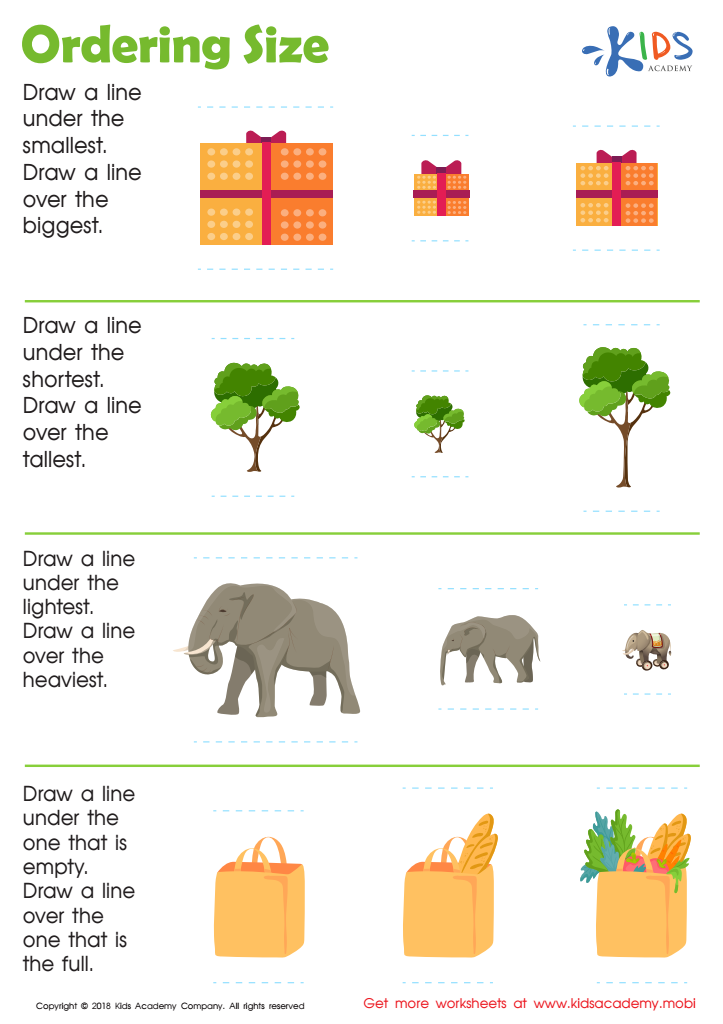
Ordering Size Worksheet
 Assign to My Students
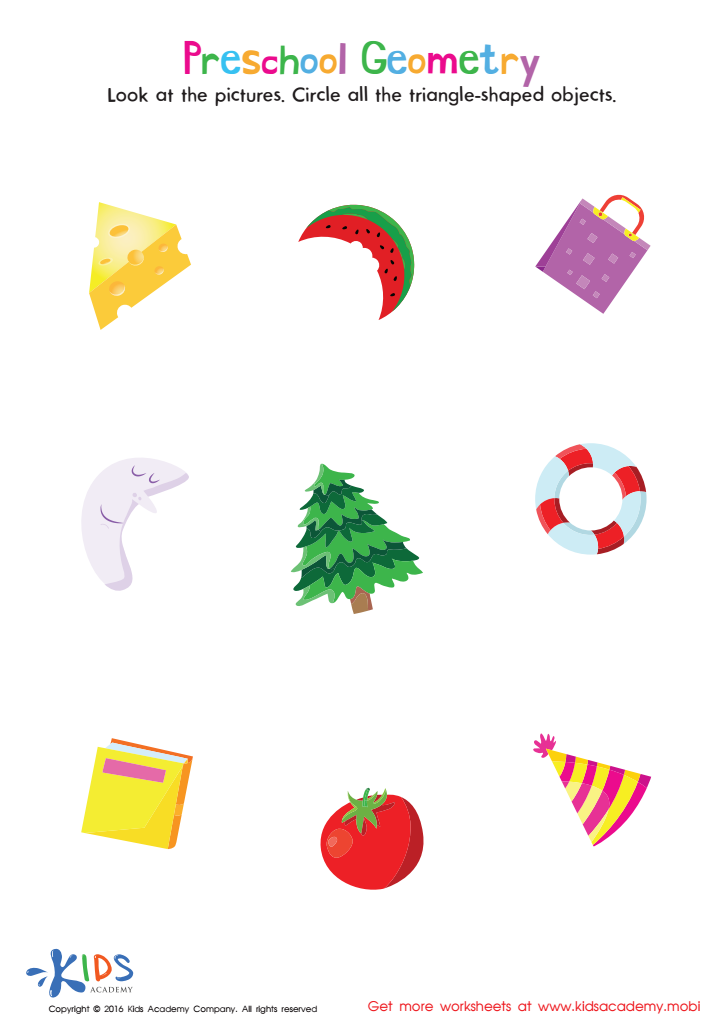
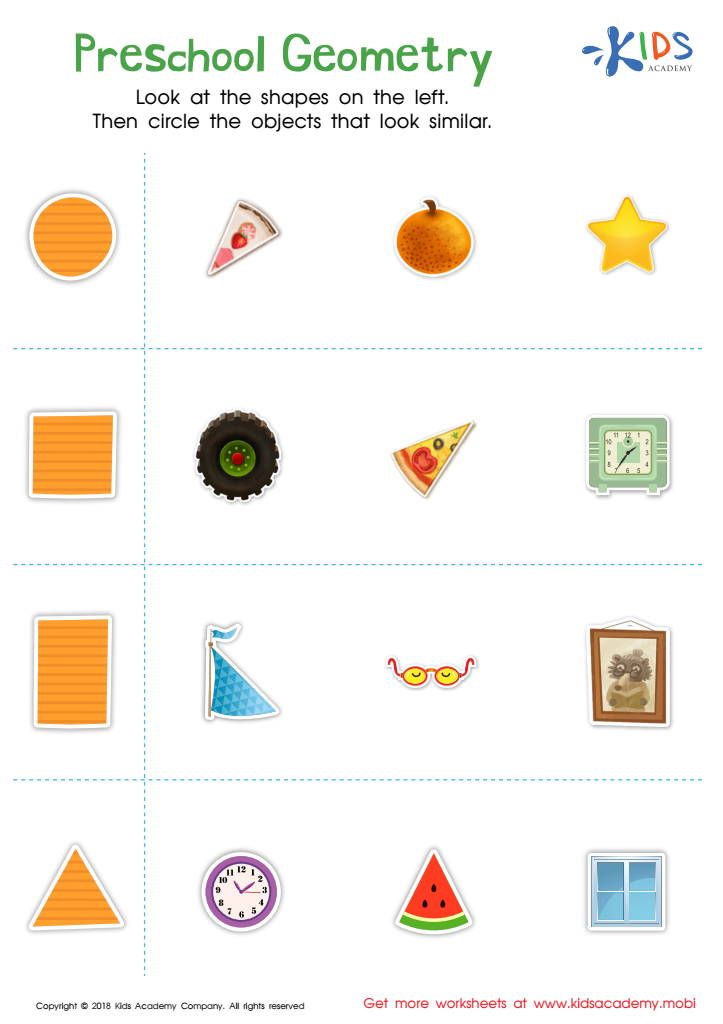
Preschool Geometry Worksheet




.jpg)



Understanding basic geometry at an early age is vital for 4-year-olds as it lays the foundation for their mathematical development and cognitive skills. At this stage, children are naturally curious about shapes and spatial relationships, making it an ideal time to introduce geometric concepts. Recognizing shapes like circles, squares, and triangles helps children identify and describe objects in their environment, enhancing their vocabulary and observational skills.
Moreover, grasping basic geometry fosters critical thinking and problem-solving abilities. Children learn to categorize and compare shapes, understand symmetry, and explore concepts such as size and position, promoting logical reasoning. Engaging young learners in activities that involve sorting, building, and drawing shapes encourages hands-on learning, creativity, and collaboration.
Early geometry education supports later academic success, as a solid understanding of shapes and space is crucial for more advanced math concepts in the future. It can also boost confidence in mathematics, enabling children to approach complex topics with a positive mindset. By prioritizing geometric learning, parents and teachers equip children with essential skills that extend beyond math, nurturing their overall development and preparing them for future educational challenges.








