Normal Vowel Diphthongs Worksheets for Ages 5-6
6 filtered results
Difficulty Level
Grade
Age
-
From - To
Subject
Activity
Standards
Unlock the world of vowel diphthongs for your little learners with our engaging worksheets designed for ages 5-6! These fun and colorful resources introduce children to the concept of vowel diphthongs, enhancing their phonetic awareness and language skills. Each worksheet features exciting activities that reinforce learning through tracing, matching, and creative exercises. Perfect for use in the classroom or at home, our diphthong worksheets promote early literacy development in an enjoyable way. Foster your child's love for reading and writing as they explore the blend of vowel sounds and improve their phonics skills. Get started today and watch their confidence soar!
Favorites
With answer key
Interactive
The AI Vowel Pair Worksheet
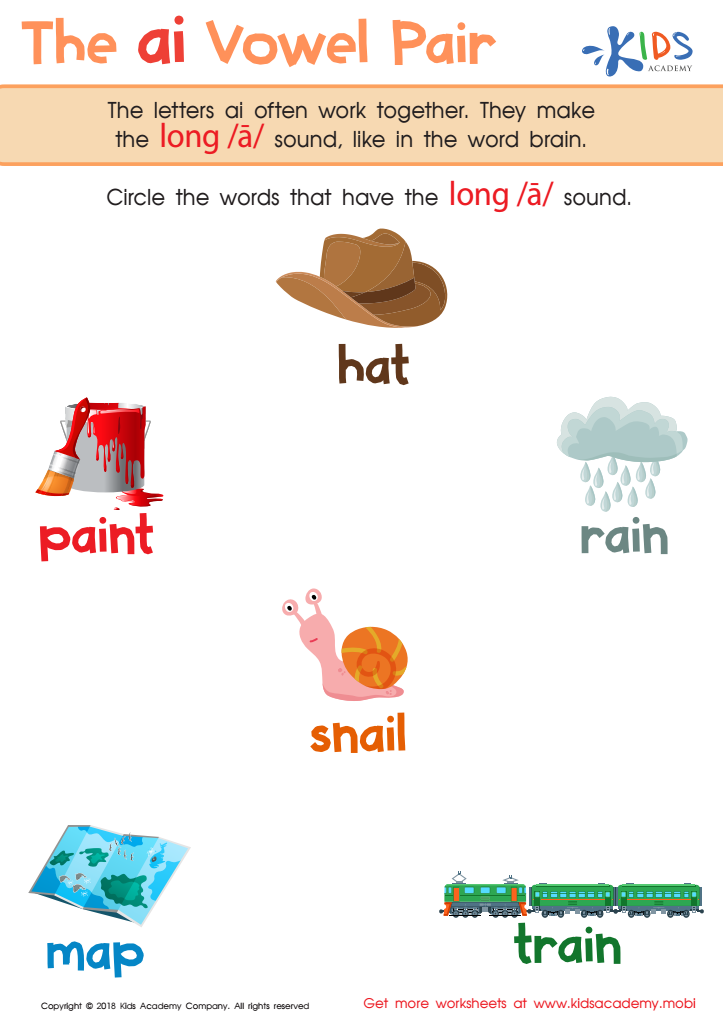
Vowel pairs make different sounds than individual letters. The 'ai' combination often forms the long /a/ sound, like in 'brain' and 'strain'. Get your kids to look at the pictures in the worksheet, identify each and say the name aloud. Help them circle the words with the long /a/ sound.
 Assign to My Students
The AI Vowel Pair Worksheet
Worksheet
Which's the OA Word? Worksheet
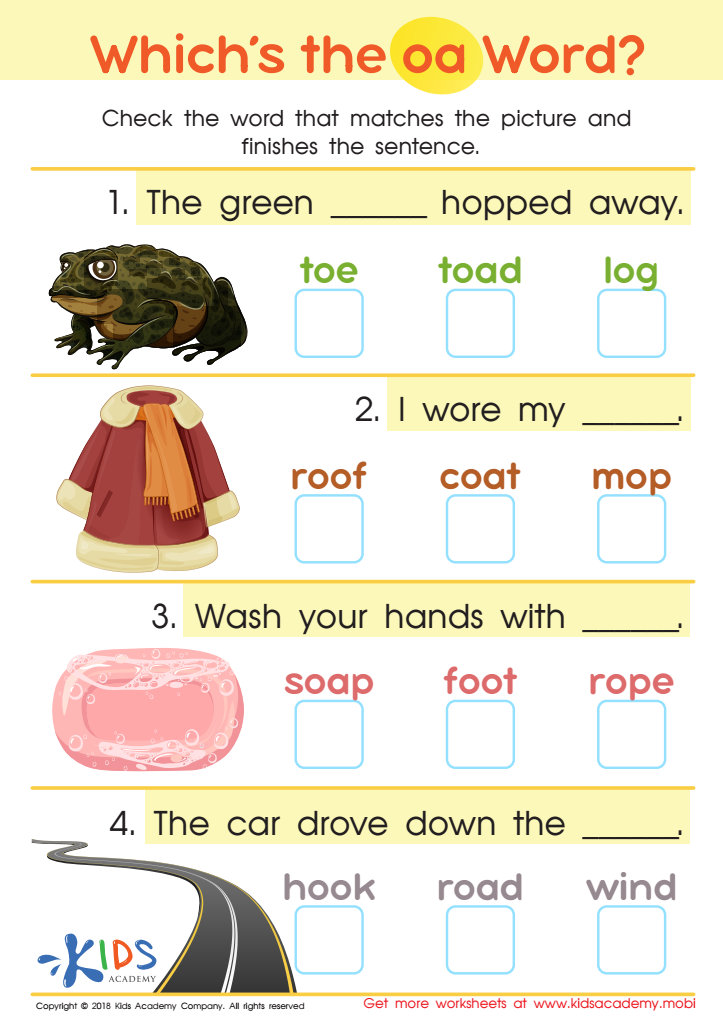
Encourage your kids to complete this fun worksheet. Ask them to identify the animals and objects in the pictures. Read the incomplete sentences aloud, and then find the correct word to finish the sentence. Check their work.
Which's the OA Word? Worksheet
Worksheet
Is It EE, EA, or AY? Worksheet
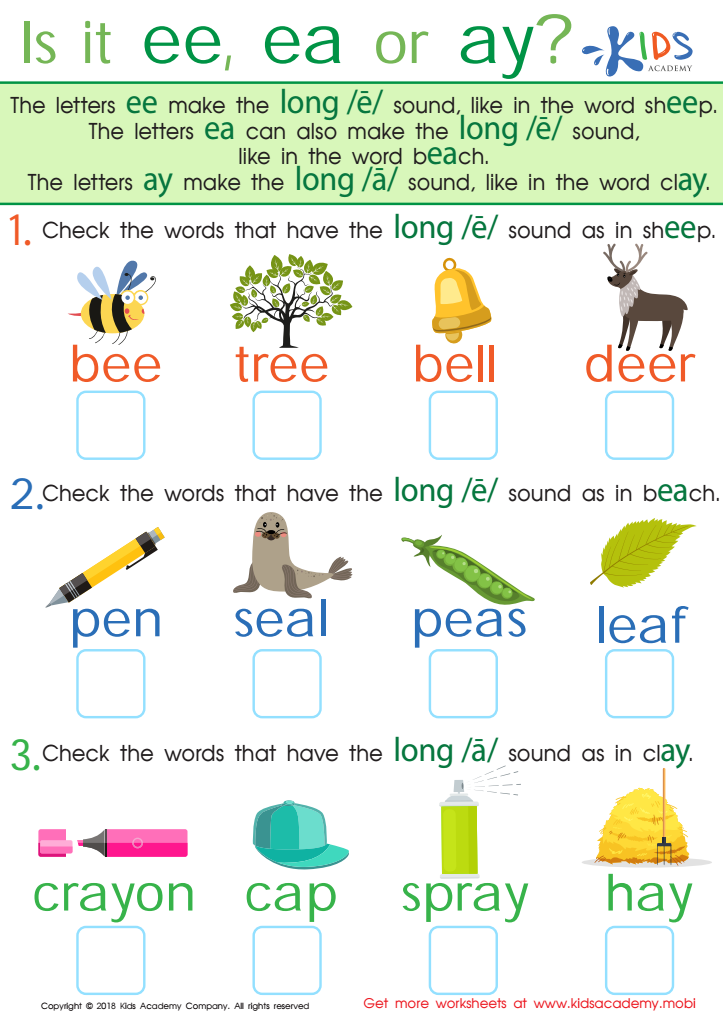
When 'ee', 'ea' and 'ay' are in words, they usually make the long /e/ and /a/ sounds. Examples of words with 'ee' are "sheep", 'beach' and 'seat' with 'ea', and 'clay' and 'play' with 'ay'. Check this colourful worksheet with your kids; help them find the words that make the long /e/ sound like 'sheep'.
Is It EE, EA, or AY? Worksheet
Worksheet
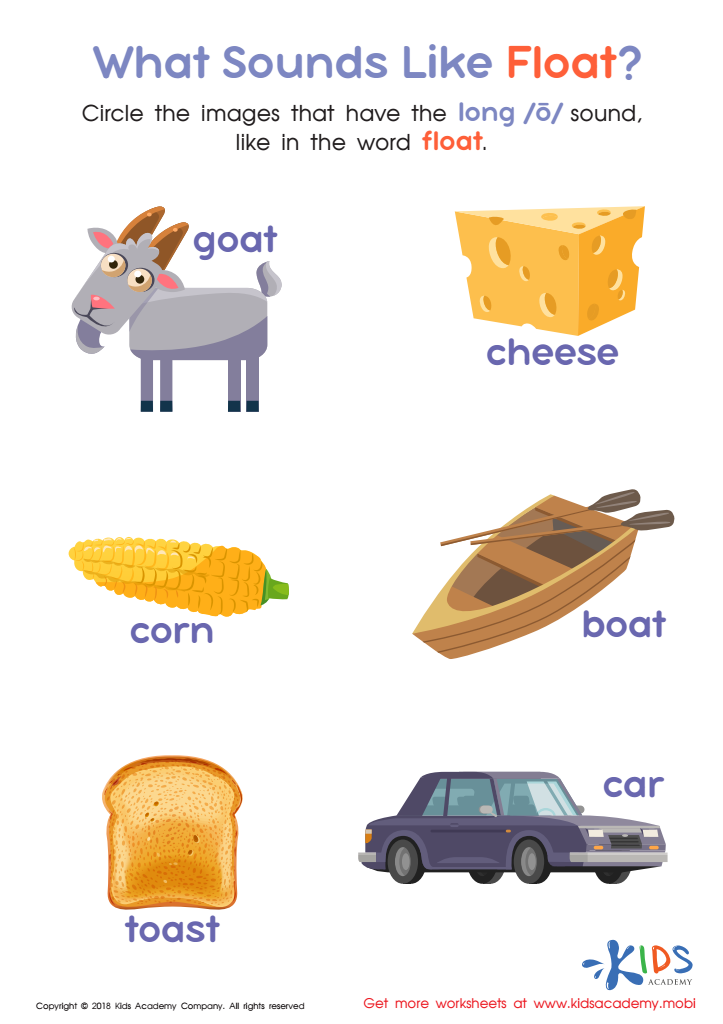
What Sounds Like Float? Worksheet
Help your kids practice the long /o/ sound with words such as 'boat', 'goat' and 'float'. Ask them to identify and circle the images in the worksheet that have the same sound. Award bonus points if they come up with more words with 'oa' spelling!
What Sounds Like Float? Worksheet
Worksheet
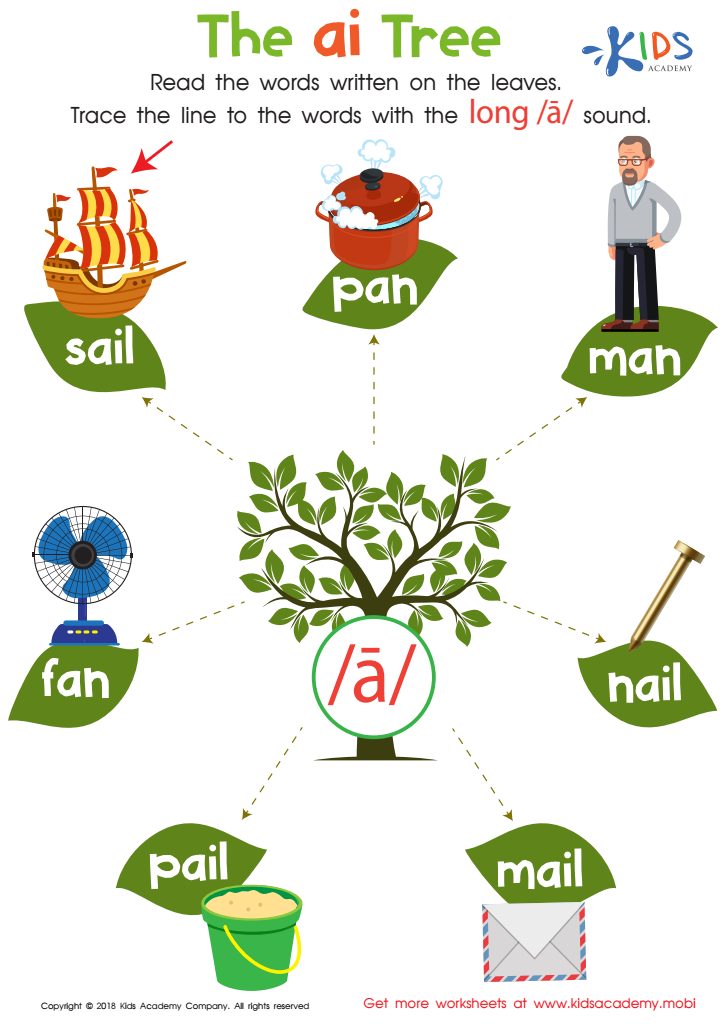
The AI Tree Worksheet
Help your kids learn to read better with this worksheet! Introduce the vowel pair 'ai' and give them familiar examples. Ask them to give you some in return. Then, have them read the words on the leaves and help them trace the ones with the long /a/ sound.
The AI Tree Worksheet
Worksheet
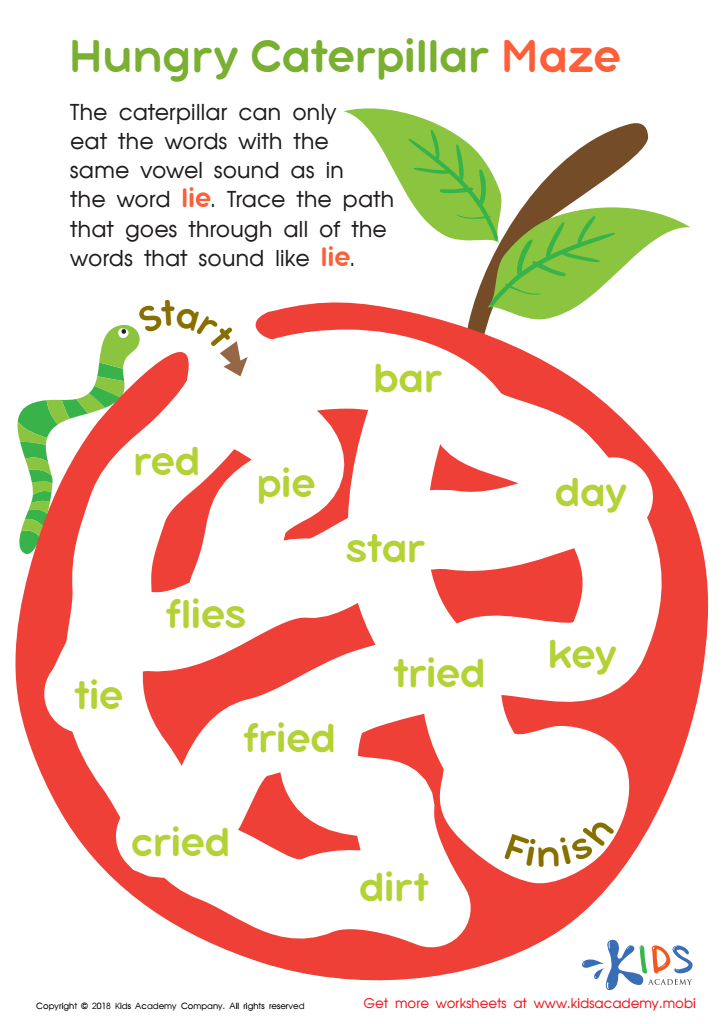
Hungry Caterpillar Maze Worksheet
Remind the kids that caterpillars turn into butterflies! This worksheet helps them practice their vowel sounds. They must trace the path of words that sound like ‘lie’ to help the caterpillar reach the finish line. It's a fun way to learn and explore!
Hungry Caterpillar Maze Worksheet
Worksheet
Join Kids Academy for Free
Who is primarily going to use this learning content?


Understanding Normal Vowel Diphthongs is crucial for parents and teachers working with children aged 5-6 because these linguistic sounds play a key role in early literacy development. Diphthongs are complex sounds formed by the combination of two vowel sounds within the same syllable, such as in the words "coin," "out," and "loud." Recognizing and pronouncing these sounds correctly enhances children’s phonemic awareness, which is foundational for reading and writing skills.
When children grasp diphthongs early on, they become more confident in their ability to decode words, leading to improved reading fluency. Additionally, exposure to diphthongs helps children develop clearer pronunciation, facilitating effective communication. Activities that focus on diphthongs, such as phonetic games or repetitive listening, engage young learners and promote auditory discrimination.
By caring about this aspect of language development, parents and teachers can provide the necessary support to equip children with vital literacy skills that will serve them well beyond early education. Encouraging familiarity with diphthongs also nurtures a love for language, making reading and learning more enjoyable. Thus, promoting sound recognition through playful and engaging strategies is vital for making literacy a foundational part of a child's education.