Comparing sizes Normal Worksheets for Ages 5-6
3 filtered results
-
From - To
Introduce your child to the concept of comparing sizes with our engaging worksheets designed for ages 5-6. Our expertly crafted activities encourage young learners to observe, analyze, and differentiate between various sizes, fostering essential early learning skills. Each worksheet offers fun, hands-on exercises that teach children how to compare and sort objects by size, helping to develop their critical thinking and problem-solving abilities. With colorful illustrations and simple instructions, our size comparison worksheets are perfect for making learning both enjoyable and educational. Give your child a head start in math and logic with our thoughtfully designed resources.
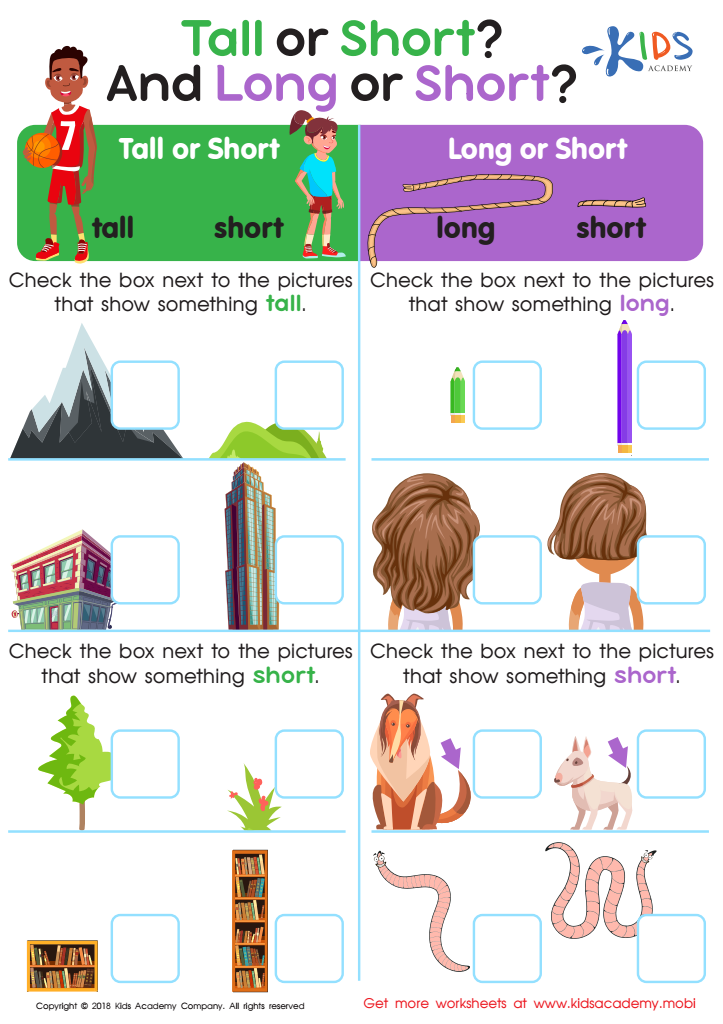
Tall or Short and Long or Short? Worksheet
 Assign to My Students
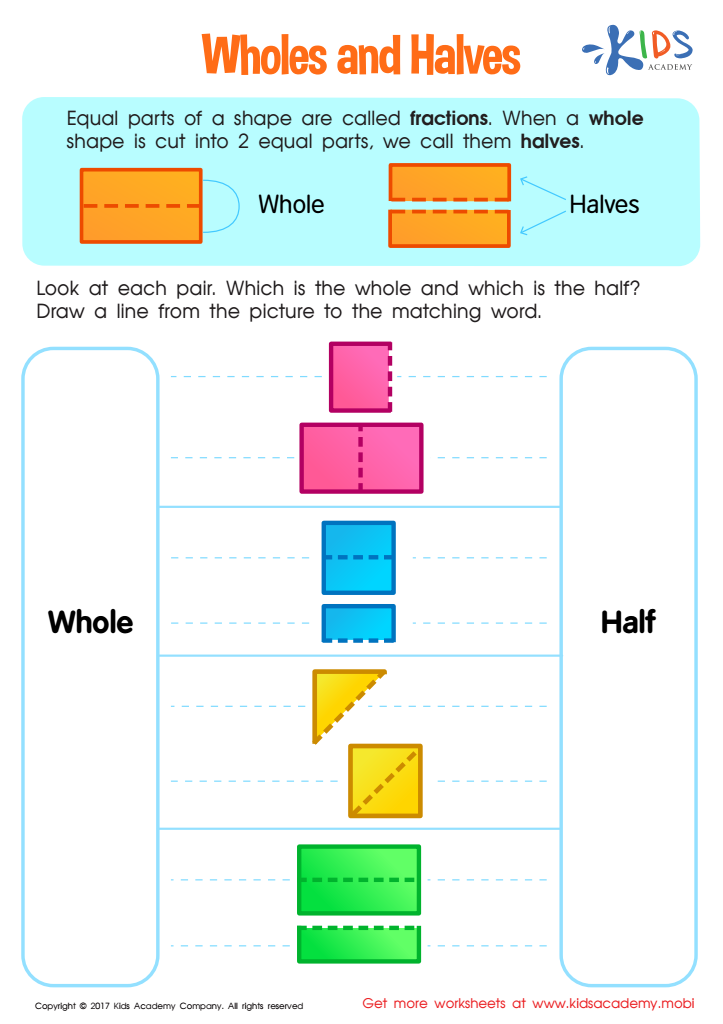
Wholes and Halves Worksheet
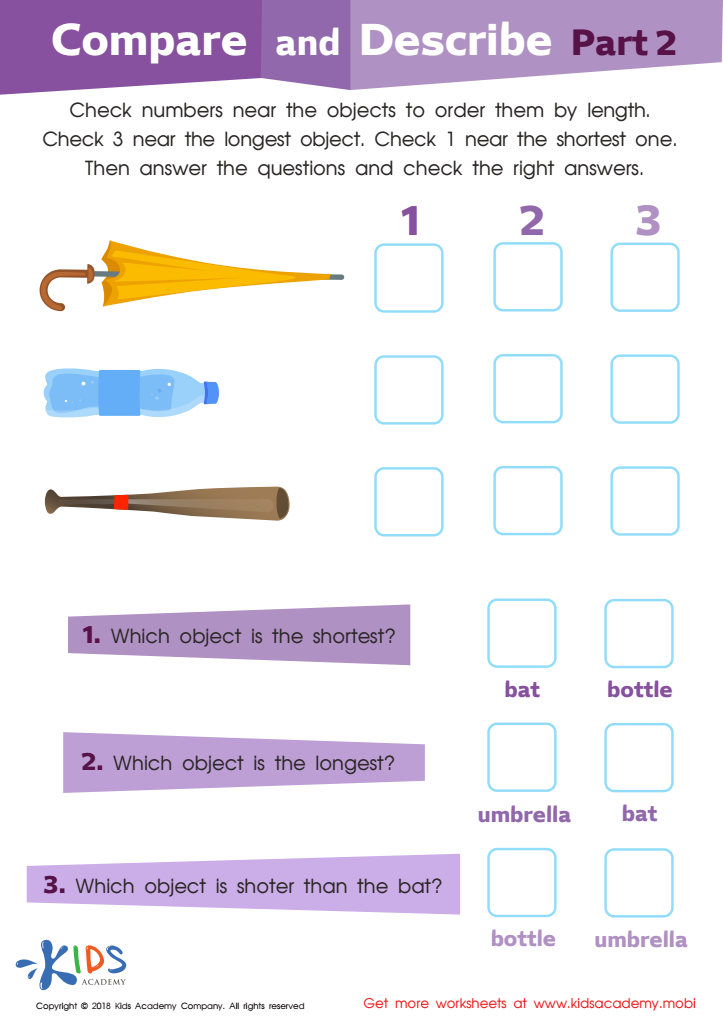
Compare and Describe: Part 2 Worksheet






Comparing sizes is a fundamental early math skill crucial for children aged 5-6. At this age, young learners are just beginning to understand concepts like big and small, tall and short, and longer and shorter. Engaging in activities that encourage size comparison helps develop their cognitive abilities, spatial reasoning, and problem-solving skills.
When parents and teachers prioritize comparing sizes, they are essentially laying the groundwork for more advanced mathematical concepts like measurement, estimation, and geometry. For instance, understanding relative sizes is a precursor to learning about volume, area, and weight. Additionally, these activities often involve sorting and categorizing, which enhance critical thinking and analytical skills.
In real-world contexts, children frequently encounter situations where recognizing size differences is vital, such as identifying objects, understanding scaled drawings, or even packing a bag efficiently. By incorporating size comparison games and discussions into daily routines, parents and teachers can make learning intuitive and enjoyable.
Moreover, this sort of hands-on-learning builds confidence as children experience success in tangible tasks. Early mastery of comparing sizes not only supports future academic success but also helps children develop a more holistic understanding of the world around them. Therefore, investing time and effort into this skill is beneficial for their overall mental and emotional development.








