Phonological awareness Normal Worksheets for Ages 5-6
3 filtered results
-
From - To
Enhance your child's phonological awareness with our engaging worksheets designed specifically for ages 5-6. These resources are perfect for early learners, offering a variety of fun activities that promote skills such as rhyming, blending sounds, and syllable counting. Our phonological awareness worksheets make learning enjoyable and interactive, ensuring that children develop vital language skills through play. From tracing letters to identifying sounds in words, each worksheet provides clear instructions and colorful illustrations to capture their attention. Foster a strong foundation for reading success with our expertly crafted phonological awareness worksheets, supporting your child's educational journey every step of the way!
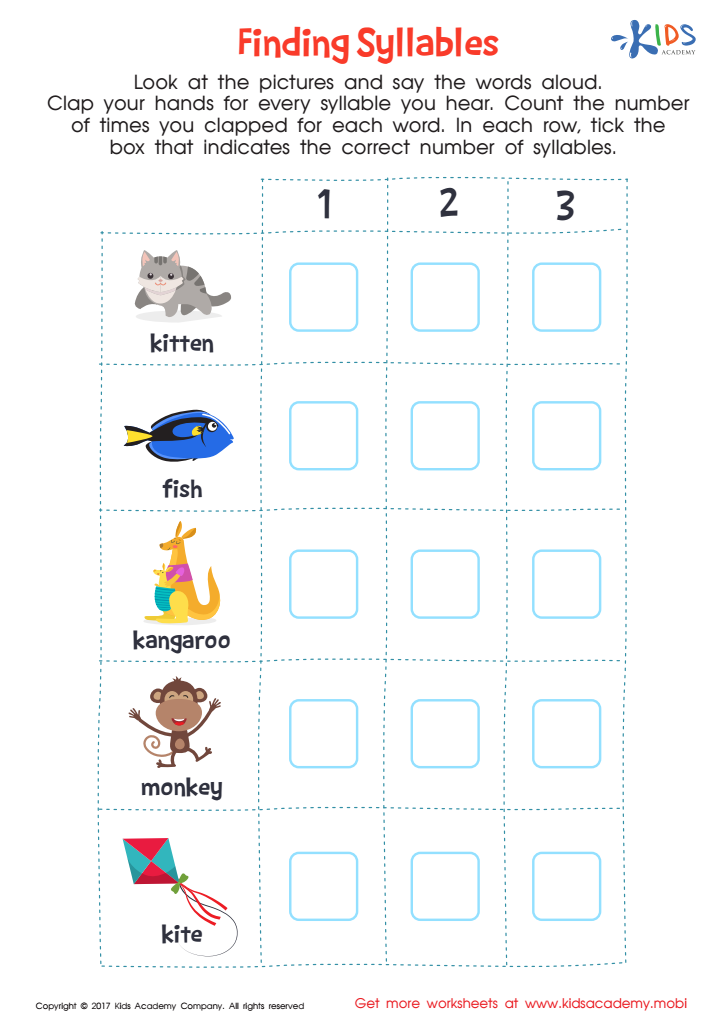
Finding Syllables Word Structure Worksheet
 Assign to My Students
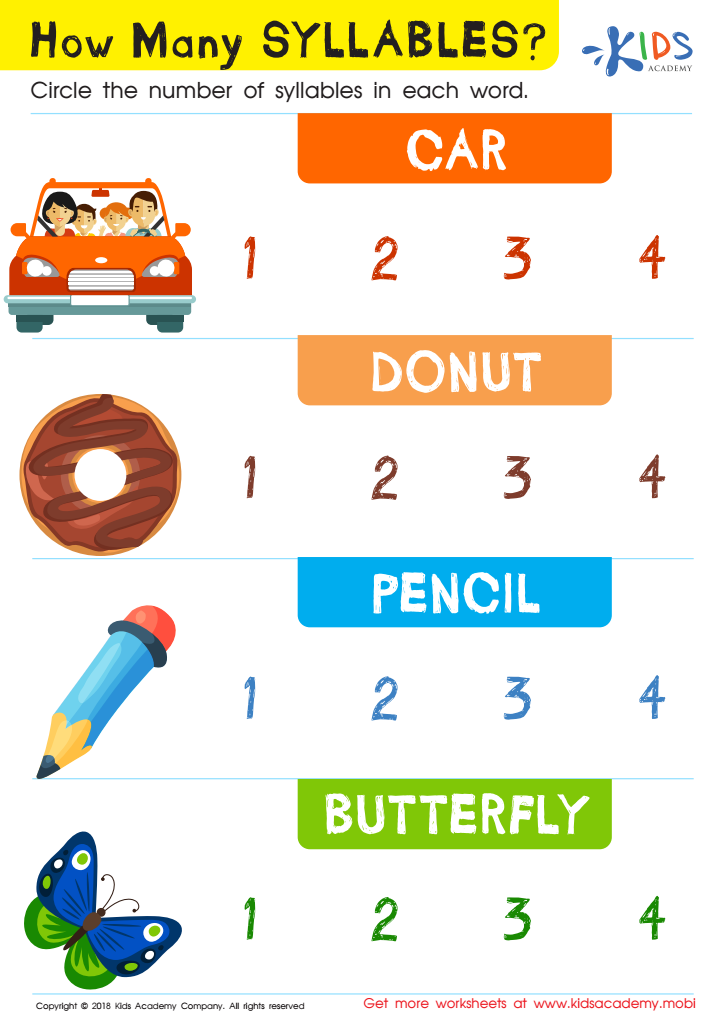
How Many Syllables? Worksheet
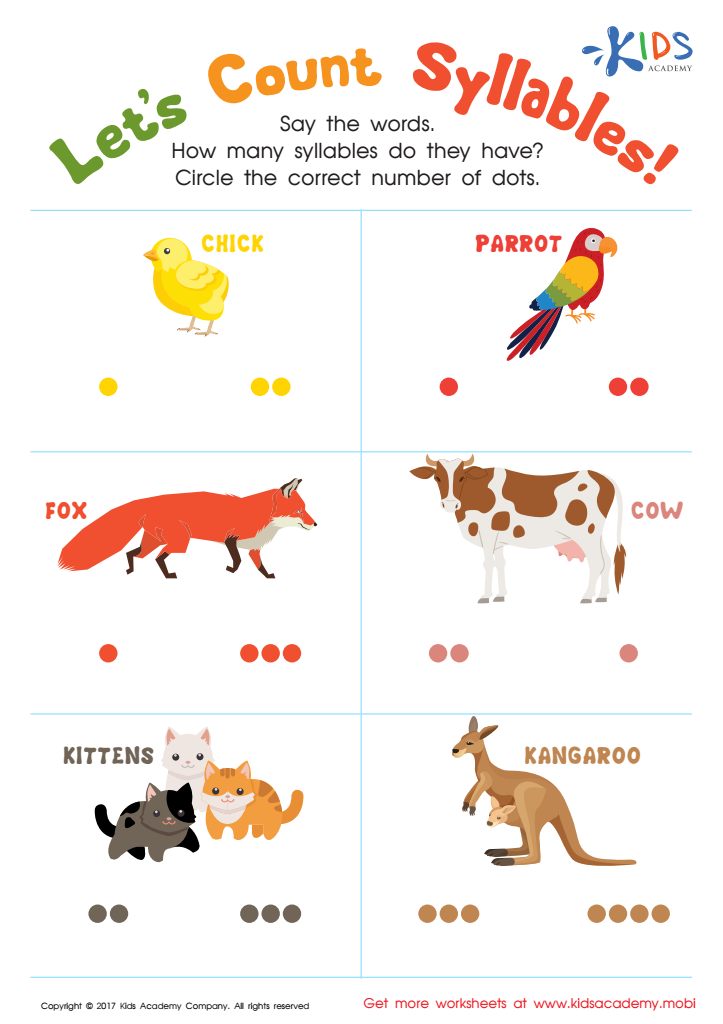
Lets Count Syllables Worksheet






Phonological awareness is a critical skill for children aged 5-6, as it serves as the foundation for reading and writing. This ability encompasses recognizing and manipulating sounds at the word, syllable, and phoneme levels. Parents and teachers should care deeply about phonological awareness for several reasons.
First, it is a strong predictor of a child's future reading success. Research shows that children who develop phonological awareness early on are more likely to excel in reading and spelling. By fostering this skill, parents and educators can help prevent literacy difficulties later in life.
Secondly, phonological awareness activities naturally promote language development. Engaging children in rhyming games, syllable clapping, and sound isolation exercises enhances their overall listening and comprehension skills, enriching their language abilities.
Moreover, early intervention is key. If children struggle with phonological awareness, addressing these challenges early can lead to better outcomes.
Lastly, when parents and teachers collaborate to support phonological awareness at home and in the classroom, they create a more cohesive learning environment, strengthening the child's educational journey. By prioritizing this skill, adults play a pivotal role in shaping confident and capable readers.








