Understanding fractions Normal Worksheets for Ages 5-6
4 filtered results
-
From - To
Welcome to our "Understanding Fractions Normal Worksheets" designed specifically for children aged 5-6. This engaging resource helps young learners grasp the basic concepts of fractions through fun and interactive activities. Our worksheets introduce essential fraction terminology, visual representation, and simple exercises that reinforce learning. Each worksheet is thoughtfully crafted to make concepts like halves, quarters, and elements of sharing comprehensible and enjoyable. With vibrant illustrations and kid-friendly language, your child will build confidence in their math skills. Explore our collection today and support your child’s journey towards mastering fractions in a playful and educational environment!
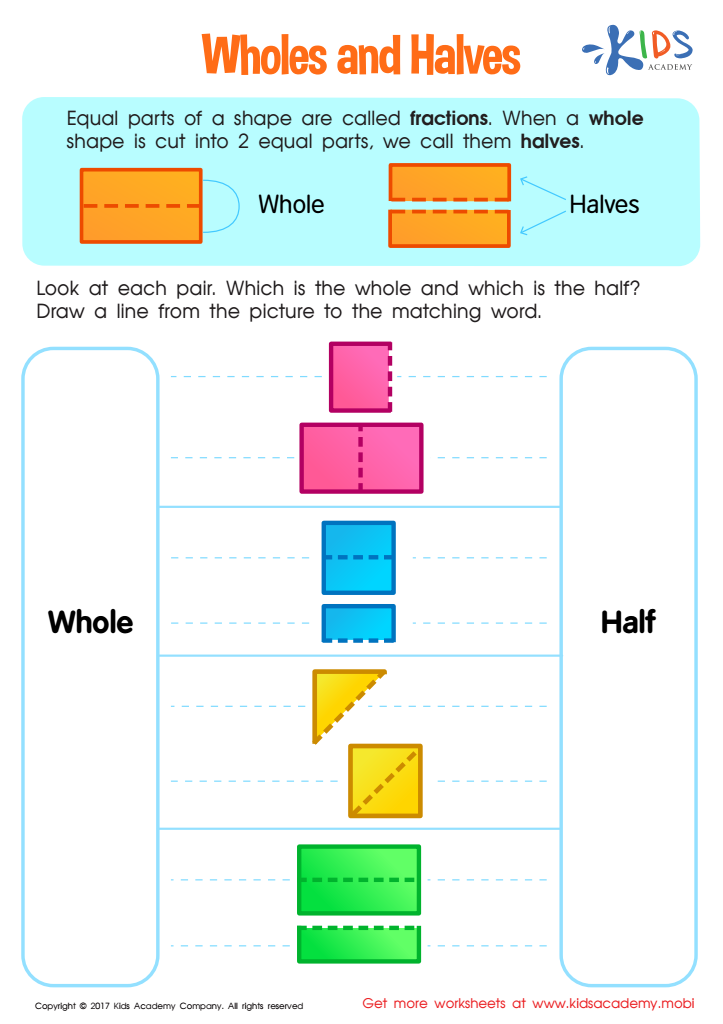
Wholes and Halves Worksheet
 Assign to My Students
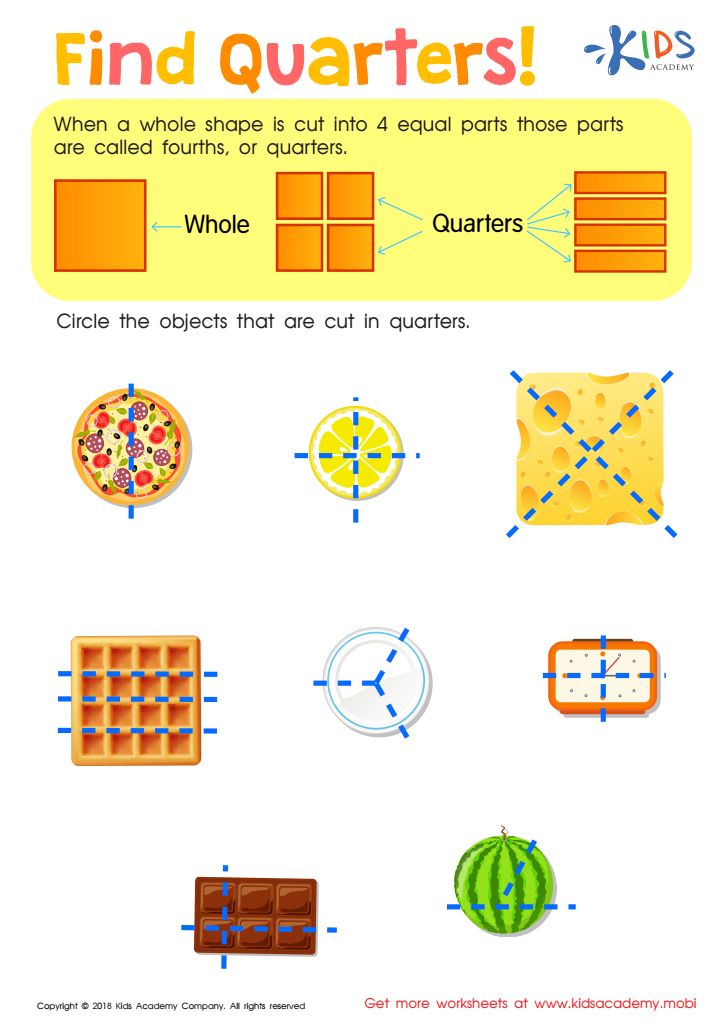
Find Quarters Worksheet
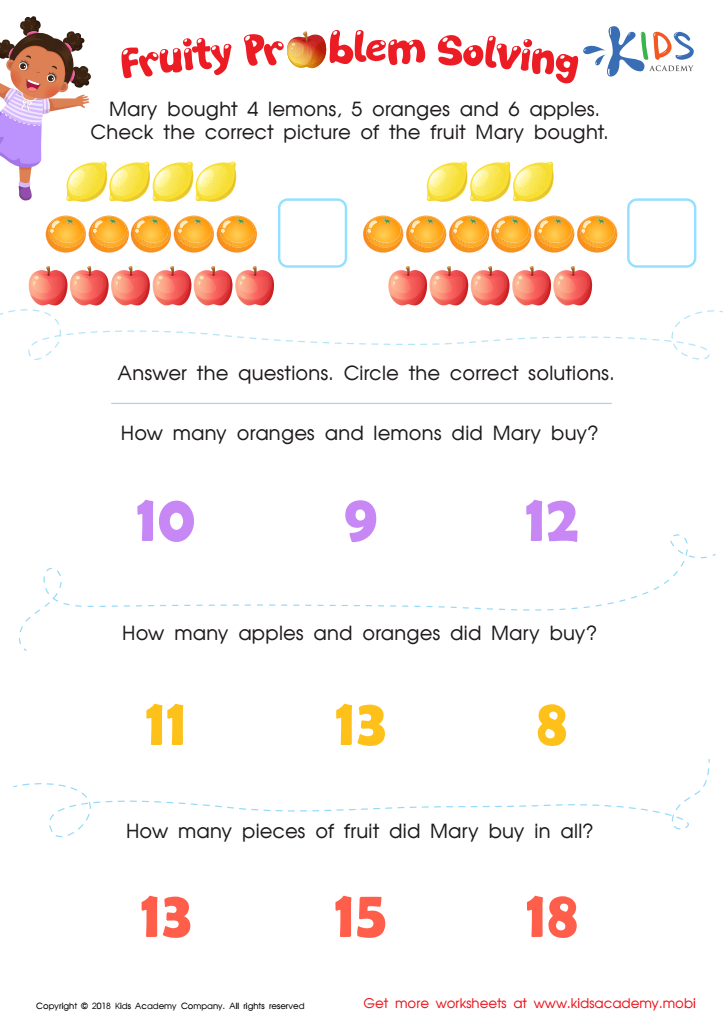
Fruity Problem Solving Worksheet
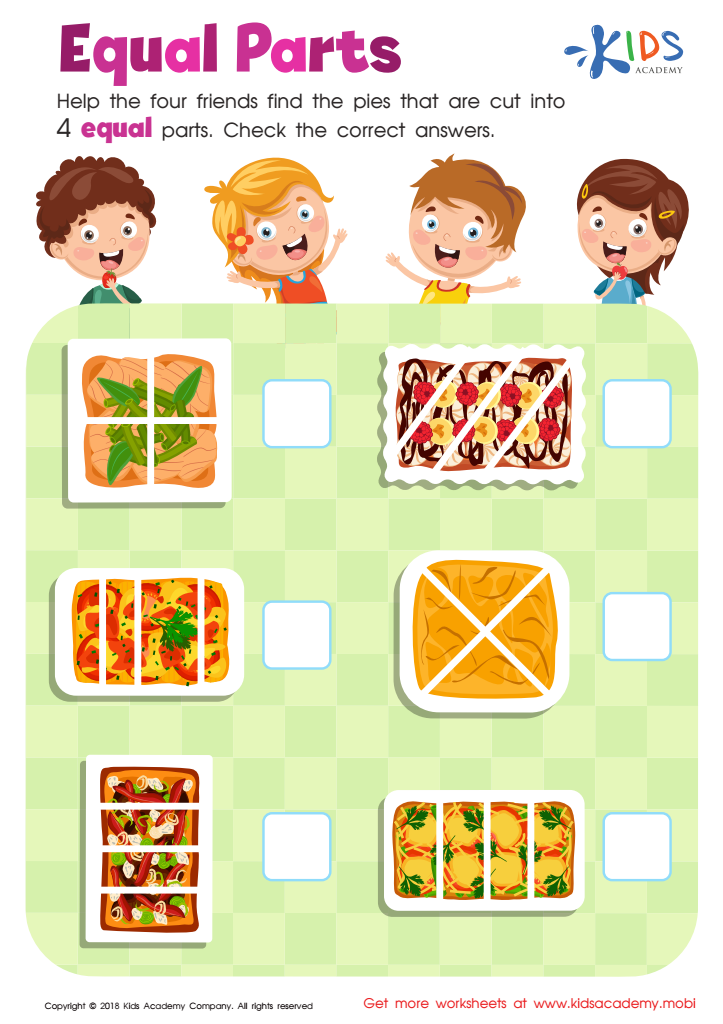
Equal Parts: Food Worksheet







Understanding fractions is a fundamental concept in early mathematics that lays the groundwork for future learning. For children aged 5-6, introduction to fractions is crucial for several reasons. Firstly, it enhances their comprehension of part-whole relationships, which can be observed in daily contexts, such as sharing food or dividing toys. This practical understanding cultivates a sense of fairness and cooperation among peers.
Moreover, grasping fractions at a young age contributes to overall cognitive development. It encourages critical thinking and problem-solving skills as children learn to compare sizes and quantities, which are foundational for higher-level math concepts. When parents and teachers emphasize fractions, they also promote confidence in mathematical abilities, allowing children to approach complex tasks with self-assurance.
Additionally, understanding fractions aids in recognizing patterns and relationships in mathematics, which is essential for their academic progression. By nurturing a positive attitude towards math early on, educators and family members can minimize future math anxiety and build a strong foundation for lifelong learning. In conclusion, fostering an understanding of fractions in early childhood not only supports mathematical skills but also encourages social interactions and cognitive growth for young learners.








