Visual discrimination skills Normal Worksheets for Ages 5-6
5 filtered results
-
From - To
Enhance your child's visual discrimination skills with our engaging worksheets designed specifically for ages 5-6! These interactive activities help young learners identify differences and similarities in shapes, patterns, and images, fostering essential cognitive development. Our visually appealing worksheets are perfect for at-home learning or classroom use, offering diverse exercises that keep children motivated and excited. With various difficulty levels, they cater to different learning styles, ensuring every child can benefit. Encourage critical thinking while making learning fun! Discover the joy of visual discrimination with our carefully crafted worksheets, and empower your little ones to master this foundational skill today!
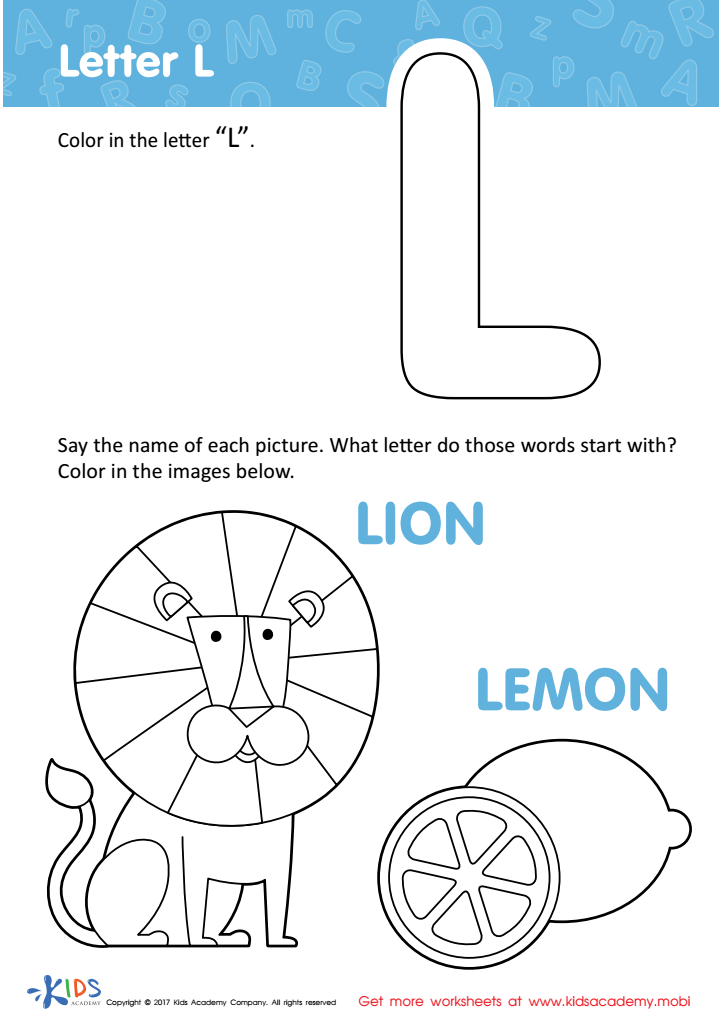
Letter L Coloring Sheet
 Assign to My Students
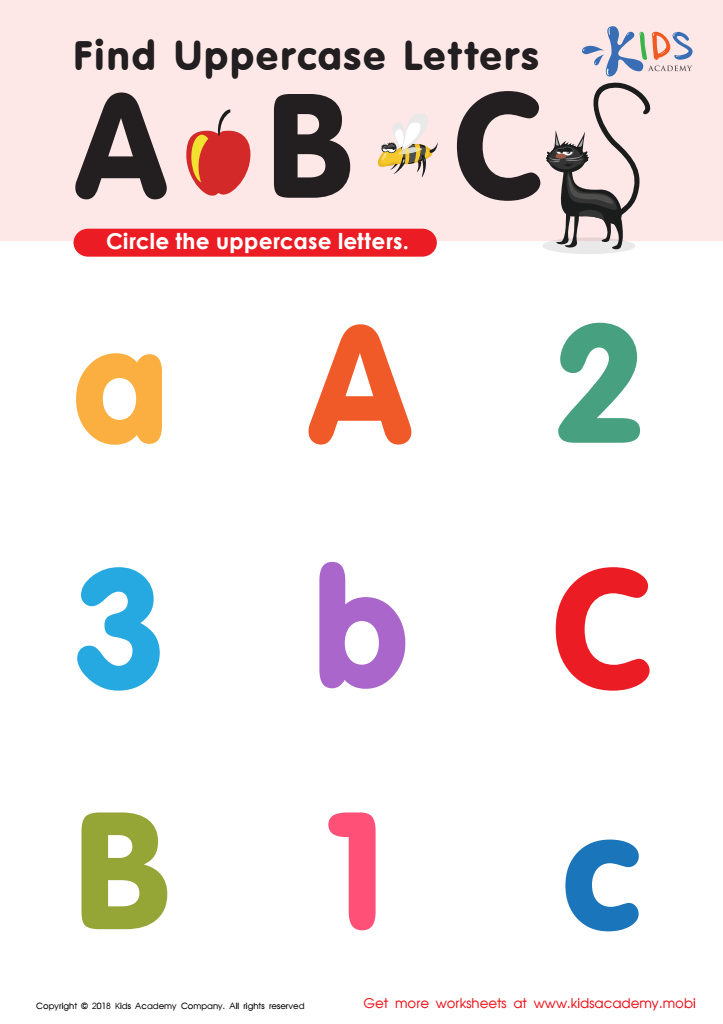
Find Uppercase Letters A, B, and C Worksheet
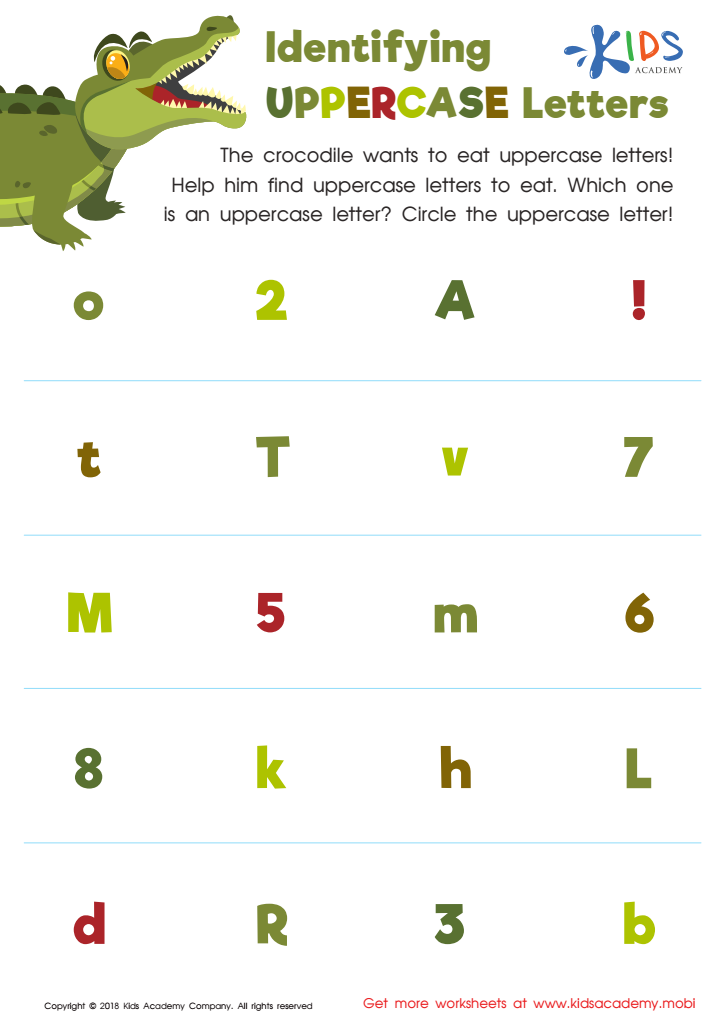
Identifying Uppercase Letters Worksheet

Find lowercase letters a b c Worksheet
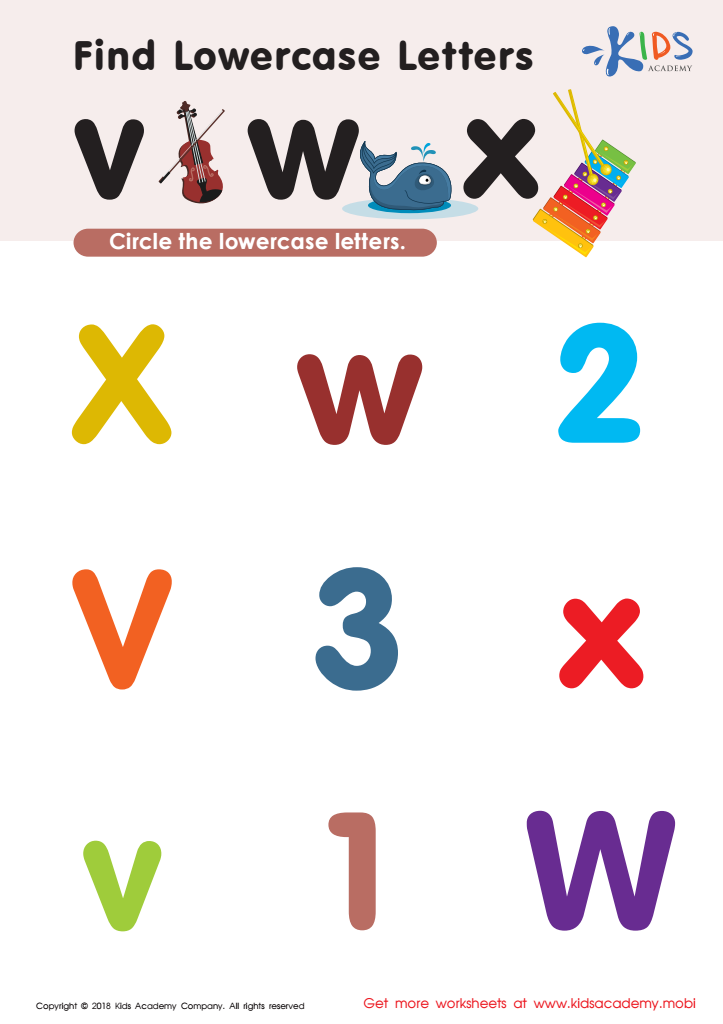
Find Lowercase Letters v w x Worksheet






Visual discrimination skills are crucial for children ages 5-6 as they form the foundation for various learning processes essential in a school environment. These skills enable children to notice and understand differences and similarities between shapes, sizes, colors, and patterns. By honing these skills, children can more easily recognize letters and numbers, which is fundamental for reading and math development.
Parents and teachers should care about visual discrimination because it affects a child's ability to follow instructions, complete tasks accurately, and participate fully in classroom activities. For example, a child who struggles with visual discrimination may have trouble distinguishing between the letters "b" and "d," live difficulties in reading and writing.
Additionally, strong visual discrimination skills support critical thinking and problem-solving by allowing children to analyze and categorize information effectively. They also have a lasting impact on self-esteem; children who can successfully identify and differentiate visual elements are more likely to feel confident in their abilities.
By nurturing visual discrimination, parents and teachers provide children with essential tools to thrive academically and socially, contributing to a well-rounded education. Investing in these foundational skills today paves the way for future academic success and lifelong learning.








