
Visual Learning Normal Worksheets for Ages 5-6
5 filtered results
Difficulty Level
Grade
Age
-
From - To
Subject
Activity
Standards
Discover our engaging Visual Learning Worksheets tailored specifically for ages 5-6! Designed to enhance young minds, these printable worksheets foster essential skills through captivating visual aids. Children will explore colors, shapes, patterns, and spatial recognition while having fun. Each worksheet encourages creativity and critical thinking, making learning an enjoyable adventure. Ideal for parents and teachers, our resources support kindergarten and early education curricula, ensuring children build a solid foundation for future learning. Browse our diverse collection today and watch your little ones thrive as they develop visual learning skills essential for their academic journey!
Favorites
With answer key
Interactive
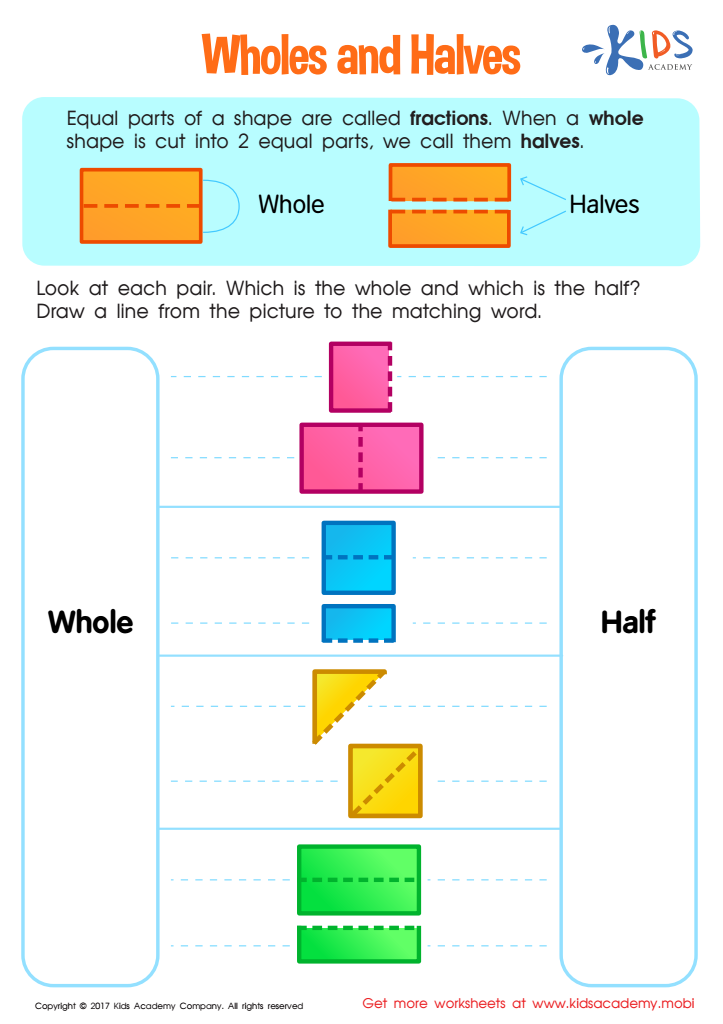
Wholes and Halves Worksheet
Students can feel overwhelmed with fractions. Help take the stress off by using a colorful worksheet to explain whole shapes and how to find halves. Ask them to identify the whole and point to the matching word for the half. A free printout can help guide them.
 Assign to My Students
Wholes and Halves Worksheet
Worksheet
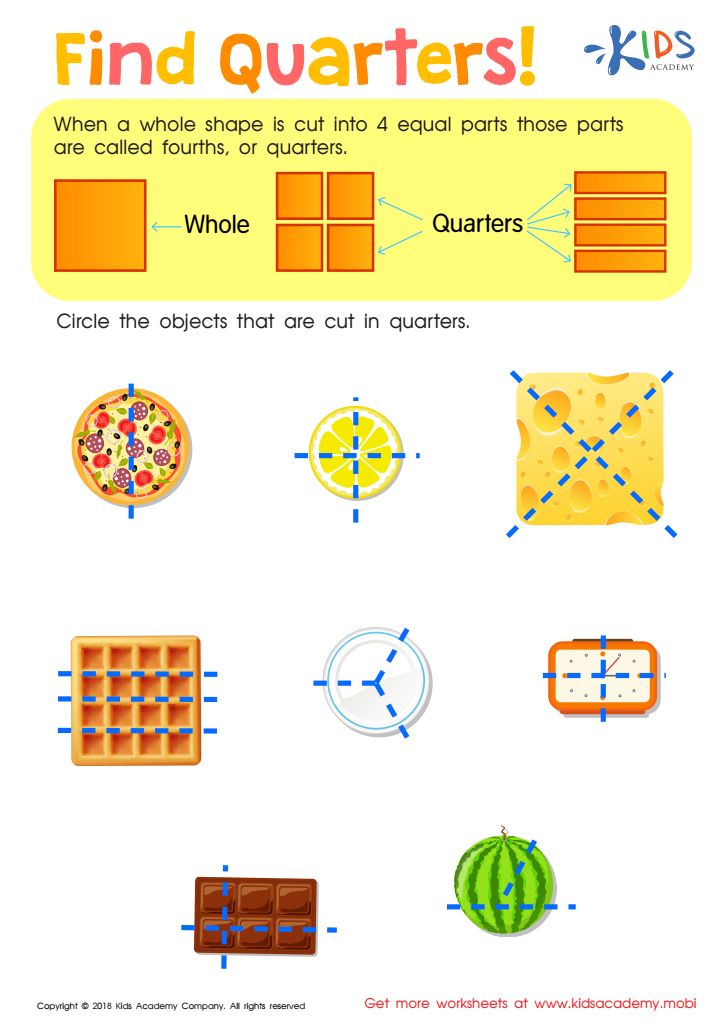
Find Quarters Worksheet
Ask your child if they know what it is called when a shape is cut into two equal parts. If yes, introduce them to quarters. Tell them that when a shape is cut into 4 equal parts, each part is called a quarter. Have them do this exercise by finding and circling objects split into quarters.
Find Quarters Worksheet
Worksheet
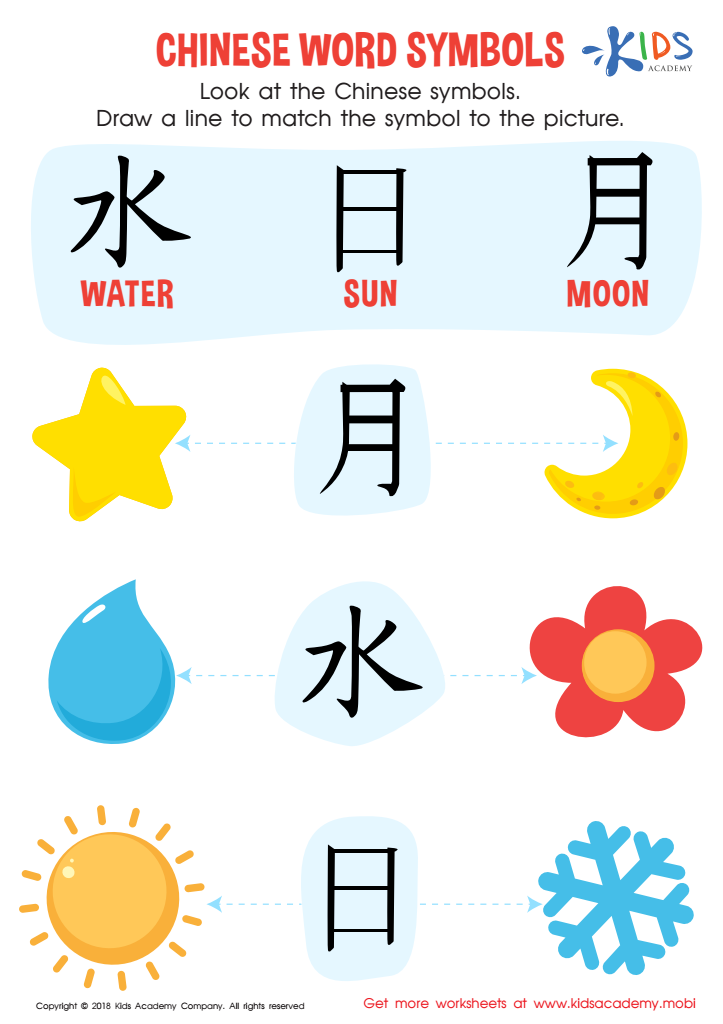
Chinese Word Symbols Worksheet
This fun worksheet helps kids learn Chinese symbols for words like water, sun, and moon. Paired with colorful pictures, tracing lines encourages fine motor skills and builds success. Kids will learn without realizing it, having fun in the process.
Chinese Word Symbols Worksheet
Worksheet
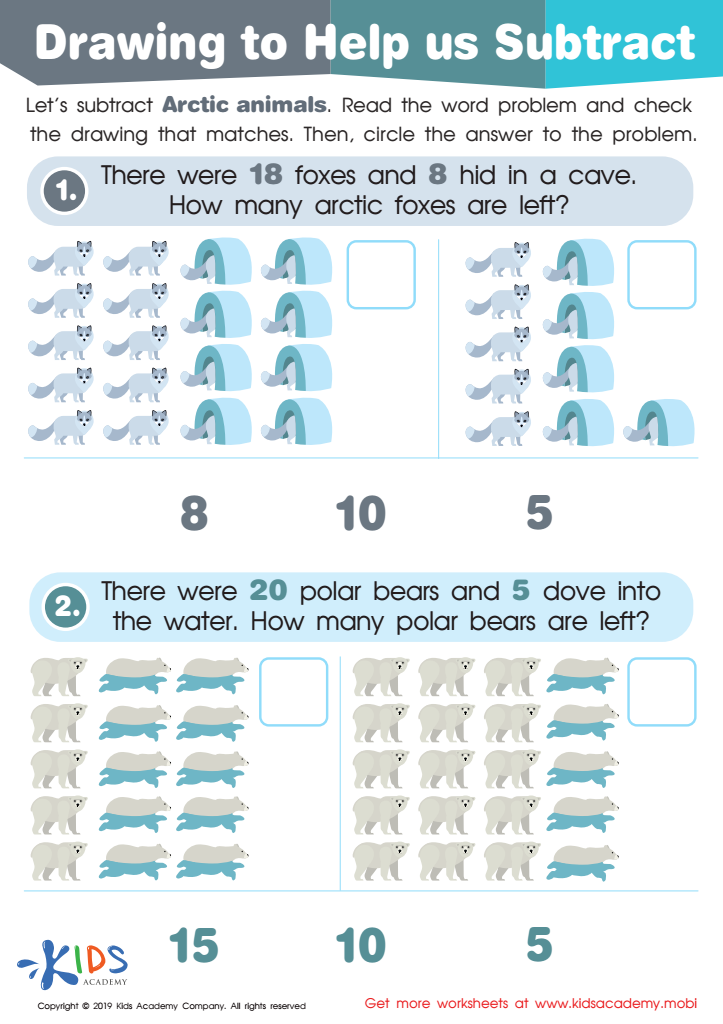
Drawing to Help Us Subtract Worksheet
Math is made fun with this free worksheet featuring Arctic animal pictures to solve basic subtraction word problems. Kids read the problem and choose the correct drawing of the animals to represent the solution. They'll have a blast with their cool animal friends while learning math!
Drawing to Help Us Subtract Worksheet
Worksheet
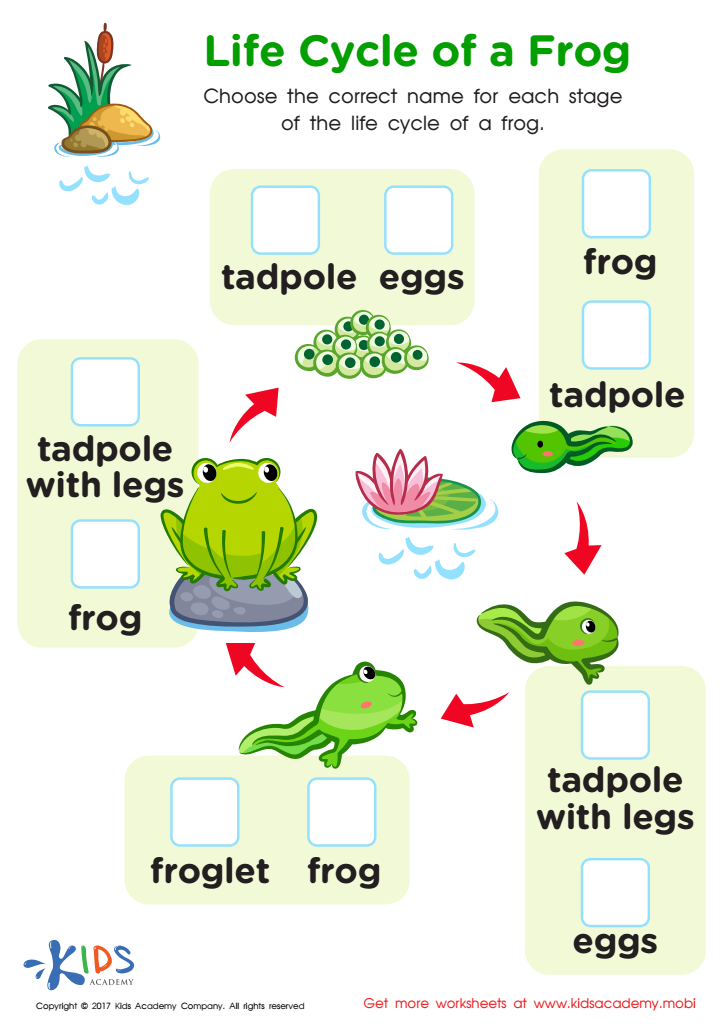
Life Cycle Frog Printable
Kids can explore the life cycle of frog with this fun worksheet! Draw lines from one stage to the next to follow the transformation from tadpole to frog and learn about the cycle of life.
Life Cycle Frog Printable
Worksheet
Join Kids Academy for Free
Who is primarily going to use this learning content?







Visual learning is critically important for children aged 5-6, as it capitalizes on their natural inclination to process information through imagery. At this stage, children are highly responsive to visual stimuli, which can significantly enhance their understanding and retention of information. Parents and teachers should care about visual learning because it supports cognitive development, improves memory, and fosters engagement.
When visual aids like pictures, charts, and videos are integrated into lessons, children can better grasp complex concepts. This age group is still developing reading and comprehension skills, so visual learning provides alternative pathways to understanding subjects. For example, using illustrations in storytelling not only sparks imagination but also reinforces narrative structure and content comprehension.
Additionally, visual learning encourages creativity and critical thinking. Children are more likely to express themselves confidently when they can illustrate their ideas. Moreover, incorporating visual elements can accommodate various learning styles, ensuring that every child has an opportunity to succeed in an inclusive learning environment.
Ultimately, prioritizing visual learning in early education cultivates a strong foundation for lifelong learning, equipping children with skills they will use throughout their academic journeys and beyond. Parents and teachers play a vital role in facilitating these valuable experiences.








