Problem-Solving Skills Normal 2D Shapes Worksheets for Ages 5-6
5 filtered results
-
From - To
Help your child develop essential problem-solving skills with our engaging Normal 2D Shapes Worksheets for ages 5-6. Designed to capture young learners' imaginations, these worksheets focus on recognizing, classifying, and comparing common 2D shapes. As children navigate through a variety of fun activities, they'll enhance their critical thinking, spatial awareness, and mathematical foundations. Perfect for home or classroom use, these problem-solving worksheets are expertly crafted to support early learning standards and build confidence. Give your child the tools they need to excel in math and beyond with our interactive and educational 2D shapes resources.
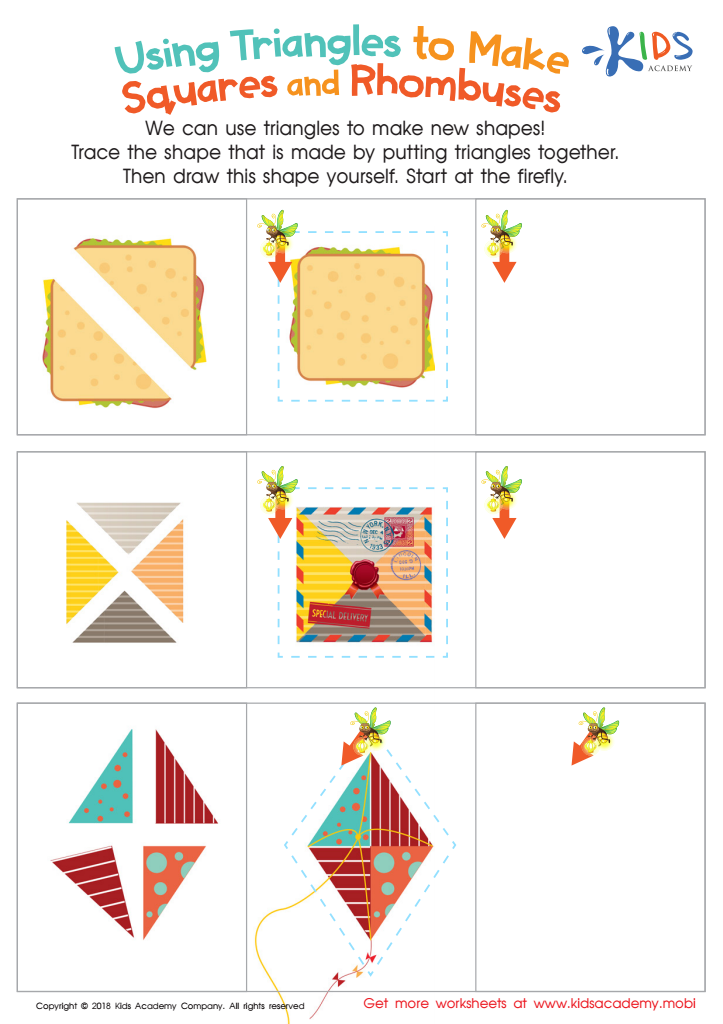
Using Triangles to Make Squares and Rhombuses Worksheet
 Assign to My Students

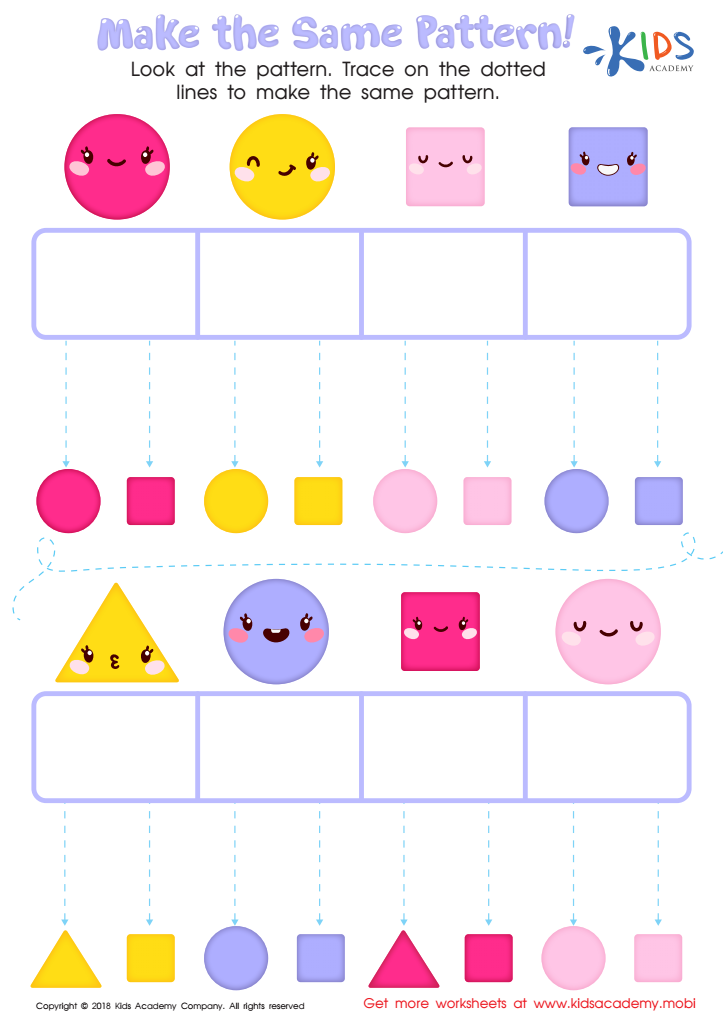
Make the Same Pattern Worksheet
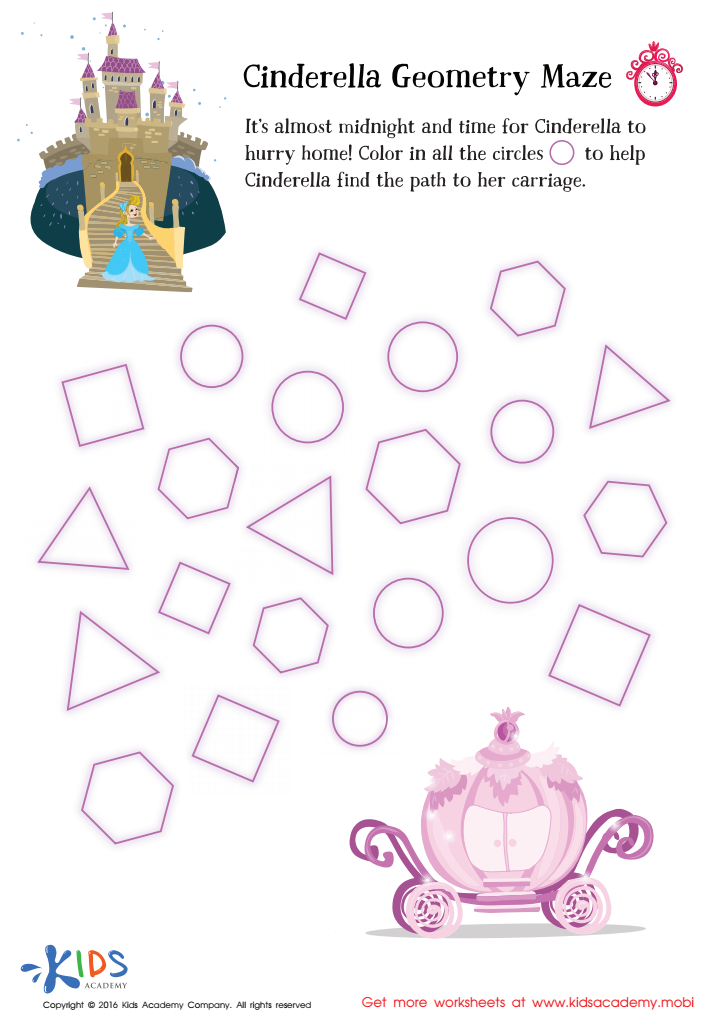
Cinderella Geometry Maze Worksheet
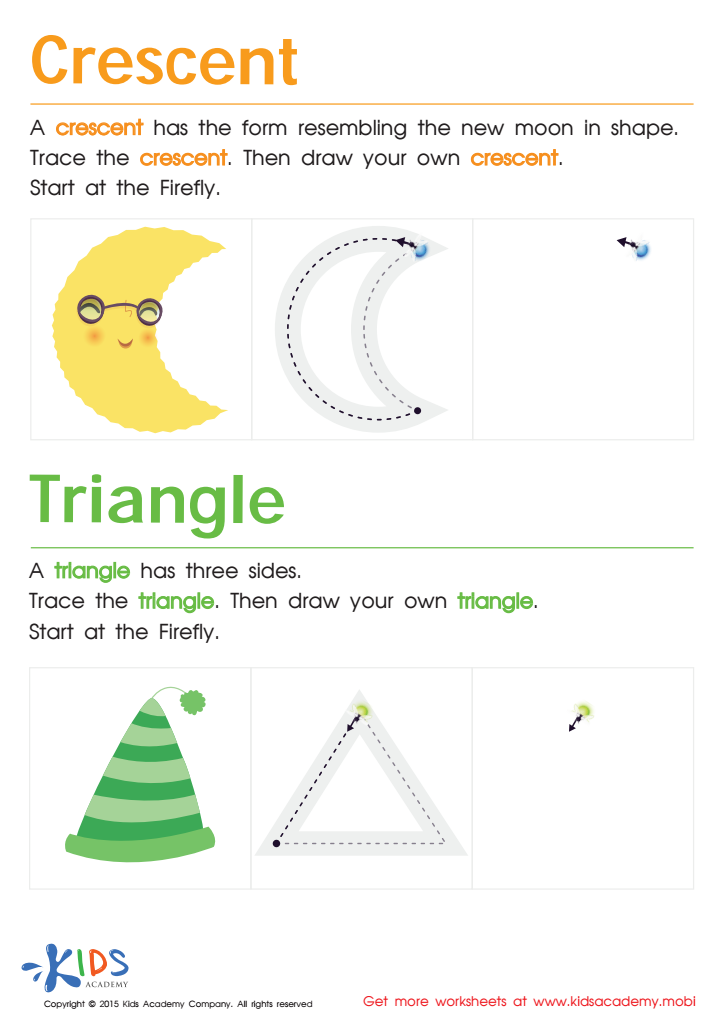
Learning to Draw Crescents And Triangles Worksheet
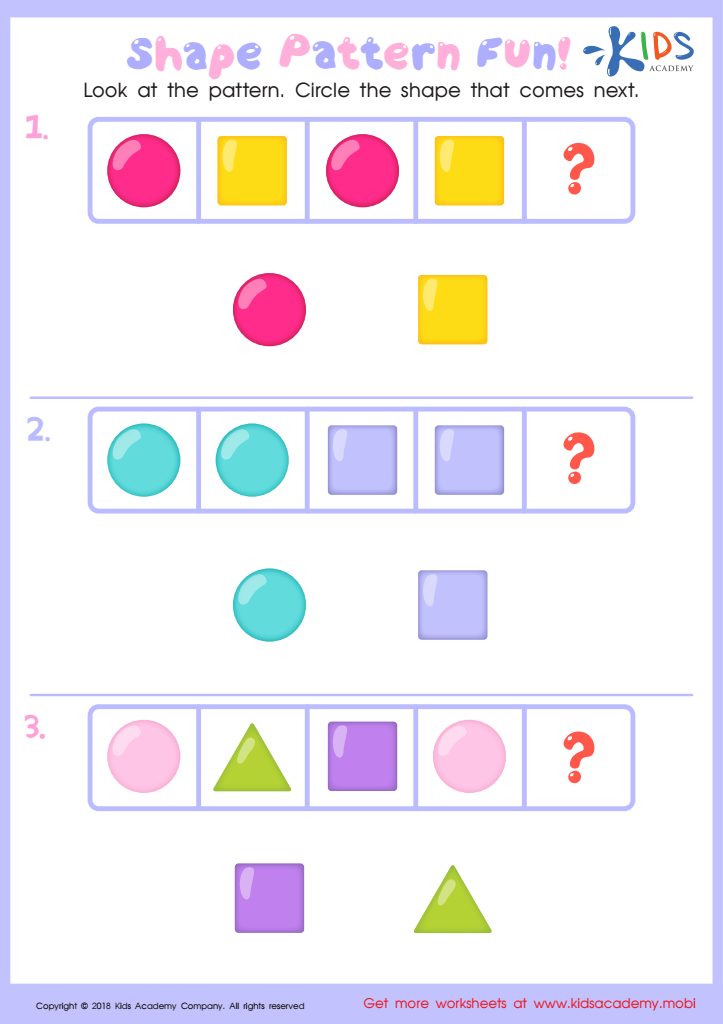
Shape Pattern Fun Worksheet








Problem-solving skills and the understanding of basic 2D shapes are fundamental components of early childhood education. For children aged 5-6, developing these skills can have a significant impact on their overall cognitive development and future academic success.
Firstly, problem-solving skills foster critical thinking and creativity. When young children engage in activities requiring them to identify, match, and manipulate 2D shapes, they learn how to analyze situations, recognize patterns, and develop strategies. These are essential brain exercises that bolster their ability to tackle more complex concepts later in life.
Additionally, recognizing 2D shapes lays an essential foundation for geometry and other related areas of mathematics. By learning to identify squares, circles, triangles, and rectangles, children become familiar with basic geometric vocabulary and concepts. This foundational knowledge not only prepares them for future lessons in math but also enhances their ability to navigate and interpret the world around them.
Moreover, problem-solving activities involving shapes improve spatial awareness. Children learn to see how different shapes fit together, which benefits their overall spatial reasoning—a skill important in everyday life, technical fields, and even creative pursuits like art and design.
Parents and teachers should thus prioritize problem-solving skills with 2D shapes to ensure their child's well-rounded academic readiness and enhanced cognitive abilities.