
Counting skills Normal Addition Facts Worksheets for Ages 5-6
5 filtered results
Difficulty Level
Grade
Age
-
From - To
Subject
Activity
Standards
Discover our "Counting Skills Normal Addition Facts Worksheets" designed specifically for children aged 5-6! These engaging worksheets help young learners build a solid foundation in addition through fun, interactive activities. Focused on essential counting skills, our resources encourage children to practice and reinforce their understanding of basic addition concepts in a playful manner. With varied exercises, including picture-based problems and numerical challenges, these worksheets cater to different learning paces and preferences. Perfect for both classroom and home use, they make learning addition enjoyable and effective, setting the stage for mathematical success in future studies. Start your child's mathematical journey today!
Favorites
With answer key
Interactive
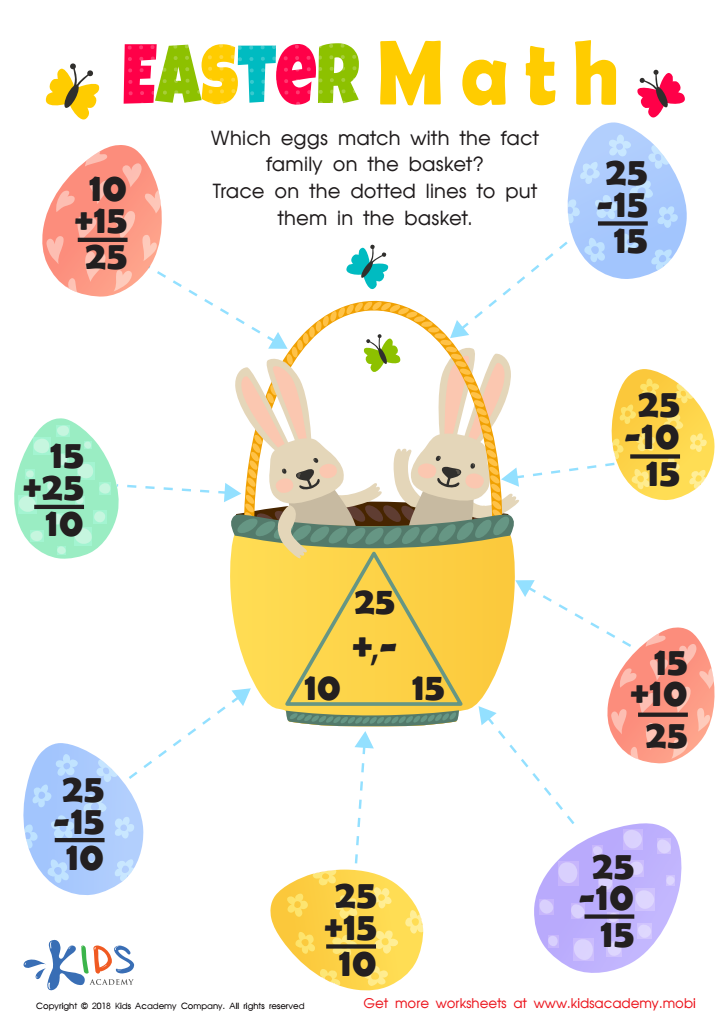
Fact Families: Easter Math Worksheet
Kids will love this vibrant PDF packed with Easter math fun! Match facts with the colorful eggs, add and subtract multiples of five to boost automaticity, and have a blast with the bunny friends!
 Assign to My Students
Fact Families: Easter Math Worksheet
Worksheet
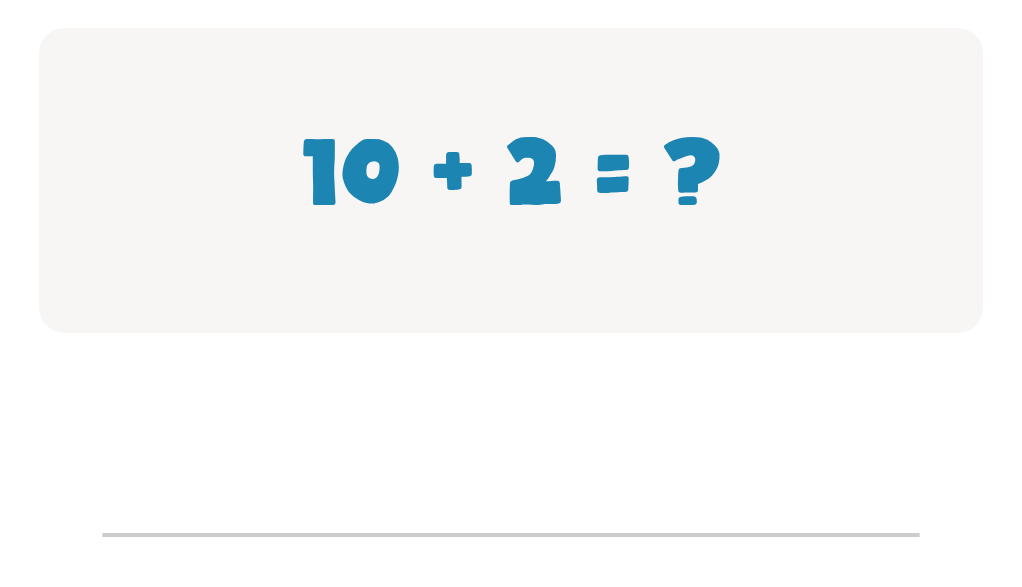

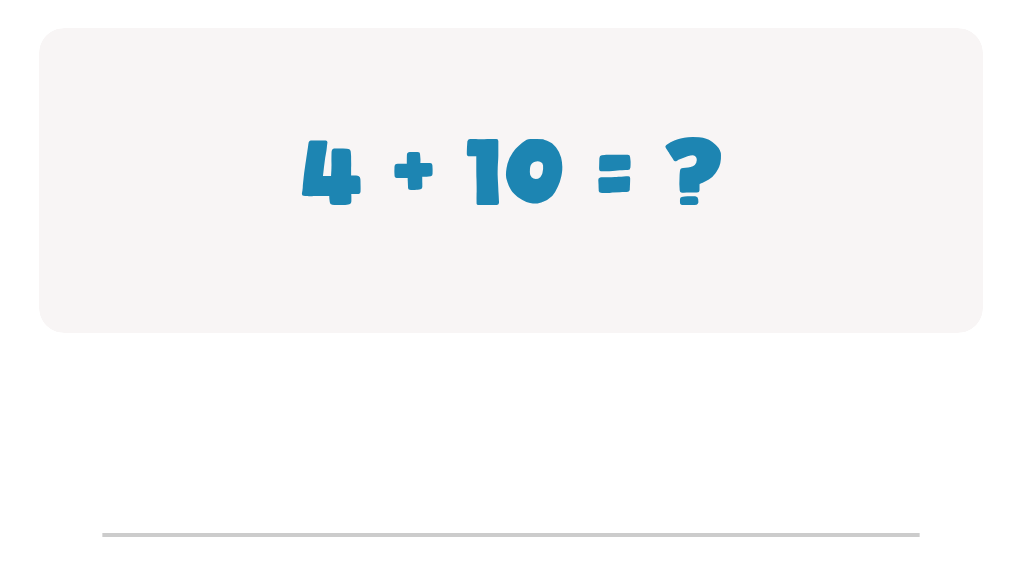
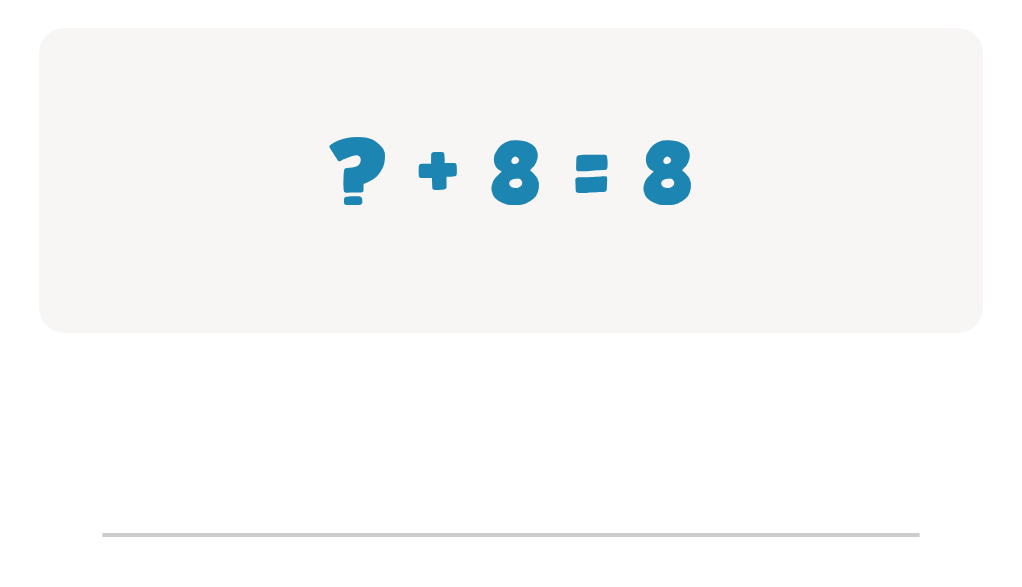

Addition Facts: Double Dice Worksheet
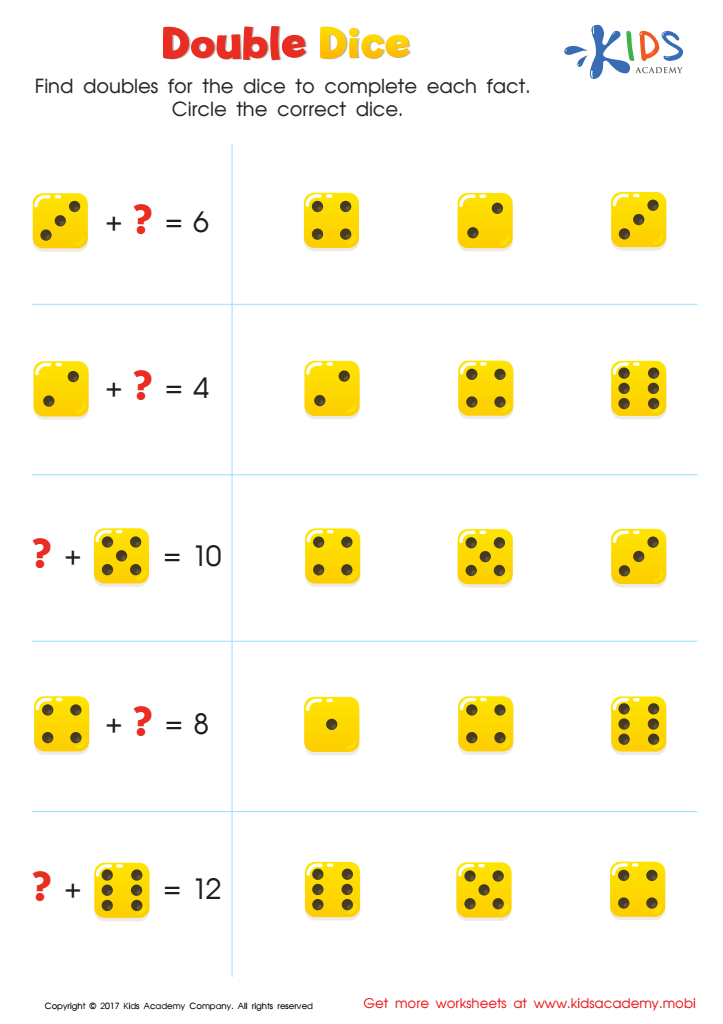
Are you looking for ways to make maths more engaging for kids? Maths can be a bore, but by teaching kids from an early age that it can be fun, they won't struggle with it. This worksheet is a great way to start: your child needs to identify the number on the left dice and find its double on the right. The sum of the two dice is also given.
Addition Facts: Double Dice Worksheet
Worksheet
Collect Sticks Worksheet
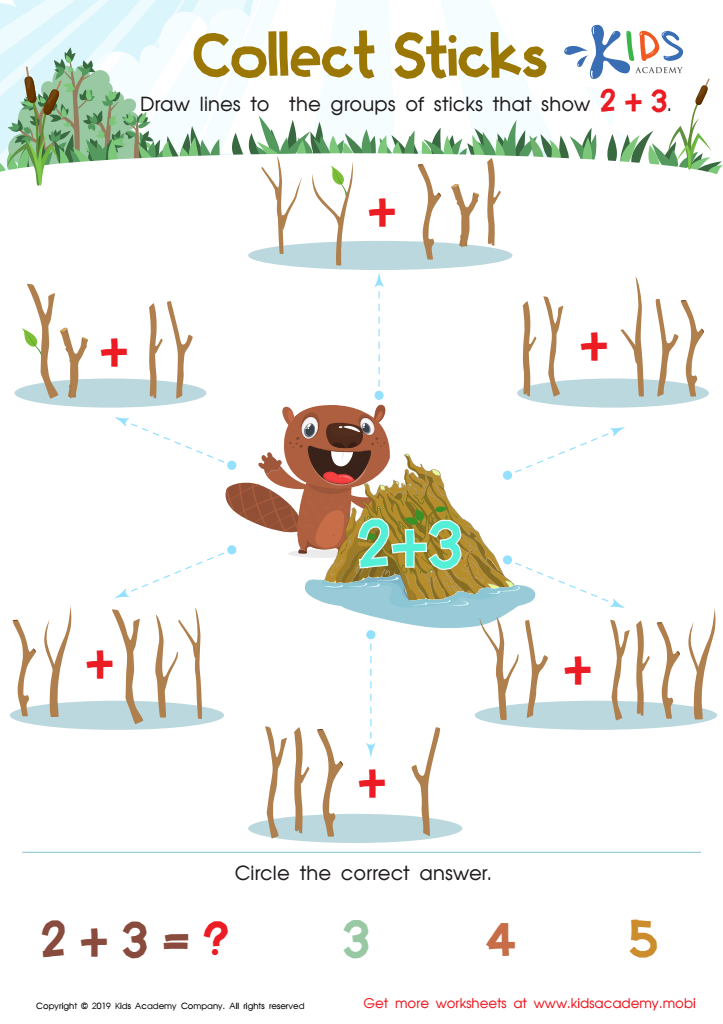
Let math be fun for your kids with a simple and colorful worksheet exercise. Addition and subtraction can be daunting, but you can make it enjoyable with exercises like this one. Get them to draw lines to the groups of sticks that show 2+3 and watch them light up.
Collect Sticks Worksheet
Worksheet
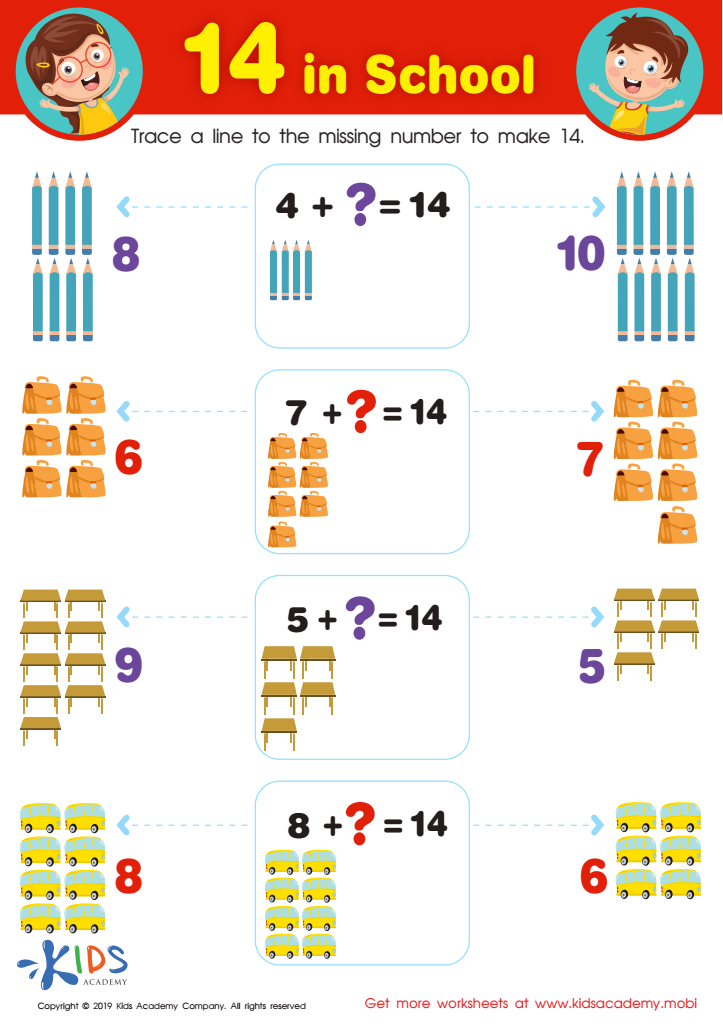
14 in School Worksheet
Remind your kids that adding different sets of numbers can give the same total (e.g. 2+3=5, 4+1=5). Ask them for more examples. Afterwards, work through the exercise. Help them count the objects and trace a line to the missing number that makes the total 14.
14 in School Worksheet
Worksheet
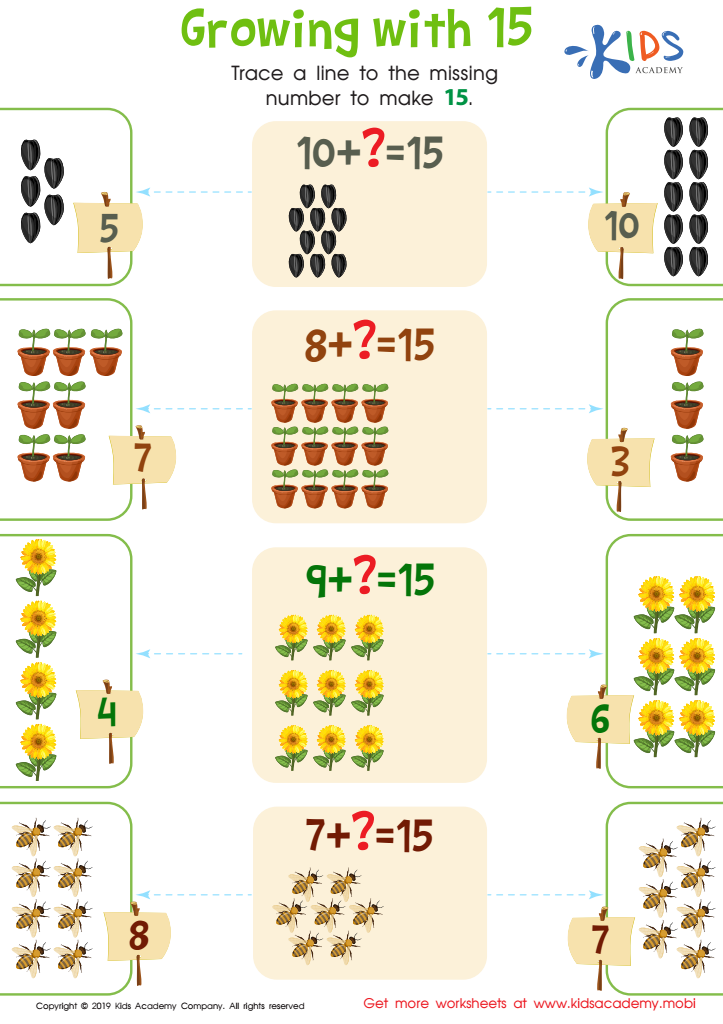
Growing with 15 Worksheet
Remind your kids that adding different sets of numbers can give the same total (e.g. 2+3=5, 4+1=5). Test their understanding by asking them for more examples. Move onto the worksheet: count objects, then trace the line to the number making a total of 15.
Growing with 15 Worksheet
Worksheet
Join Kids Academy for Free
Who is primarily going to use this learning content?








Counting skills and understanding basic addition facts are foundational mathematical competencies that play a crucial role in early childhood education for children aged 5-6. At this stage, children develop their numerical sense, which is vital for future academic success. When parents and teachers emphasize counting and normal addition, they are cultivating skills that enhance cognitive development, problem-solving abilities, and critical thinking.
Early mastery of counting and addition facts fosters a sense of mathematical confidence in children. It allows them to engage more fully in classroom activities, group projects, and everyday experiences involving math. These skills lay the groundwork for more complex mathematical concepts encountered later, such as subtraction, multiplication, and even more advanced topics in high school and beyond.
Moreover, learning addition facts through games and interactive activities helps reinforce mathematical concepts while making learning enjoyable. Engaging parents in their child's learning can further enhance this process by encouraging practice in everyday situations, like counting objects at home or sharing snacks.
Overall, prioritizing counting and addition skills during ages 5-6 can yield substantial benefits and instill a love for math that lasts a lifetime, fostering both academic achievement and lifelong curiosity.








