Number Sequencing Normal Addition & Subtraction Worksheets for Ages 5-6
3 filtered results
-
From - To
Introduce essential math skills to your child with our engaging "Number Sequencing: Normal Addition & Subtraction Worksheets" designed for ages 5-6. These carefully crafted activities focus on basic arithmetic while enhancing number sequencing abilities, vital for early math learning. Each worksheet is crafted to build confidence and competence through fun, interactive exercises that kids love. Developed by educational experts, these tools cater to young learners, ensuring they grasp fundamental concepts with ease. Perfect for home or classroom settings, our worksheets provide a solid foundation for future mathematical success. Download now to make learning both productive and enjoyable!
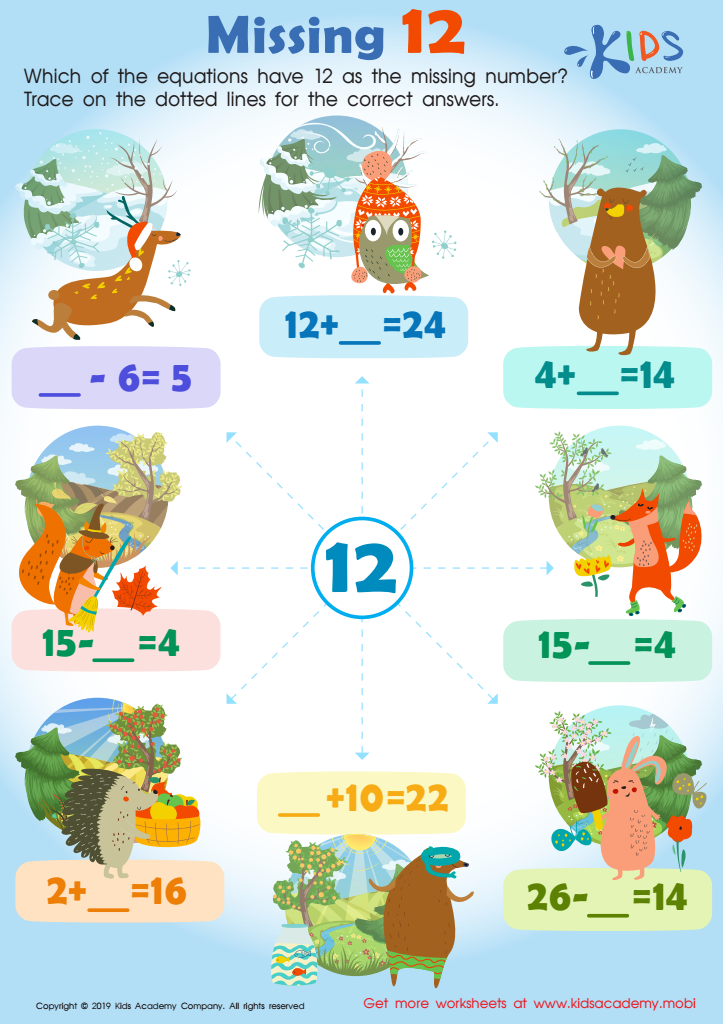
Missing 12 Worksheet
 Assign to My Students
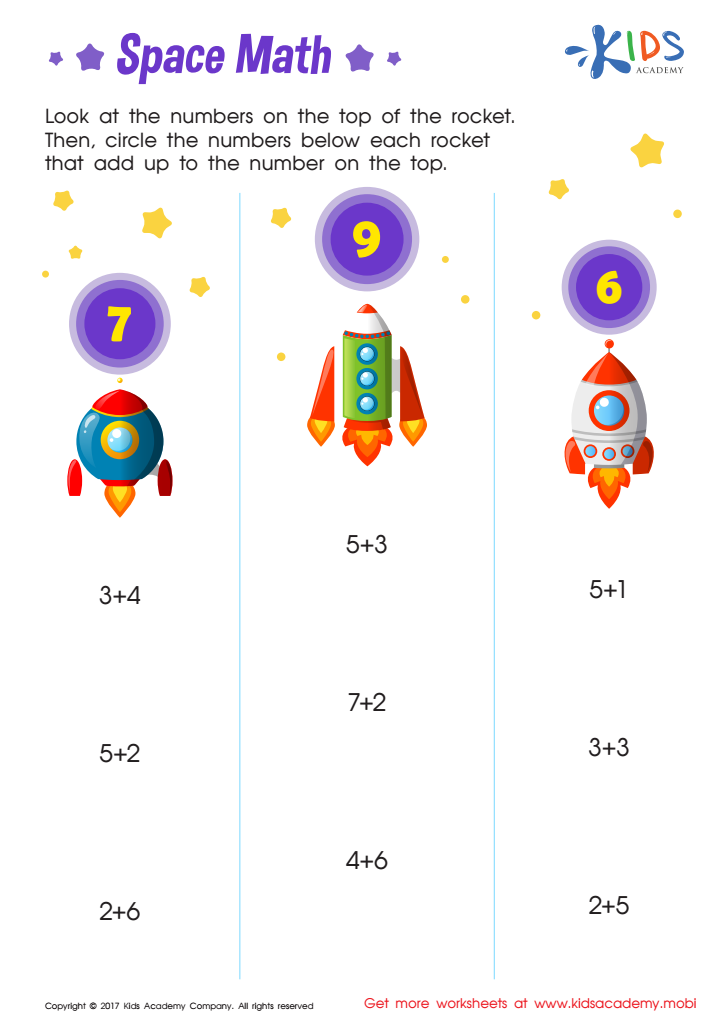
Addition: Space Math Worksheet
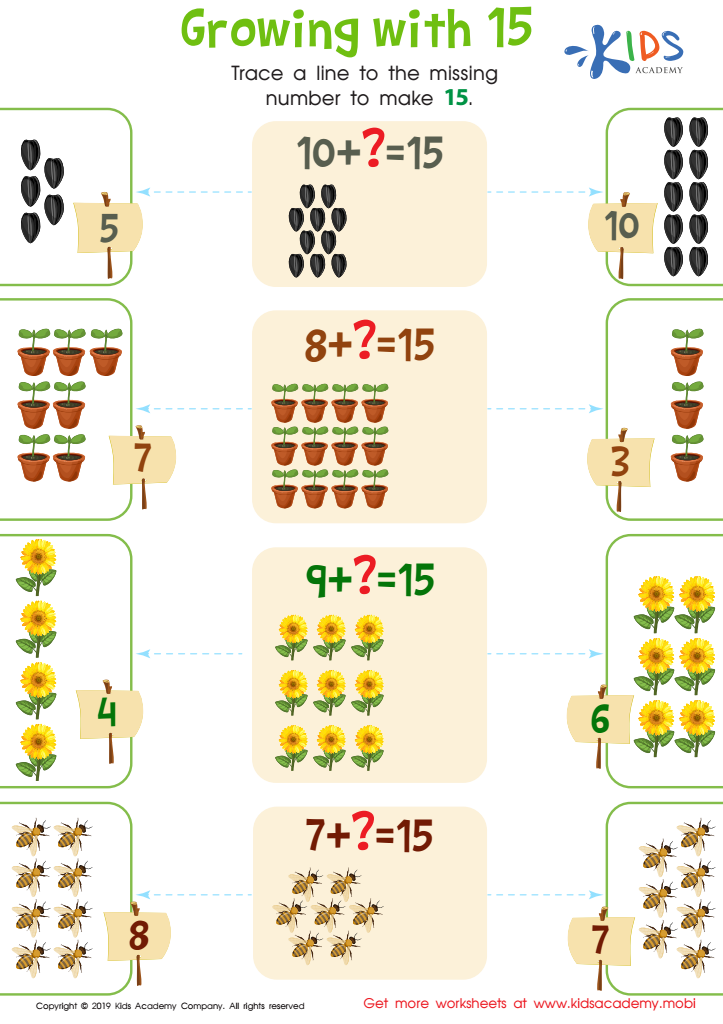
Growing with 15 Worksheet








Number sequencing, as well as basic addition and subtraction, are foundational math skills that parents and teachers should prioritize for children aged 5-6. These skills lay the groundwork for more complex mathematical concepts and problem-solving abilities that students will encounter in their educational journey.
Firstly, mastering number sequencing allows children to understand the order and value of numbers. This comprehension is crucial for everyday tasks, such as organizing objects, recognizing patterns, and predicting numerical outcomes. Knowing how numbers relate to one another forms the basis for arithmetic operations.
Addition and subtraction are basic arithmetic operations that are essential for daily activities. For example, calculating change, determining time, and measuring quantities often require these skills. Early proficiency in these areas helps reinforce logical thinking and boosts a child's confidence in handling numerical information.
Engaging children at this age in activities that involve counting, number games, and simple math problems can make learning fun and stimulate cognitive development. This practice can lead to better academic performance by enabling children to tackle more advanced mathematical challenges with ease.
In summary, fostering an early understanding of numbering, addition, and subtraction sets children up for success in both academic and everyday contexts, making it an essential focus for parents and educators alike.








