Counting skills Normal Geometry Worksheets for Ages 5-6
6 filtered results
-
From - To
Introduce your young learner to the exciting world of geometry with these engaging counting skills worksheets designed specifically for ages 5-6. Each worksheet combines fun geometric shapes with essential counting exercises, helping children develop their mathematical skills while keeping them entertained. Our carefully crafted activities enhance cognitive abilities, improve shape recognition, and build a solid foundation for future math learning. Perfect for home or classroom use, these printable worksheets make mastering counting both enjoyable and educational. Help your child build confidence and a love for learning with these interactive, age-appropriate counting skills worksheets.
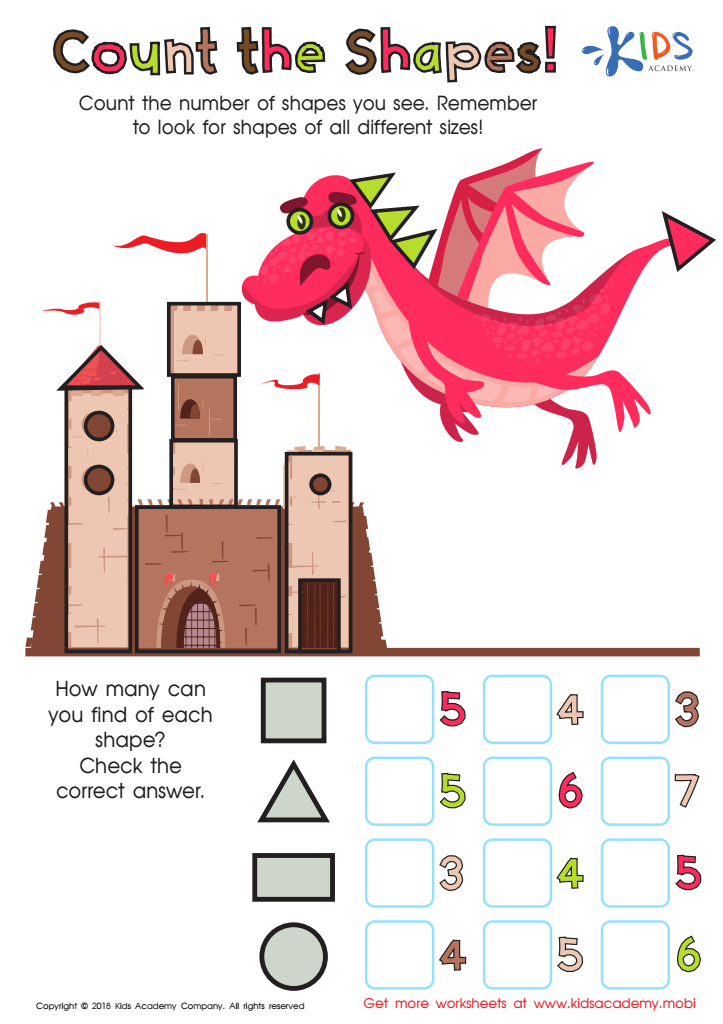
Count the Shapes Worksheet
 Assign to My Students











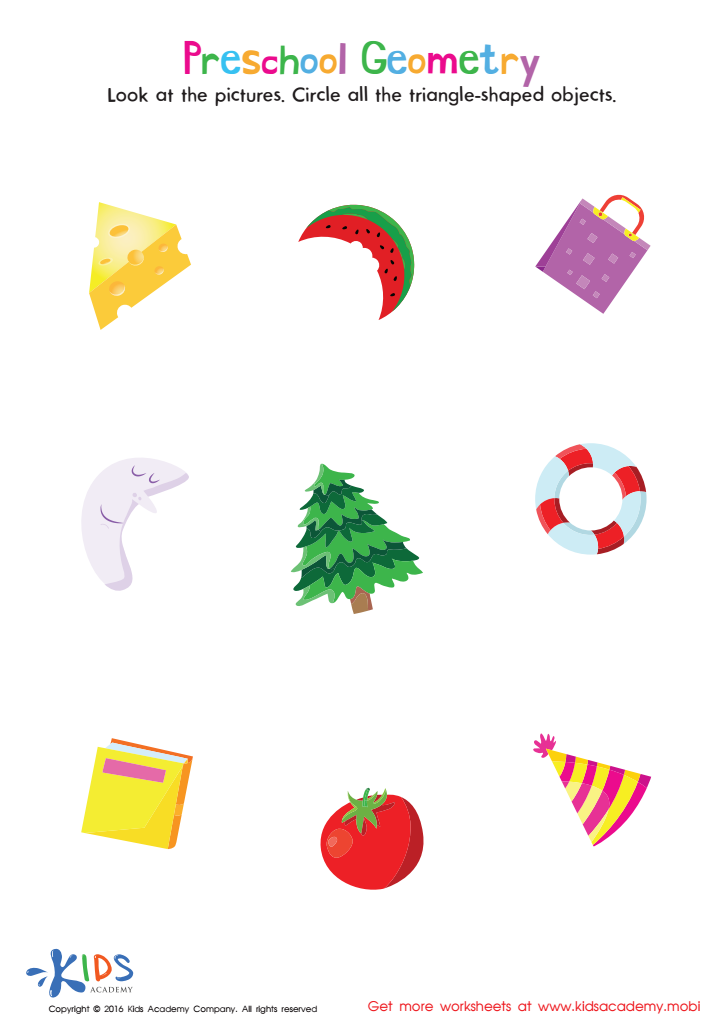
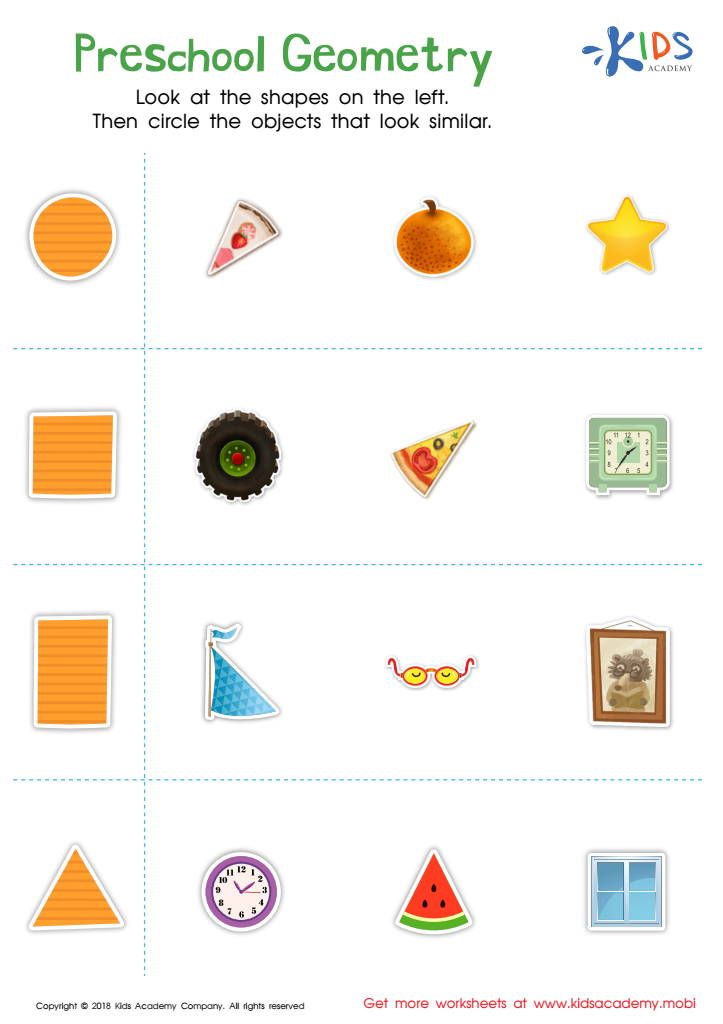
Preschool Geometry Worksheet
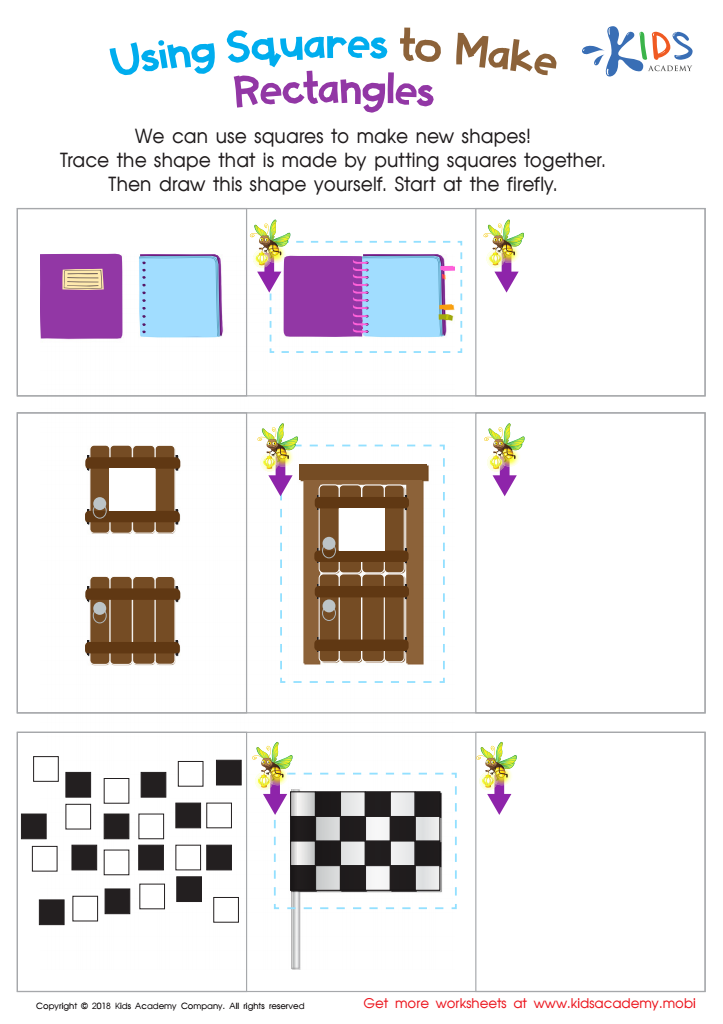
Using Squares to Make Rectangles Worksheet
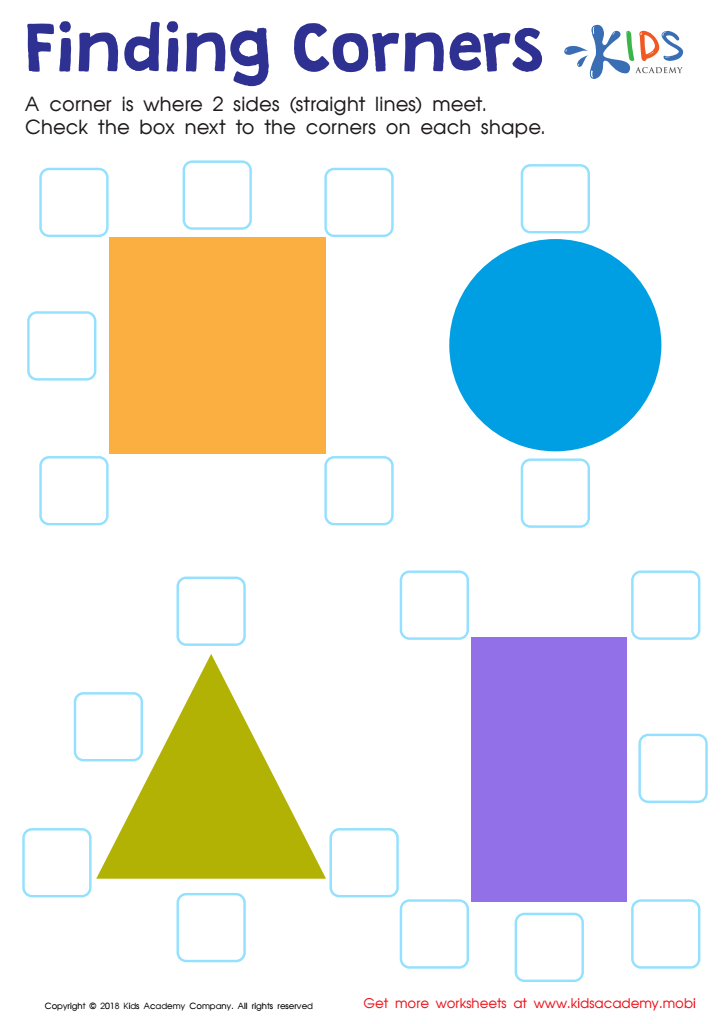
Finding Corners Worksheet
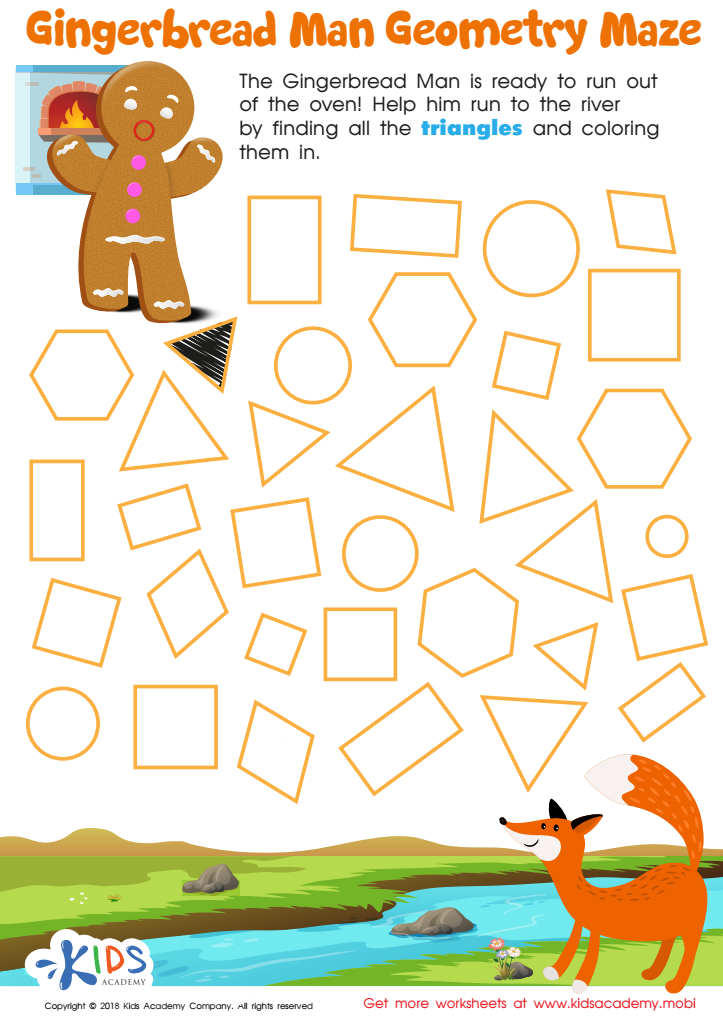
Gingerbread Man Geometry Maze Worksheet








Counting skills and basic geometry form the cornerstone of early childhood education, and their importance cannot be overstated for children aged 5-6.
Firstly, counting skills lay the groundwork for all future mathematical learning. At this age, children are beginning to understand numbers, quantities, and the relationships between them. Proficiency in counting helps them develop number sense, which is essential for more complex mathematical concepts like addition, subtraction, and eventually, multiplication and division. Beyond arithmetic, counting skills also aid in developing logical thinking and problem-solving abilities. These cognitive skills are fundamental and apply across various subjects and everyday scenarios.
Parallelly, basic geometry teaches children spatial awareness, which is crucial for their overall cognitive development. Recognizing and understanding shapes and their properties help kids interpret and organize the world around them. It also enhances their visual and spatial abilities, which are important for tasks ranging from navigating environments to reading and writing. For example, understanding that two triangles can form a square aids in developing a child's comprehension of space and structure.
By focusing on these foundational skills, parents and teachers ensure that children are better prepared for future educational challenges. More importantly, they foster a love for learning and curiosity, which are key drivers of academic success and lifelong learning.








