Differentiating shapes Normal Geometry Worksheets for Ages 5-6
3 filtered results
-
From - To
Introduce your young learners to the world of geometry with our "Differentiating Shapes" worksheets designed specifically for ages 5-6. These engaging and educational printables help children identify, compare, and contrast various shapes, laying a strong foundation for future math skills. Each worksheet focuses on recognizing and differentiating basic shapes like circles, squares, triangles, and rectangles, making learning fun and interactive. Perfect for classroom use or at-home practice, our worksheets encourage visual learning and shape recognition through hands-on activities. Boost your child's geometry skills today with these expertly crafted resources!
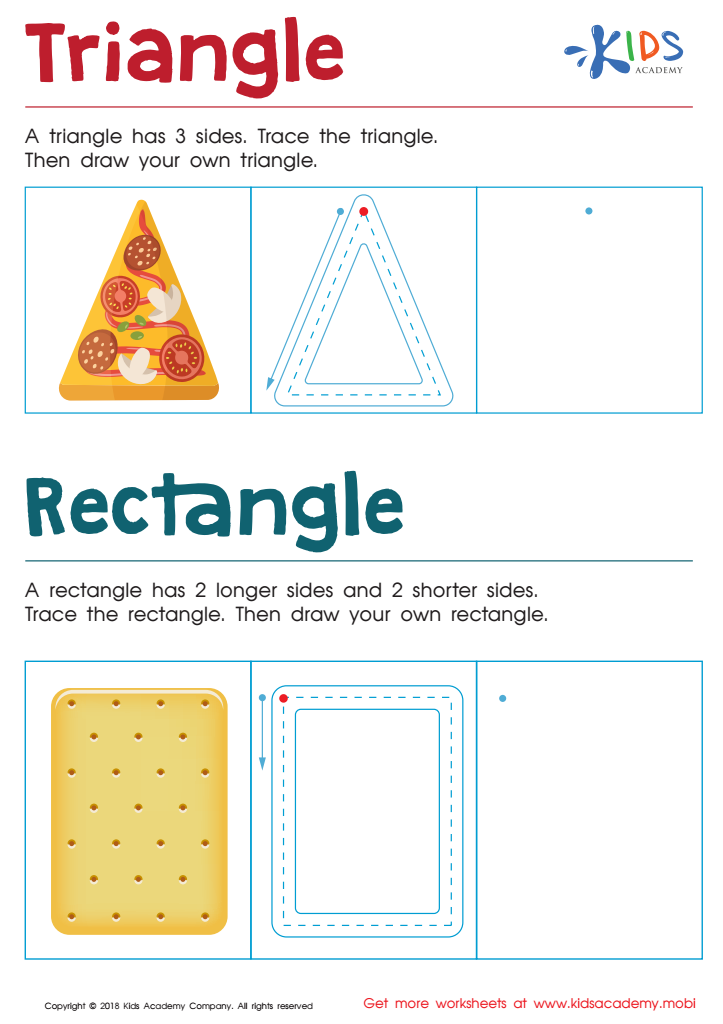
Triangle Rectangle Worksheet
 Assign to My Students











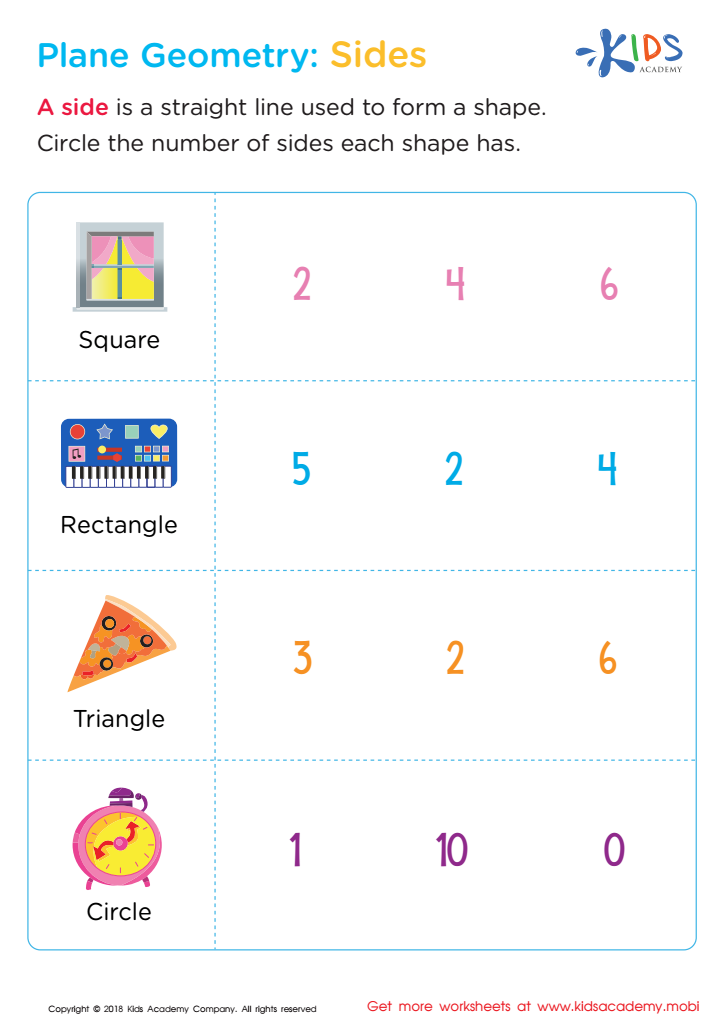
Plane Geometry: Sides Worksheet
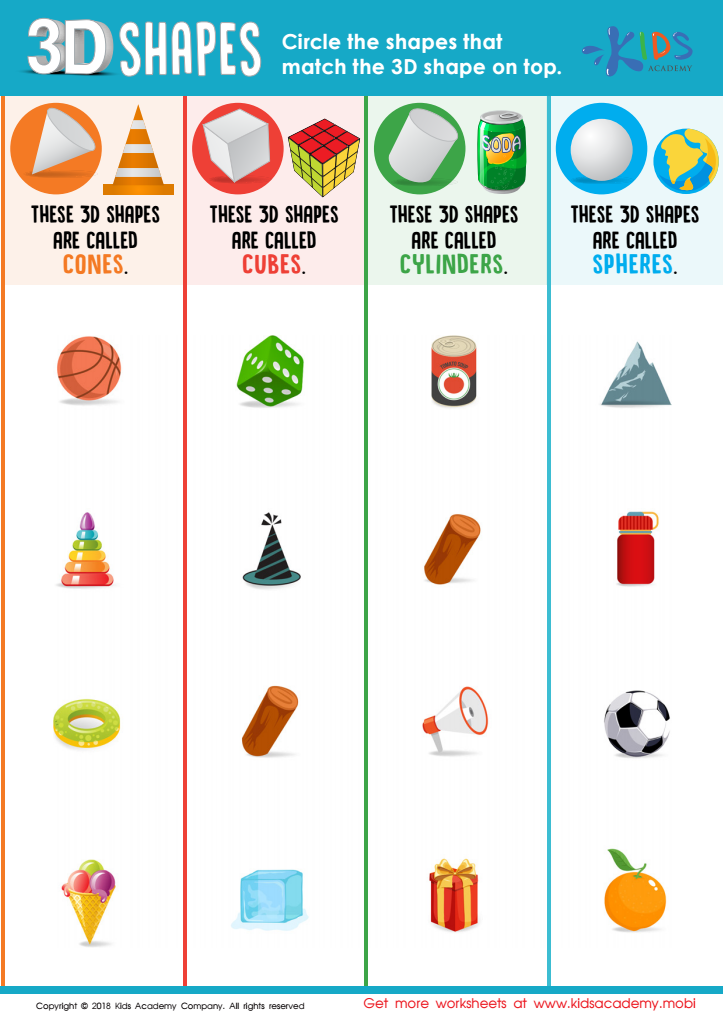
3D Shapes Worksheet








Differentiating shapes is a fundamental skill in early childhood education, crucial for the cognitive and spatial development of children aged 5-6. Parents and teachers should care about this for several reasons. First, understanding basic geometric shapes lays down the groundwork for more advanced mathematical concepts, such as geometry, algebra, and even trigonometry. These are essential skills that will support children throughout their schooling and everyday life.
When children recognize and classify shapes, they improve their visual recognition and spatial reasoning abilities. This ability to distinguish and categorize shapes aids in the development of problem-solving skills and logical thinking. For example, recognizing the difference between a square and a rectangle can help children understand the properties of each shape, fostering analytical skills.
Moreover, learning about shapes enriches children's vocabulary, encouraging precise communication. Terms like "circle," "triangle," "square," and "rectangle" become part of their lexicon, allowing them to describe their surroundings more accurately.
From a social and emotional standpoint, mastering shapes can enhance a child’s confidence and encouragement of a positive attitude towards learning. Struggling to comprehend shapes might lead to frustration, impacting their self-esteem and enthusiasm for school. Thus, early engagement with geometry is not just about math; it's about overall educational development and helping children become successful and confident learners.








