Pattern recognition Normal Geometry Worksheets for Ages 5-6
3 filtered results
-
From - To
Discover the joy of learning with our "Pattern Recognition Normal Geometry Worksheets" designed specifically for children ages 5-6. These engaging worksheets help young learners develop essential skills in identifying, analyzing, and creating patterns through fun geometry concepts. From simple shapes to colorful patterns, our activities foster cognitive growth and enhance critical thinking abilities. Perfect for classroom use or at-home learning, these worksheets provide a hands-on approach to mastering geometry. Encourage creativity and confidence in your child as they explore the exciting world of shapes and patterns! Start their educational journey with our interactive resources today!
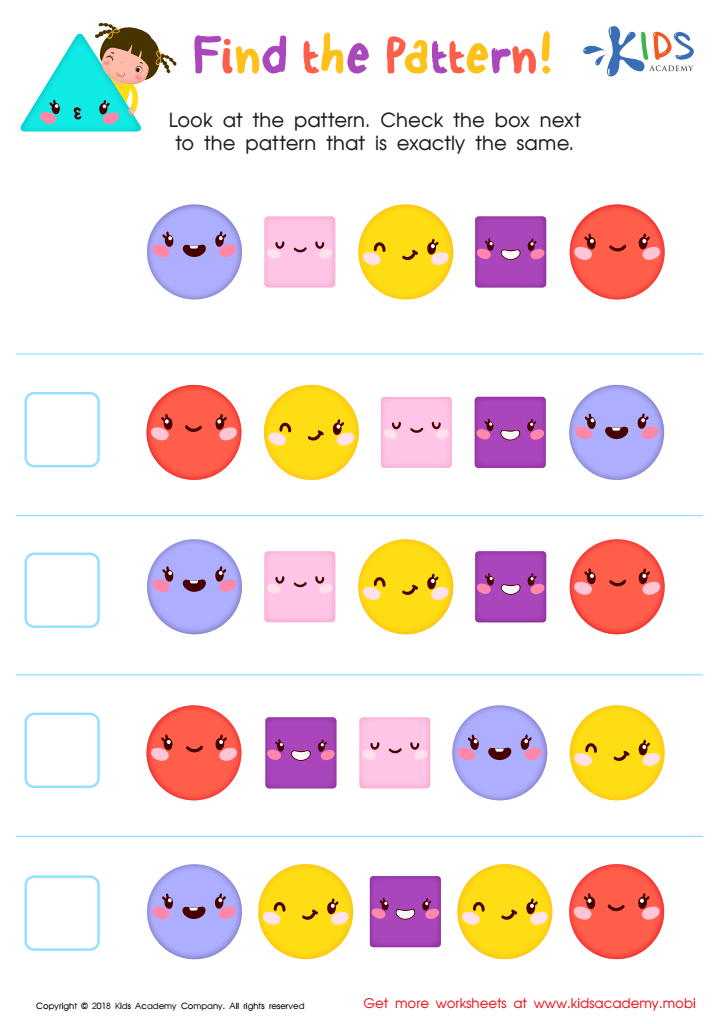
Find the Pattern Worksheet
 Assign to My Students











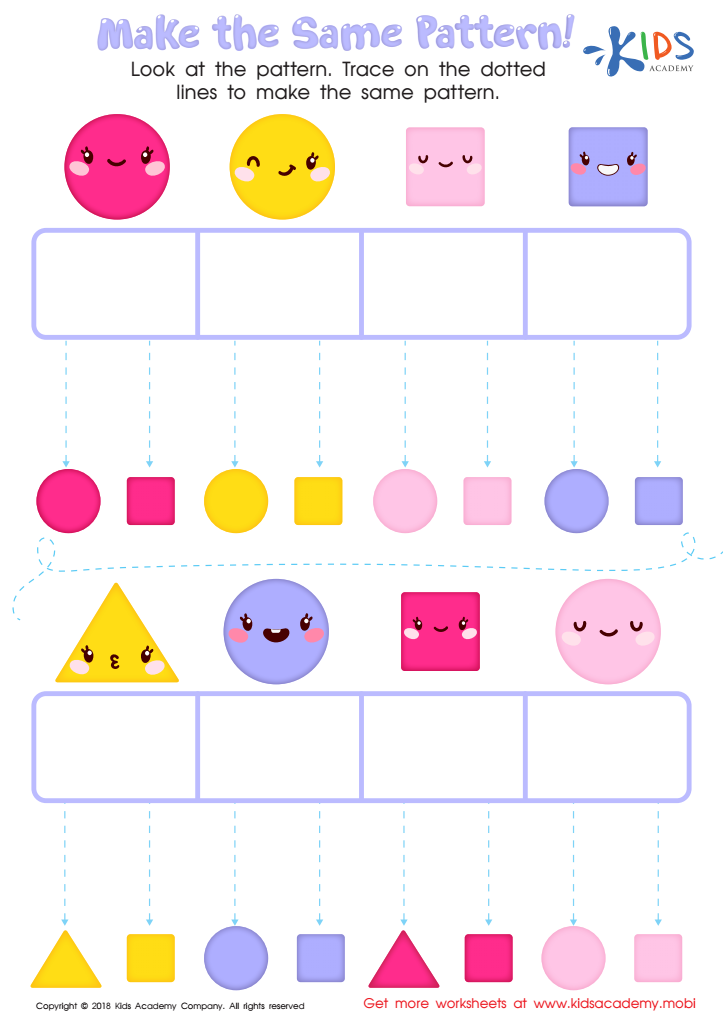
Make the Same Pattern Worksheet
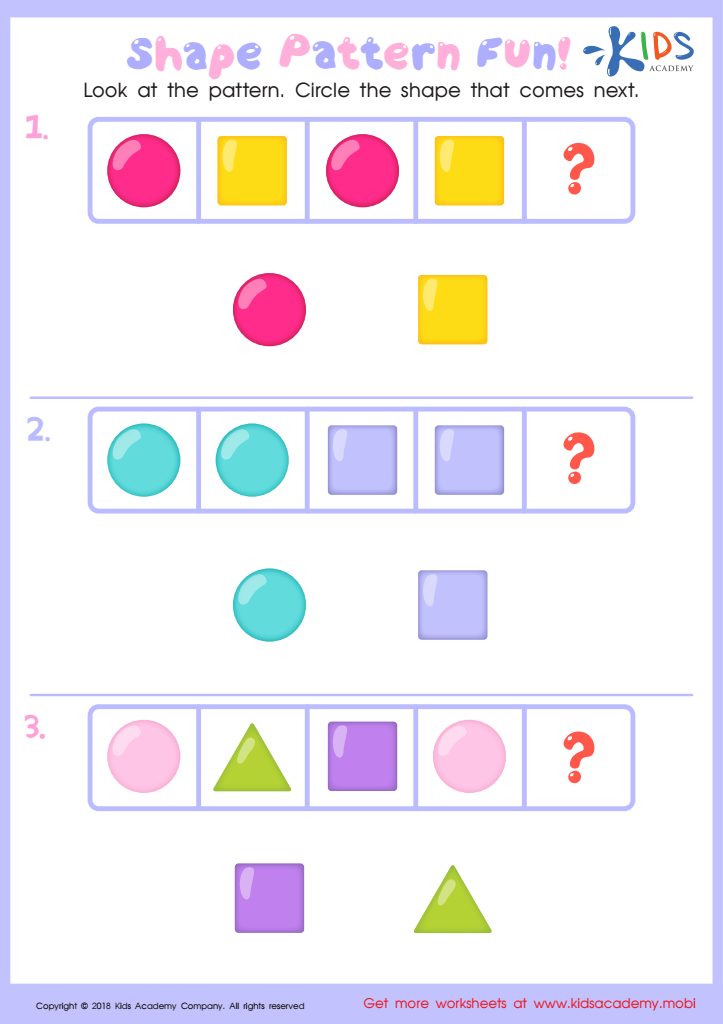
Shape Pattern Fun Worksheet








Pattern recognition and basic geometry are fundamental skills for children ages 5-6, laying the groundwork for their mathematical understanding and critical thinking. During this crucial developmental stage, kids are naturally curious, actively exploring their surroundings. Introducing them to patterns—repeating sequences of shapes, colors, or numbers—sharpens their observational skills. Recognizing patterns fosters logical reasoning and problem-solving abilities, which are essential not just in math, but across various disciplines.
When it comes to geometry, concepts like shapes and spatial awareness help young learners articulate and describe the world around them. Children learning to identify shapes, understand their properties, and recognize their arrangements develop the ability to visualize and contextualize information, which enriches their comprehension and creativity.
Furthermore, engaging with patterns and geometry enhances fine motor skills through hands-on activities like building and drawing. For parents and teachers, embrace these subjects as valuable tools for cognitive development and readiness for more complex concepts in later years. By nurturing these skills, we provide children with a strong foundation for math, reasoning, and intricate problem-solving—abilities crucial for their academic journey and everyday life. Investing in early education in these areas signifies a commitment to the child's future success.








