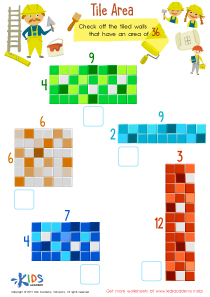
Enhancing problem-solving skills Normal Numbers Worksheets for Ages 5-6
3 filtered results
-
From - To
Enhancing problem-solving skills is crucial for young learners, and our Normal Numbers Worksheets for Ages 5-6 provide an engaging way to support this development. Tailored to meet the needs of early learners, these worksheets feature a variety of fun activities that foster critical thinking and logical reasoning through number recognition and basic arithmetic. Children will explore concepts such as counting, comparing, and simple addition and subtraction, all while enjoying interactive challenges that make learning enjoyable. Our resources are designed not only to strengthen numerical skills but also to build confidence as young minds navigate the world of math. Explore our worksheets today!
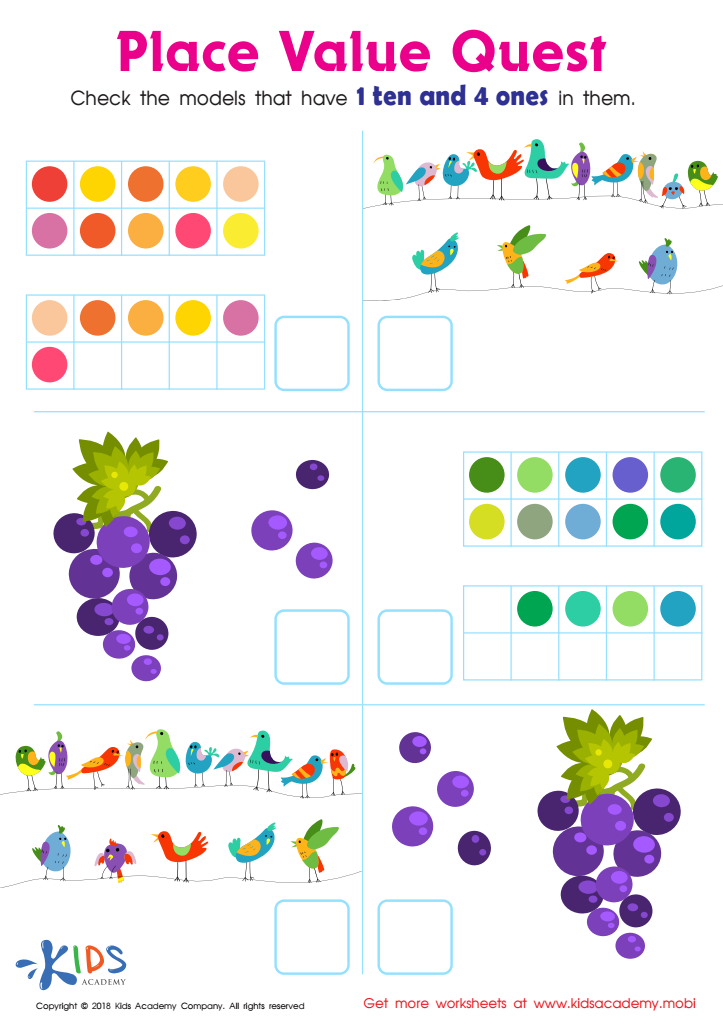
Place Value Quest Worksheet
 Assign to My Students
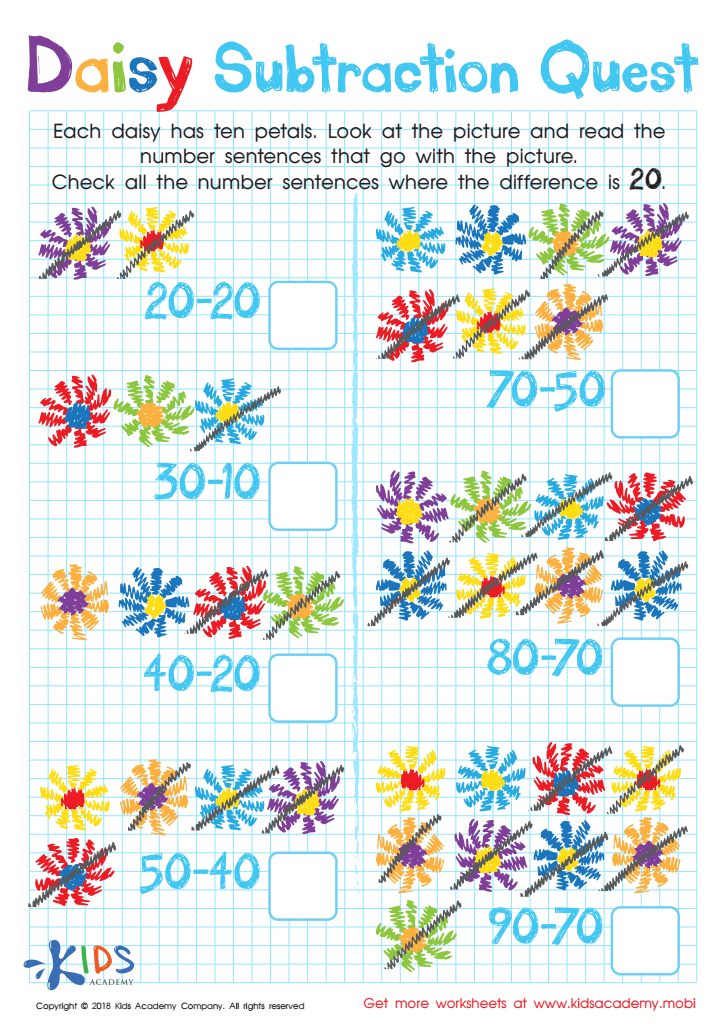
Daisy Subtraction Quest Worksheet
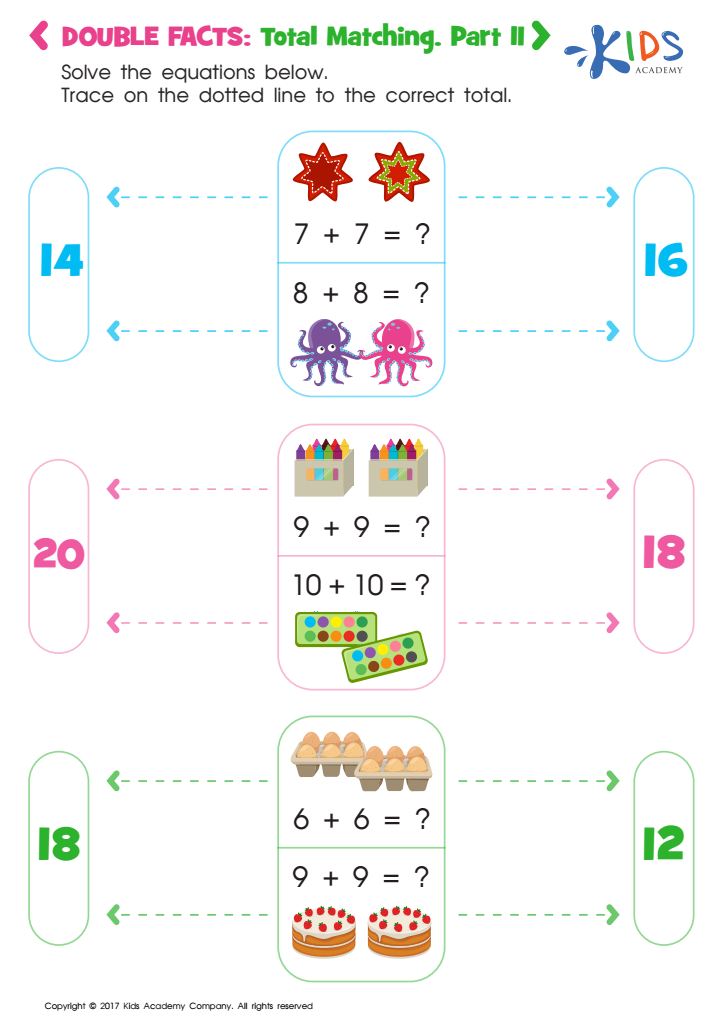
Double Facts: Total Matching 2 Worksheet








Enhancing problem-solving skills with normal numbers for children ages 5-6 is crucial for several reasons. First, these foundational skills impact a child's overall academic journey. At this age, children are naturally curious, exploring their world through questions and challenges. Engaging them in problem-solving using normal numbers helps cultivate critical thinking, encouraging them to observe, analyze, and draw conclusions.
Moreover, these skills contribute to a child’s confidence. Solving problems empowers children, making them feel capable and resourceful. It teaches perseverance; as they encounter difficulties, they learn the value of resilience and trying different approaches until they find solutions.
Additionally, mathematical skills, including understanding normal numbers, provide the basis for a wide array of real-world applications. Whether it’s counting objects, recognizing patterns, or making simple calculations, the ability to manipulate numbers is essential in everyday life.
Finally, fostering these skills enhances communication and teamwork. Collaborative problem-solving exercises teach children to articulate their thoughts, listen to others, and negotiate solutions. By investing time in developing problem-solving abilities, parents and teachers are equipping children with essential tools for lifelong learning and interaction, laying the groundwork for future success both academically and socially.