Matching skills Normal Math Worksheets for Ages 5-6
8 filtered results
-
From - To
Our 'Matching Skills Normal Math Worksheets for Ages 5-6' are designed to captivate young minds while enhancing their foundational math abilities. These worksheets encourage children to match objects, numbers, and shapes, refining their cognitive and observational skills. Perfect for preschoolers, these activities focus on nurturing early number sense, pattern recognition, and logical thinking in a fun, engaging manner. Featuring colorful illustrations and diverse themes, each worksheet ensures a delightful learning experience. Ideal for both classroom and home use, these printable resources are a fantastic tool to boost kids' confidence and make learning math an exciting adventure.
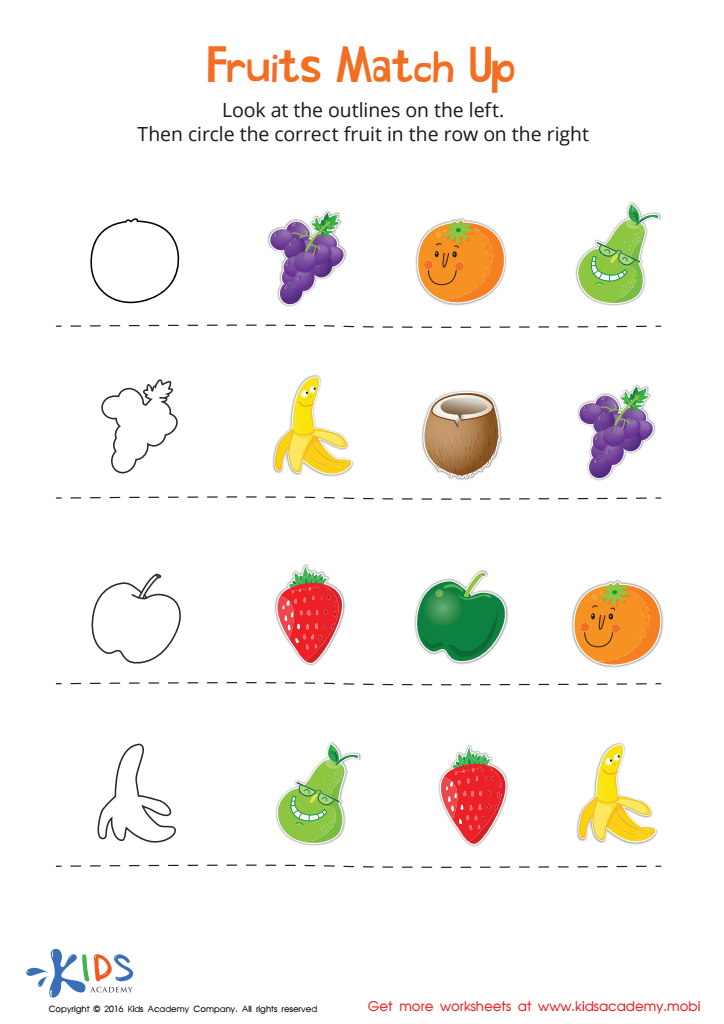
Fruits Match Up Worksheet
 Assign to My Students
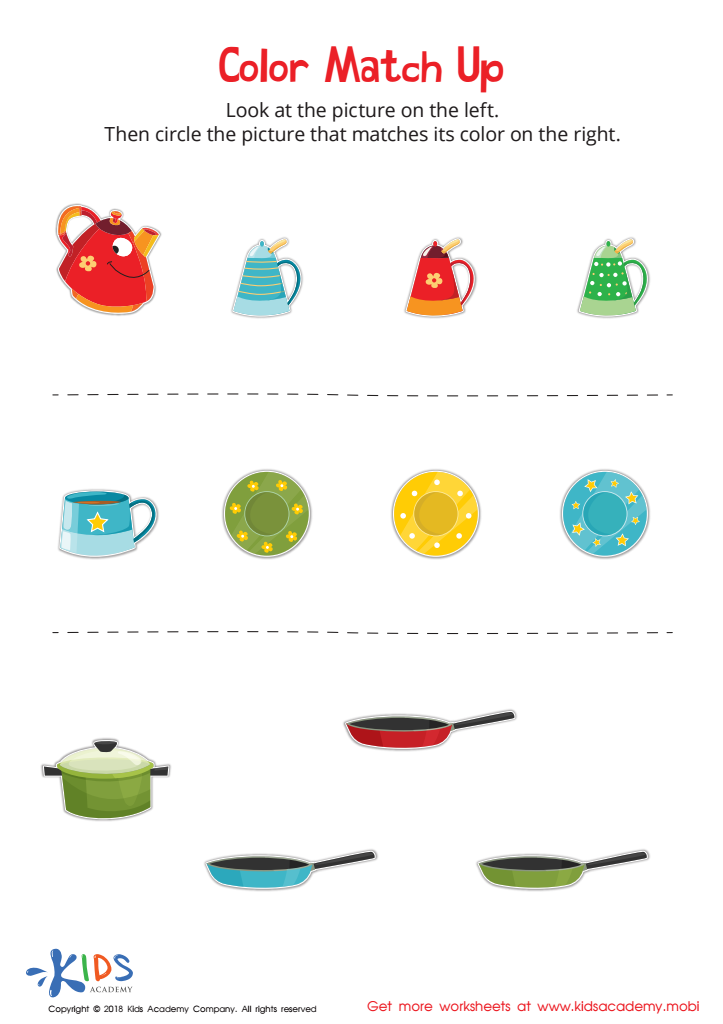
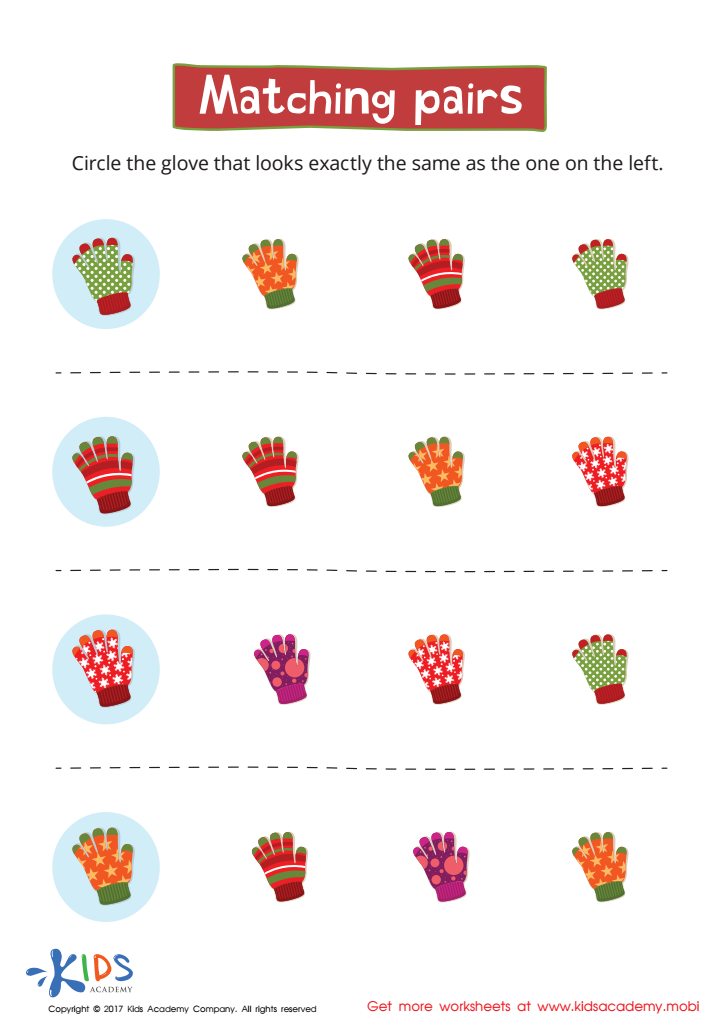
Matching: Matching Pairs Worksheet
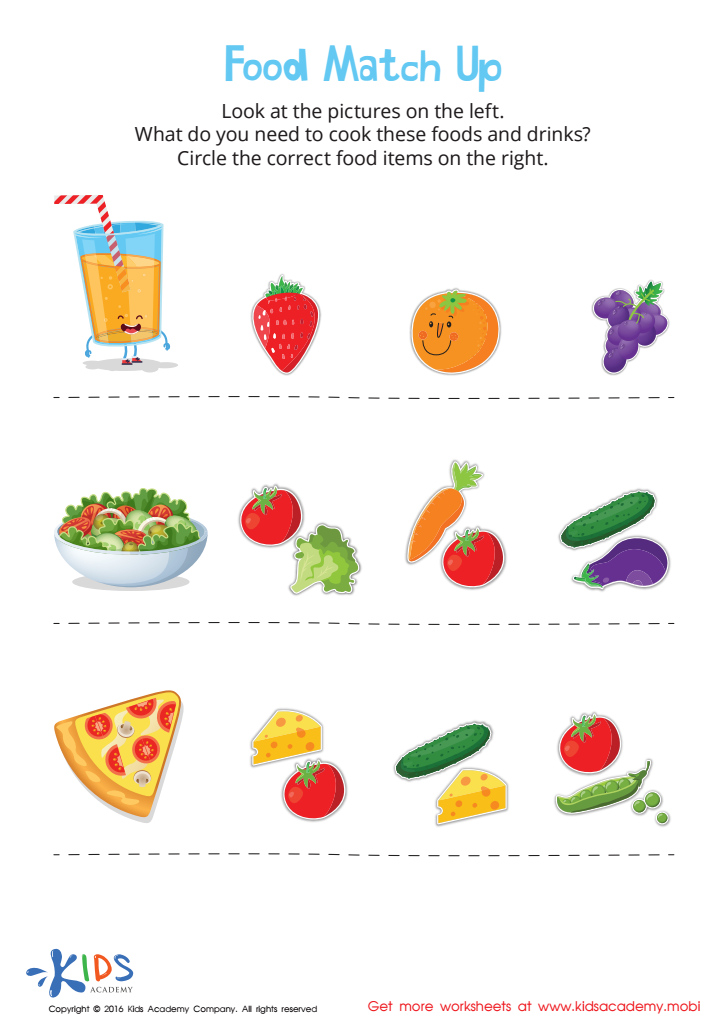
Food Match Up Worksheet
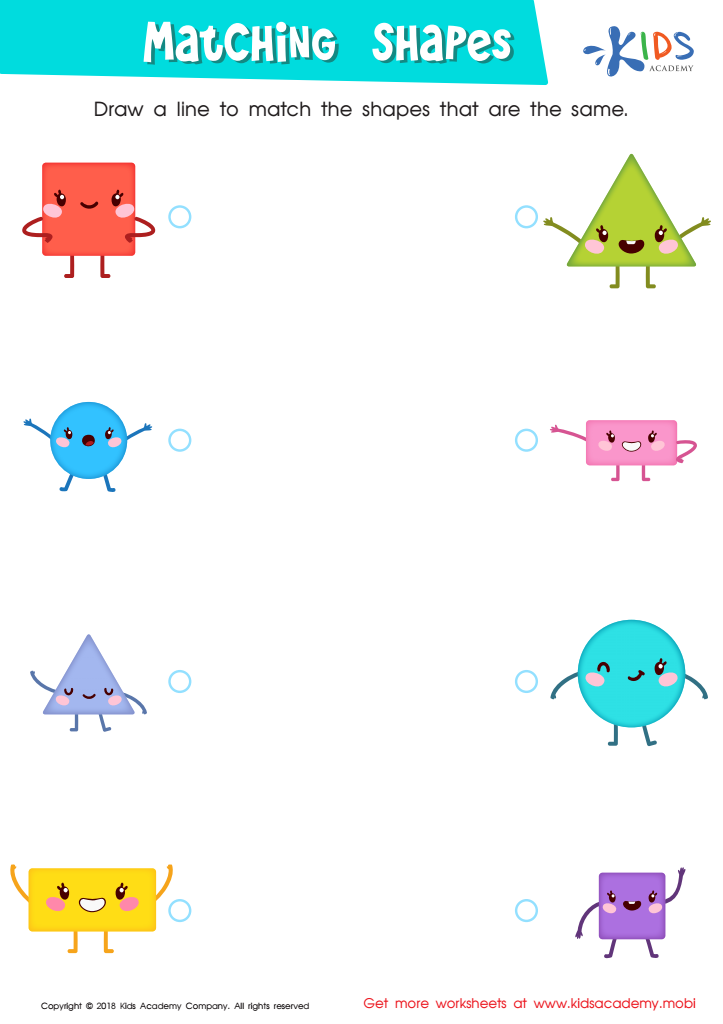
Matching Shapes Worksheet
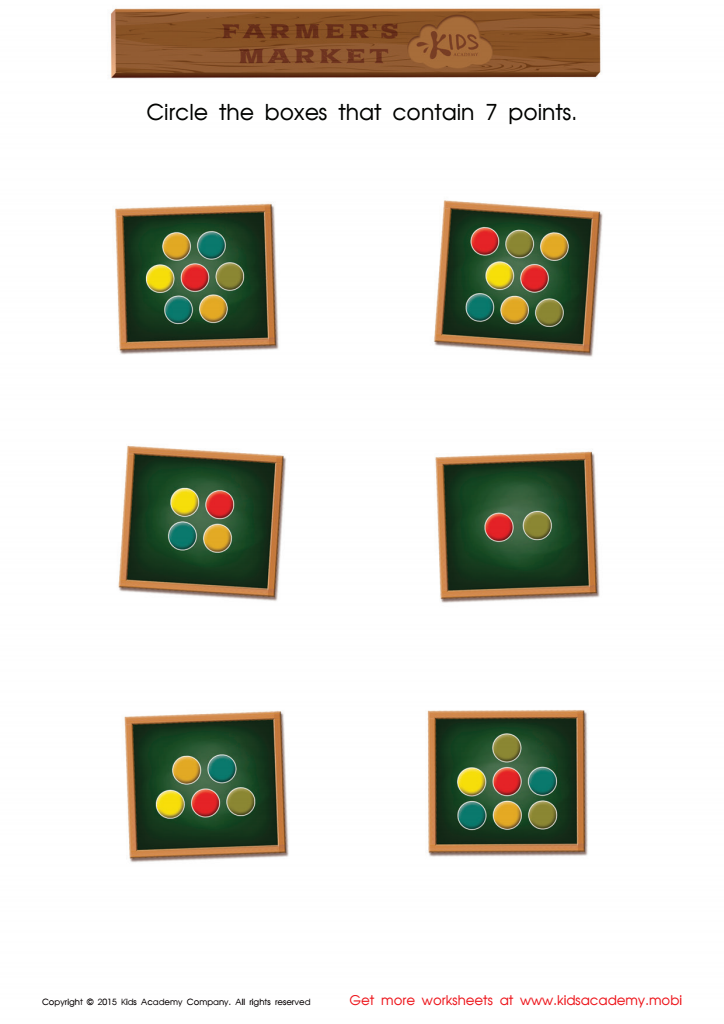
Count and Match Points 7 Math Worksheet
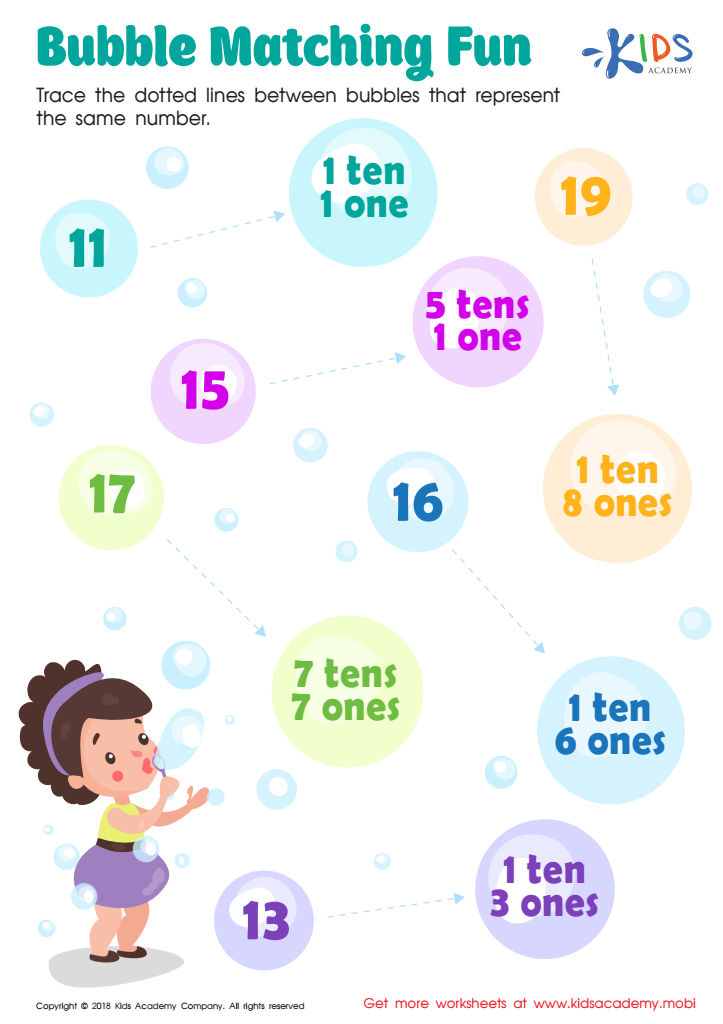
Bubble Matching Fun Worksheet
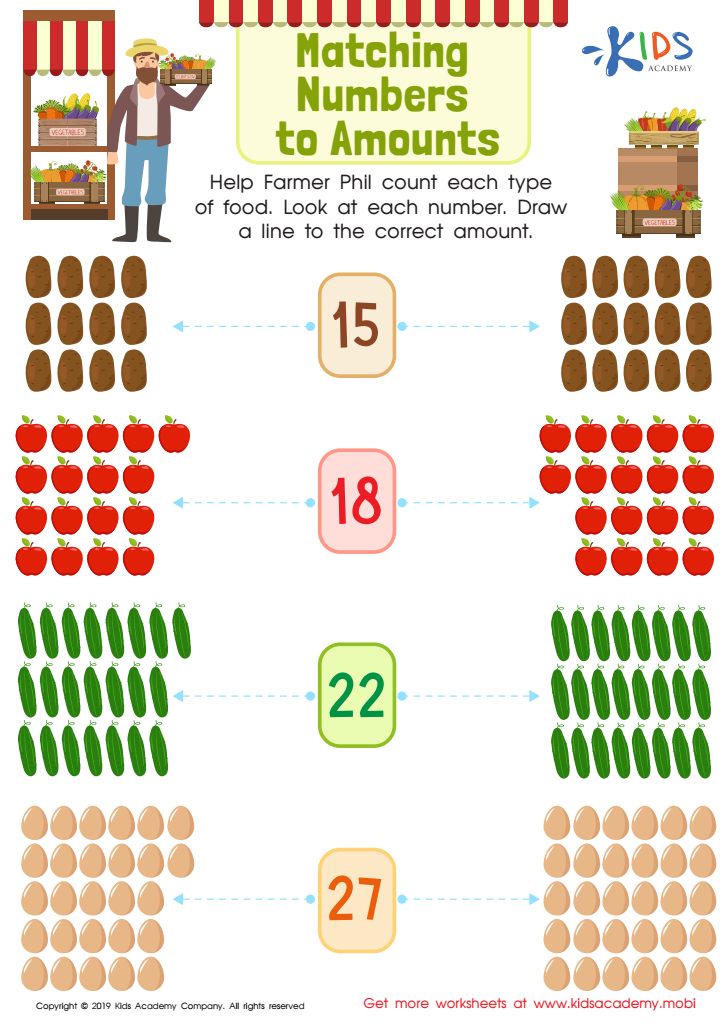
Matching Numbers to Amounts Worksheet








Matching skills in early math for children aged 5-6 are crucial for several reasons, making it essential for parents and teachers to focus on them. At this developmental stage, children are like sponges, absorbing information rapidly. Matching skills, which include sorting, classifying, and identifying patterns, lay the foundational groundwork for more advanced mathematical concepts.
Firstly, these skills enhance cognitive development. They help children recognize relationships and make sense of the abstract concepts of numbers and shapes. By learning to match objects based on attributes such as size, color, or quantity, children begin to understand key principles of classification and order—essential pre-math concepts.
Secondly, matching skills improve problem-solving abilities and logical thinking. When children match items, they engage in analytical thinking, deciding which items share characteristics and which do not. This critical thinking will be useful not only in math but also in science and everyday life.
Moreover, matching games and activities are engaging and fun, making learning a joyful experience rather than a chore. This positive relationship with learning at a young age encourages a lifelong love for education.
Lastly, children gain confidence in their abilities when they successfully complete matching tasks, fostering a positive mindset towards future challenges. Parents and teachers should therefore devote time and resources to nurturing these skills, ensuring children are well-prepared for the academic journey ahead.








