Understanding shapes Normal Math Worksheets for Ages 5-6
3 filtered results
-
From - To
Welcome to our "Understanding Shapes" math worksheets designed for children aged 5-6. These engaging, printable activities help young learners develop crucial shape recognition and understanding skills while having fun. Our worksheets feature colorful visuals, hands-on exercises, and interactive challenges that promote essential learning concepts like identifying, sorting, and comparing shapes. Perfect for both classroom and home settings, our resources support early math development and foster a love for learning. Equip your child with the foundation they need for future math success as they explore the world of shapes through creative and thoughtfully designed activities. Dive in and watch their confidence grow!
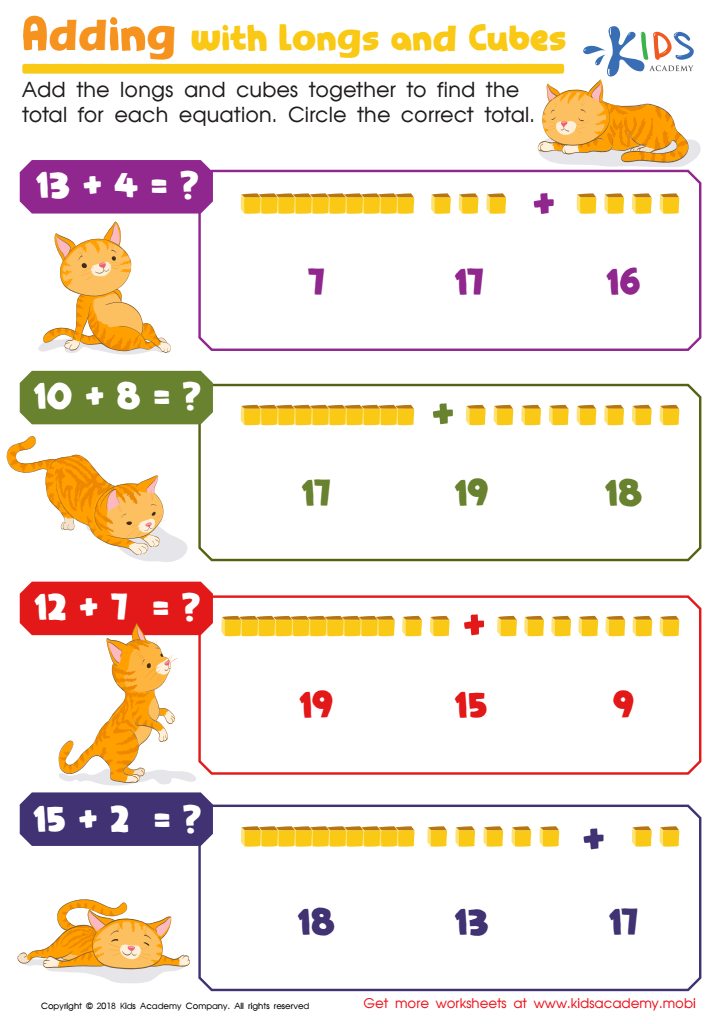
Adding With Longs and Cubes Worksheet
 Assign to My Students
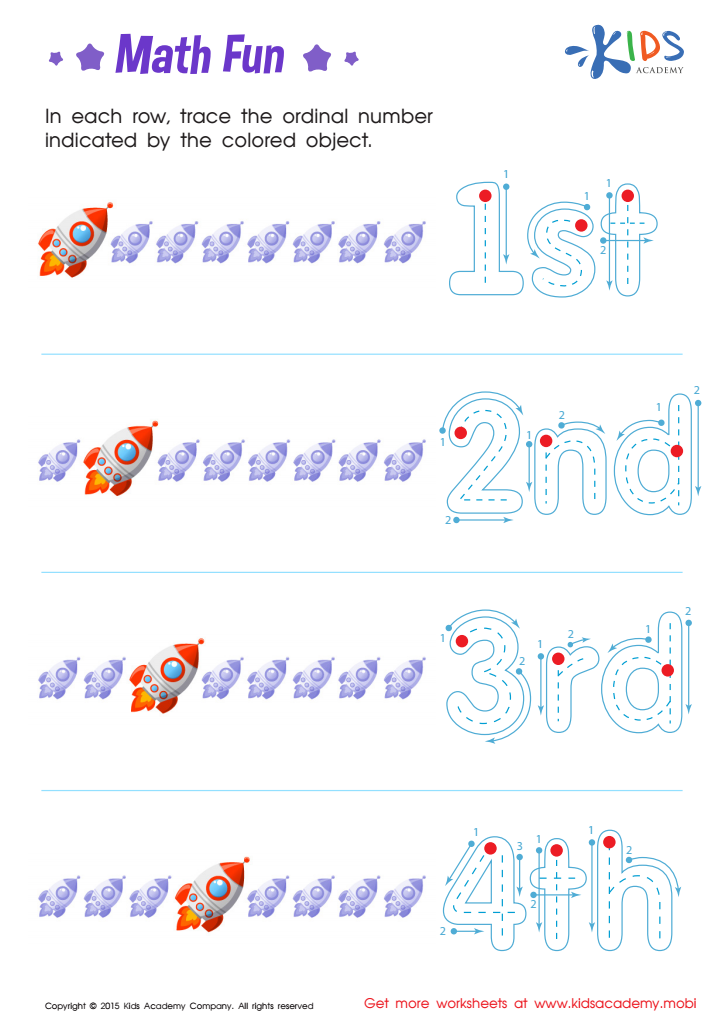
Ordinal Numbers: Math Fun Worksheet
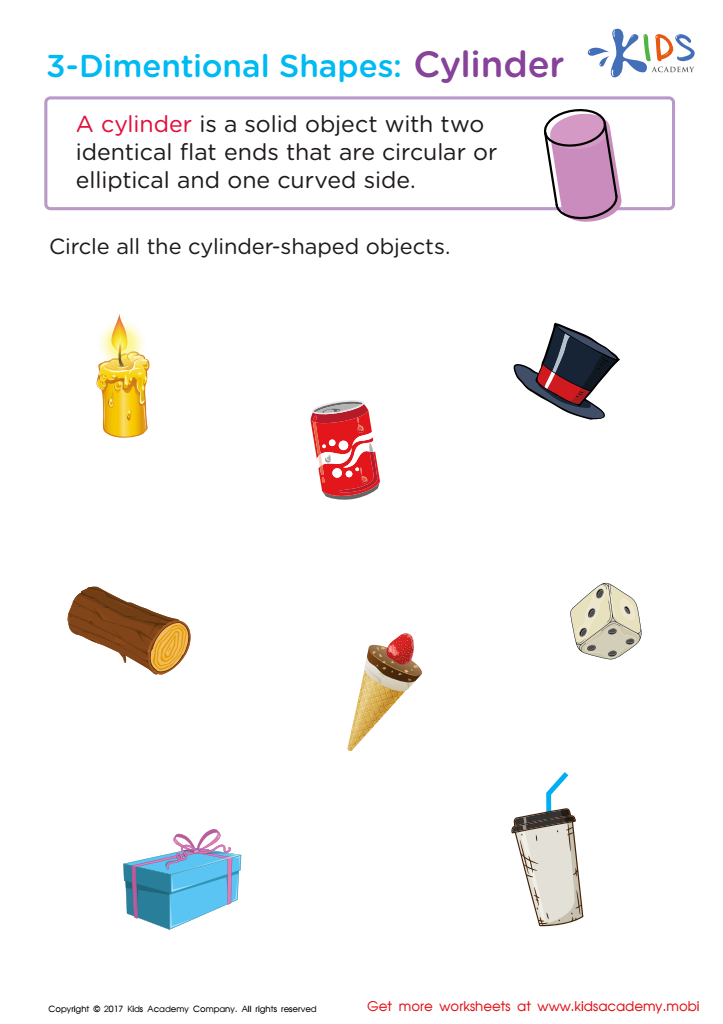
Three–Dimensional Shapes: Cylinder Worksheet





%20(1).jpg)

Parents and teachers should prioritize helping children understand shapes in math for several reasons. First, recognizing shapes is a foundational skill that promotes critical thinking and spatial awareness. At ages 5-6, children are not just identifying shapes; they are beginning to analyze and differentiate between them, laying the groundwork for geometry and advanced math concepts.
Second, understanding shapes helps children develop problem-solving skills. When they manipulate and create with different shapes, they learn to explore possibilities, which nurtures creativity and innovation.
Additionally, exploring shapes can enhance other learning areas, such as language development. Talking about shapes encourages vocabulary expansion as children learn to describe their characteristics, fostering communication skills.
Moreover, understanding shapes plays a critical role in real-world applications, from architecture to art. By grasping this fundamental concept, children gain insight into how shapes shape our world, igniting curiosity and interest in learning.
Finally, promoting mathematical understanding through shapes builds confidence. Mastering early math concepts creates a positive learning experience, paving the way for greater math success as they progress through school. Thus, engaging children in shape understanding is essential for their holistic development and lifelong learning.








