Color recognition Normal Writing Worksheets for Ages 5-6
10 filtered results
-
From - To
Enhance your child's learning experience with our Color Recognition Normal Writing Worksheets designed for ages 5-6! These engaging worksheets introduce essential color concepts while fostering writing skills through fun and creative activities. Each worksheet encourages children to practice identifying, naming, and coloring various objects, seamlessly blending color recognition with handwriting practice. With colorful illustrations and age-appropriate exercises, children will develop cognitive skills while enjoying the process. Ideal for at-home learning or classroom settings, these worksheets make learning colors enjoyable and effective. Browse our selection today and give your young learners the tools they need to succeed!
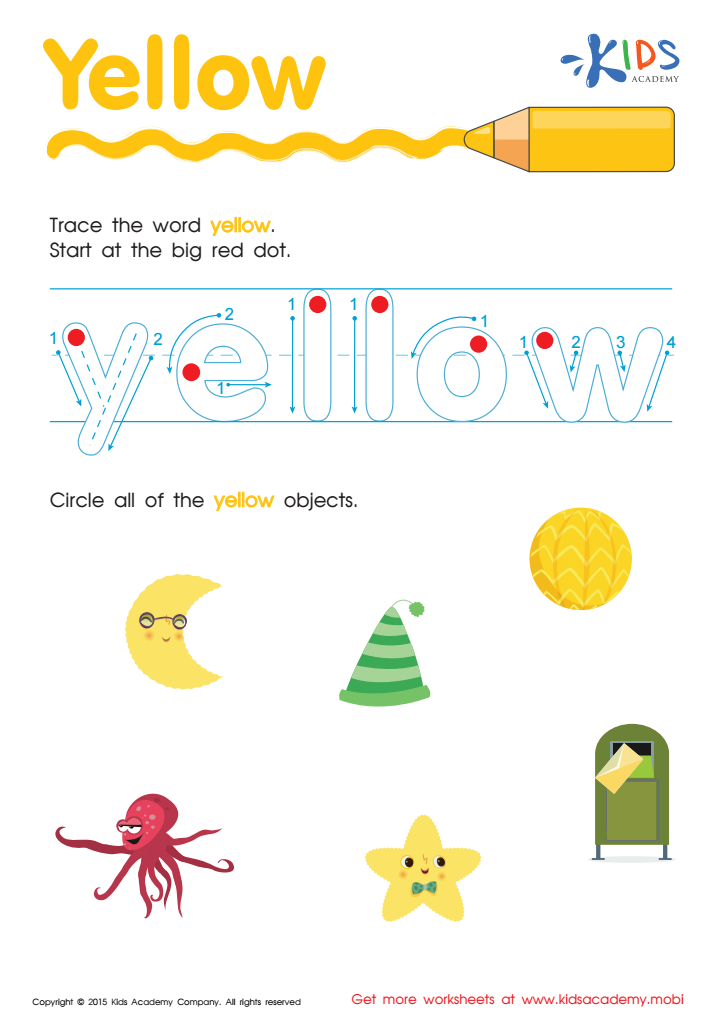
Yellow Tracing Color Words Worksheet
 Assign to My Students
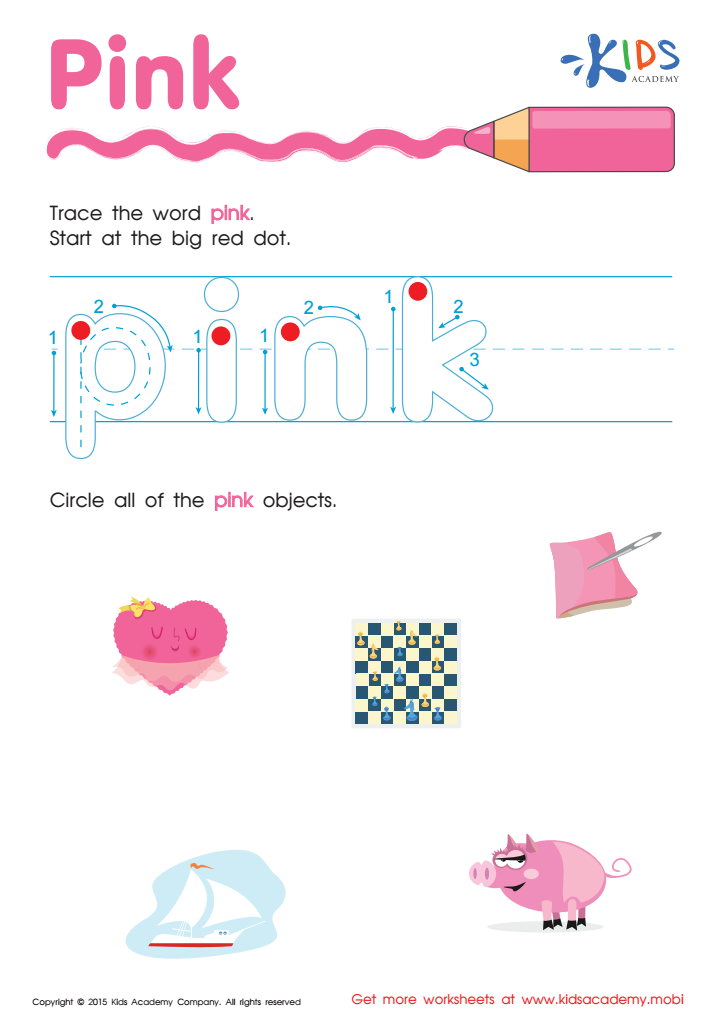
Pink Tracing Color Words Worksheet
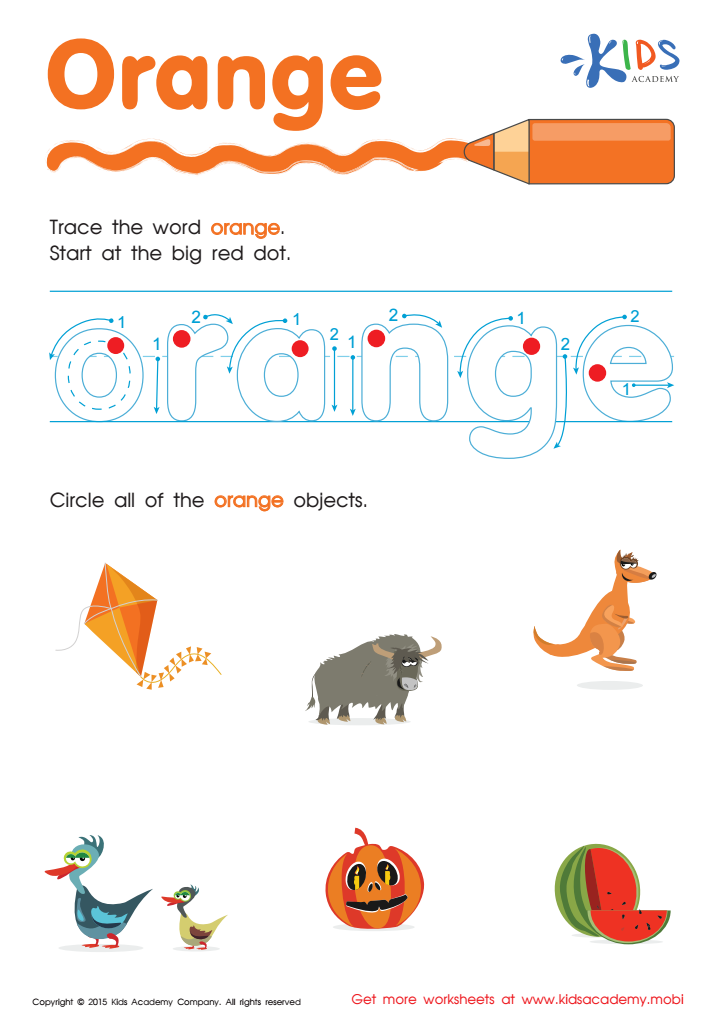
Orange Tracing Color Words Worksheet
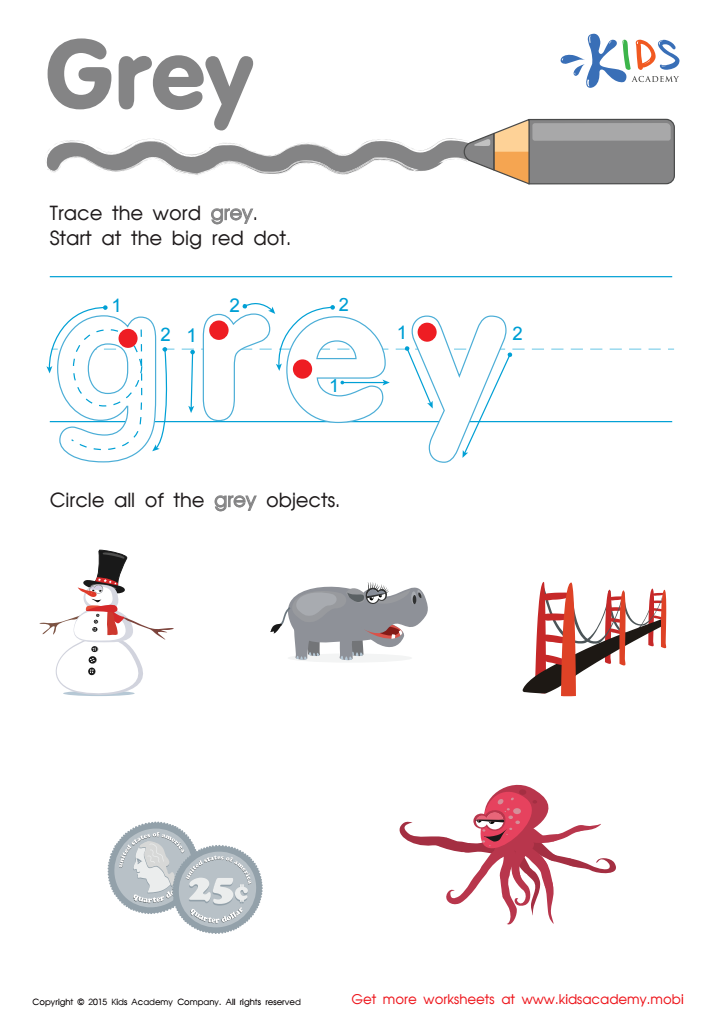
Grey Tracing Color Words Worksheet
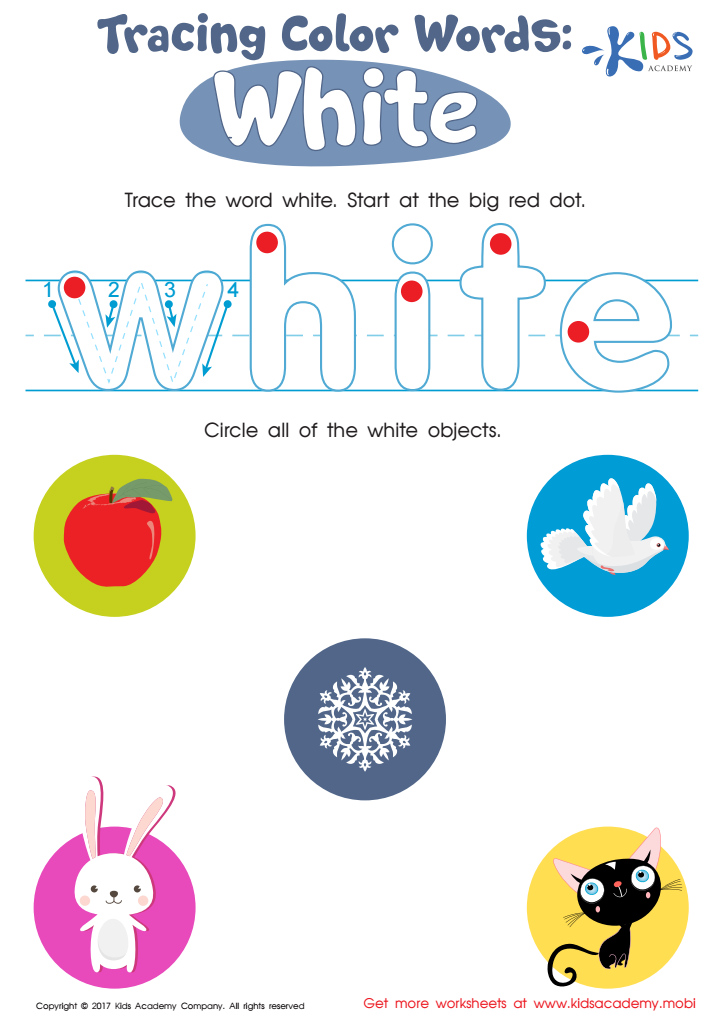
White Tracing Color Words Worksheet
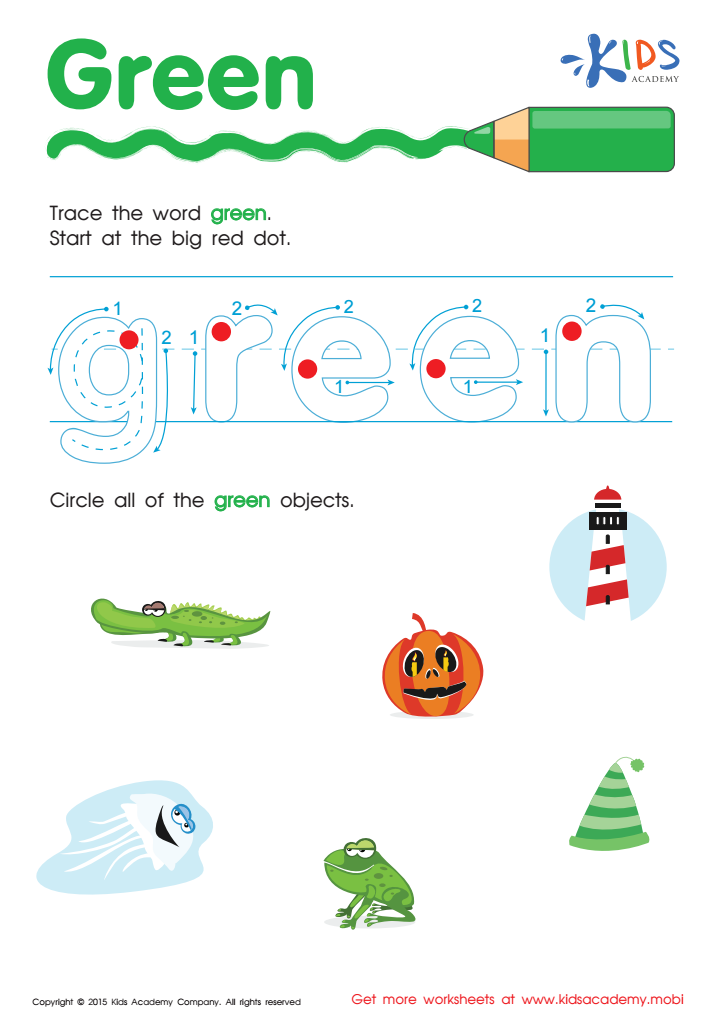
Green Tracing Color Words Worksheet
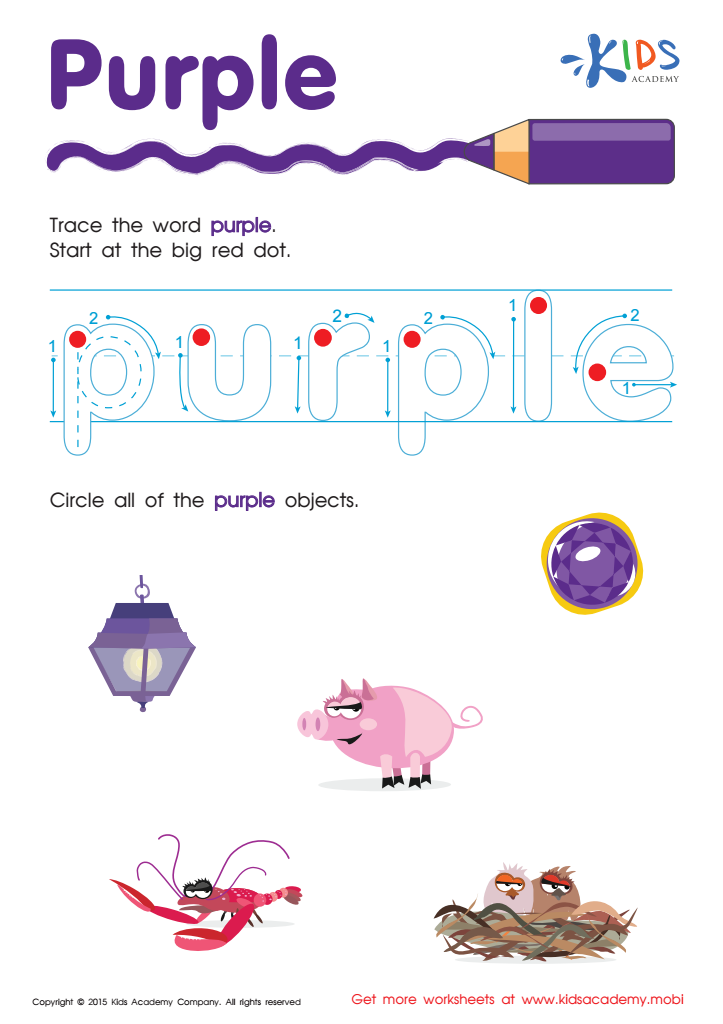
Purple Tracing Color Words Worksheet
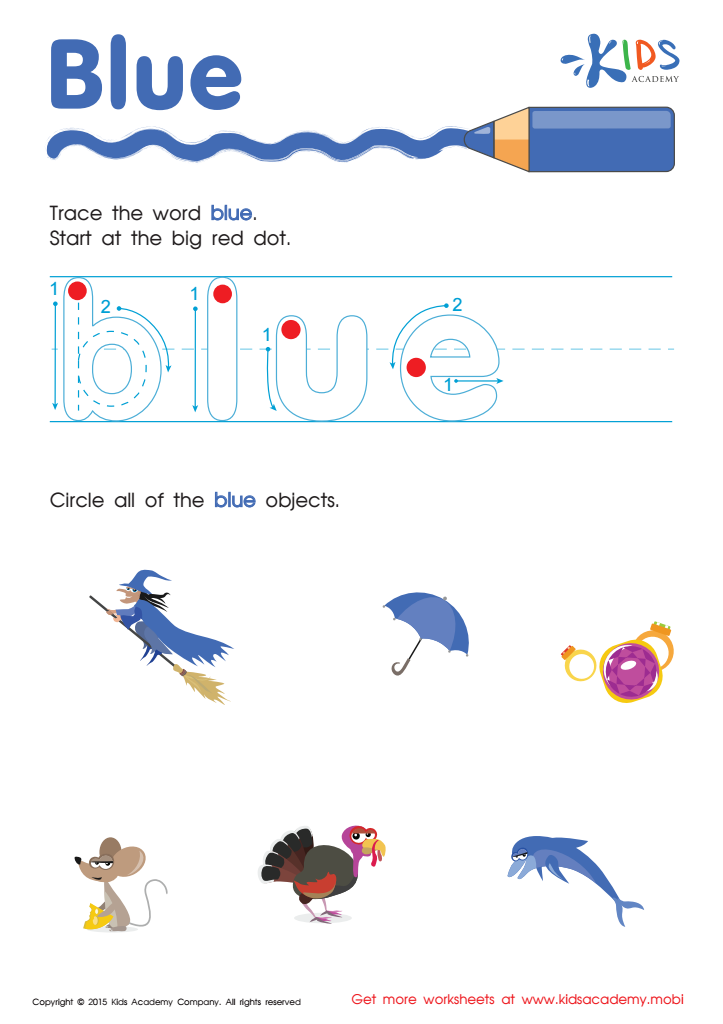
Blue Tracing Color Words Printable
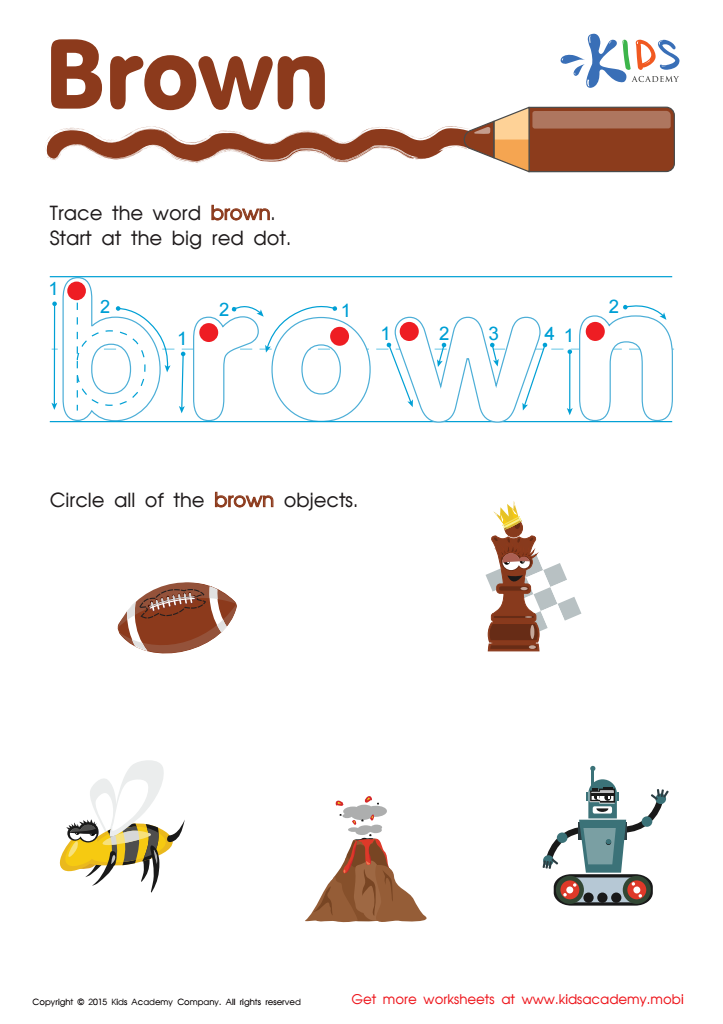
Brown Tracing Color Words Worksheet
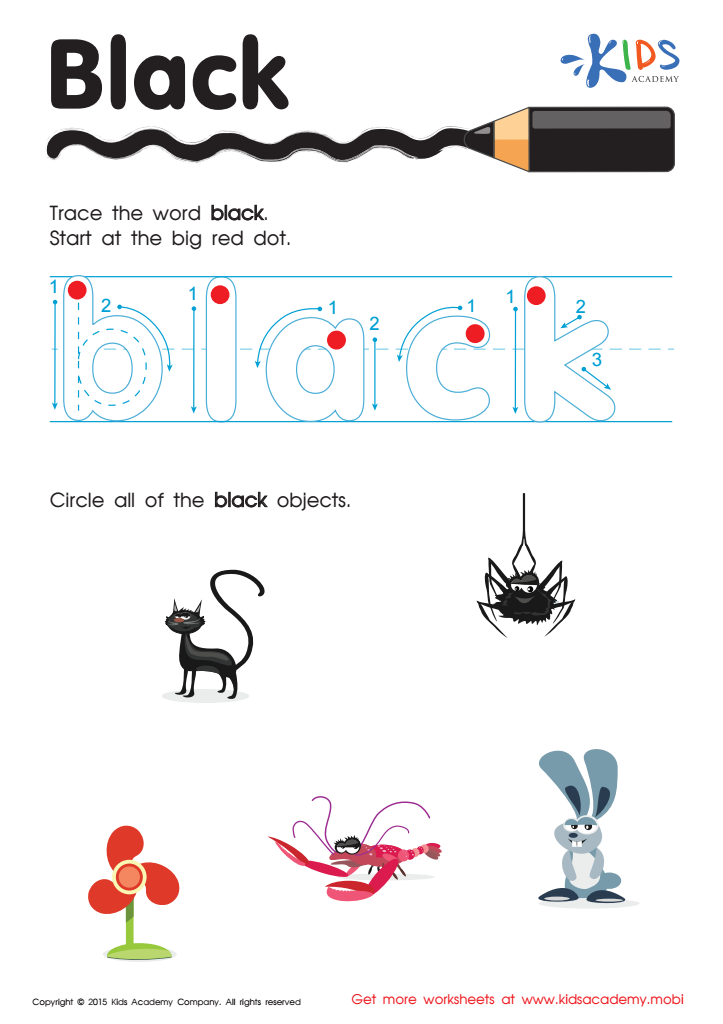
Black Tracing Color Words Printable




.jpg)
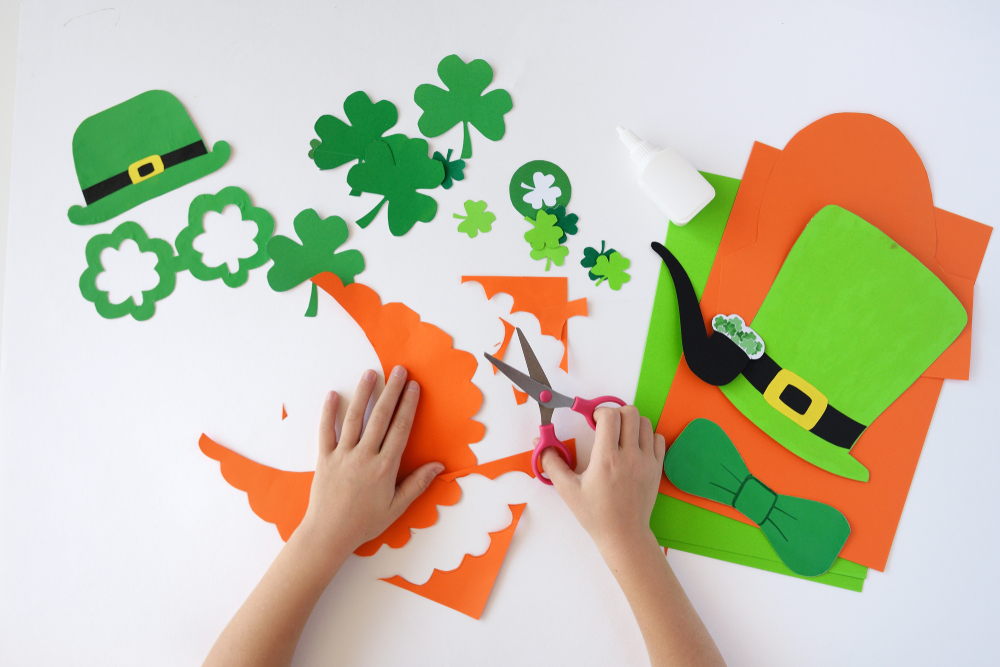

Color recognition is a foundational skill for children aged 5-6 that extends beyond simply naming hues. For parents and teachers, understanding the importance of color recognition plays a crucial role in early childhood development. Being able to identify and differentiate colors helps children make sense of their world and enhances their observation skills. It serves as an important stepping stone in cognitive development, contributing to their ability to categorize objects and understand relationships.
Moreover, color skills are often tied to language development. When children learn colors, they practice vocabulary and build language skills, facilitating communication and expression. Engaging with colors also supports fine motor skills through activities like coloring, painting, and crafting.
In everyday scenarios, recognizing colors can boost children's confidence in their choices, whether it's selecting clothing or participating in art projects. Additionally, colors play a significant role in emotional literacy; various colors evoke different feelings, enabling children to express their emotions and understand others' feelings better.
Ultimately, fostering color recognition lays the groundwork for more complex learning, enhancing academic readiness and social skills. Parents and teachers should prioritize this simple yet impactful area of development to support holistic growth in young learners.