Observational skills Normal Worksheets for Ages 5-7
15 filtered results
-
From - To
Enhance your child's observational skills with our engaging worksheets designed for ages 5-7. These printable resources provide fun and interactive activities that encourage young learners to explore, analyze, and interpret their surroundings. Each worksheet features vibrant illustrations and age-appropriate exercises to help develop attention to detail, critical thinking, and pattern recognition. Ideal for use at home or in the classroom, our observational skills worksheets are perfect for supporting early development across various subjects. Transform learning into an enjoyable journey as children gain confidence in their abilities while honing essential skills for future success! Discover the joy of observation today!
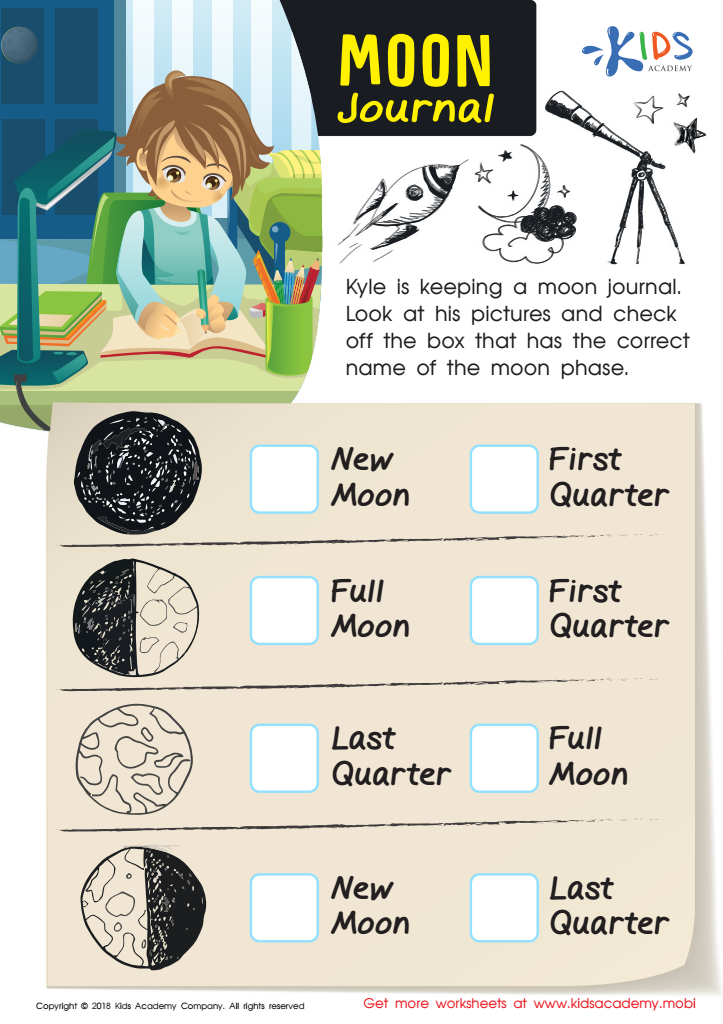
Moon Journal Worksheet
 Assign to My Students
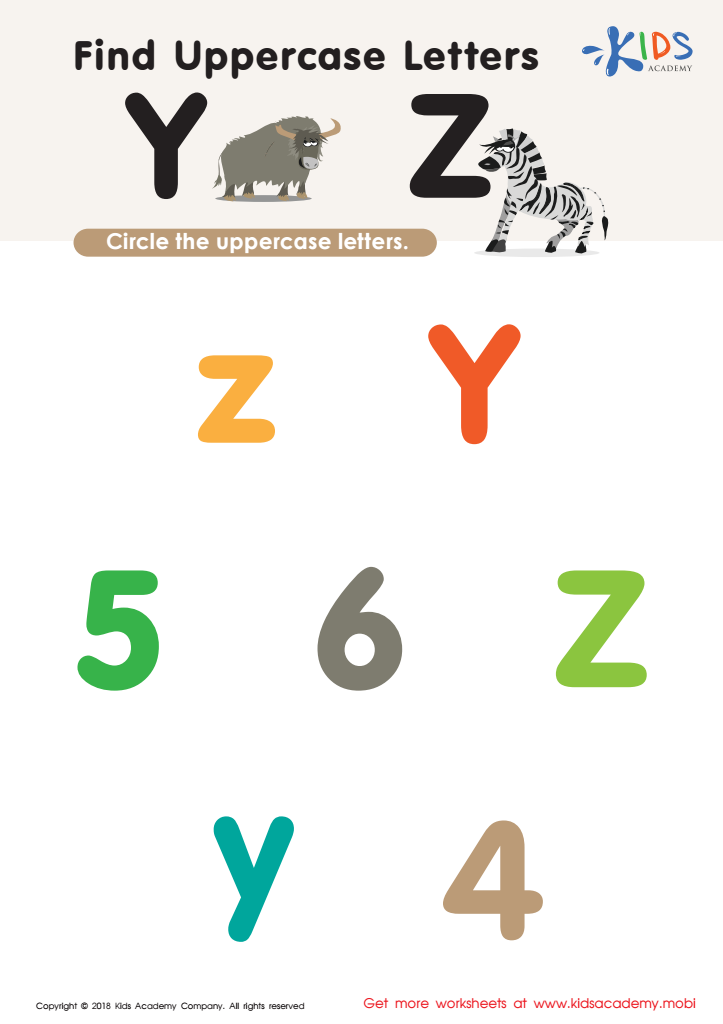
Find Uppercase Letters Y Z Worksheet
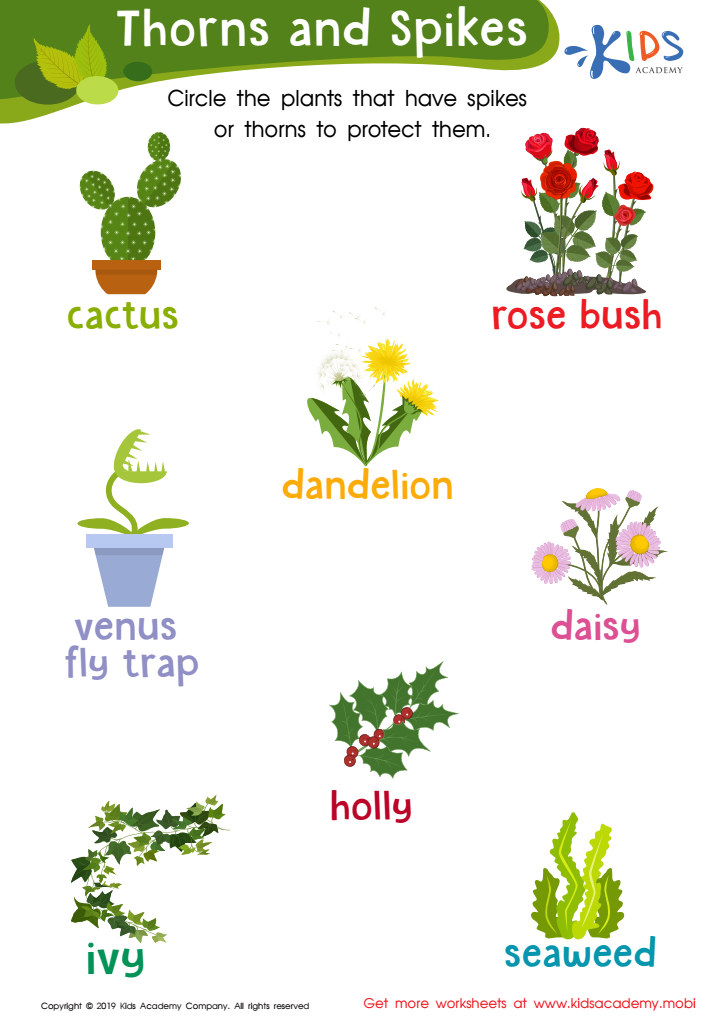
Thorns and Spikes Worksheet
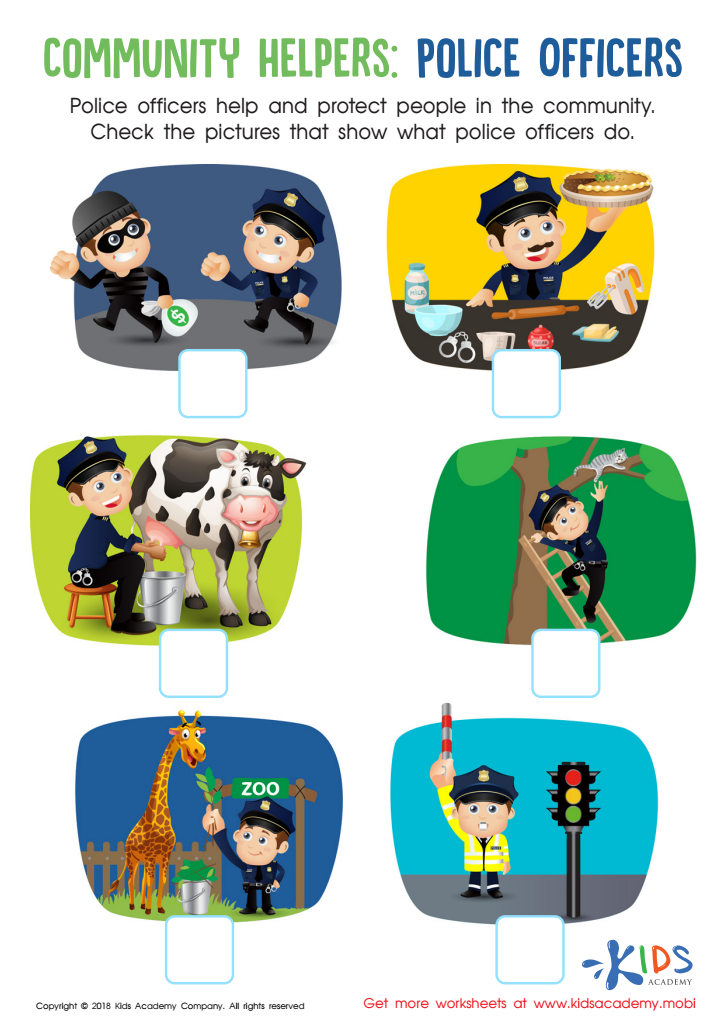
Police Officers Community Helpers Worksheet
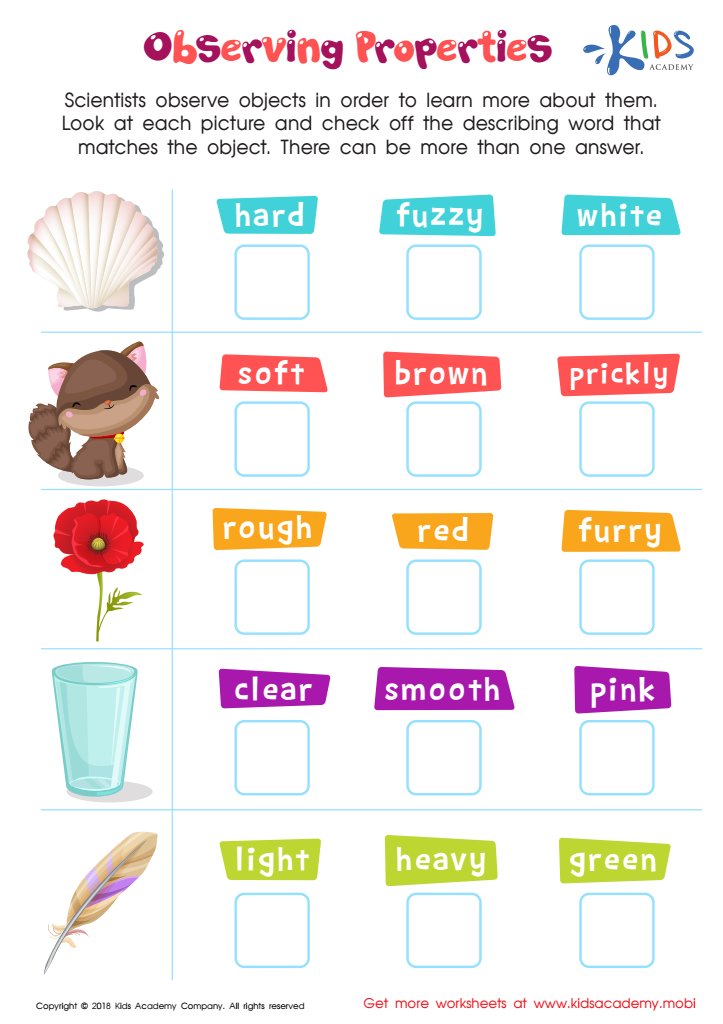
Observing Properties Worksheet
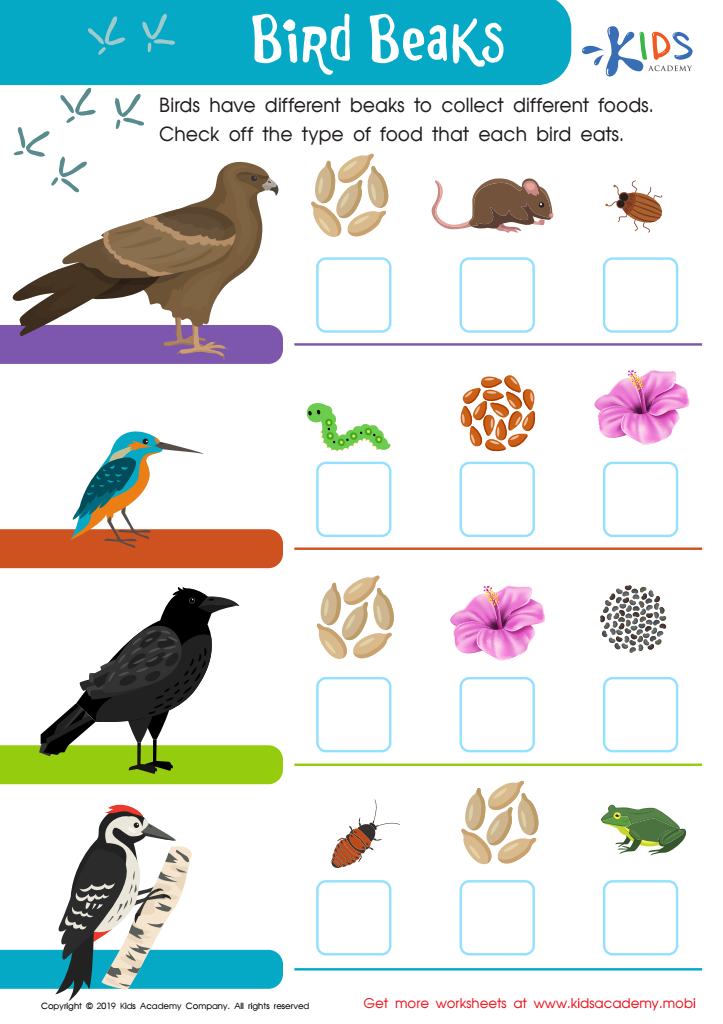
Bird Beaks Worksheet
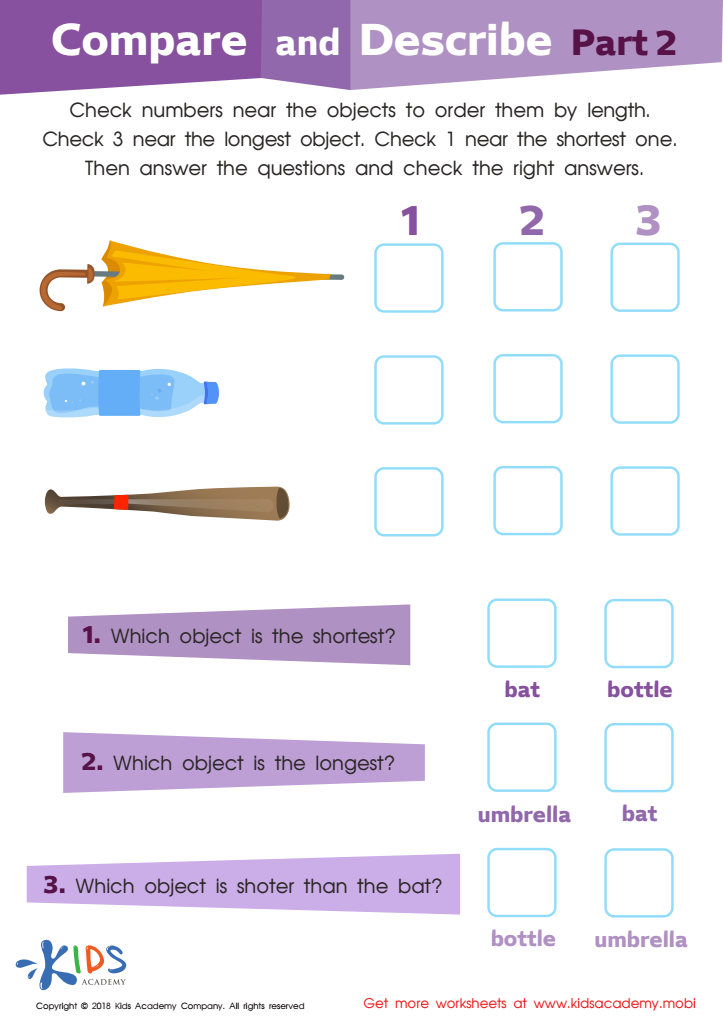
Compare and Describe: Part 2 Worksheet
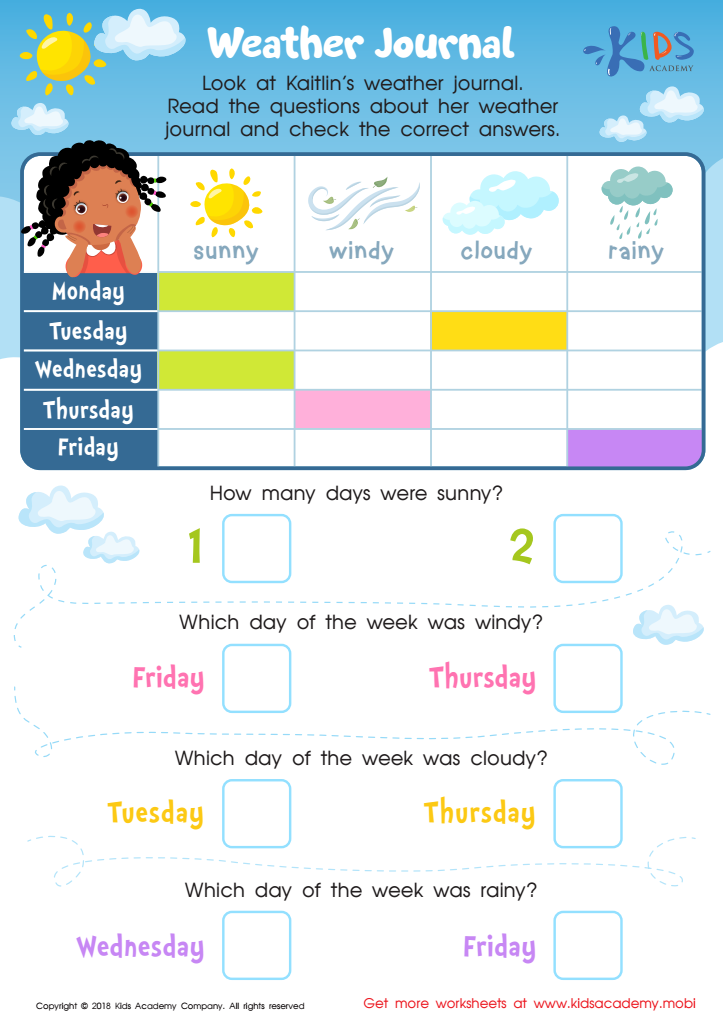
Weather Journal Worksheet
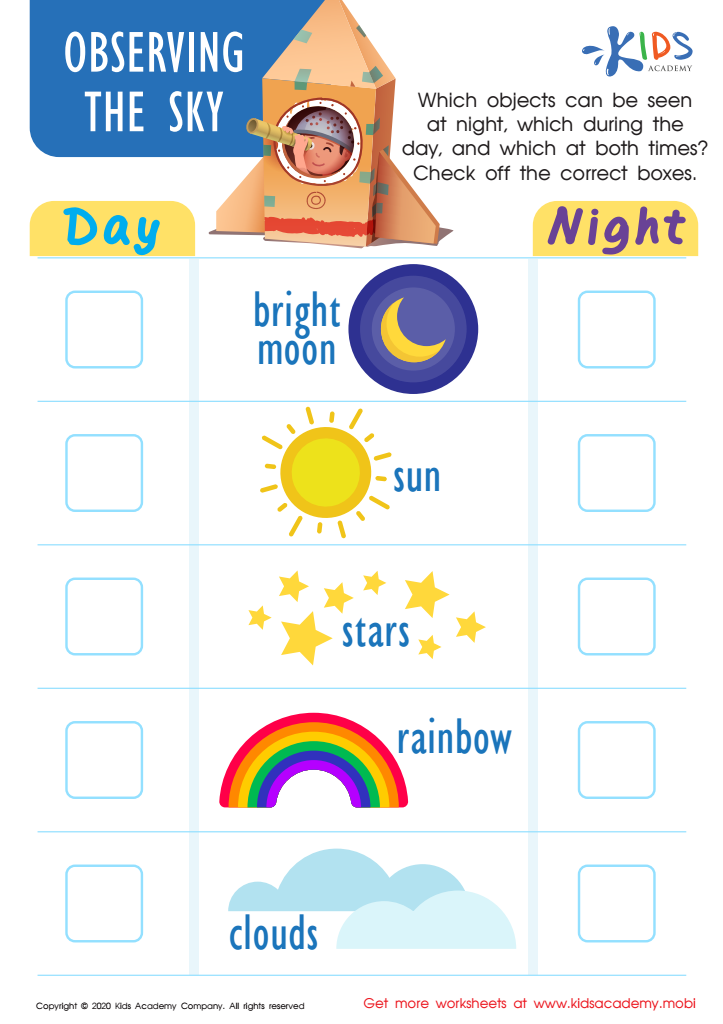
Observing the Sky Worksheet
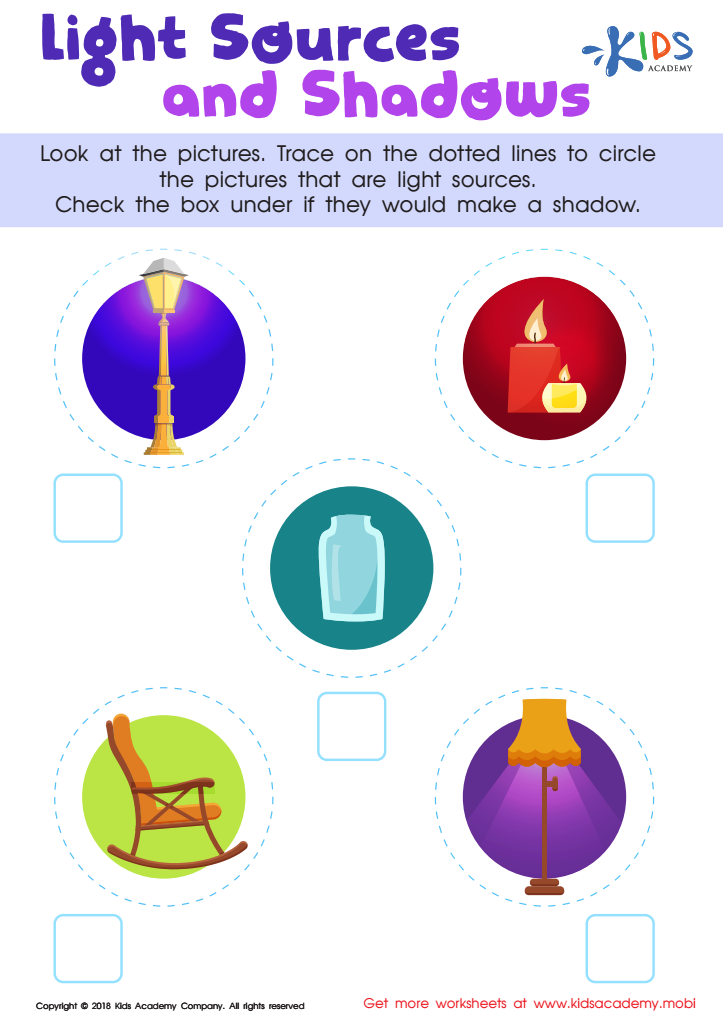
Light Sources and Shadows Worksheet
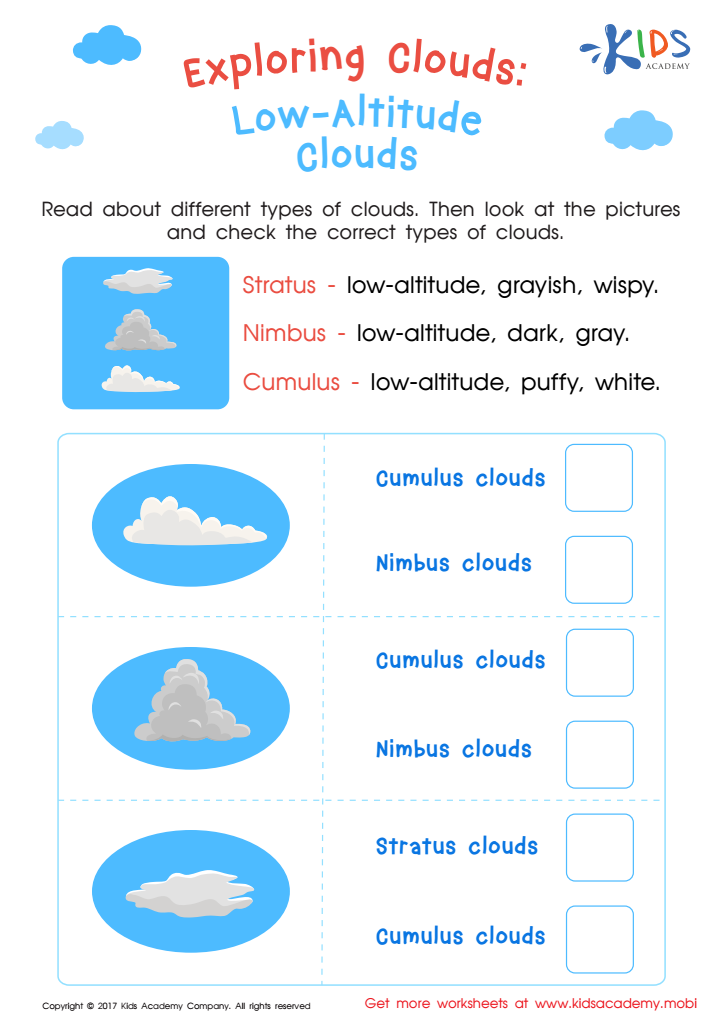
Exploring Clouds: Low Altitude Clouds Printable
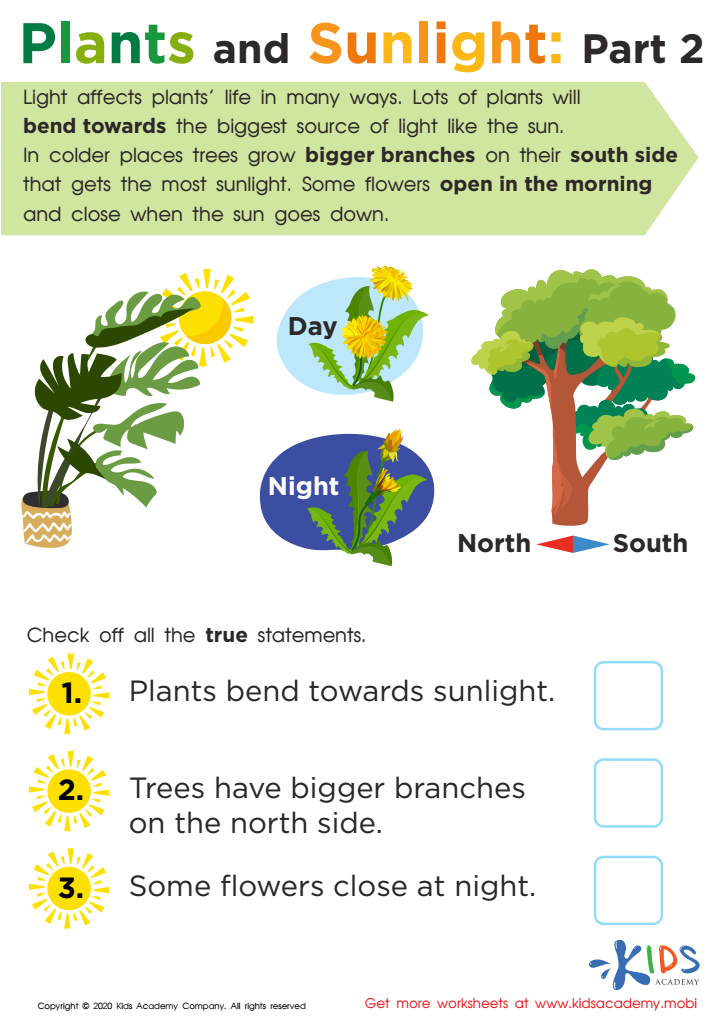
Plants and Sunlight: Part 2 Worksheet
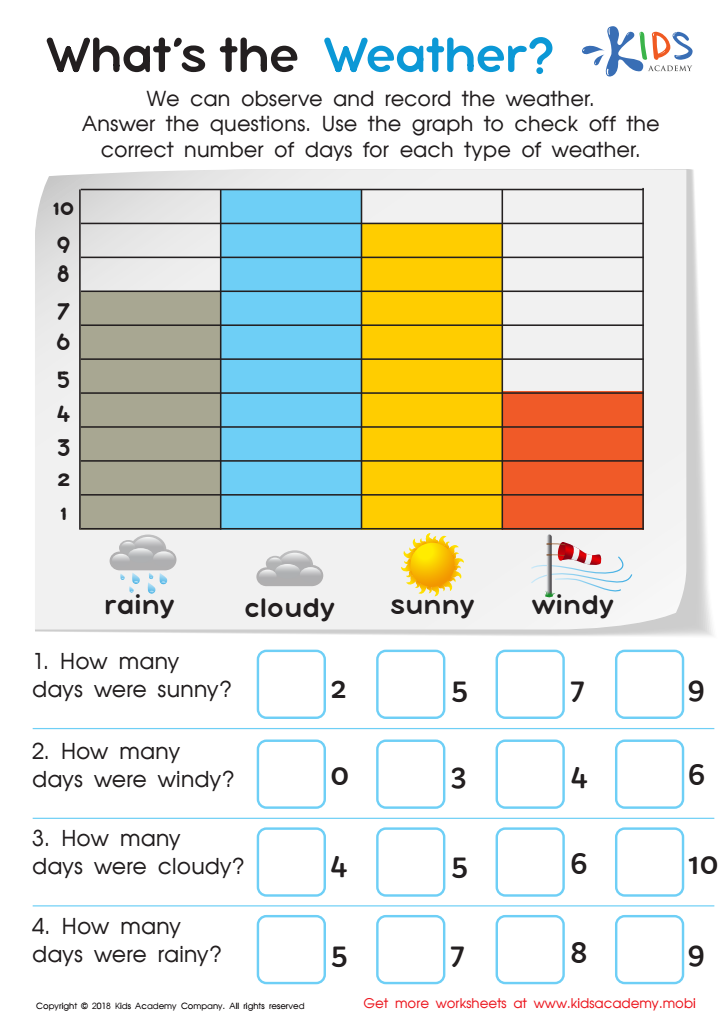
What's the Weather? Worksheet
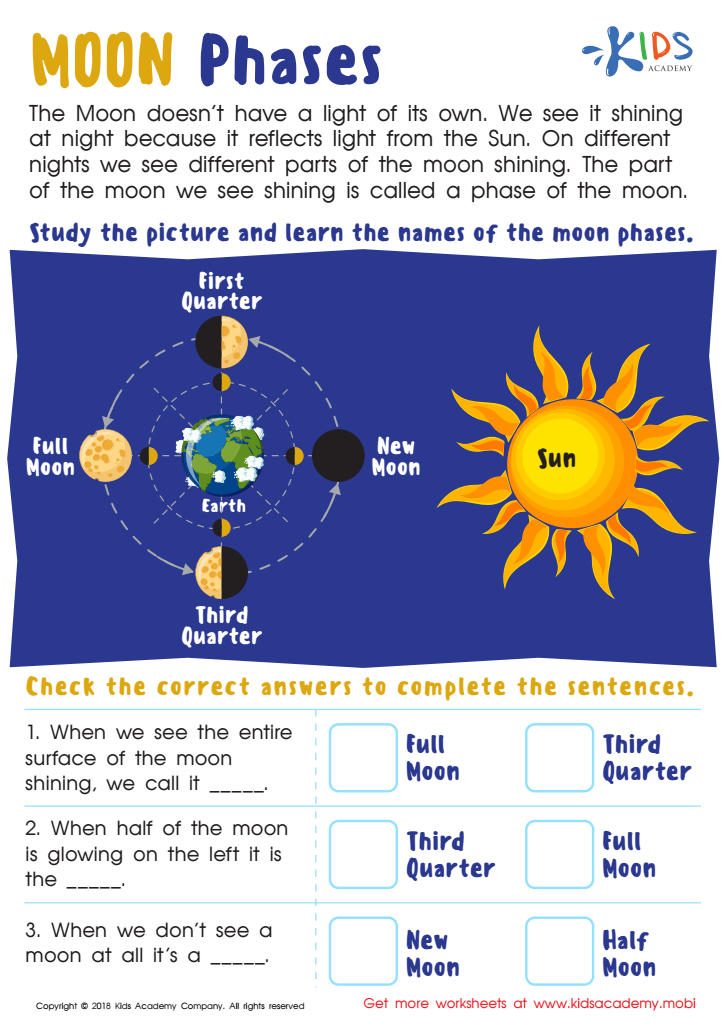
Moon Phases Worksheet
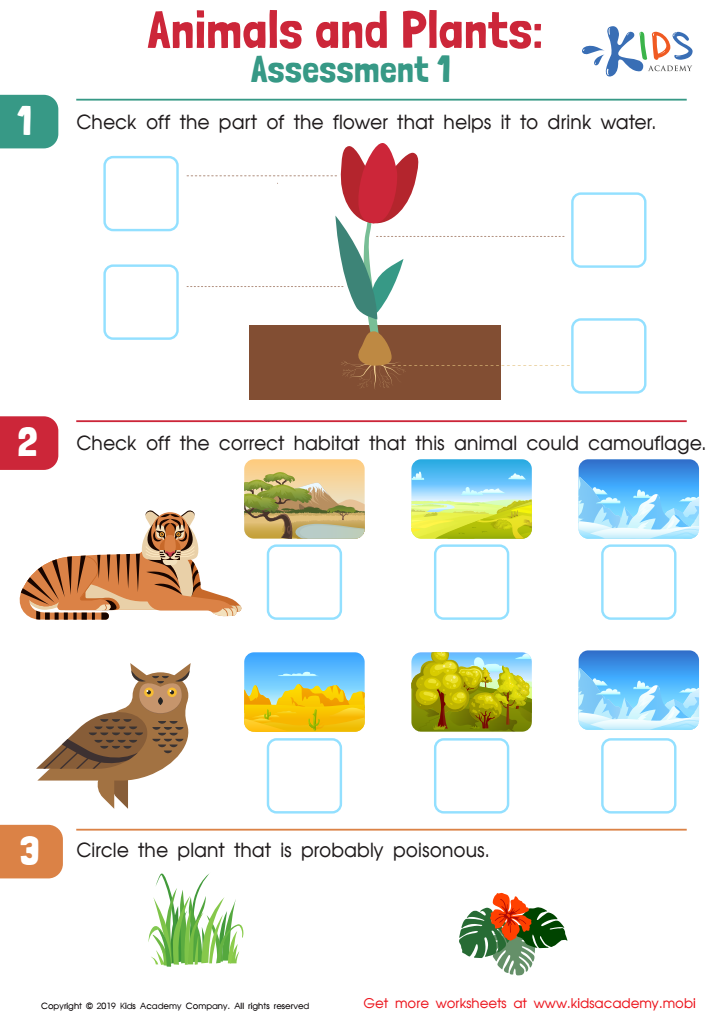
Animals and Plants: Assessment 1 Worksheet






.jpg)

Observational skills are crucial for children aged 5-7, as they lay the foundation for lifelong learning. At this developmental stage, children are naturally curious and begin to engage with their environment more critically. Strengthening their observational skills empowers them to notice details, draw connections, and develop critical thinking abilities.
When parents and teachers cultivate these skills, they enhance children's ability to understand instructions, interpret social cues, and engage in problem-solving. This age group is essential for concept formation; through careful observation, children learn to categorize objects, recognize patterns, and make comparisons, which are integral to math and science comprehension.
Furthermore, solid observational skills foster emotional intelligence. Children learn to read the emotions of those around them, aiding in empathy and social interactions. Team activities and cooperative learning enhance communication skills, making children better at articulating their thoughts.
By nurturing children's observational abilities, parents and teachers not only support academic success but also encourage holistic development that equips children with the skills needed to navigate the world around them. Observational skills are foundational for social, emotional, and intellectual growth, making them a priority for caregivers in these formative years.








