Sound recognition Normal Worksheets for Ages 5-7
13 filtered results
-
From - To
Unlock your child's auditory potential with our Sound Recognition Normal Worksheets tailored for ages 5-7. Designed by educational experts, these engaging worksheets focus on enhancing listening and phonetic skills. Each activity encourages children to identify and differentiate various sounds, promoting better reading and language competencies. Our fun and interactive exercises are perfect for both classroom use and at-home practice, helping young learners build a strong foundation in essential sound recognition skills. Build their confidence and make learning enjoyable with Kids Academy's expertly crafted worksheets. Download today and watch their auditory skills flourish!
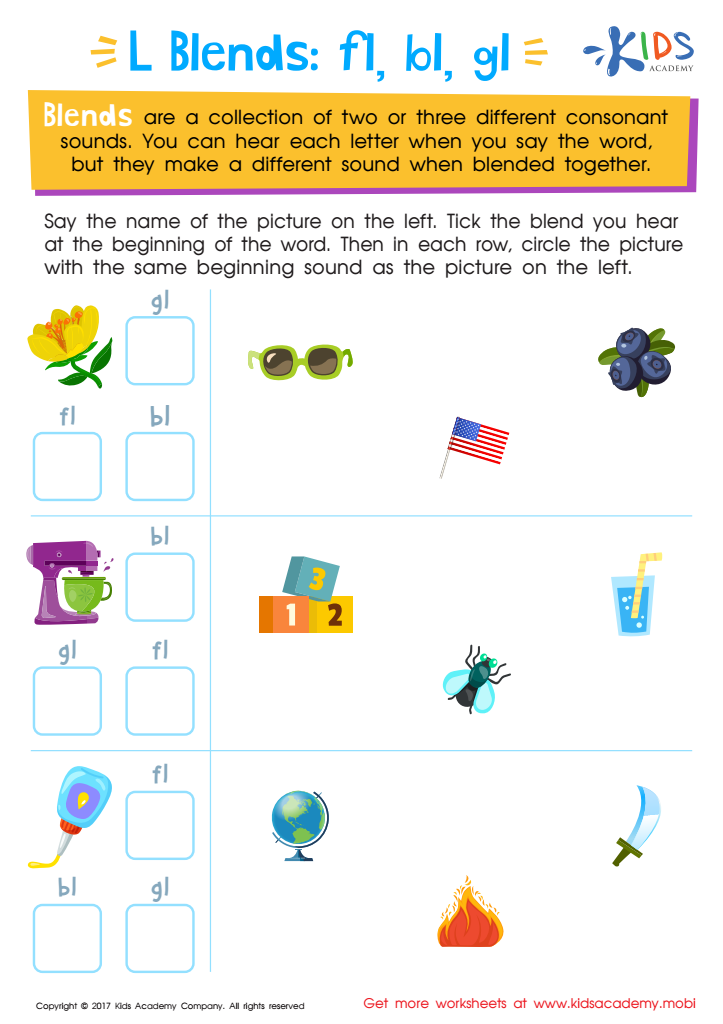
Blending Consonants: "Fl", "Bl" and "Gl" Printable
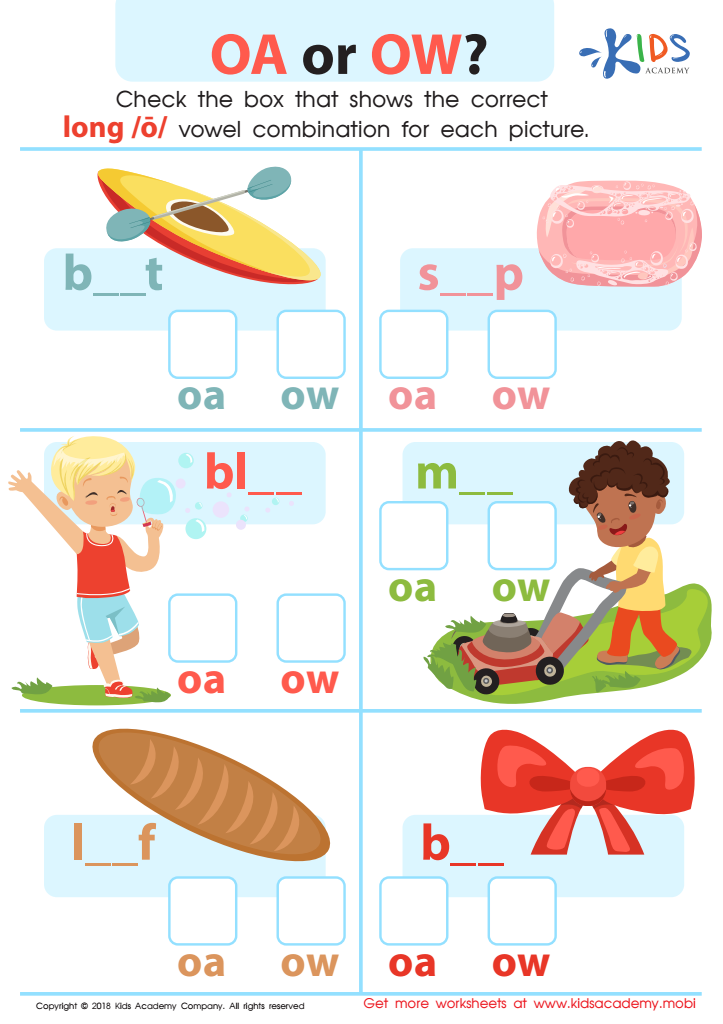
Reading: OA or OW Worksheet
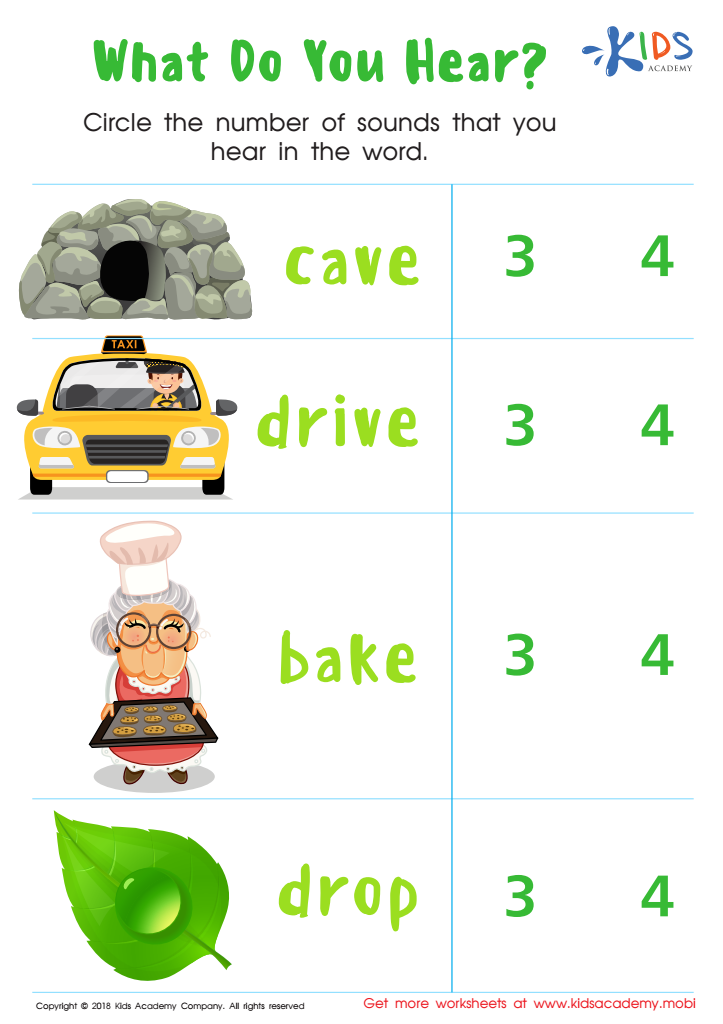
What Do You Hear? Worksheet
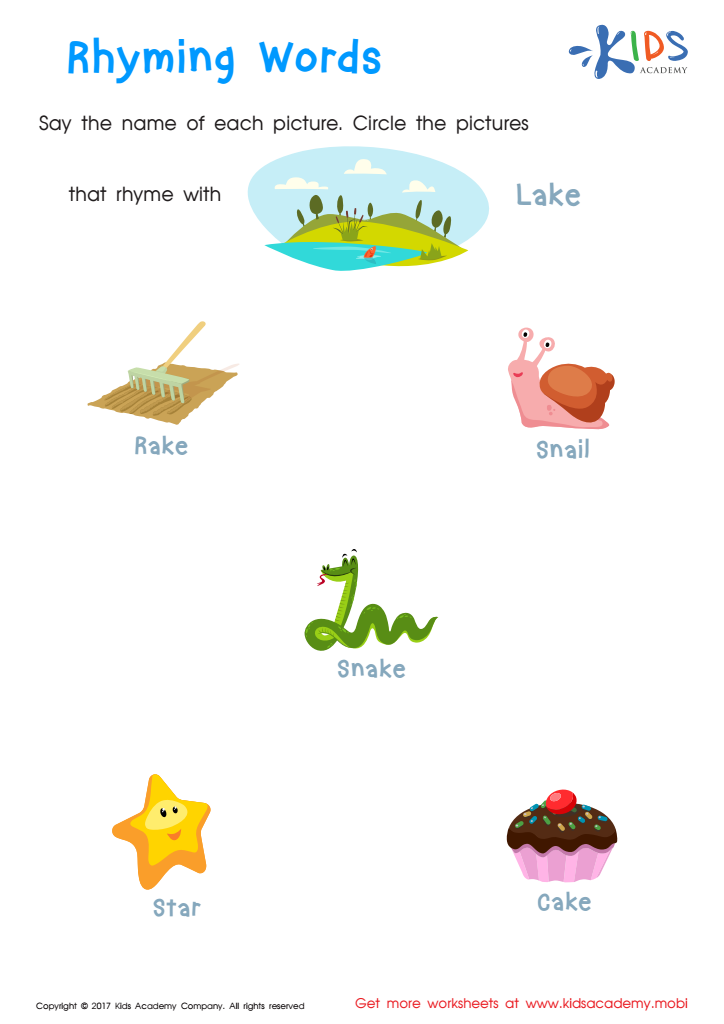
Rhyming Words Rhyming Worksheet
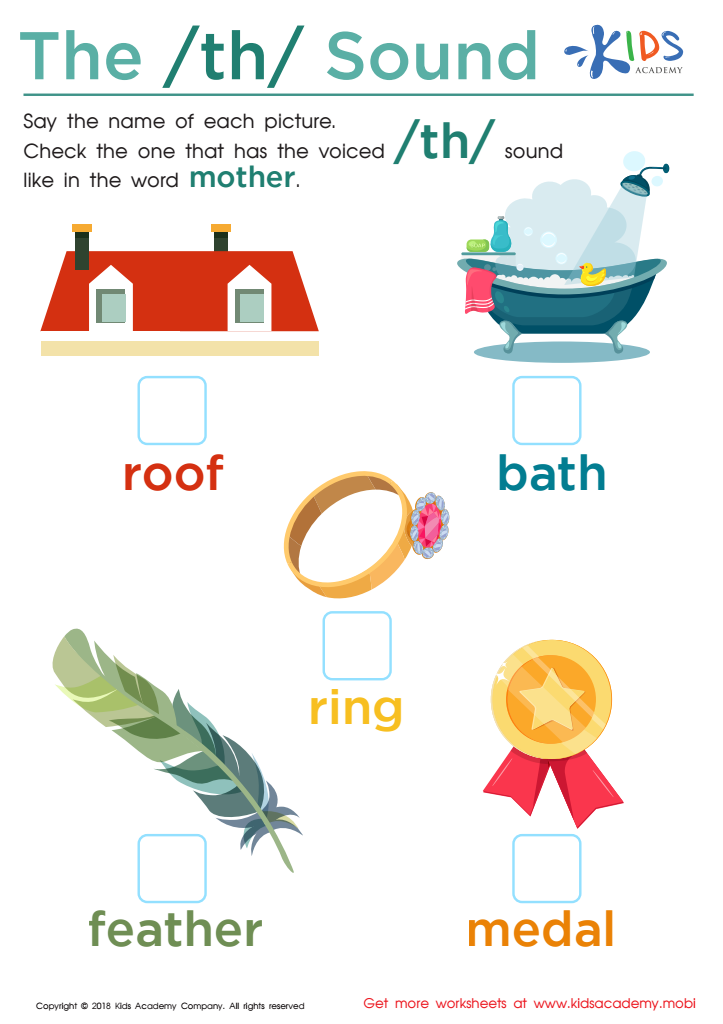
The /th/ Sound Worksheet
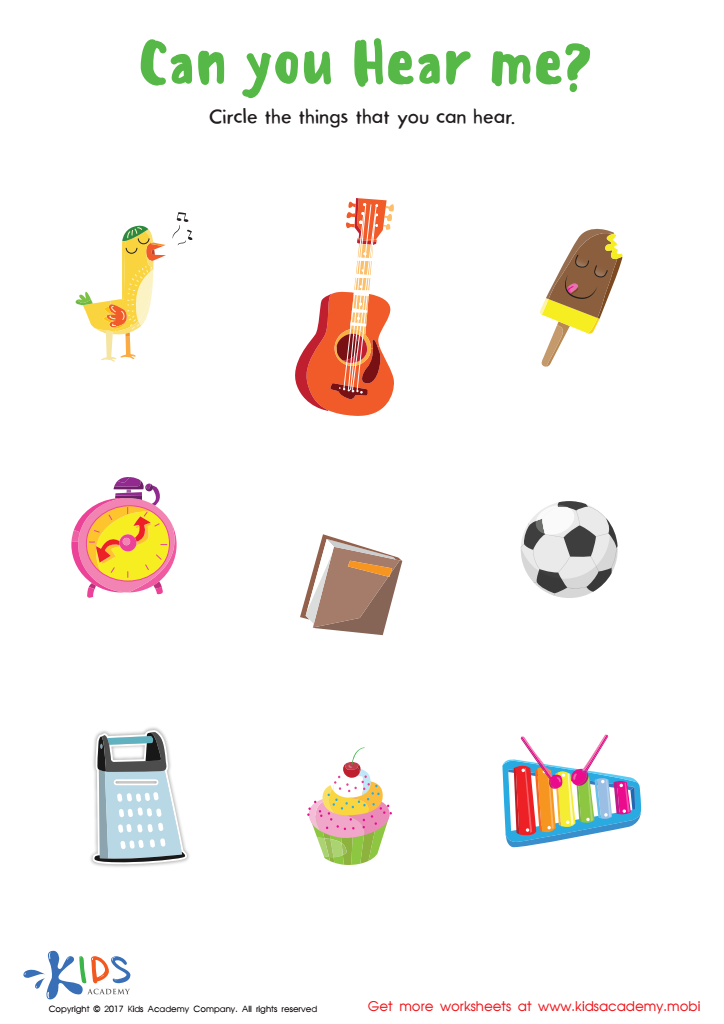
Can You Hear Me Worksheet
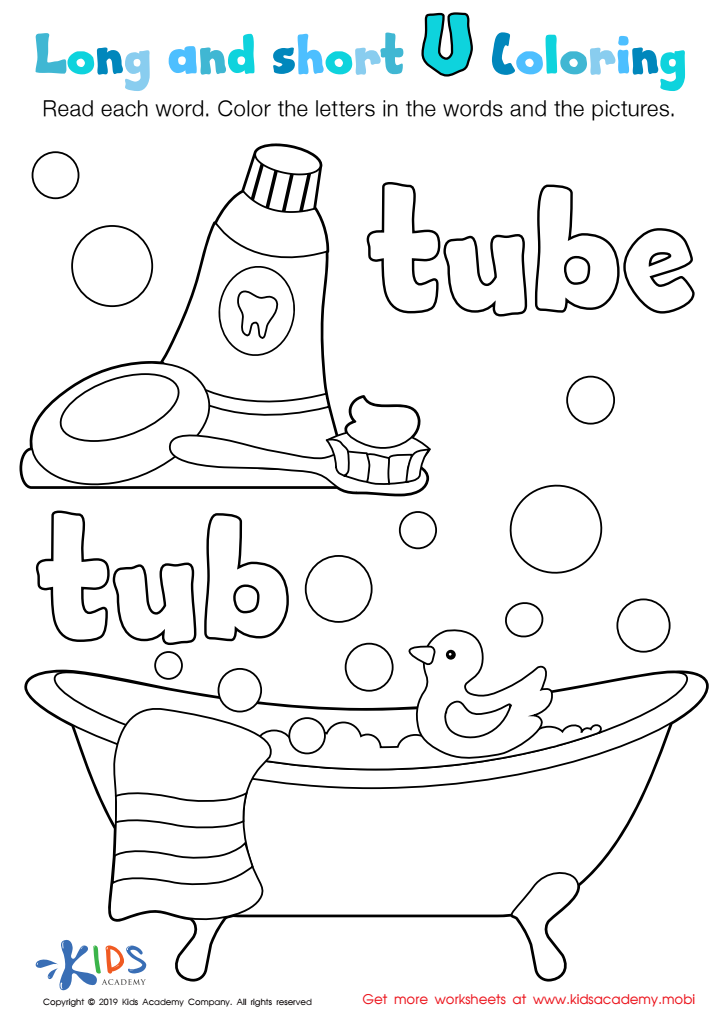
Long and Short U Worksheet
 Assign to My Students
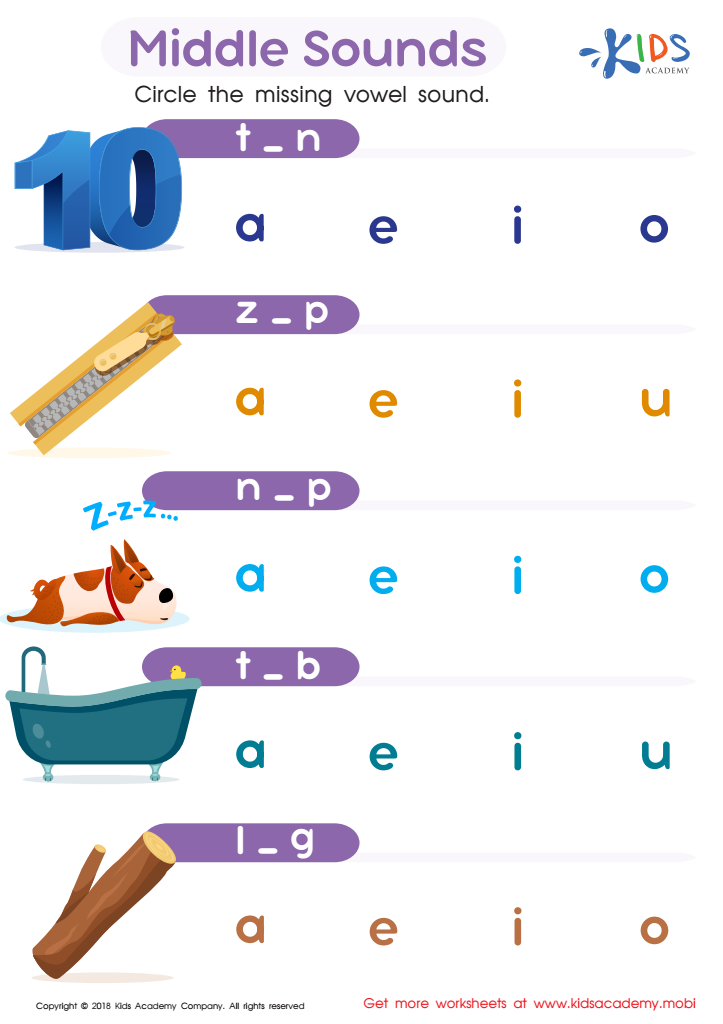
Middle Sounds Worksheet
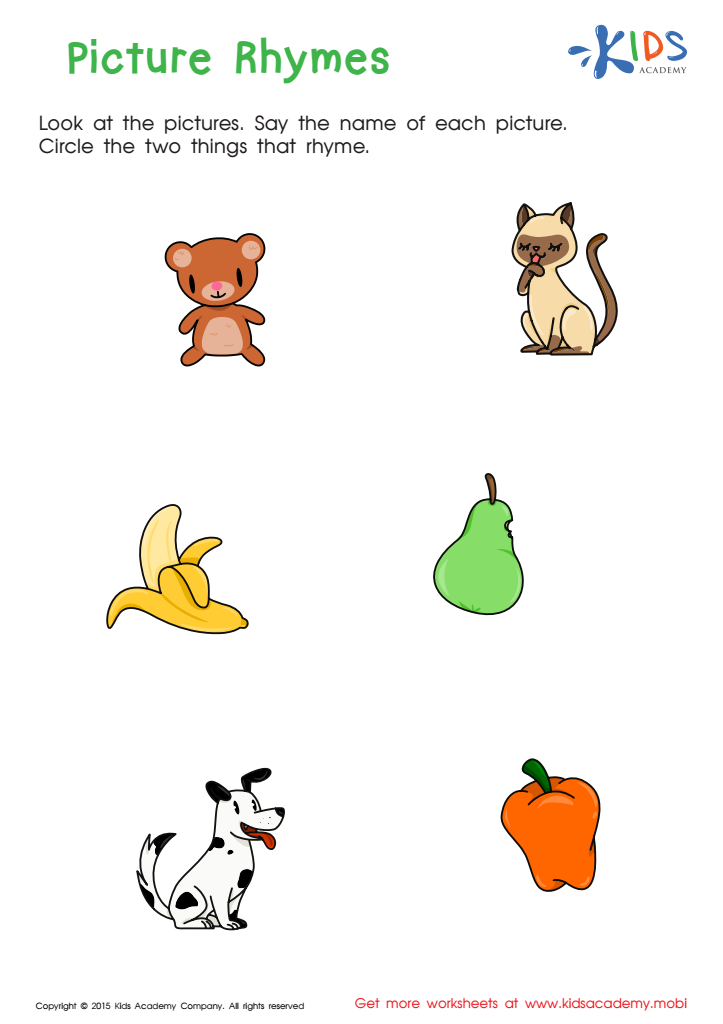
First Words: Picture Rhymes Worksheet
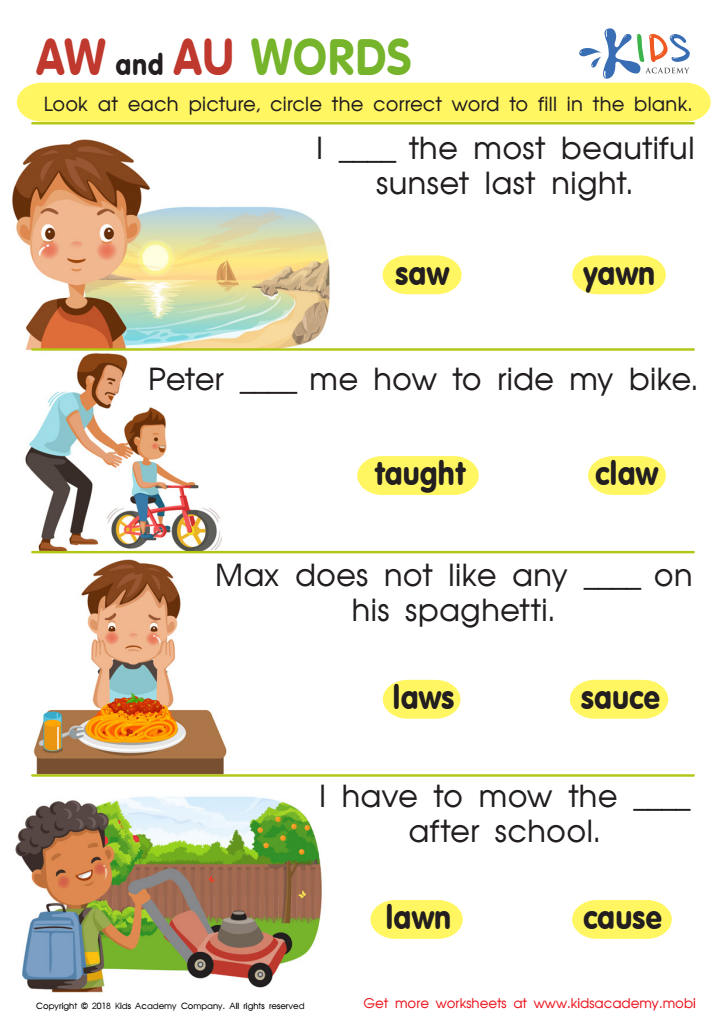
Reading: AW and AU Words Worksheet
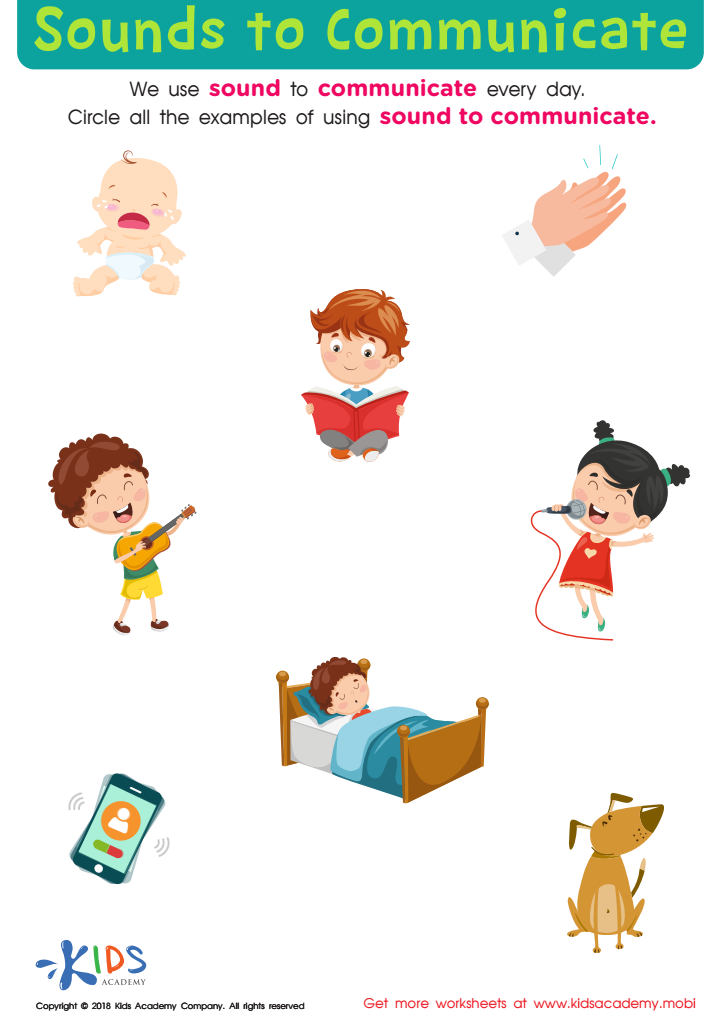
Sounds to Communicate Worksheet
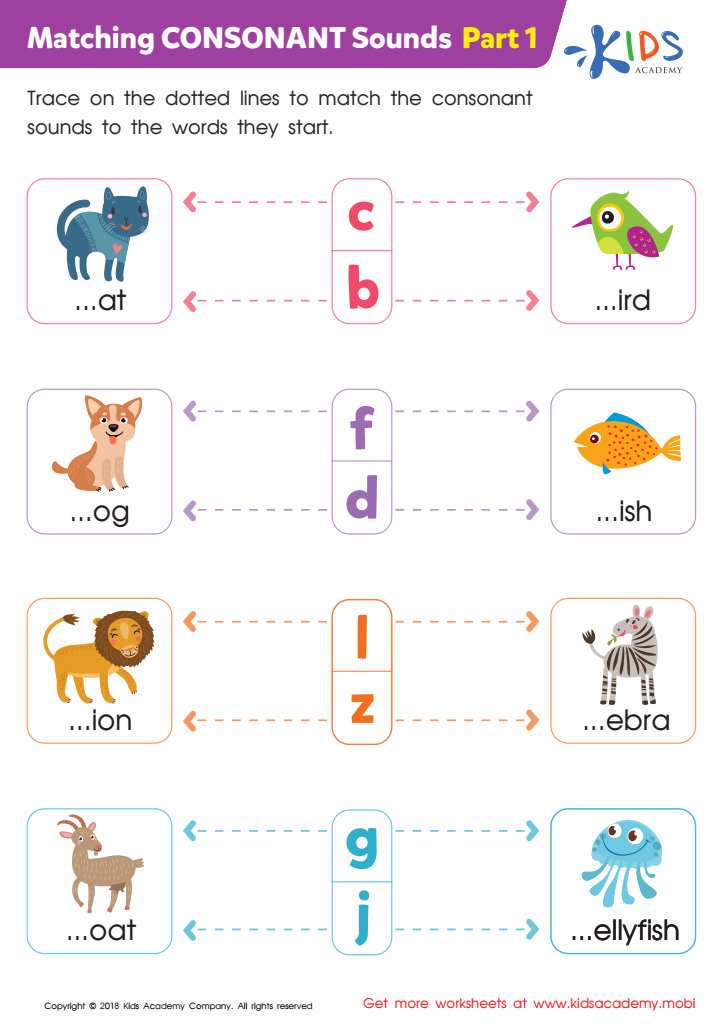
Matching Consonant Sounds: Part 1 Worksheet
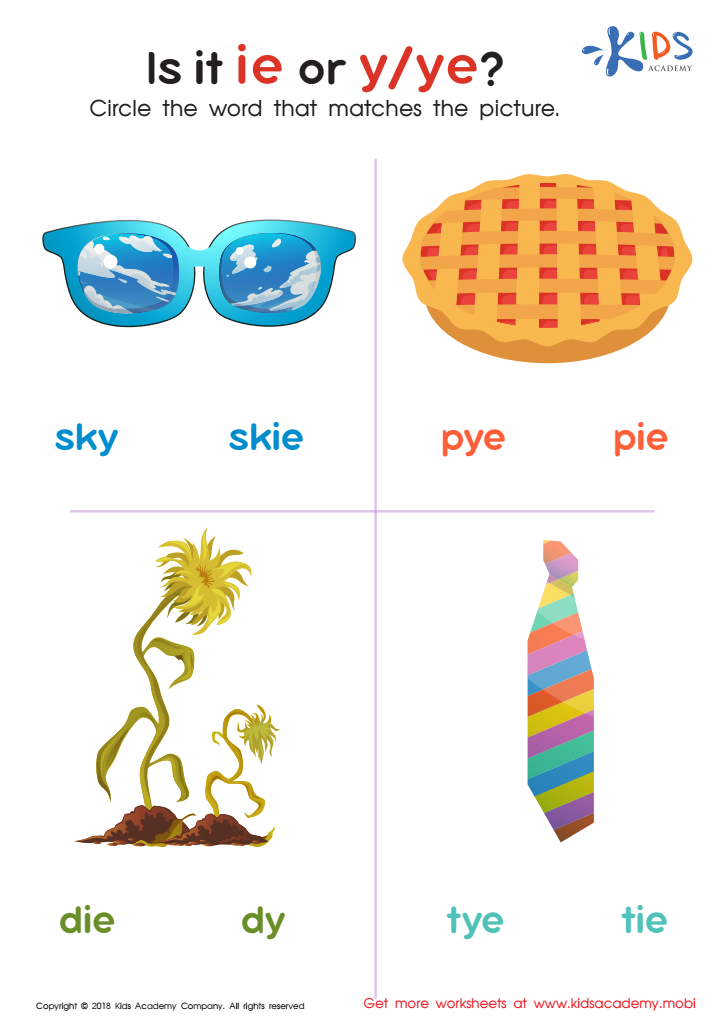
Is It IE or Y/Ye? Worksheet





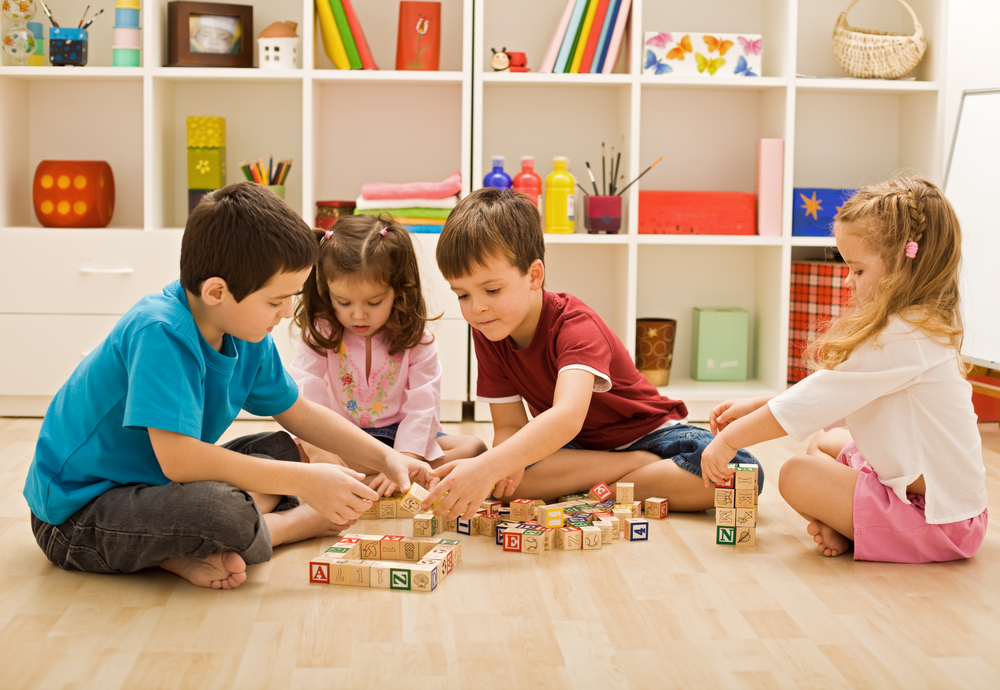


Sound recognition is a vital skill for young children, typically aged 5 to 7, as it significantly impacts their language development and literacy skills. Parents and teachers should prioritize it because it forms the foundation for reading and writing abilities.
At this age, children are beginning to learn the relationship between sounds and letters, known as phonemic awareness. This skill is crucial for decoding words, thus allowing children to read fluently. A child who can recognize and differentiate between sounds ("normal sound recognition") will more easily grasp spelling, pronunciation, and comprehension. Difficulty in this area can lead to struggles with reading, thereby affecting academic performance and self-confidence.
Moreover, sound recognition plays a crucial role in social and emotional development. Children learn to communicate more effectively, understanding and producing the correct sounds in speech. This ensures they can express themselves clearly and engage in more meaningful interactions with peers and adults.
Parents and teachers can support sound recognition by engaging in activities like reading aloud, playing rhyming games, and encouraging attentive listening. Addressing any early signs of difficulty can provide intervention opportunities, potentially preventing more serious literacy challenges later on. Thus, investing time in developing sound recognition skills in young children lays a strong foundation for future learning and communication success.








