Syllable identification Normal Worksheets for Ages 5-7
4 filtered results
-
From - To
Our Syllable Identification Worksheets for ages 5-7 make learning fun and effective! Designed to strengthen early reading skills, these worksheets help young learners identify and count syllables in words. With engaging activities and colorful illustrations, children will enjoy developing their phonemic awareness. Each worksheet promotes confidence in reading and speaking by breaking down words into manageable syllables. Perfect for classroom use or at-home practice, these resources support individualized learning. Watch as your child gains mastery in this foundational skill, setting the stage for future literacy success. Explore our free printable worksheets today to give your child a head start!
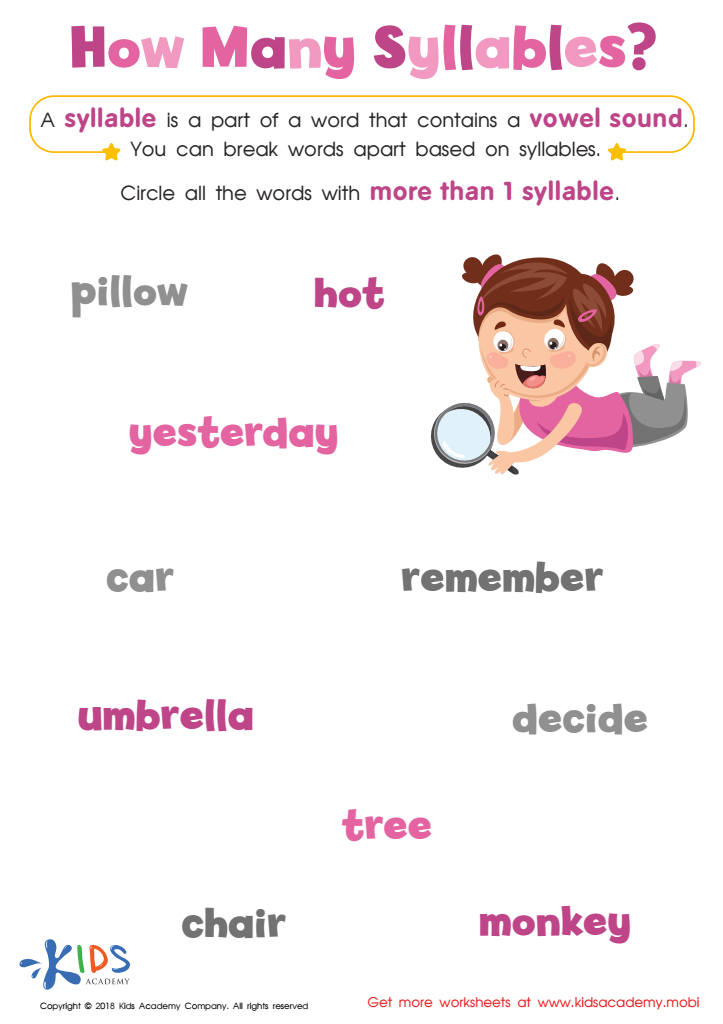
Reading: How Many Syllables Worksheet
 Assign to My Students
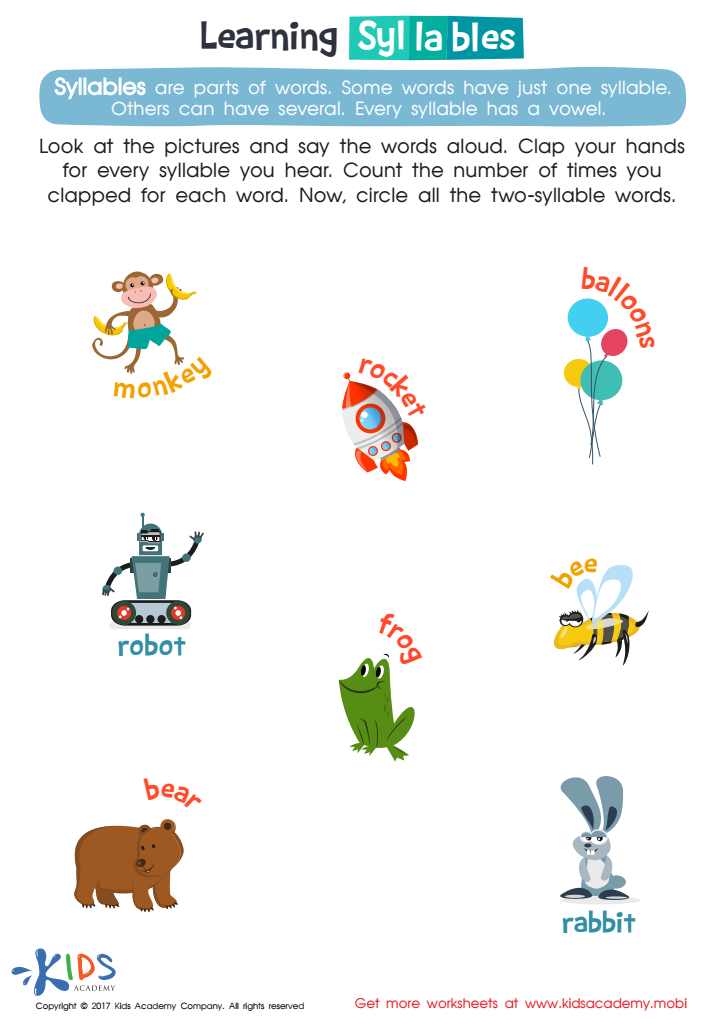
Learning Syllables Word Structure Worksheet
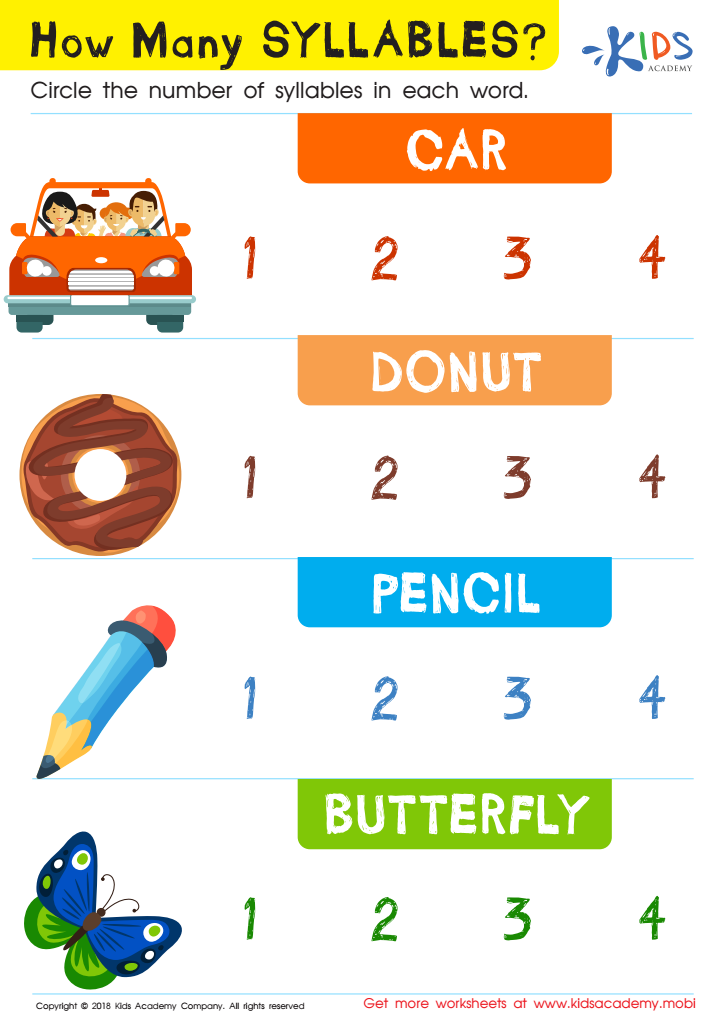
How Many Syllables? Worksheet
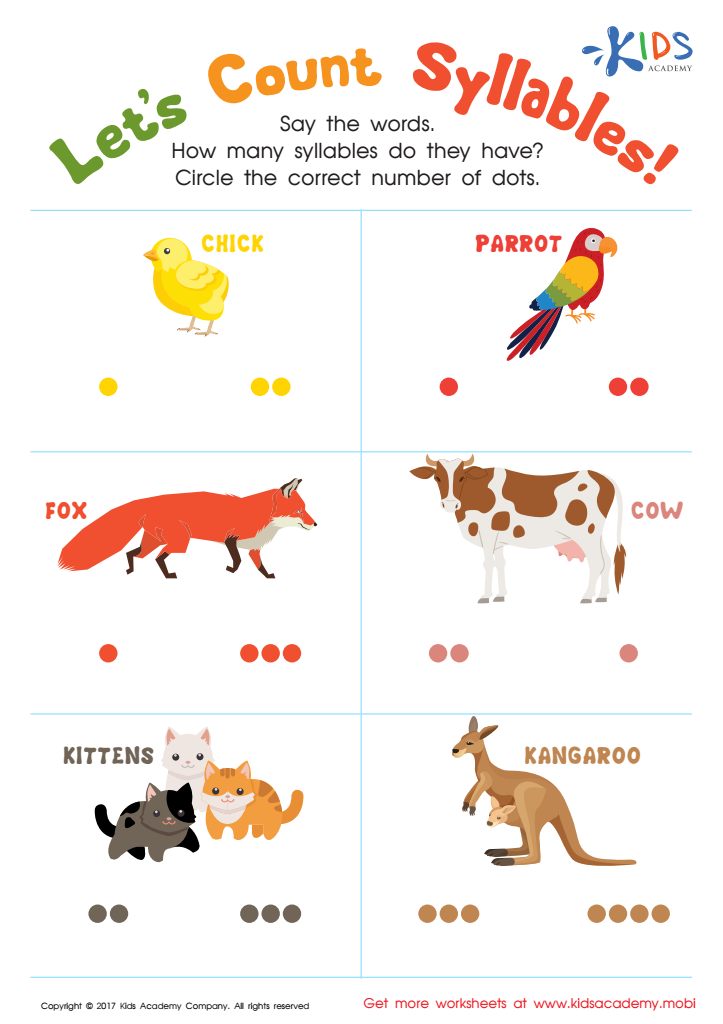
Lets Count Syllables Worksheet







.jpg)
Syllable identification is a fundamental aspect of early literacy development, crucial for children aged 5-7. At this age, kids are beginning their journey into reading and writing, and understanding syllables—units of sound in a word—plays a vital role in this process. Syllable identification helps children with phonological awareness, which is the ability to hear and manipulate the sound structures in words. This skill is an early predictor of reading success.
When children learn to break words into syllables, they can better decode unfamiliar words, enhancing their reading fluency and comprehension. For example, recognizing that the word "fantastic" can be divided into three syllables (fan-tas-tic) makes it more manageable for young readers.
Moreover, syllable identification supports spelling abilities. By understanding how words can be broken down into smaller parts, children can tackle the spelling of complex words more easily. This skill also lays the foundation for more advanced literacy skills, such as understanding word stress and rhythm in reading aloud, which contribute to better oral reading and effective communication.
Teachers and parents who emphasize syllable identification provide children with the tools they need for academic success and a lifelong love of reading. Ensuring young learners master this skill can reduce future literacy challenges and foster confidence in learning.








