Understanding fractions Normal Worksheets for Ages 5-7
6 filtered results
-
From - To
Explore our “Understanding Fractions Normal Worksheets” designed specifically for ages 5-7. These engaging worksheets help young learners grasp the fundamental concepts of fractions in a playful and intuitive way. With colorful illustrations and interactive exercises, children will develop a solid foundation in recognizing, comparing, and working with fractions. Each worksheet is tailored to reinforce key skills through fun activities that spark curiosity and inspire learning. Perfect for classroom use or at-home practice, these resources aim to make math fun and accessible for early learners. Start your child's journey to mathematical confidence today with our comprehensive collection of fraction worksheets!
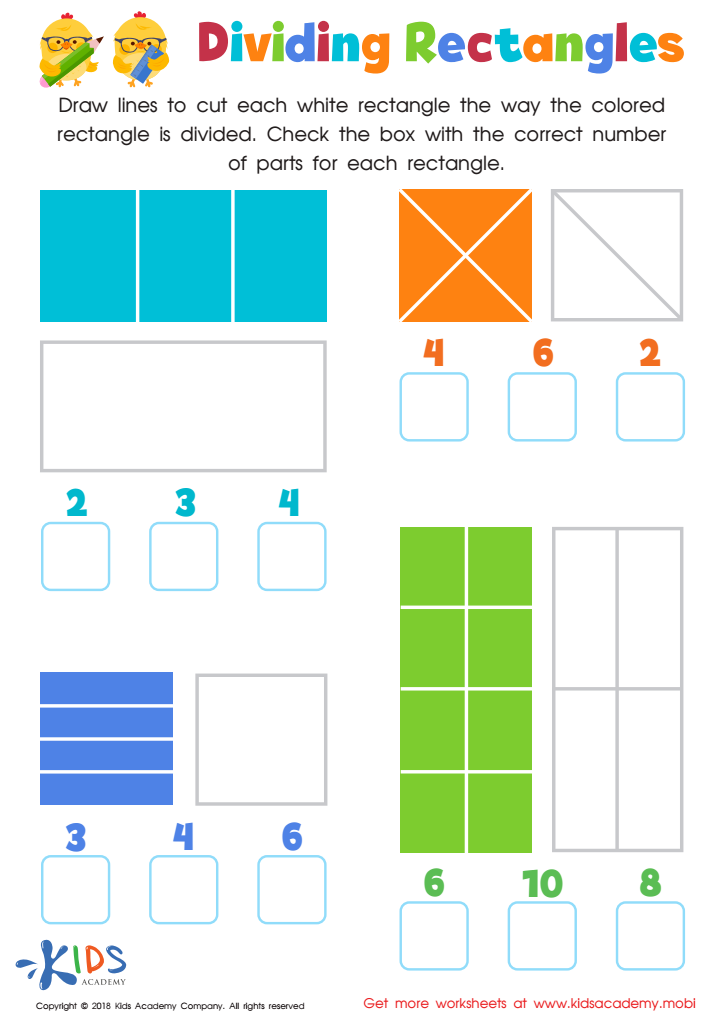
Dividing Rectangles Worksheet
 Assign to My Students
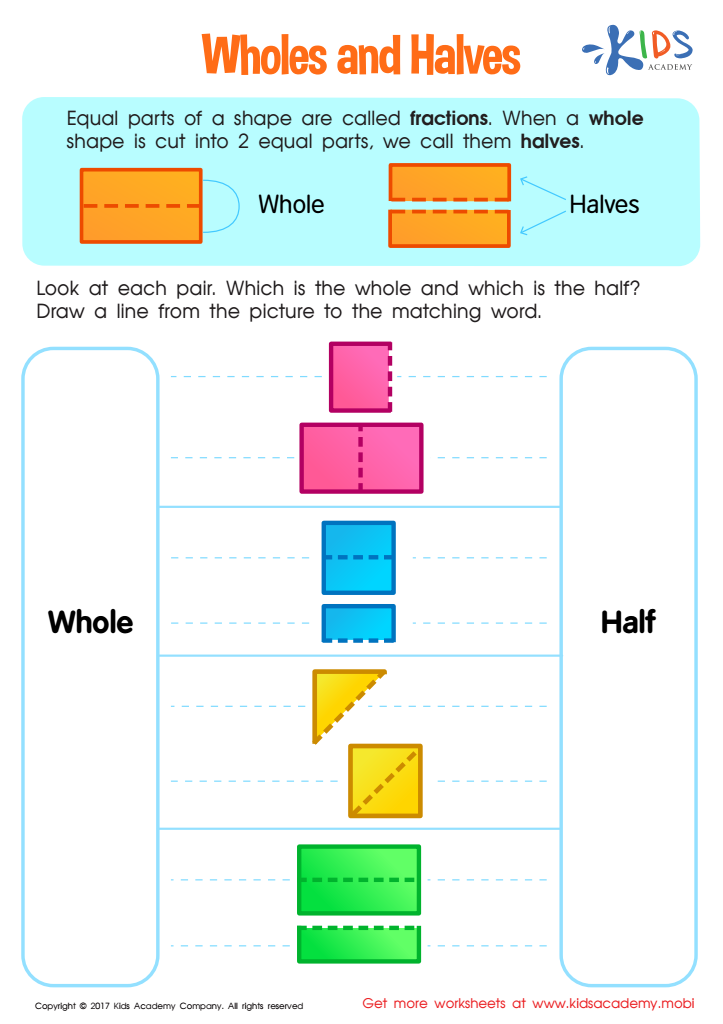
Wholes and Halves Worksheet
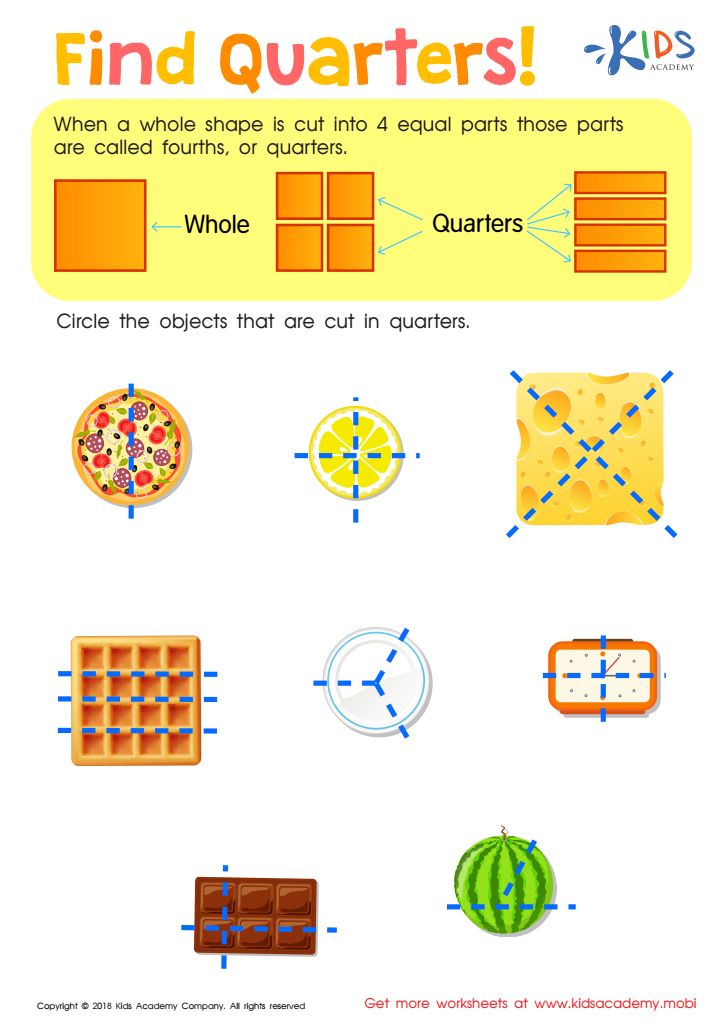
Find Quarters Worksheet
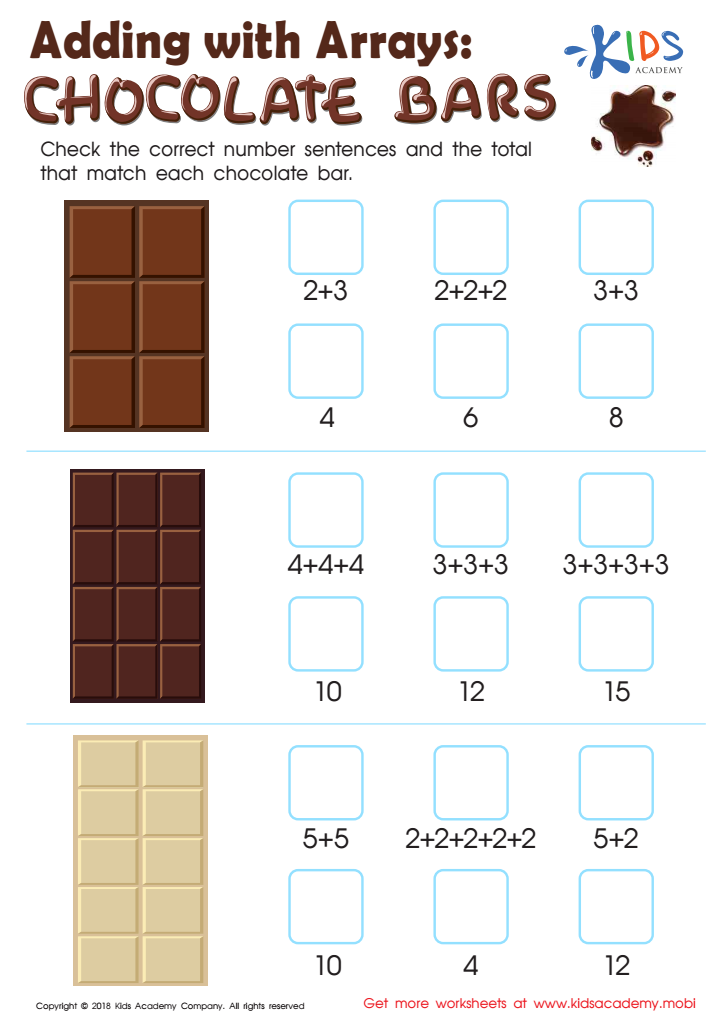
Adding with Arrays: Chocolate Bars Worksheet
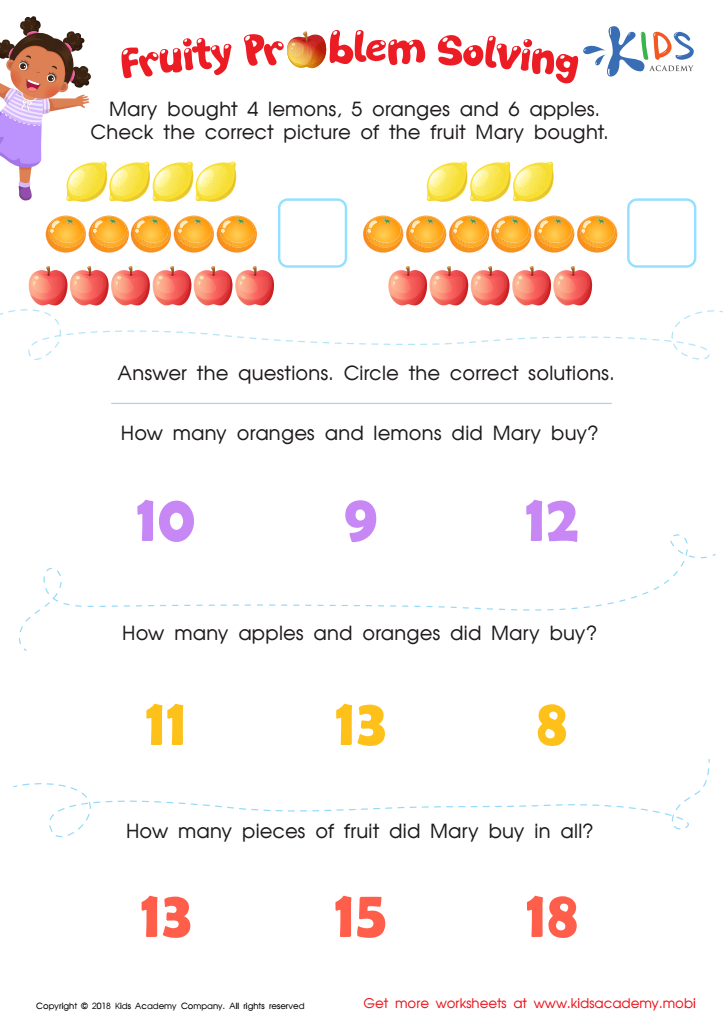
Fruity Problem Solving Worksheet
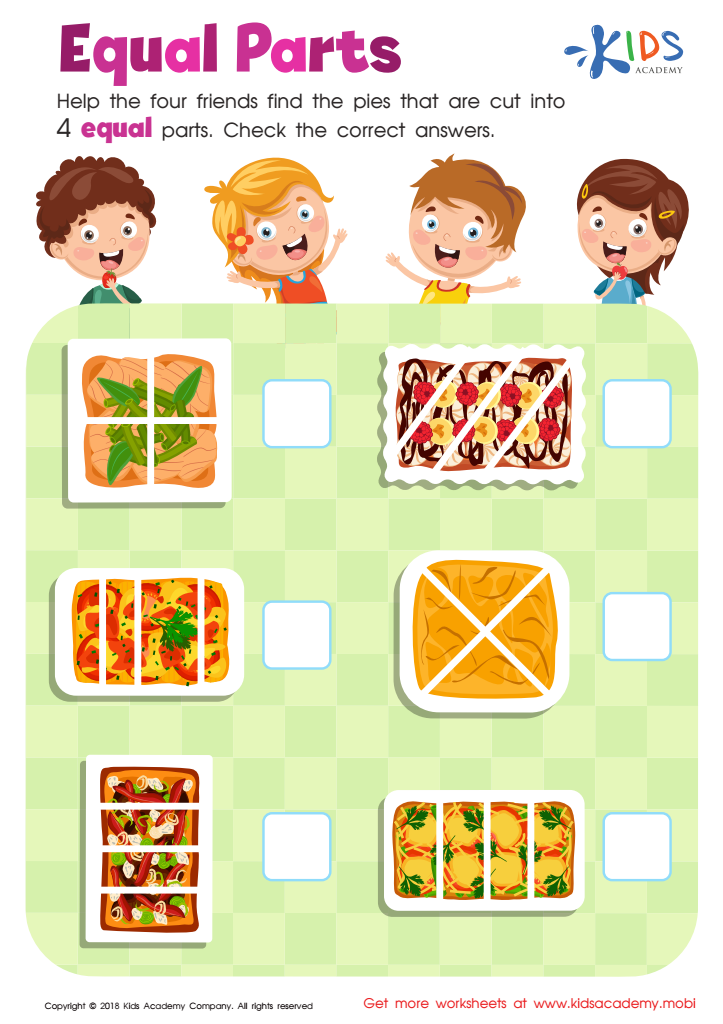
Equal Parts: Food Worksheet






Understanding fractions is a critical milestone for children ages 5-7, and both parents and teachers should prioritize this concept in their educational approach. Fractions form the foundation for essential mathematical skills that children will rely on throughout their academic journey. When children grasp the idea that fractions represent parts of a whole, they develop a stronger number sense, which is vital for more complex mathematics, like addition, subtraction, and even early algebra.
Moreover, understanding fractions aids in the development of critical thinking and problem-solving skills. For instance, when children learn to divide objects into equal parts, they cultivate a sense of fairness and equity, which are essential social concepts. Engaging in lessons involving fractions also allows children to apply math in real-world scenarios—whether through sharing food, measuring ingredients in cooking, or dividing items in play, these experiences reinforce learning and cultivate excitement about math.
Ultimately, fostering a solid understanding of fractions at this early stage can make children more confident in math, leading to positive attitudes and higher achievement as they progress through their education. As a joint effort, parents and teachers can create enriched learning environments where these fundamental concepts flourish.








