Understanding measurements Normal Worksheets for Ages 5-7
8 filtered results
-
From - To
Discover engaging and educational worksheets designed to help children aged 5-7 grasp the concept of measurements. Our "Understanding Measurements Normal Worksheets" provide fun activities that introduce young learners to essential measurement skills, including length, weight, and volume. With vibrant illustrations and age-appropriate exercises, these worksheets encourage hands-on learning and critical thinking. Children will enhance their understanding of measurements through practical examples and interactive challenges that promote active participation. Perfect for classroom or home learning, these resources support early mathematical development and make learning measurements enjoyable. Equip your young learners with the skills they need for future success in math!
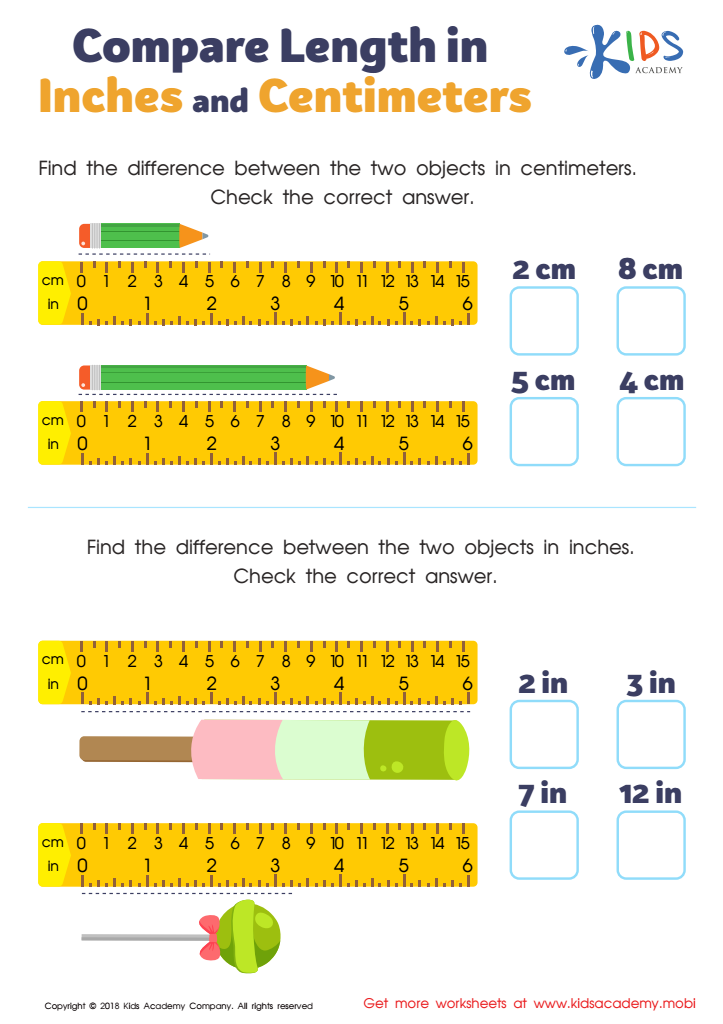
Compare Length in Inches and Centimeters Worksheet
 Assign to My Students
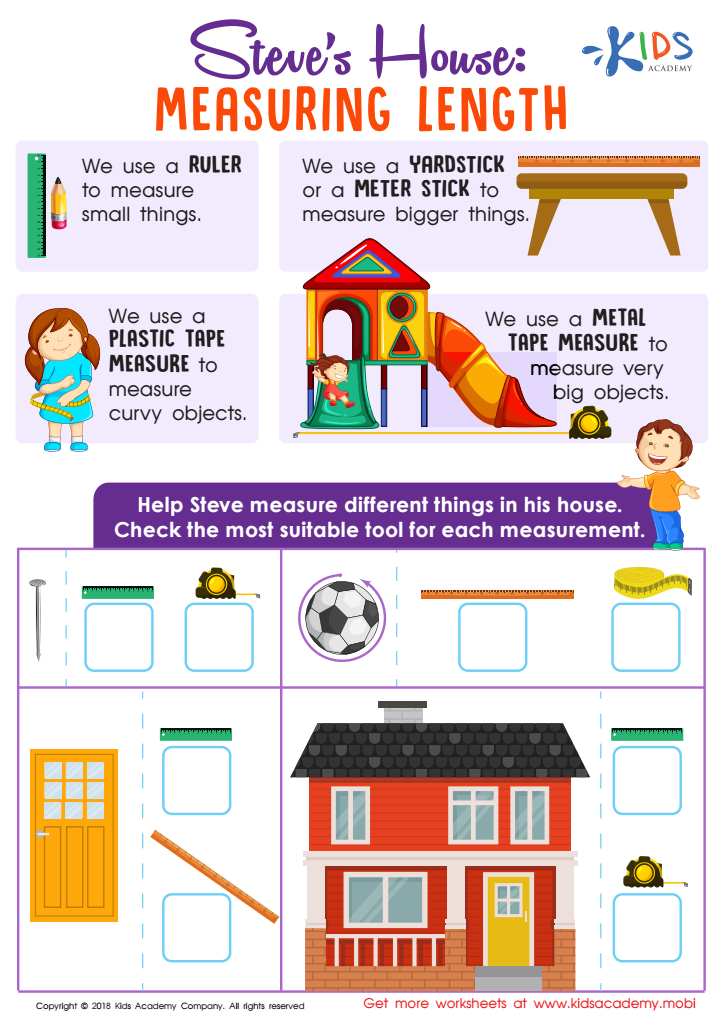
Steve's House: Measuring Length Worksheet
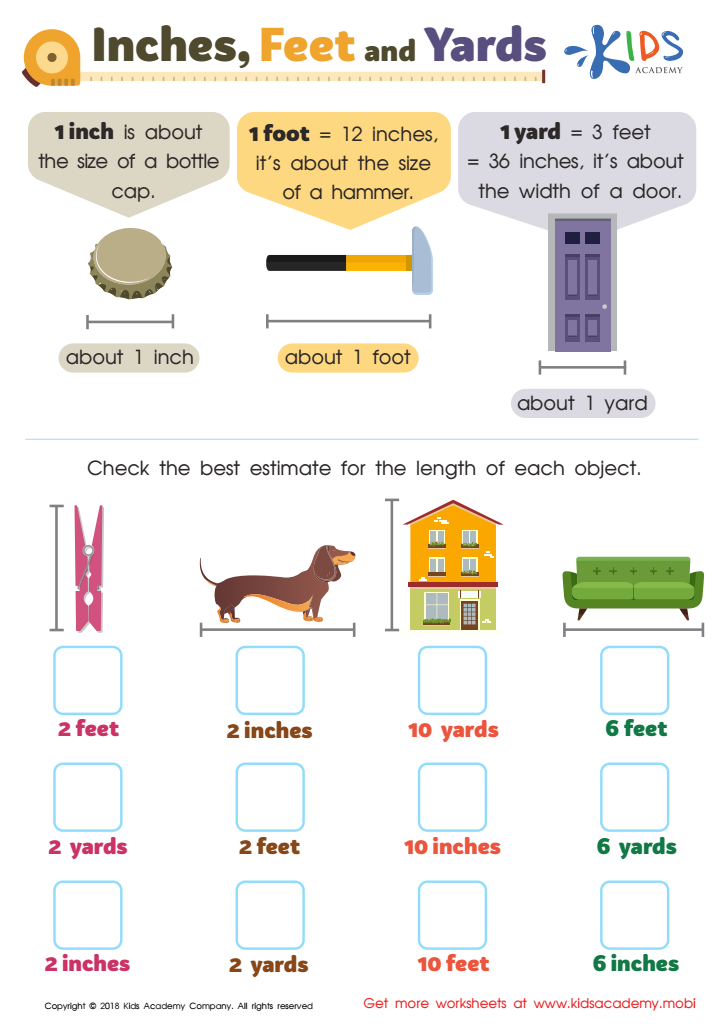
Inches, Feet and Yards Worksheet
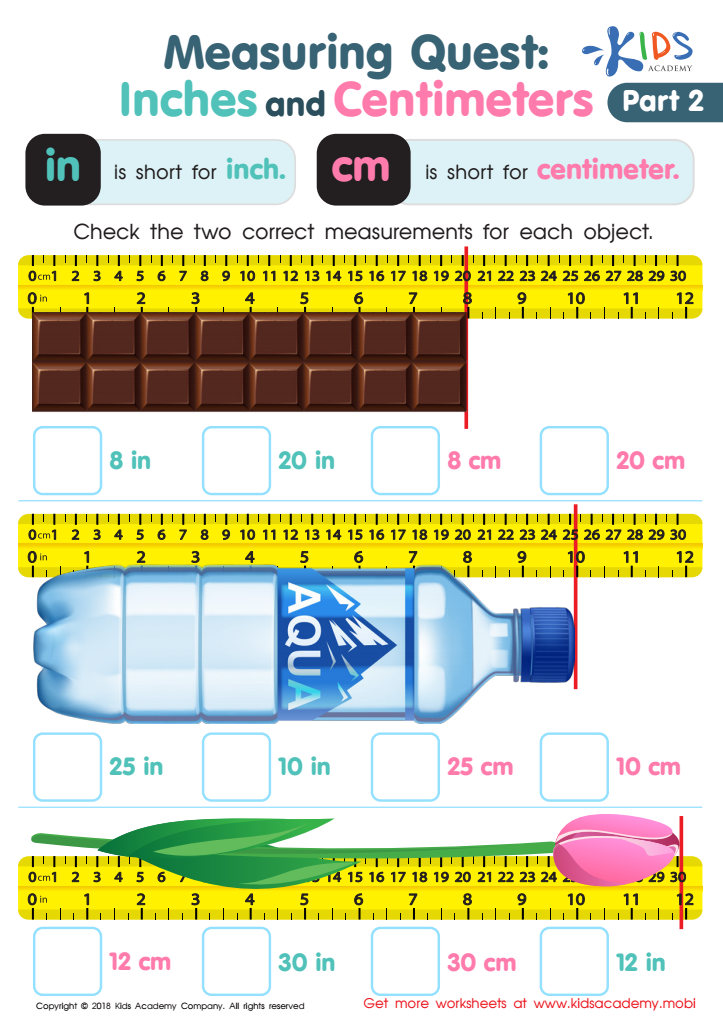
Measuring Quest: Inches and Centimeters - Part 2 Worksheet
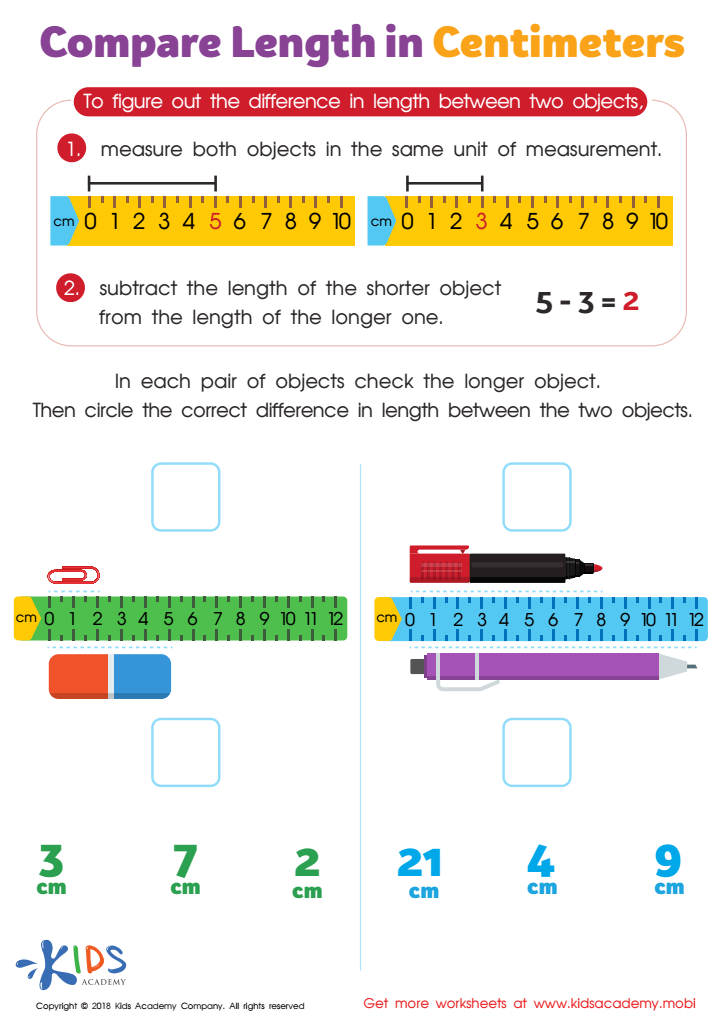
Compare Length in Centimeters Worksheet
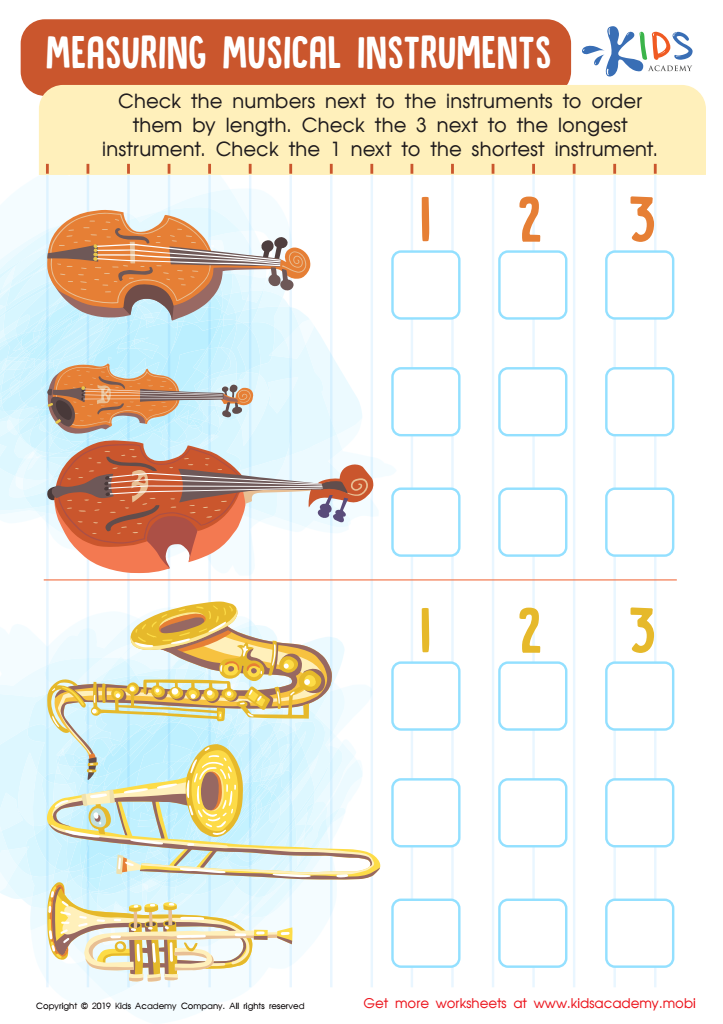
Measuring Musical Instruments Worksheet
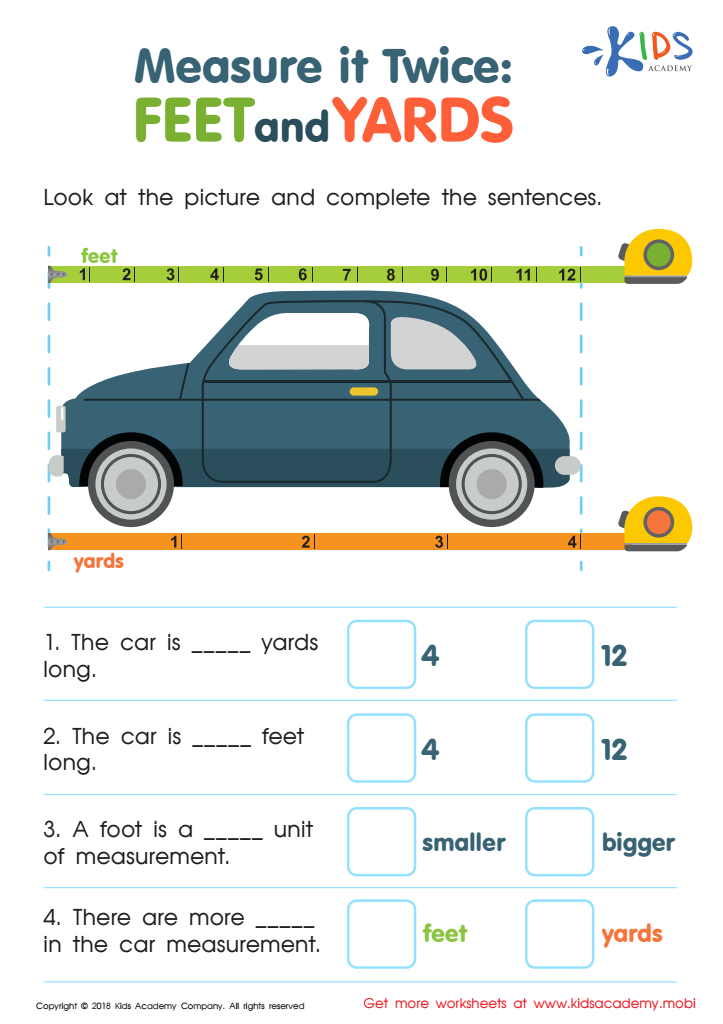
Measure It Twice: Feet and Yards Worksheet
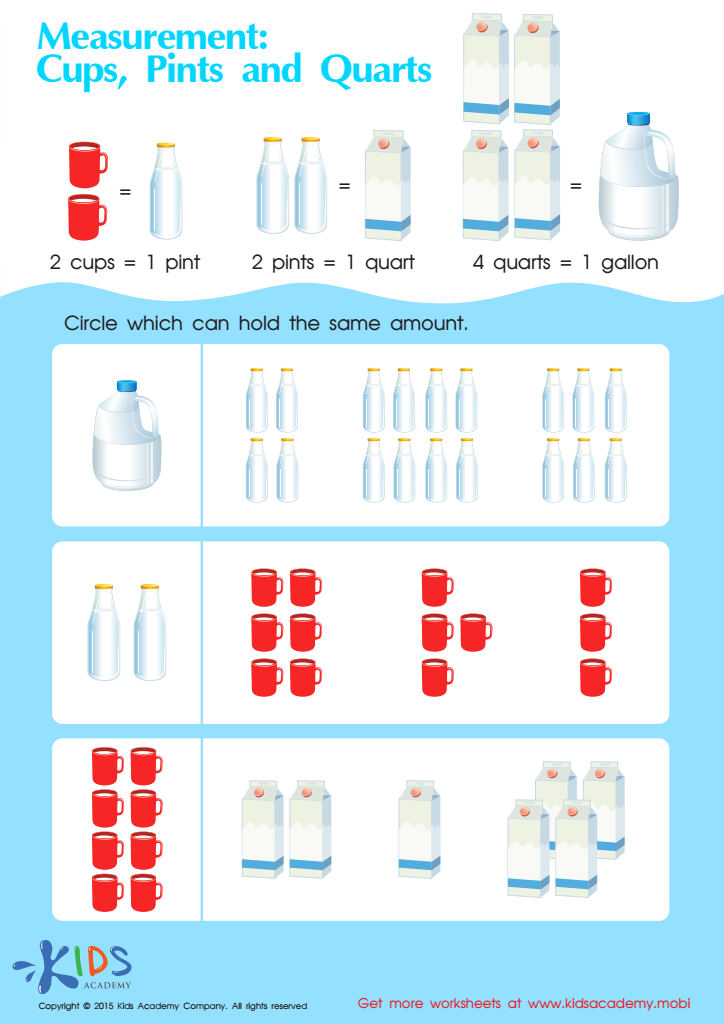
Cups, Pints and Quarts 2 Worksheet


.jpg)

.jpg)



Understanding measurements is crucial for children aged 5-7 because it fosters essential math skills that lay the foundation for future learning. At this age, children are naturally curious and actively explore their environment. By introducing measurement concepts, parents and teachers help children develop their ability to quantify and compare objects—skills that are integral to everyday life.
Measuring height, weight, length, and volume encourages critical thinking and problem-solving. When children learn to compare two lengths or understand concepts like "more" and "less," they begin to grasp the fundamentals of mathematics. Additionally, measurement activities, such as cooking or building projects, incorporate hands-on, experiential learning, making abstract concepts more concrete.
Furthermore, measurement teaches children to recognize patterns and relationships in the world around them. It promotes discussion about size, shape, and distance, enhancing language skills while strengthening cognitive development. By engaging in these activities, parents and teachers also support children's social skills as they collaborate and communicate their findings. Overall, an early focus on measurement ignites curiosity, enhances confidence in math abilities, and ultimately prepares children for more advanced mathematical concepts in later years, making it a vital area of focus for young learners.








