Counting practice Normal Geometry Worksheets for Ages 5-7
3 filtered results
-
From - To
Enhance your child’s mathematical skills with our Counting Practice Normal Geometry Worksheets, designed specifically for ages 5-7. These engaging and fun worksheets introduce young learners to foundational counting skills while exploring basic geometric shapes. Through interactive activities, children will develop a strong understanding of numbers and geometry in a playful environment. Each worksheet is crafted to promote critical thinking and reinforce key concepts, helping kids build confidence in their math abilities. Ideal for both classroom and home use, our worksheets support early learners on their journey toward math mastery. Start your child’s counting adventure today!
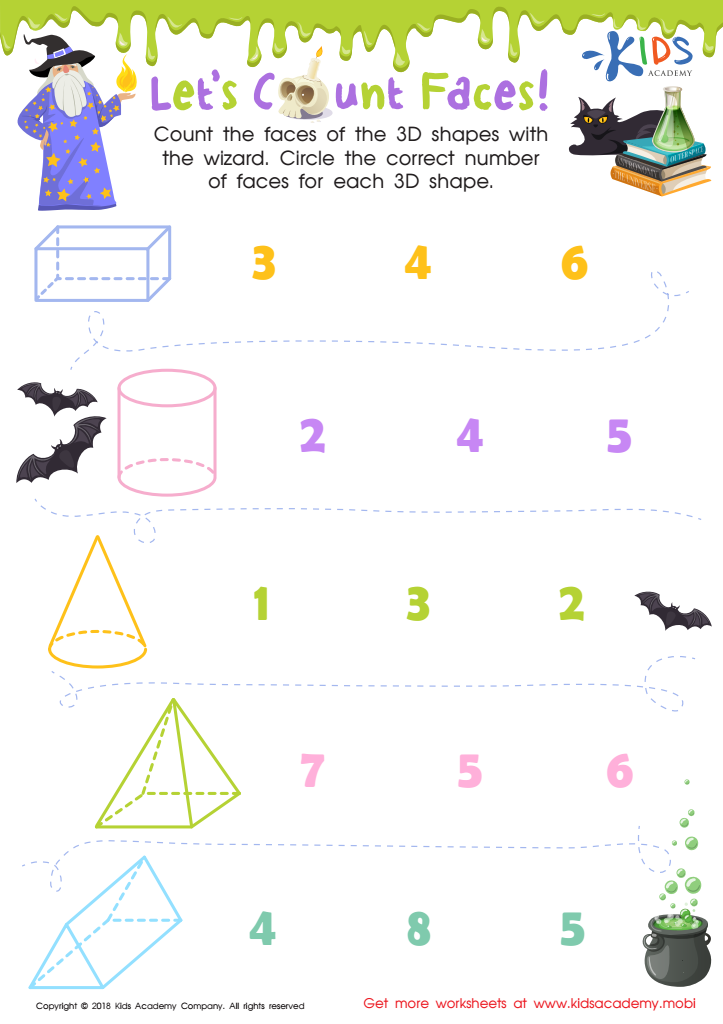
Let's Count Faces! Worksheet
 Assign to My Students











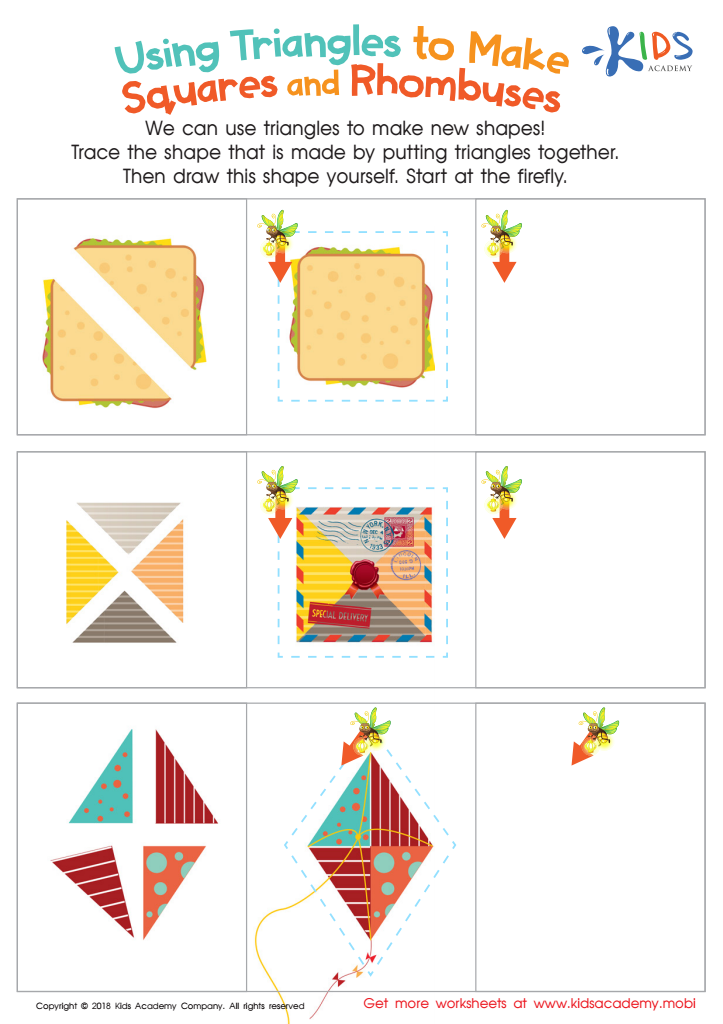
Using Triangles to Make Squares and Rhombuses Worksheet
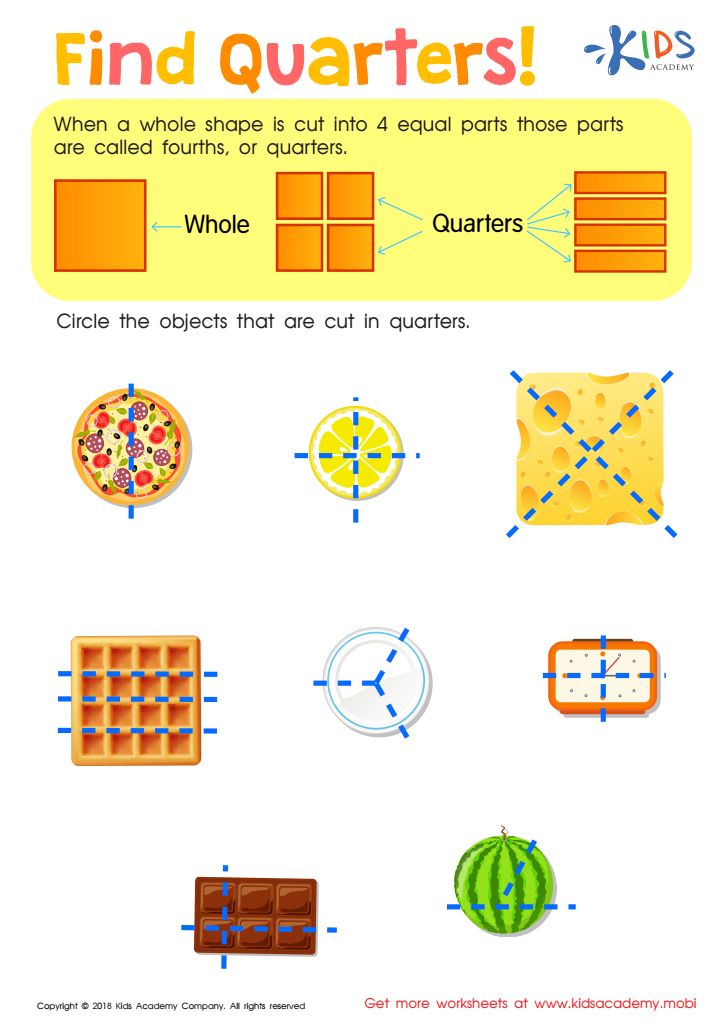
Find Quarters Worksheet








Counting and basic geometry are foundational skills for children aged 5-7, forming the bedrock for future math understanding. During this critical developmental stage, children are naturally curious and eager to learn, making it the ideal time to foster a love for numbers and shapes. Engaging in counting practice helps children develop number sense, enabling them to understand relationships between quantities and the concept of quantity itself. It also builds essential skills for arithmetic, critical thinking, and problem-solving.
Similarly, normal geometry introduces children to shapes, spatial awareness, and the properties of objects. Recognizing shapes and understanding their attributes are vital for early math competencies and can enhance observational skills in daily life. Additionally, geometry encourages creativity and imagination through activities such as building, drawing, and manipulating shapes.
For teachers and parents, emphasizing these subjects cultivates a playful learning environment, giving children confidence and enjoyment in mathematics. It establishes a positive attitude towards learning, which is crucial for academic success. Moreover, these practices encourage the development of fine motor skills and coordination through hands-on activities. In summary, prioritizing counting and normal geometry gives children the tools they need for academic achievement and the ability to make sense of the world around them.








