Differentiating shapes Normal Geometry Worksheets for Ages 5-7
3 filtered results
-
From - To
Explore our engaging Differentiating Shapes Normal Geometry Worksheets, designed specifically for children aged 5-7! These interactive printables offer a fun and effective way for young learners to identify, compare, and categorize various shapes. Each worksheet is crafted to enhance cognitive skills, foster visual recognition, and build a solid mathematical foundation. With colorful visuals and age-appropriate activities, children will enjoy honing their understanding of fundamental geometric concepts. Perfect for both classroom and home use, our worksheets provide a structured approach to learning shapes while promoting creativity and critical thinking. Start your child's geometry adventure today!
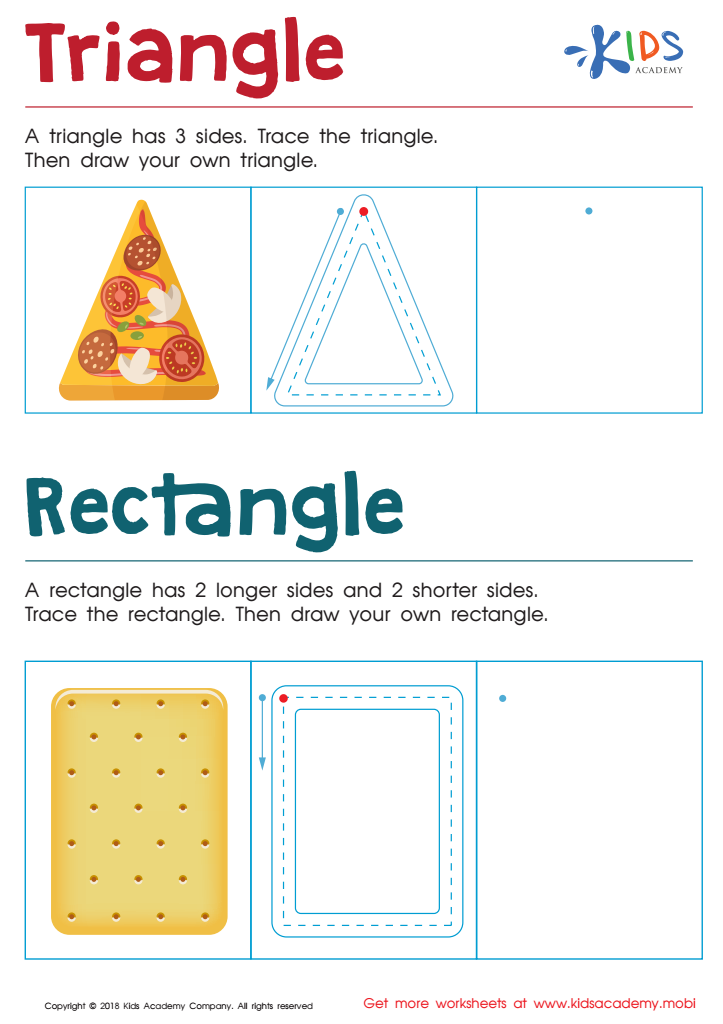
Triangle Rectangle Worksheet
 Assign to My Students











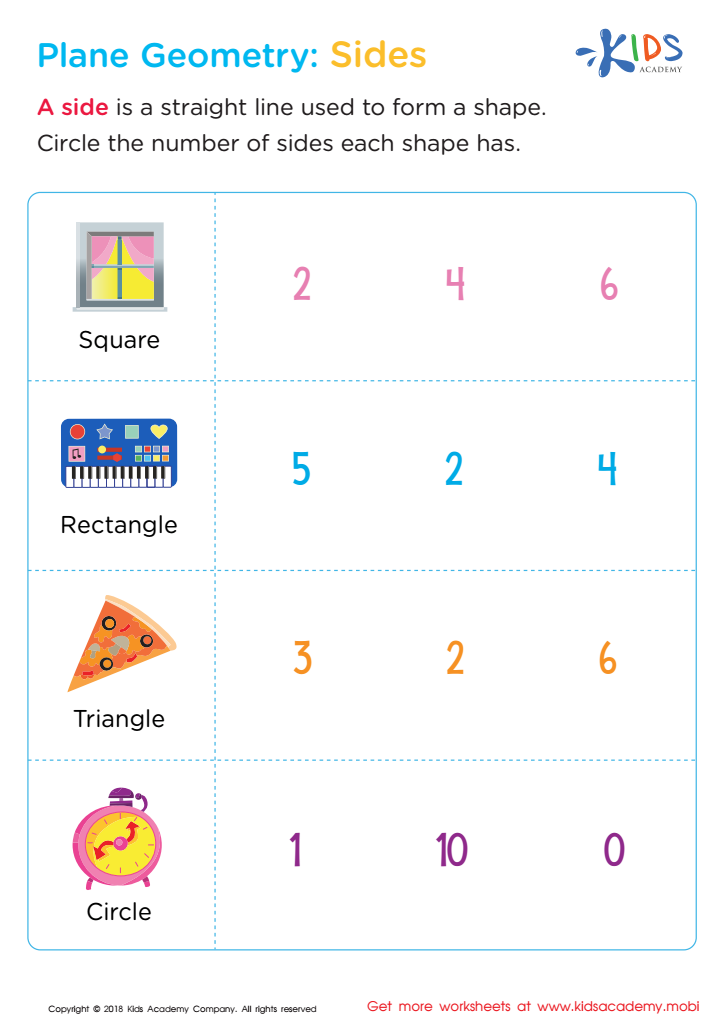
Plane Geometry: Sides Worksheet
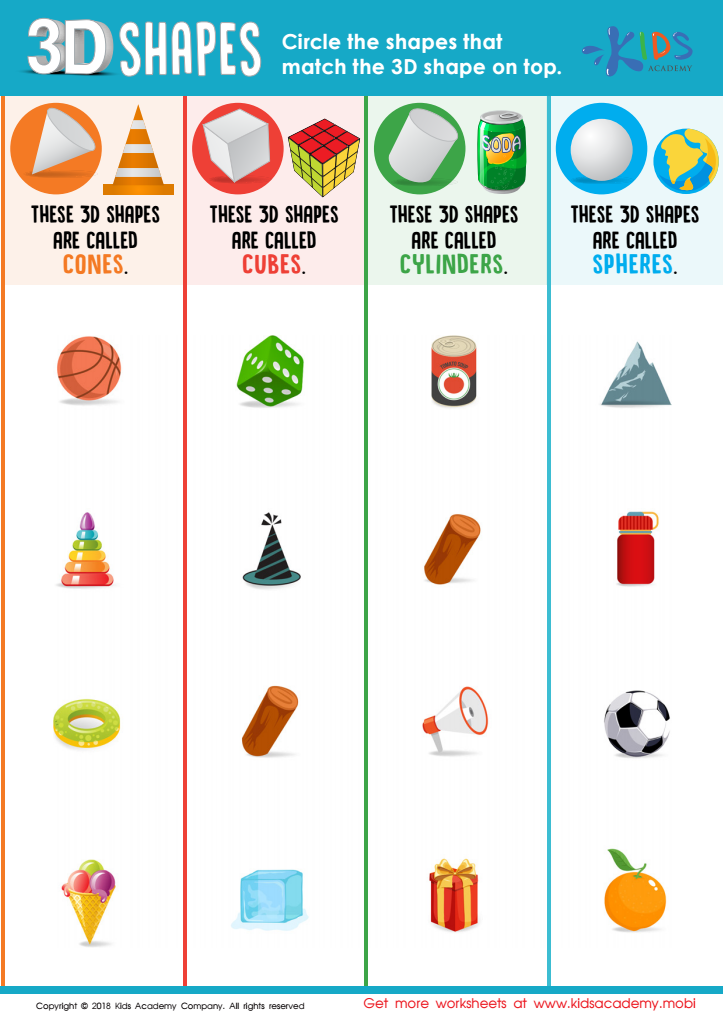
3D Shapes Worksheet








Differentiating shapes in normal geometry for children aged 5-7 is crucial for several reasons. First, young learners develop critical thinking and problem-solving skills when they explore and categorize various shapes. By engaging with different geometric forms, children enhance their spatial awareness, which lays the foundation for mathematical understanding.
Furthermore, differentiation caters to varied learning styles and abilities within the classroom. Young children often possess diverse interests and strengths; adjusting instruction to meet individual needs ensures that all students remain engaged and motivated. For example, hands-on activities using tangible objects can be particularly beneficial for kinesthetic learners.
Geometry also promotes language development as children describe, compare, and discuss shapes, inadvertently enriching their vocabulary and communication skills. Additionally, recognizing and naming basic shapes is pivotal for future learning in mathematics and science, as these concepts are integral to more advanced subjects.
In essence, teachers and parents should care about effectively differentiating shapes to foster essential cognitive and linguistic skills in children, encouraging a love for learning and paving the way for future academic success. By nurturing these could vary abilities when working with geometry, we build a strong foundation for lifelong mathematical literacy.








