Spatial awareness Normal Math Worksheets for Ages 5-7
10 filtered results
-
From - To
Discover our engaging Spatial Awareness Normal Math Worksheets designed specifically for children aged 5-7. These worksheets help young learners develop essential spatial awareness skills through fun and interactive activities. Children will explore concepts such as shape recognition, understanding distance, and visual orientation, laying a strong foundation for future math success. Our worksheets cater to various learning styles, ensuring that every child can enhance their cognitive skills while enjoying the learning process. Perfect for parents and teachers alike, these resources make math both enjoyable and educational. Empower your child’s learning journey with our carefully crafted worksheets today!
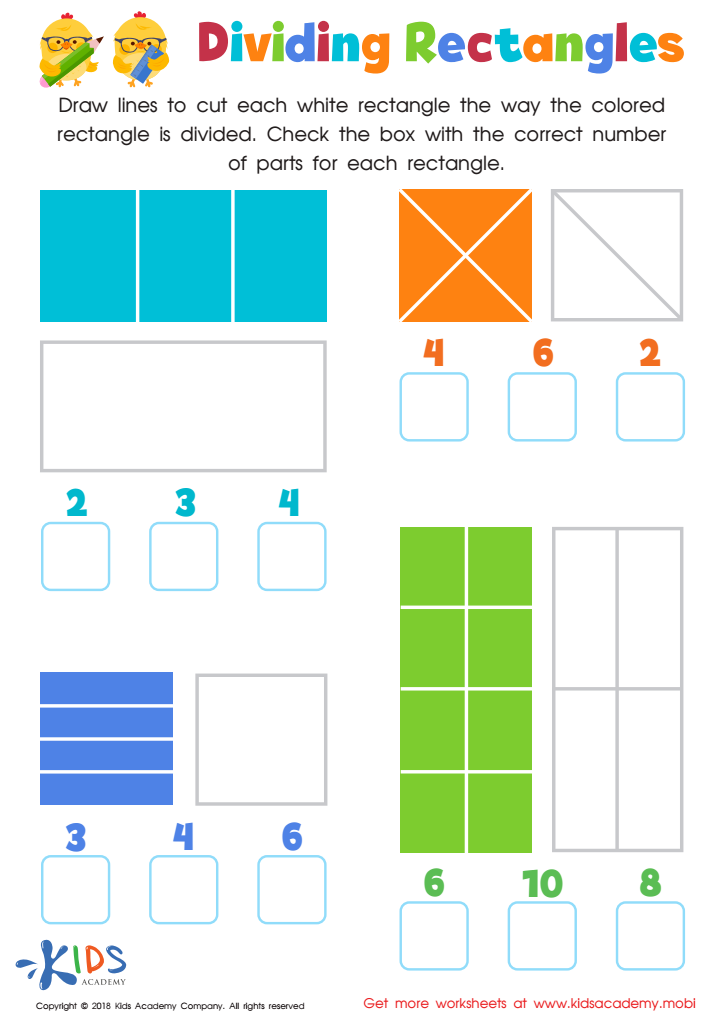
Dividing Rectangles Worksheet
 Assign to My Students
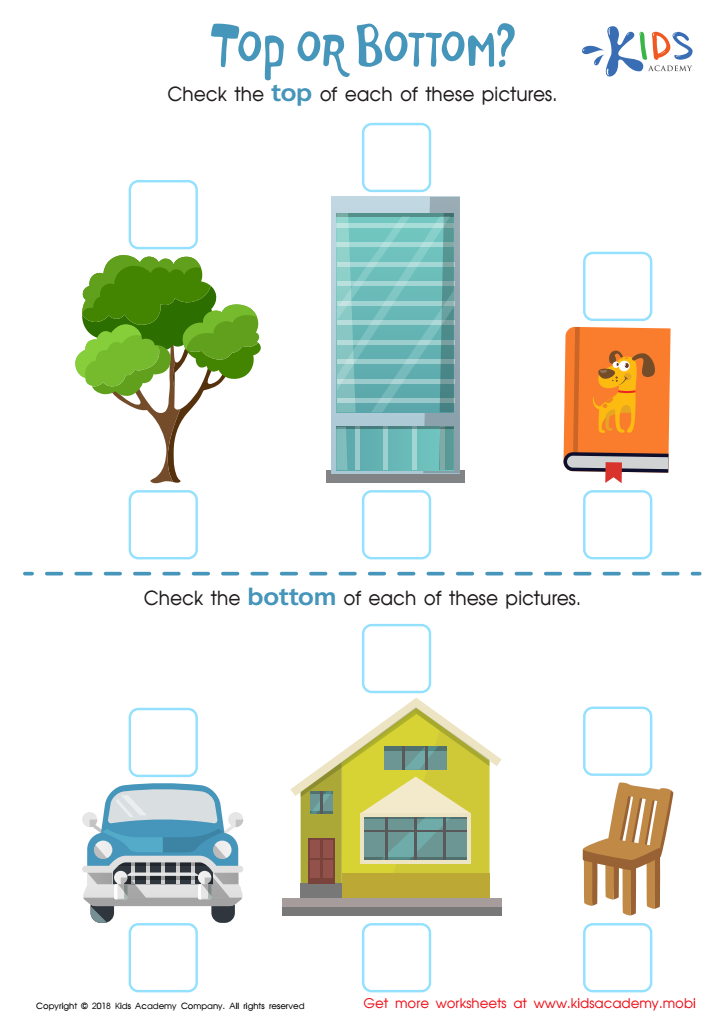
Top or Bottom Worksheet
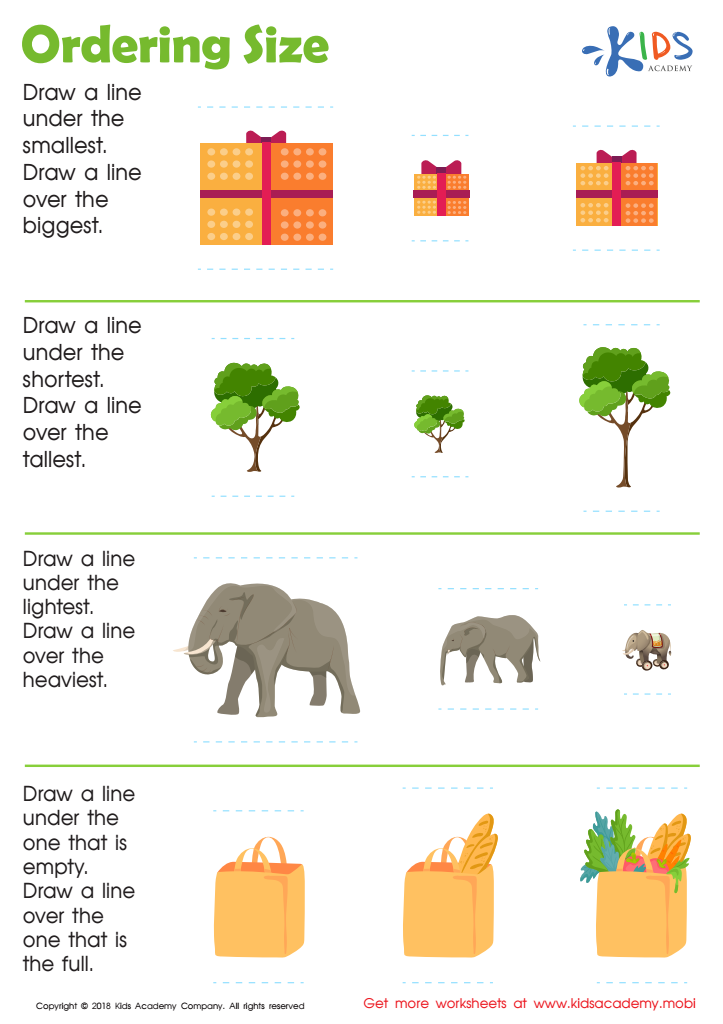
Ordering Size Worksheet
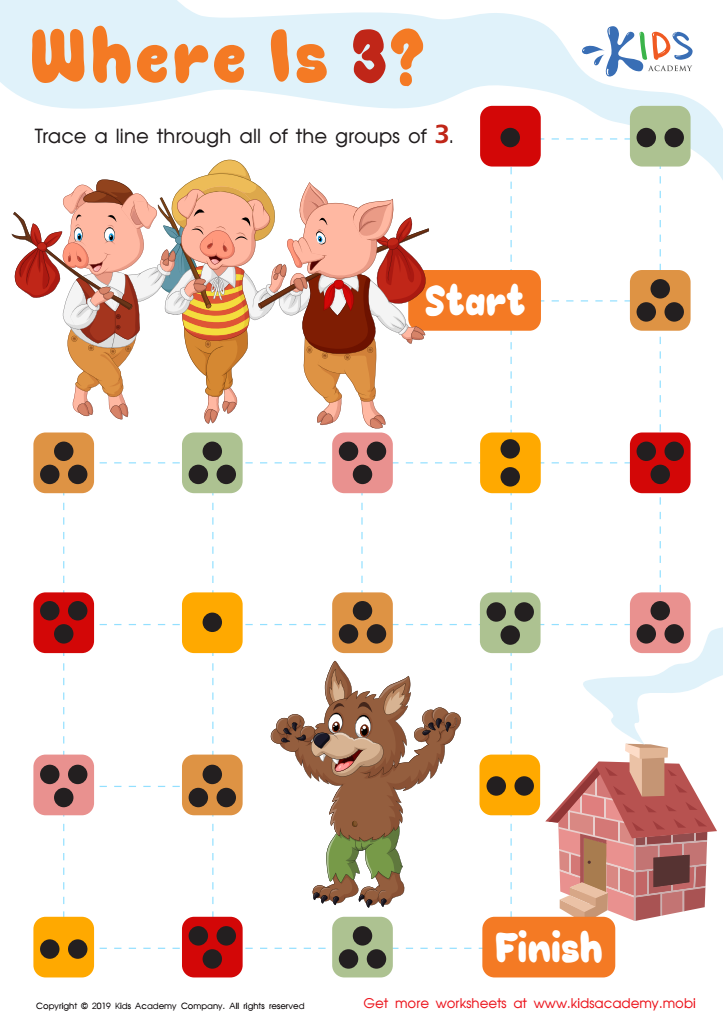
Where Is 3? Worksheet
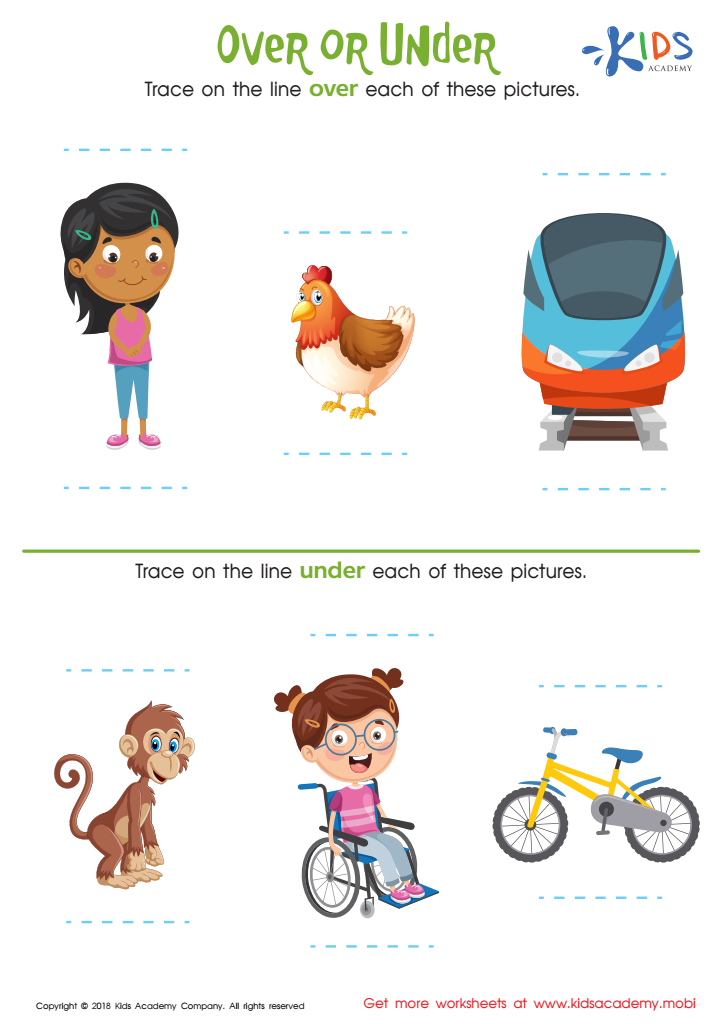
Over or Under Worksheet
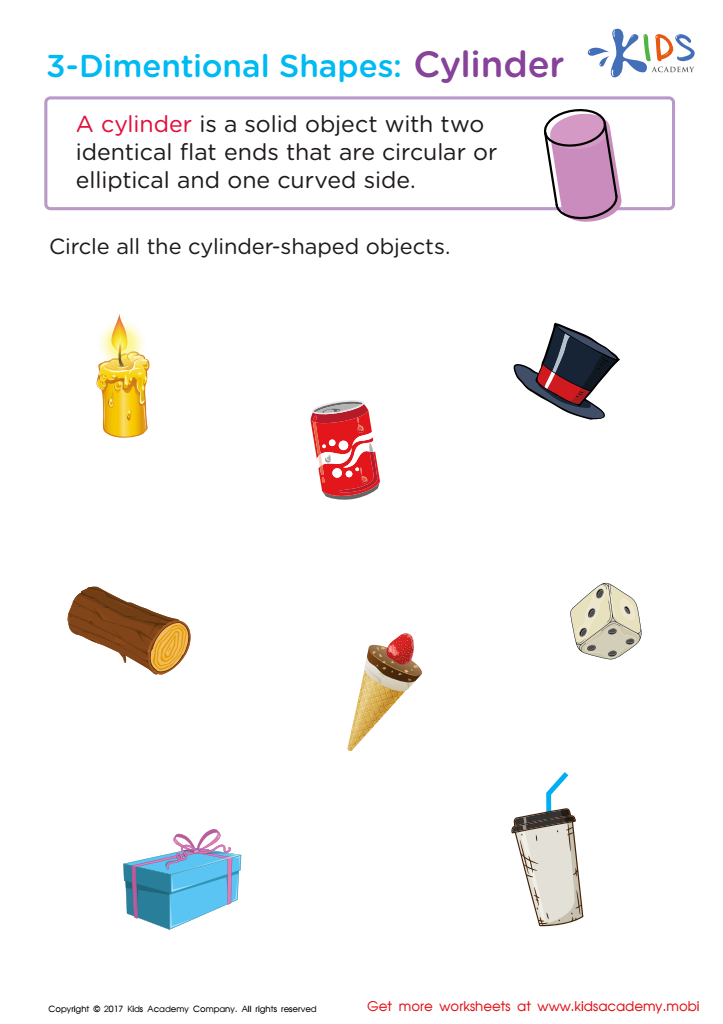
Three–Dimensional Shapes: Cylinder Worksheet
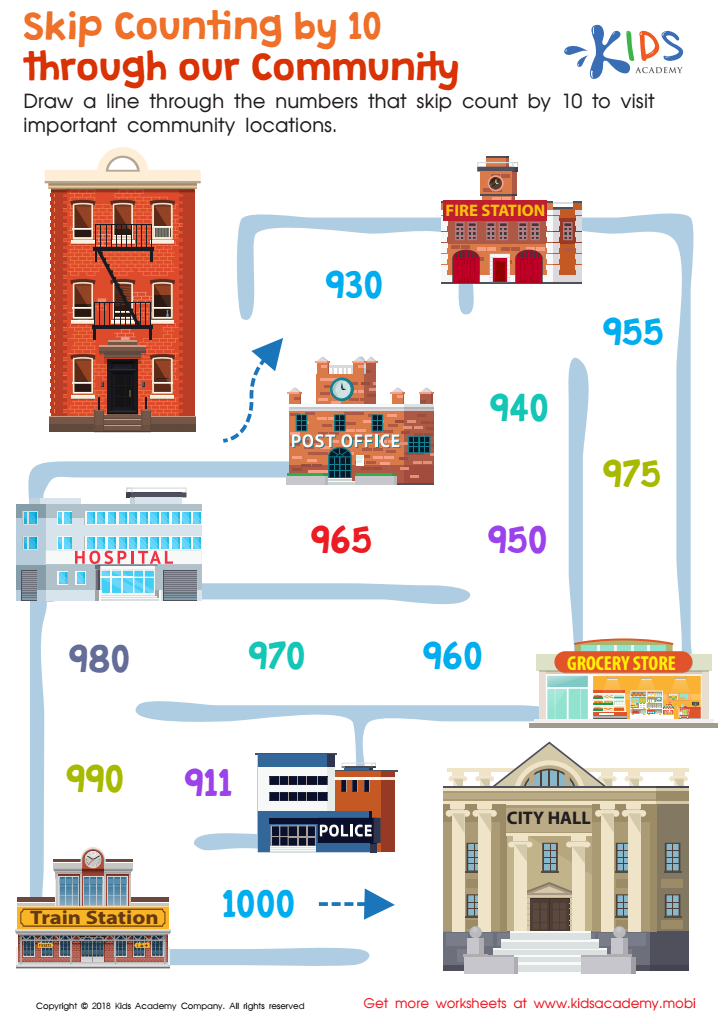
Skip Counting by 10 Through Our Community Worksheet
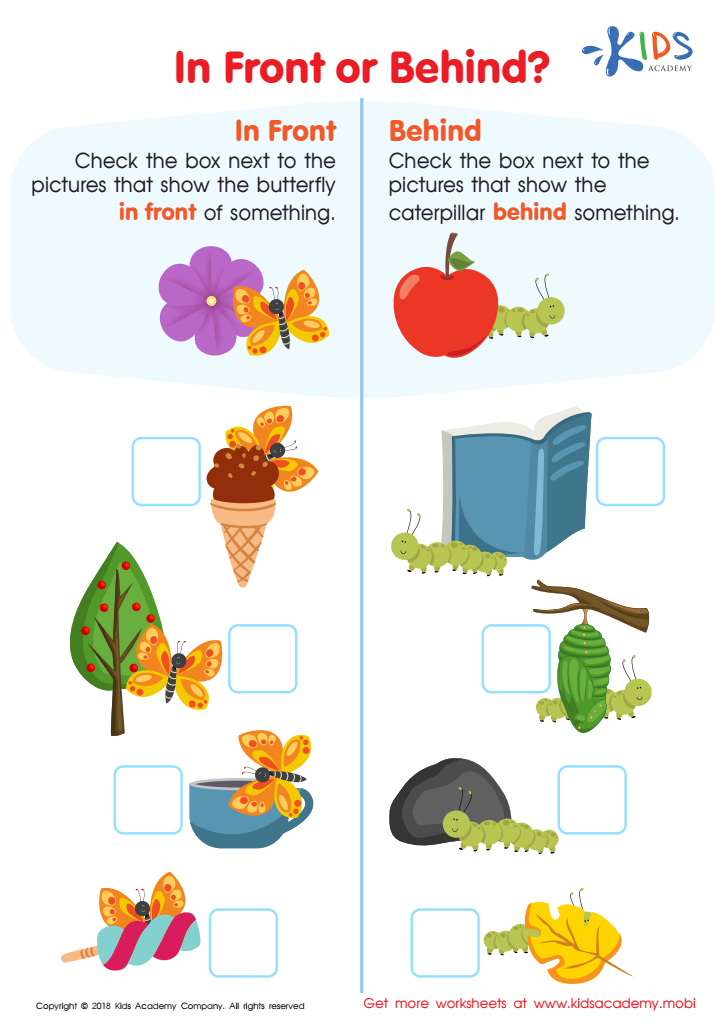
In Front or Behind Worksheet
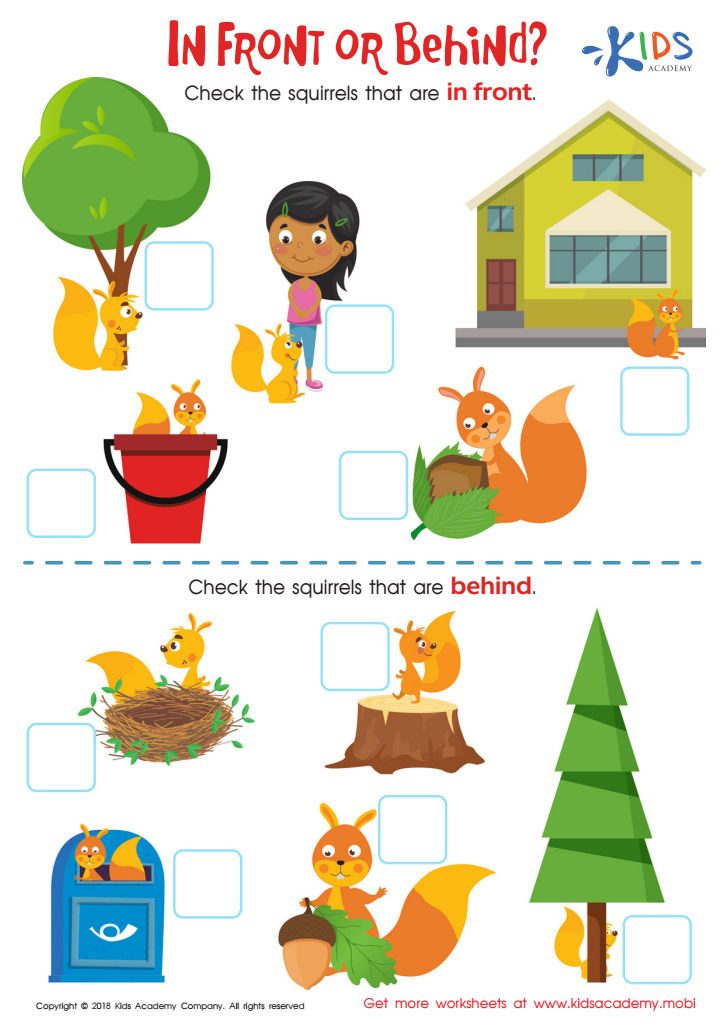
In Front or Behind: Part 2 Worksheet
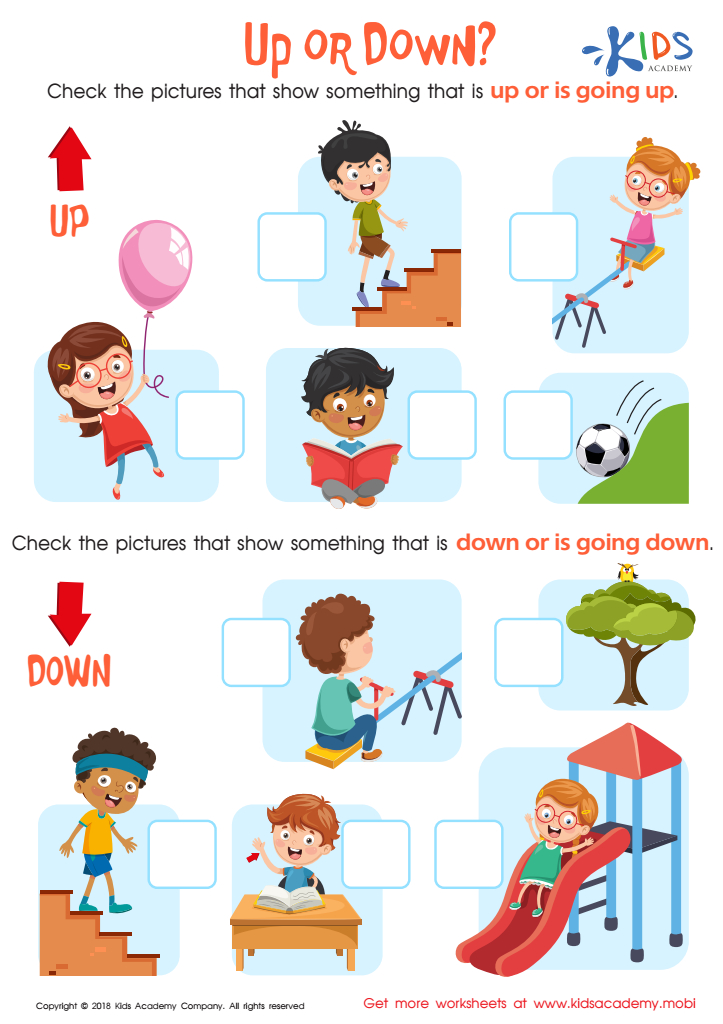
Up or Down Worksheet







Spatial awareness is a crucial skill that significantly impacts a child’s overall development, particularly in mathematics. For children aged 5-7, fostering spatial awareness is essential for several reasons. First, it lays the groundwork for understanding geometric concepts, such as shapes, sizes, and spatial relations. This understanding is vital for tasks like measuring and drawing, which they will encounter as they progress through their education.
Additionally, improved spatial awareness enhances problem-solving skills. Children who can visualize and manipulate objects in their minds are often better equipped to tackle mathematical problems, fostering a deeper understanding of mathematical concepts over time. By incorporating activities like puzzles, building blocks, and map-reading exercises, parents and teachers can make math engaged and fun, as these play-based methods help to strengthen spatial skills while making learning enjoyable.
Furthermore, spatial awareness supports successful completion of everyday tasks, from organizing belongings to navigating their environment. Building this skill early prepares children for future academic challenges in STEM (Science, Technology, Engineering, and Mathematics) fields. Therefore, investing in spatial awareness during these formative years is imperative for both cognitive development and fostering a holistic approach to learning. By prioritizing this area, parents and teachers set the stage for lifelong skills and academic success.








