Understanding fractions Normal Math Worksheets for Ages 5-7
6 filtered results
-
From - To
Explore our "Understanding Fractions" Normal Math Worksheets designed for children ages 5-7. These engaging worksheets introduce young learners to the concept of fractions through simple, age-appropriate activities. Ideal for nurturing foundational math skills, our resources feature interactive exercises that make learning fun and effective. Kids will enjoy visual aids and hands-on approaches to grasp essential fraction concepts, such as halves, quarters, and more. Perfect for classroom or home use, these worksheets aim to build confidence and understanding in mathematics. Join us in making math a joyful adventure for your little ones! Start fostering their love for learning today!
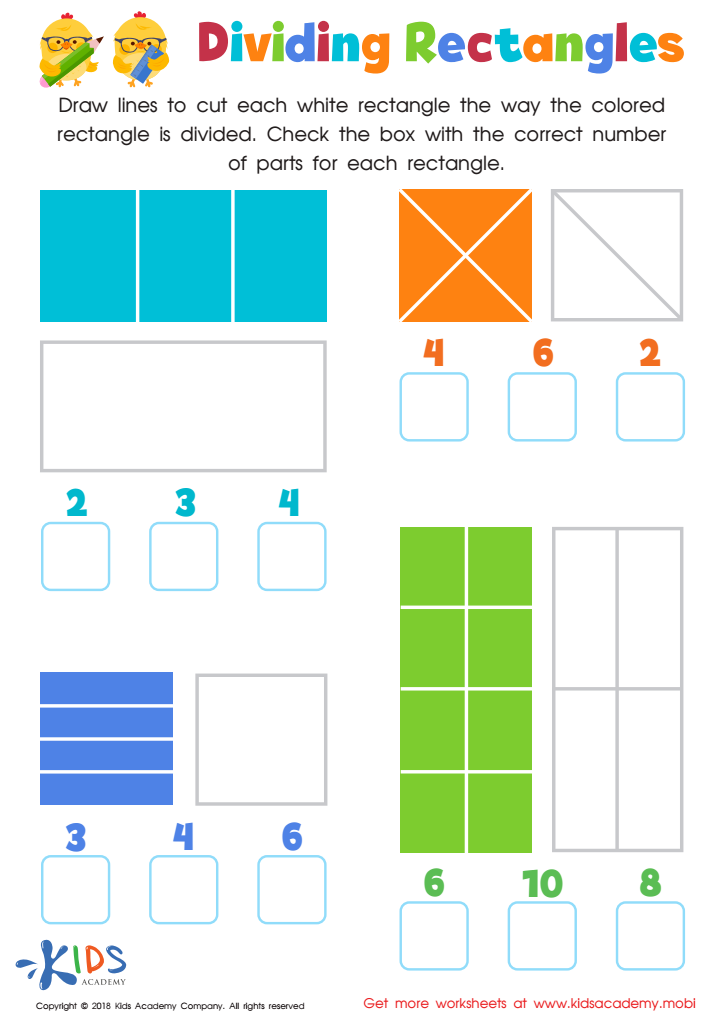
Dividing Rectangles Worksheet
 Assign to My Students
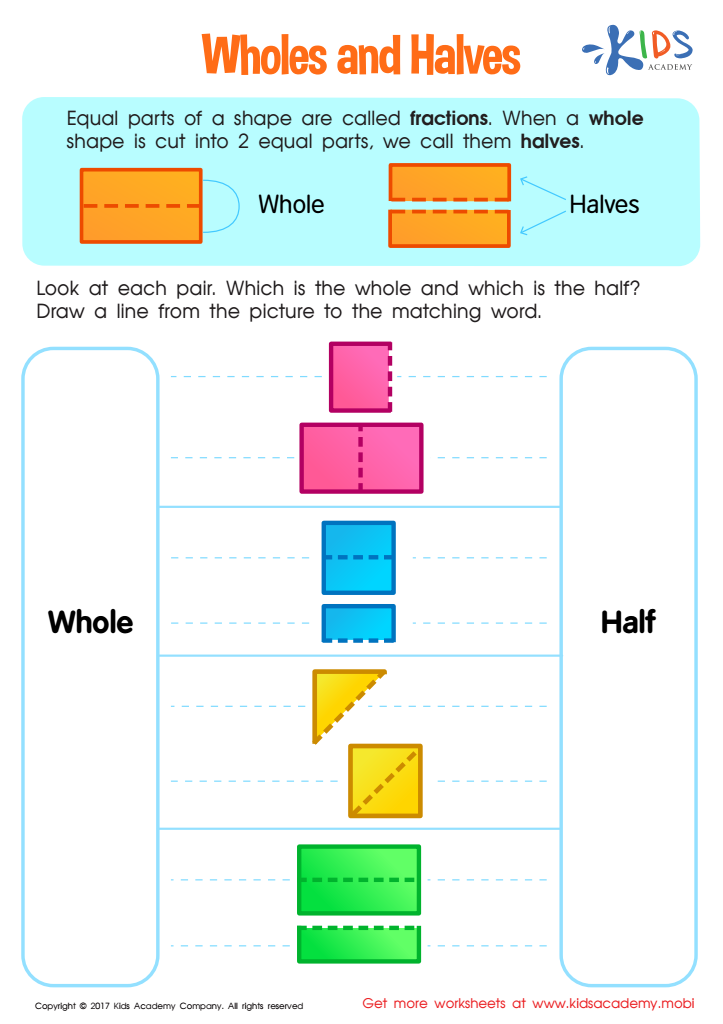
Wholes and Halves Worksheet
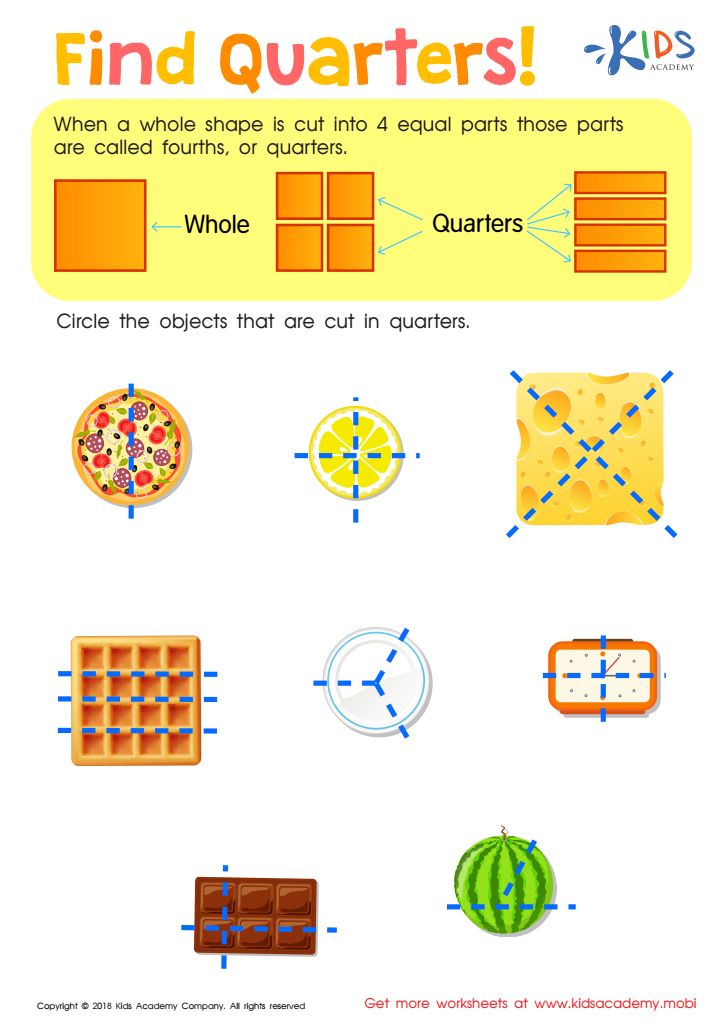
Find Quarters Worksheet
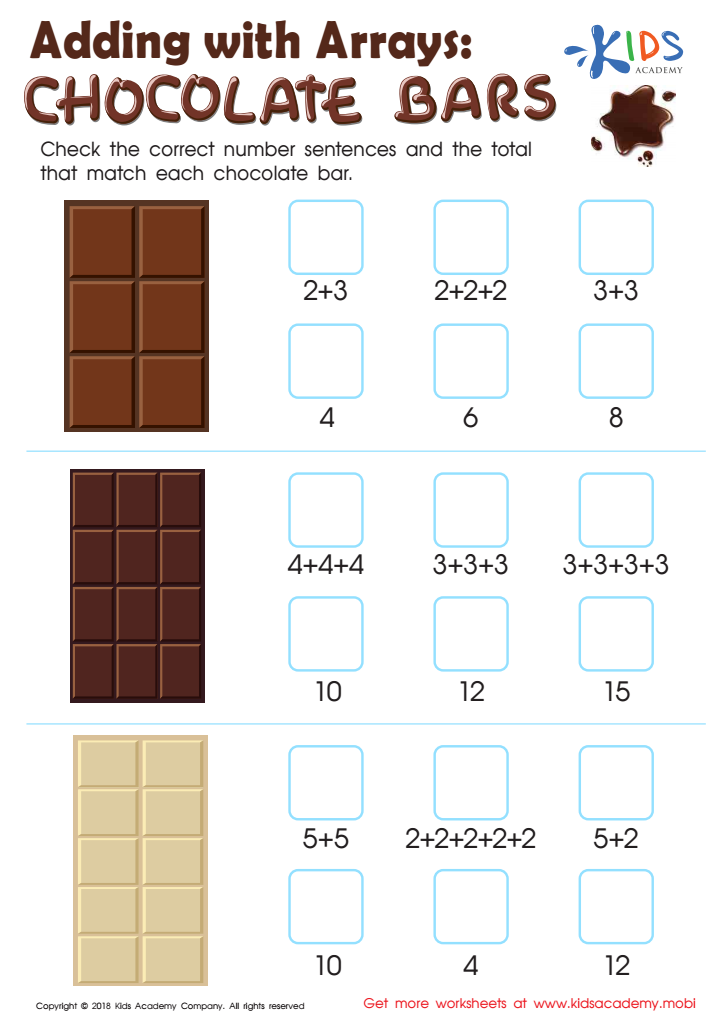
Adding with Arrays: Chocolate Bars Worksheet
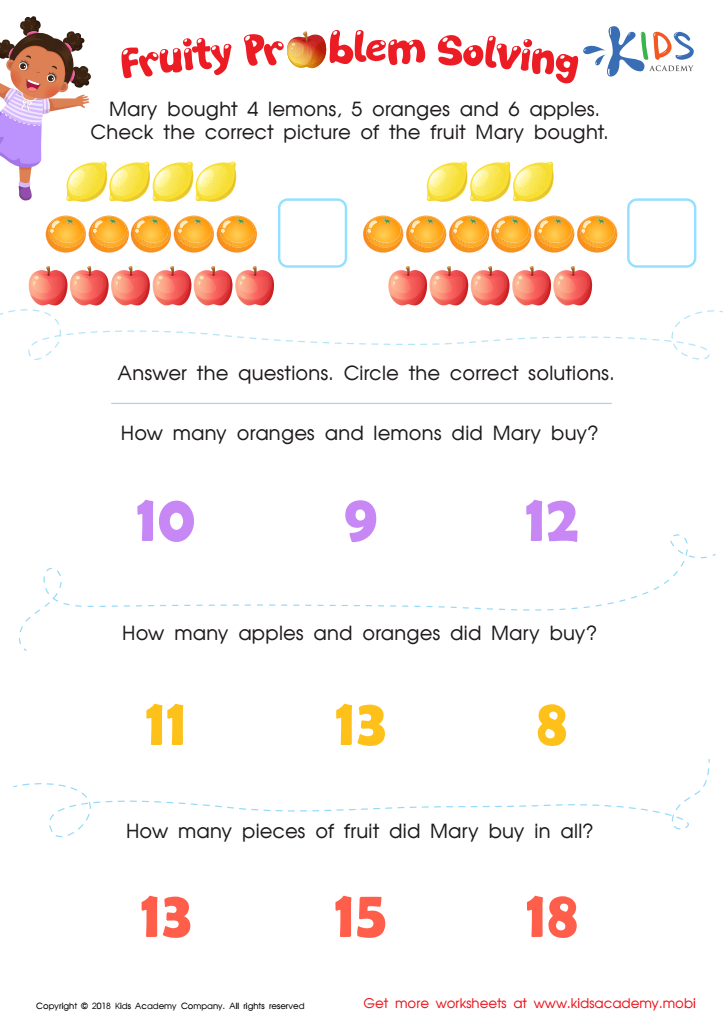
Fruity Problem Solving Worksheet
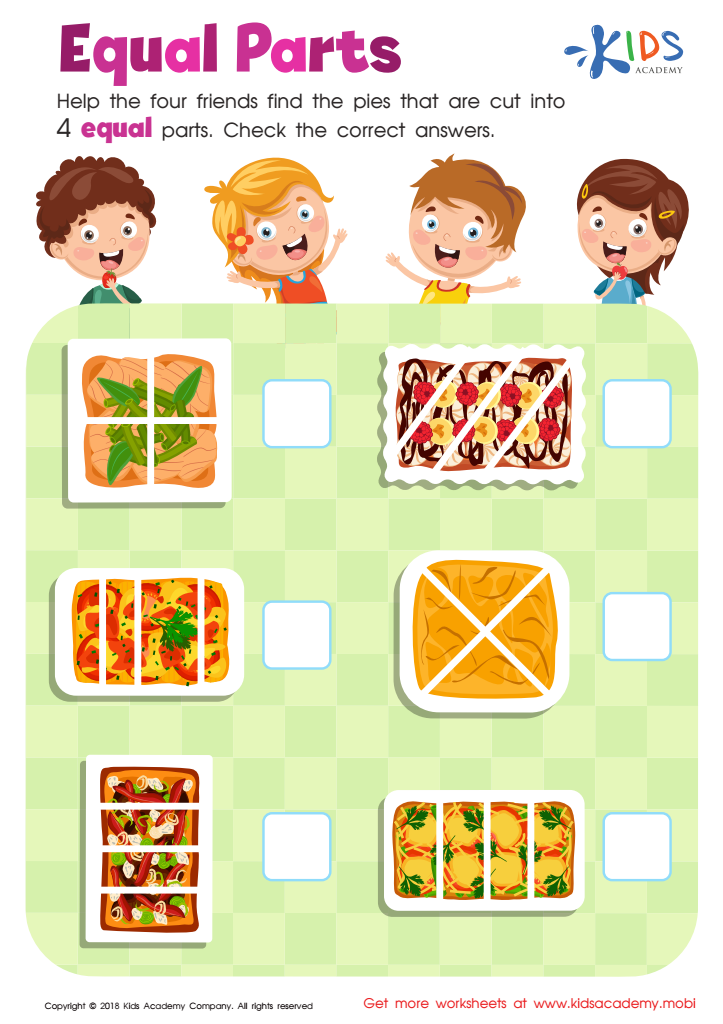
Equal Parts: Food Worksheet



.jpg)



Understanding fractions is essential for children aged 5-7 as it lays the groundwork for their future mathematical skills and comprehension. At this age, children are beginning to explore basic concepts of numbers and their relationships, and engaging with fractions can deepen their understanding of whole numbers by introducing them to parts of a whole.
Parents and teachers play a crucial role in guiding children through this stage of learning. When children grasp fractions, they develop critical thinking skills and the ability to make comparisons, which enhances problem-solving abilities. For example, recognizing that a half is smaller than a whole fosters an understanding of proportions, an important concept in both math and real-world applications.
Moreover, engaging with fractions helps children develop a positive attitude toward math. When they see the connections between fractions and everyday life—like sharing pizza or dividing candies—they become more motivated to learn. Interactive activities and discussions around fractions also promote collaboration and communication skills among peers.
Ultimately, when parents and teachers prioritize understanding fractions, they help children build a strong foundation for more complex mathematical concepts in the future while fostering a love for learning and encourages analytical thinking.








