Number Recognition Normal Numbers up to 100 Worksheets for Ages 5-7
13 filtered results
-
From - To
Our "Number Recognition Normal Numbers up to 100 Worksheets for Ages 5-7" at Kids Academy are designed to make learning numbers easy and fun! Tailored for children ages 5 to 7, these engaging worksheets help young learners master number identification and counting up to 100. Through a variety of exercises, such as number matching, tracing, and coloring activities, kids can develop numeracy skills and build a strong mathematical foundation. Suitable for both classroom and home use, these printable resources are perfect for fostering math confidence and proficiency. Start your child’s number learning journey with our effective and enjoyable worksheets today!
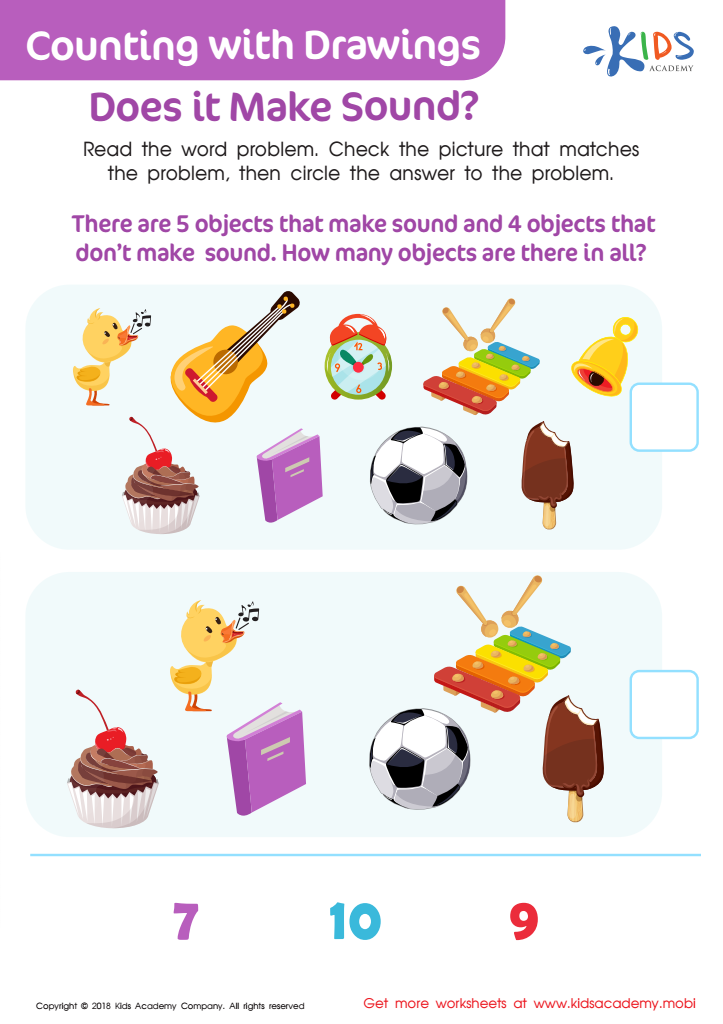
Counting With Drawings. Does It Make Sound? Worksheet
 Assign to My Students
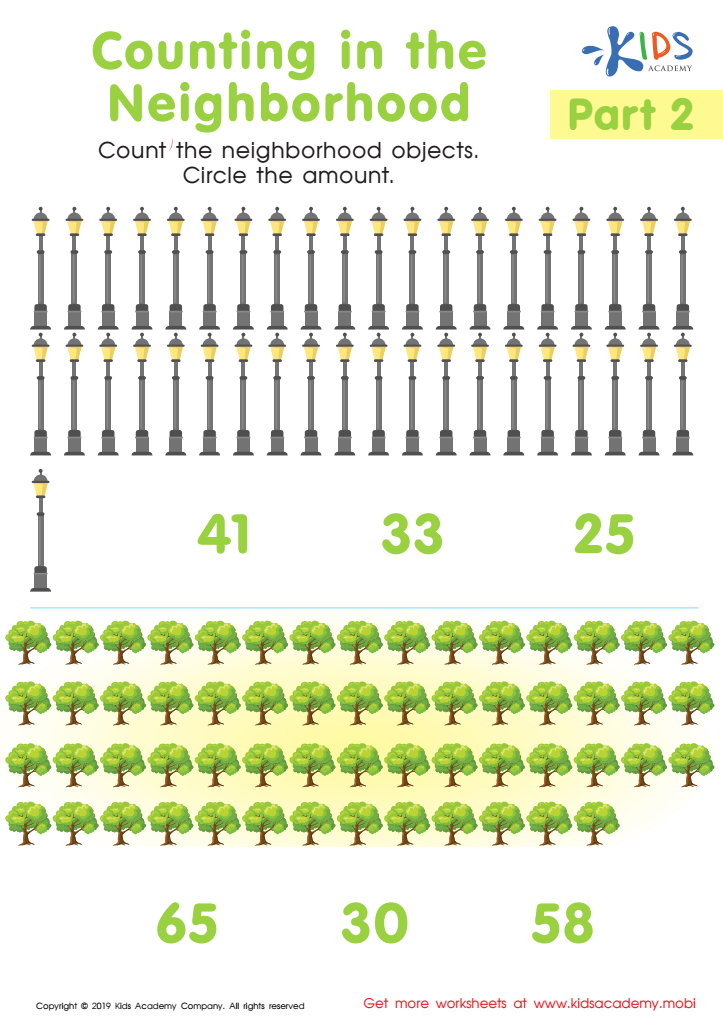
Counting In The Neighborhood Part 2 Worksheet
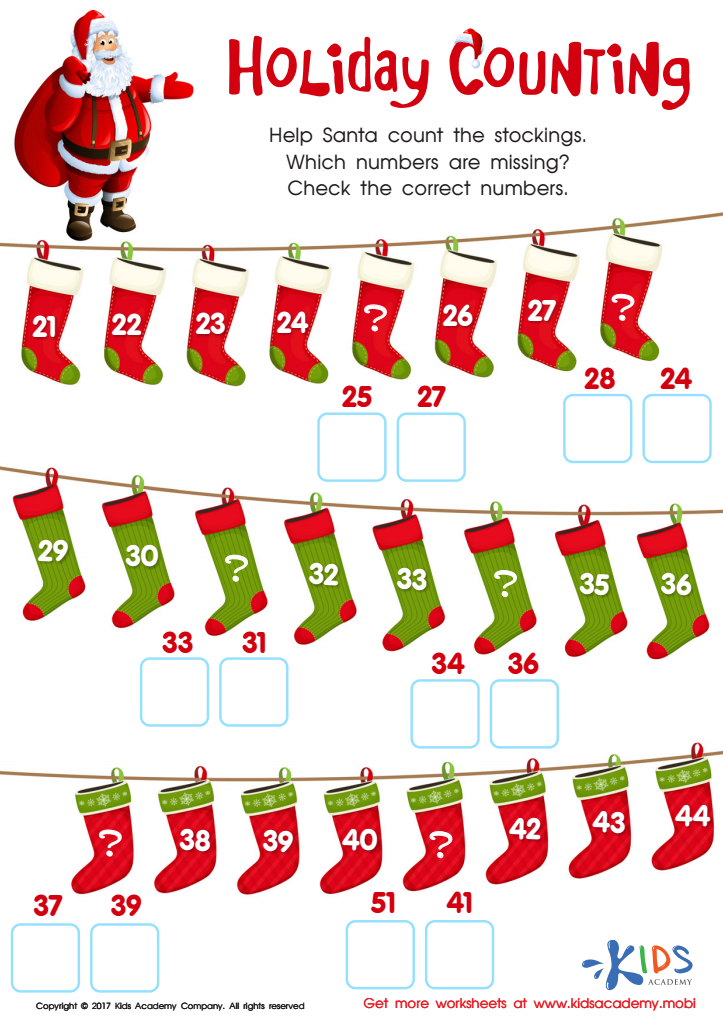
Holiday Counting Worksheet
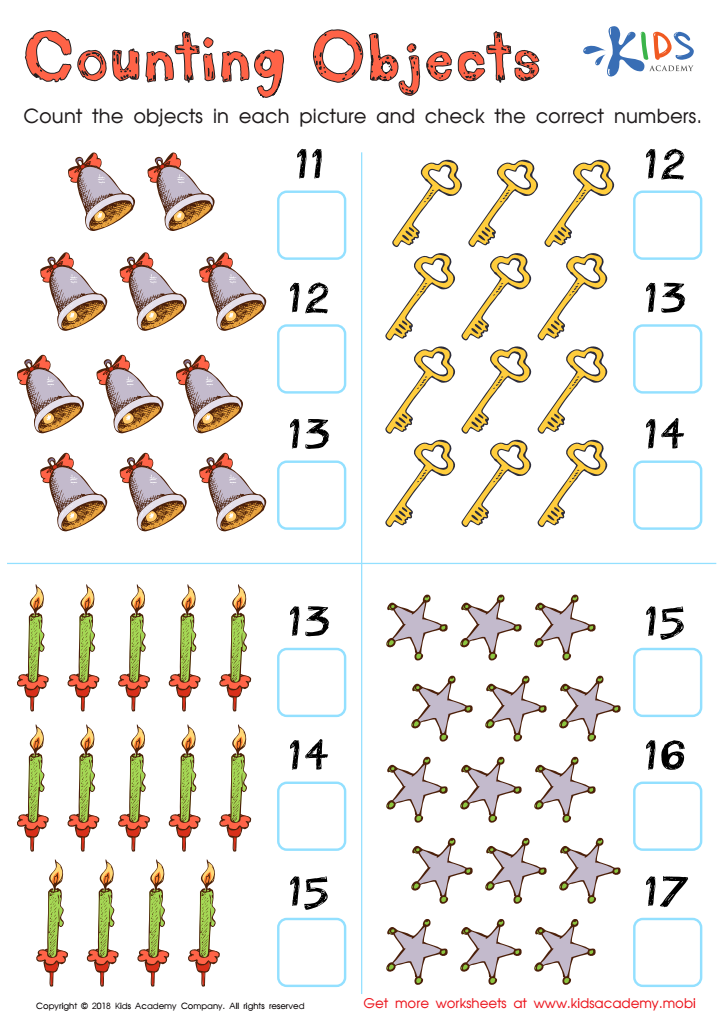
Counting Numbers Worksheet For Kindergarten
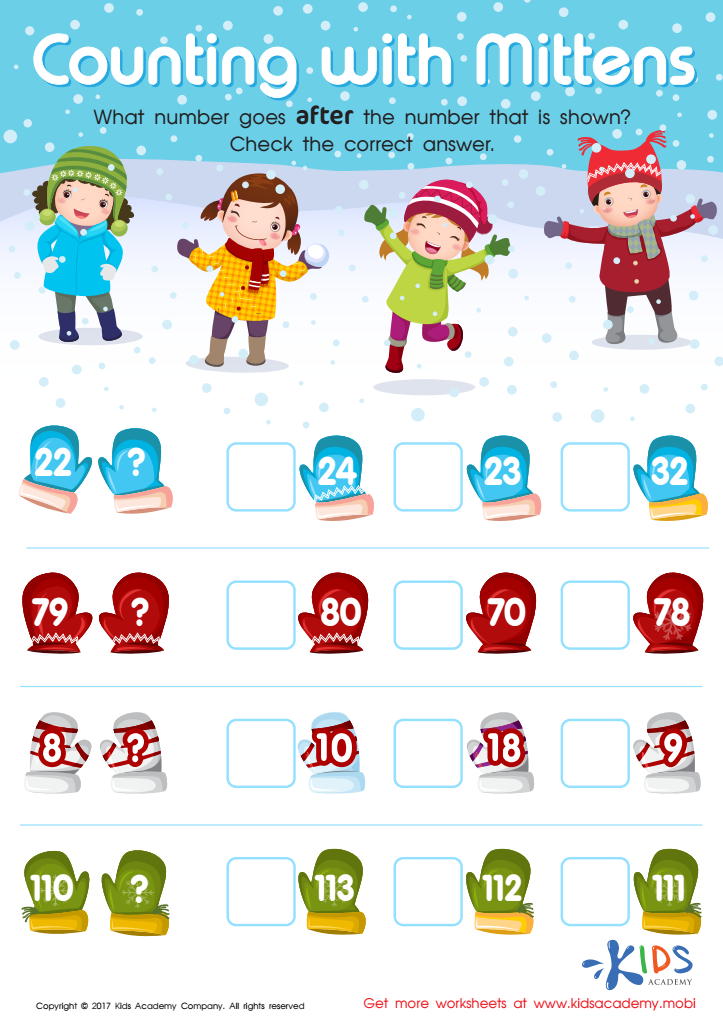
Counting with Mittens Worksheet
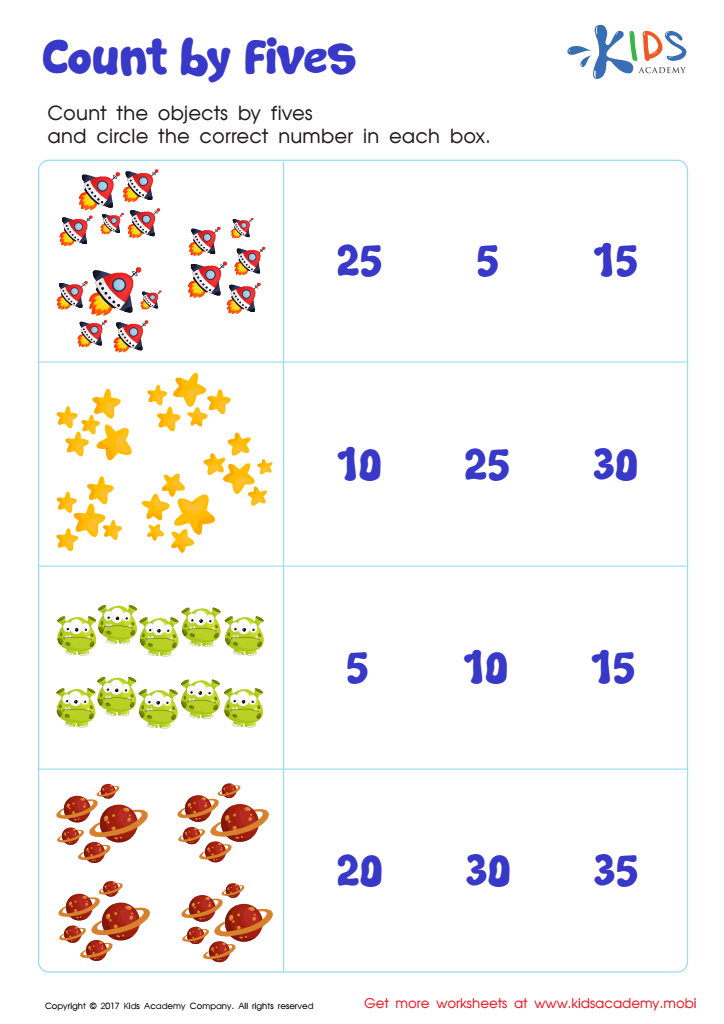
Skip Counting by 5s: Space Math Printable
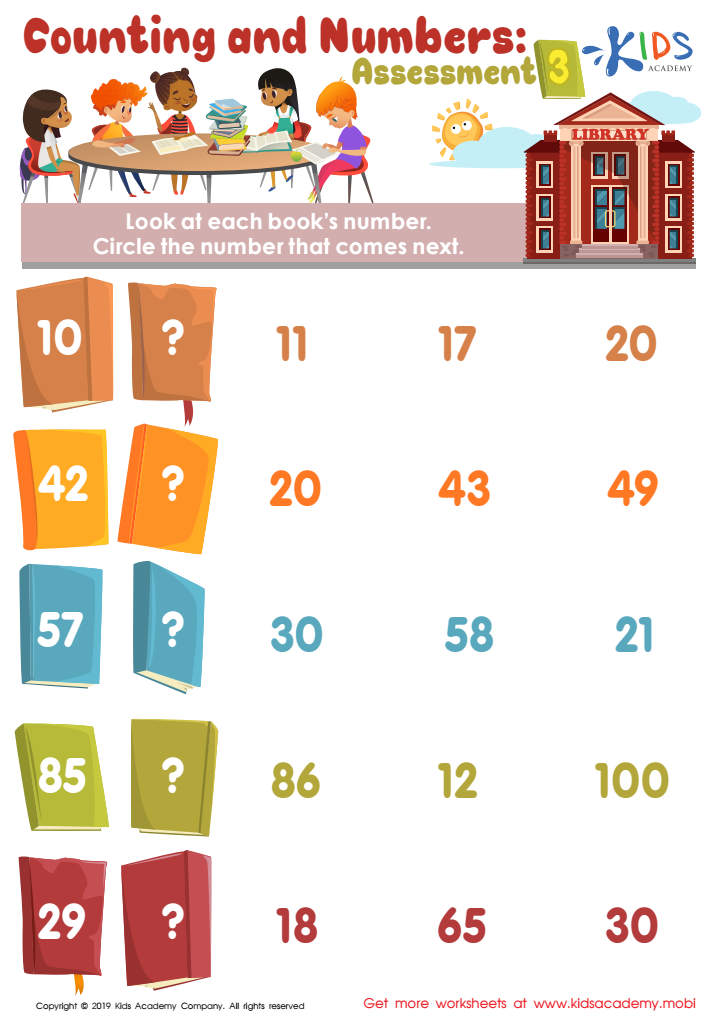
Counting and Numbers: Assessment Worksheet
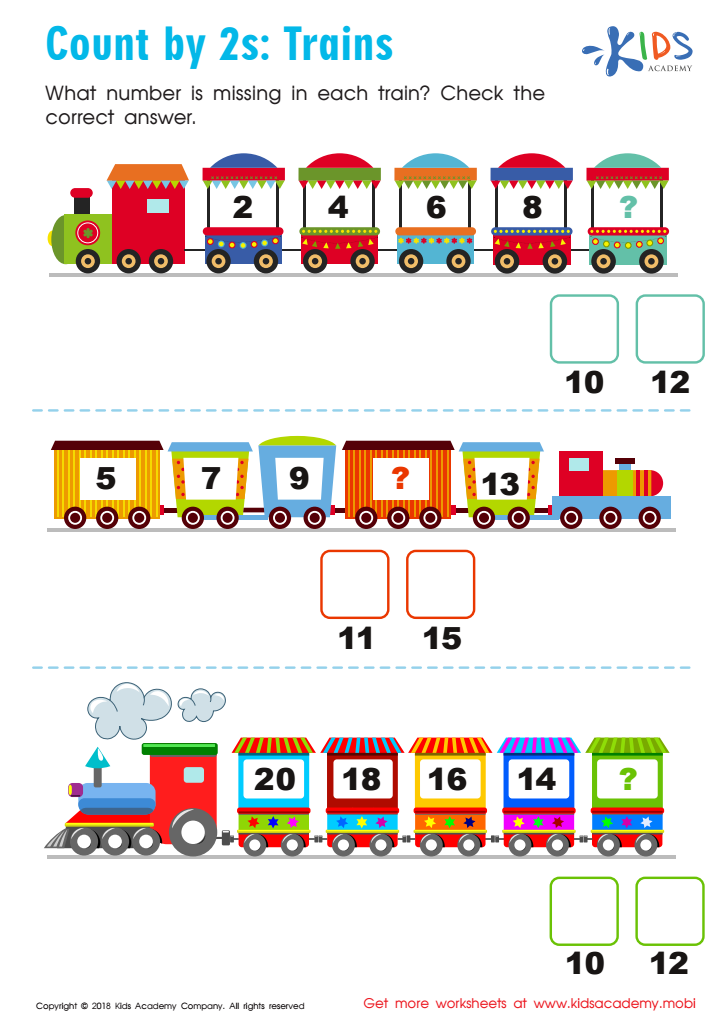
Count by 2's: Trains Worksheet
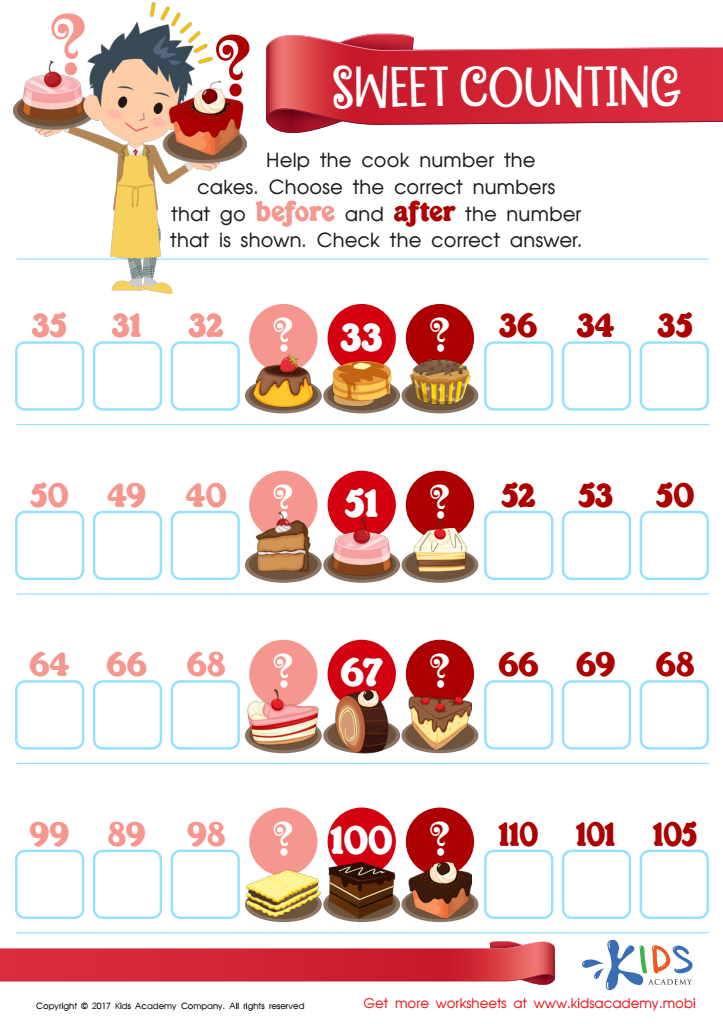
Sweet Counting - Part 1 Worksheet
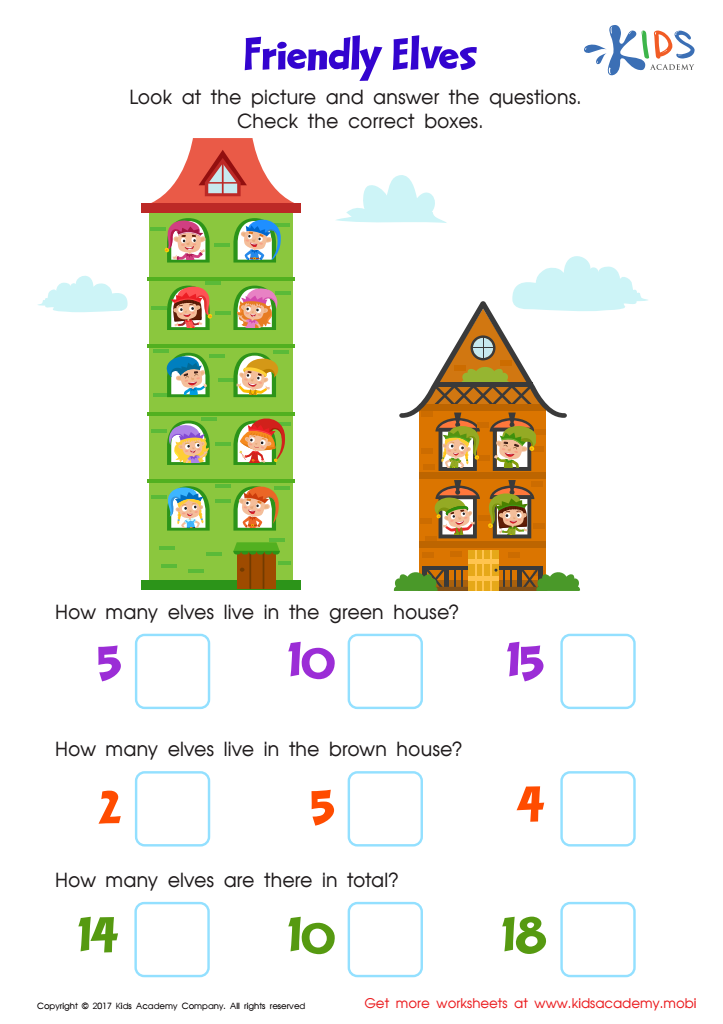
Place Value: Friendly Elves Worksheet
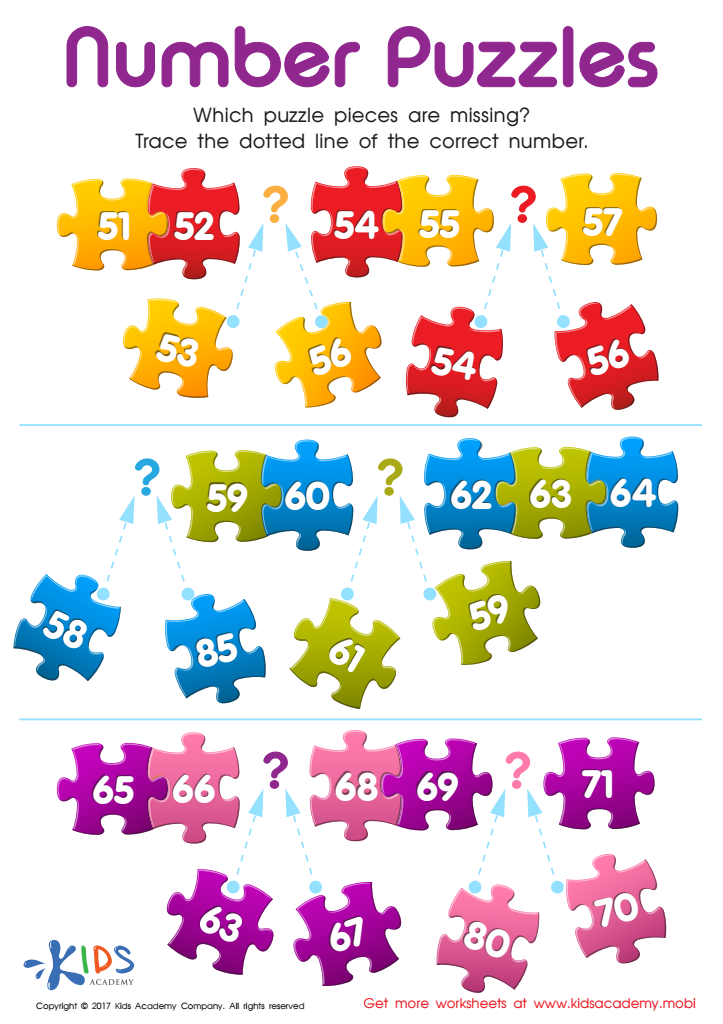
Number Puzzles Worksheet
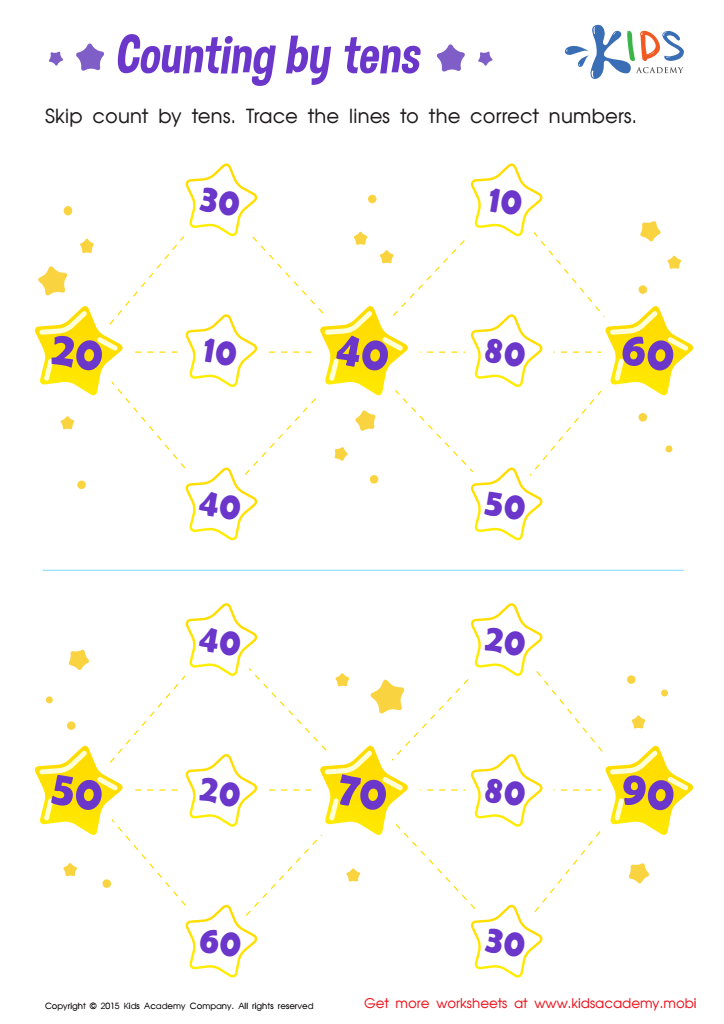
Learn Dozens: Counting by Tens Printable
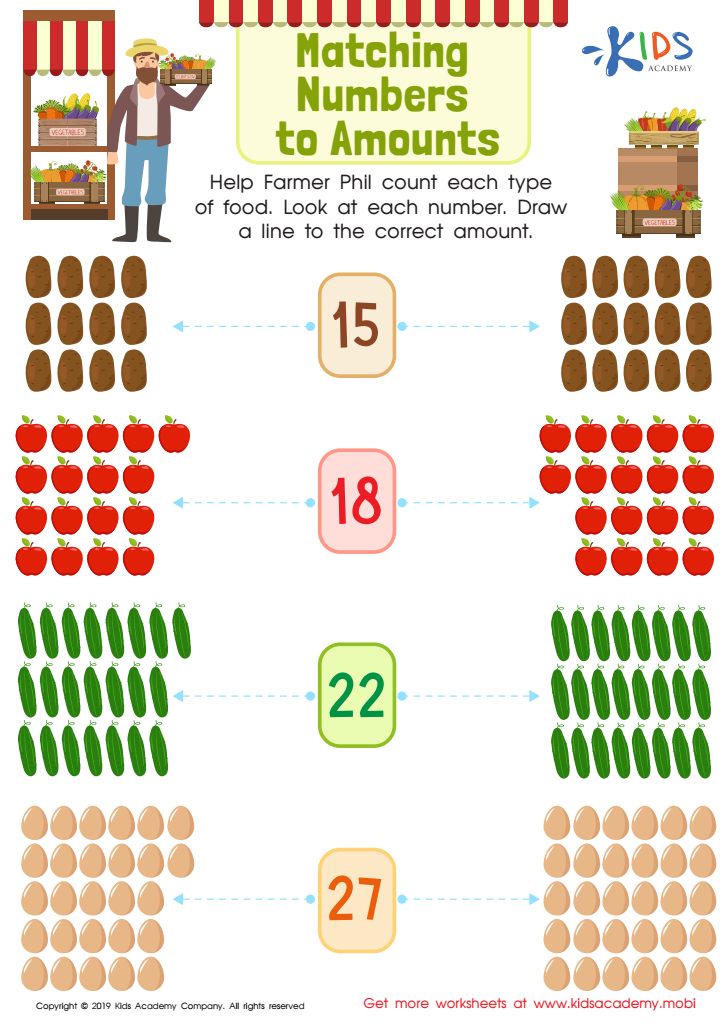
Matching Numbers to Amounts Worksheet








Number recognition, particularly normal numbers up to 100, forms a critical part of early childhood education for children aged 5-7. This foundational numeracy skill is essential as it influences a child's mathematical understanding and ability to undertake more complex mathematical concepts in later years, such as addition, subtraction, and place value.
Firstly, recognizing numbers up to 100 enables children to better comprehend the world around them; numbers frequently appear in daily activities like counting objects, telling time, and understanding money. Developing this skill fosters numerical literacy, vital for both academic achievements and everyday functionality.
Secondly, early number recognition supports cognitive development, enhancing memory, attention, and problem-solving skills. Learning numbers involves recognizing numerical patterns, comparing quantities, and understanding relational concepts, all of which are crucial cognitive abilities. This also builds confidence in tackling new learning challenges.
Lastly, fostering numeracy skills at an early age contributes to positive attitudes toward mathematics. Children who master basic numbers exhibit a sense of achievement that can encourage a lifelong interest in and appreciation for math. Conversely, struggles with early math concepts can lead to frustration and a dislike for math-related activities, affecting overall academic performance.
Parents and teachers should therefore prioritize number recognition up to 100, setting a solid foundation for future academic success and practical life skills.