Pattern recognition Normal Patterns Worksheets for Ages 5-7
5 filtered results
-
From - To
Explore our engaging Pattern Recognition Normal Patterns Worksheets designed for children ages 5-7! These worksheets are crafted to enhance your child's critical thinking and analytical skills through fun and interactive exercises. With a vibrant mix of colors and shapes, kids will learn to identify, complete, and create patterns, laying a strong foundation in mathematics and cognitive development. Our easy-to-follow activities promote concentration and fine motor skills, encouraging young learners to think critically while enjoying the process. Perfect for both classroom and at-home learning, these worksheets make mastering pattern recognition a delightful adventure. Start your child's journey into math today!
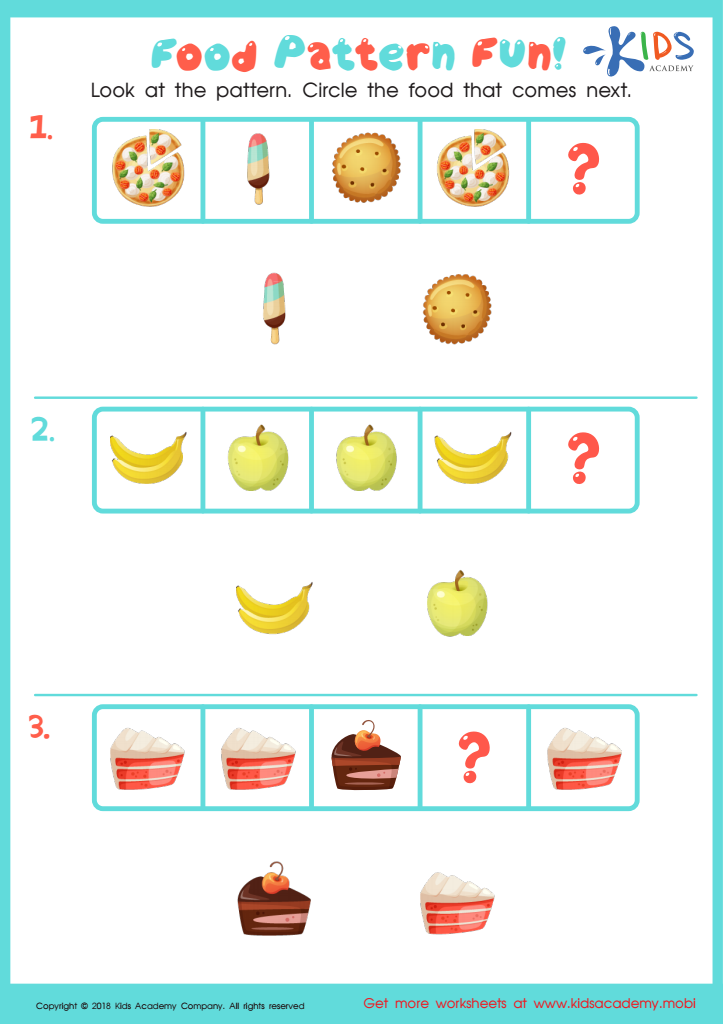
Food Pattern Fun Worksheet
 Assign to My Students
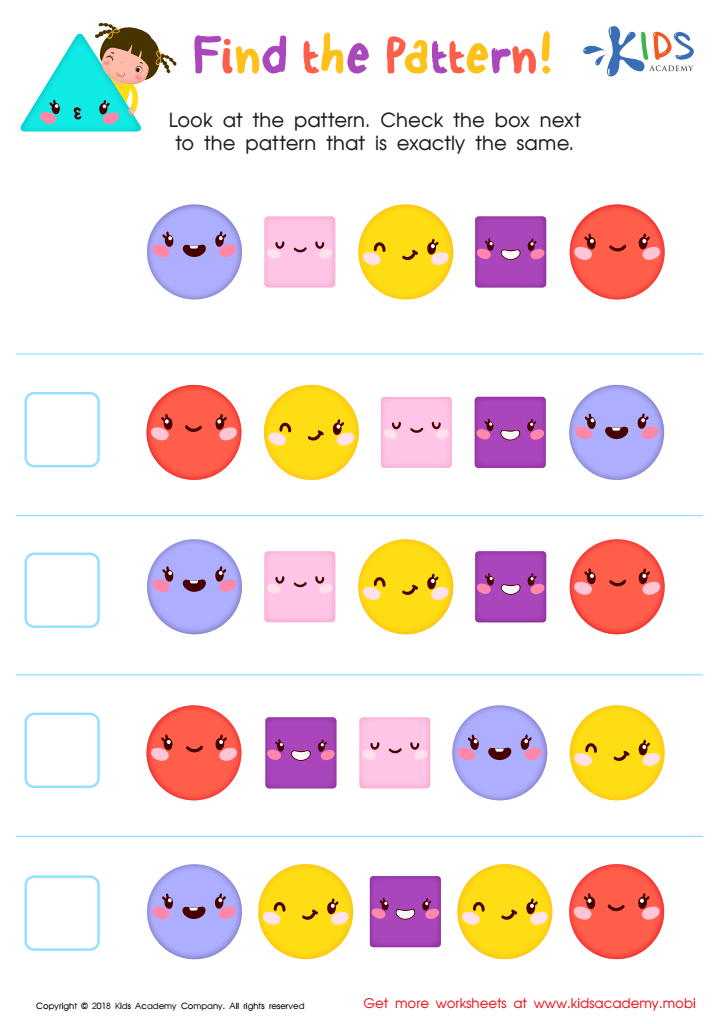
Find the Pattern Worksheet
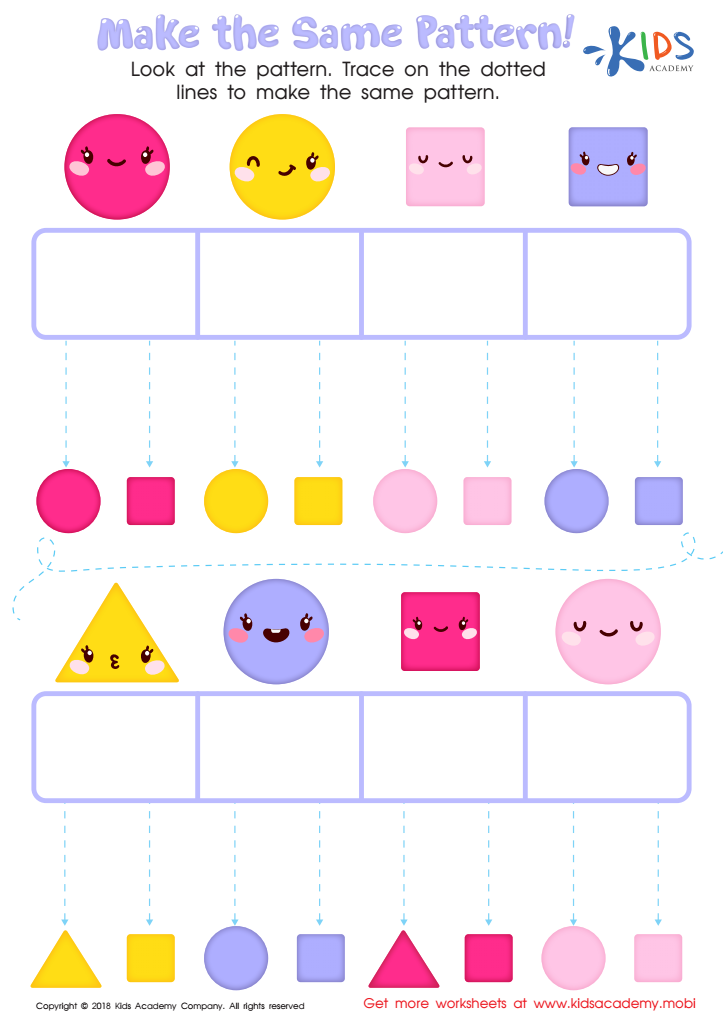
Make the Same Pattern Worksheet
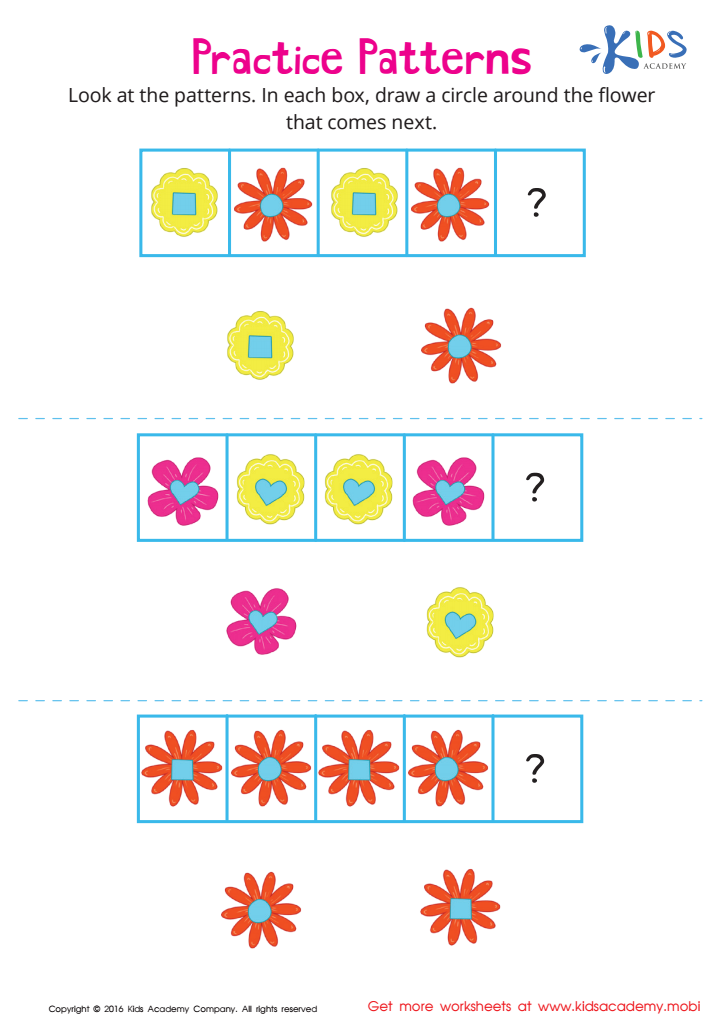
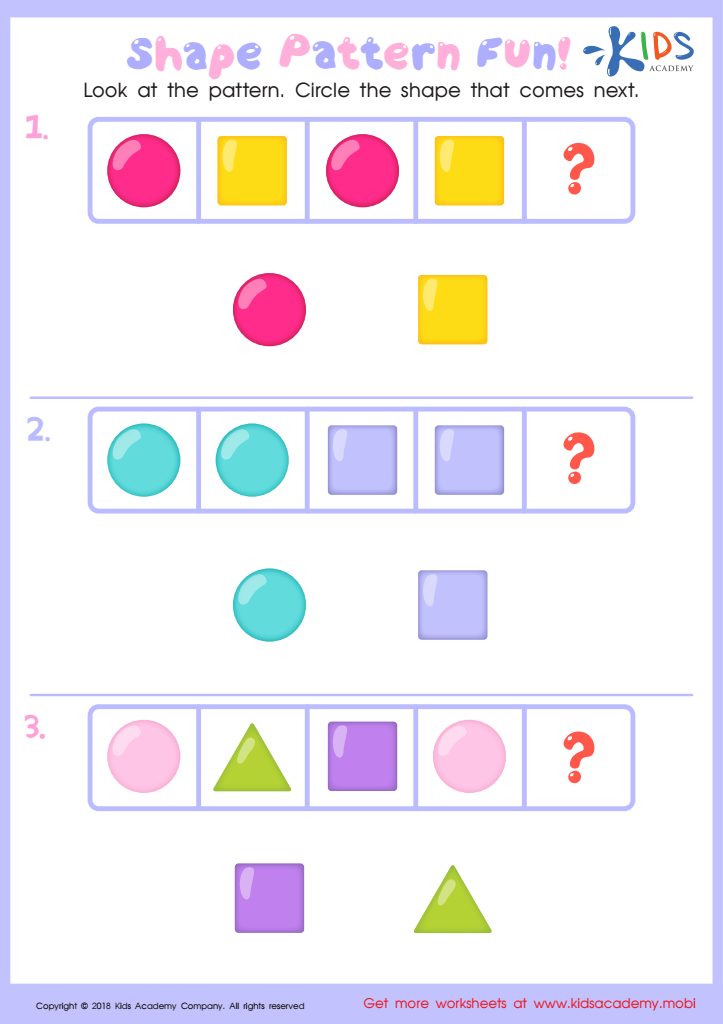
Shape Pattern Fun Worksheet








Pattern recognition is a crucial cognitive skill that significantly influences a child's development, particularly for children aged 5 to 7. During these formative years, children are not only acquiring foundational skills in math and literacy but are also enhancing their problem-solving abilities and logical thinking. Understanding normal patterns helps children make connections between concepts, making learning more profound and meaningful.
Teachers and parents should prioritize pattern recognition because it lays the groundwork for critical thinking. When children identify and analyze patterns in their environment, they learn to predict outcomes and solve problems more effectively. For example, recognizing patterns in numbers aids in mathematics, while identifying patterns in language supports reading and writing skills.
Additionally, integrating pattern recognition into daily activities fosters creativity and adaptability. Children who engage with patterns often demonstrate enhanced spatial awareness and memory capabilities. By promoting pattern recognition, parents and teachers equip children with essential life skills, enabling them to navigate complex situations as they grow.
In summary, emphasizing normal patterns from ages 5 to 7 cultivates essential cognitive abilities that serve as building blocks for a child’s academic and personal success. Hence, educators and parents should champion these skills for holistic development.








