
Animal Classification Normal Sorting Worksheets for Ages 5-7
3 filtered results
Difficulty Level
Grade
Age
-
From - To
Subject
Activity
Standards
Explore our engaging "Animal Classification Normal Sorting Worksheets" designed specifically for children ages 5-7. These interactive worksheets help young learners develop essential sorting and categorization skills as they discover the fascinating world of animals. Children will identify and classify different animals based on various criteria, including species, habitat, and physical characteristics. With vibrant illustrations and age-appropriate activities, these worksheets promote critical thinking and enhance cognitive development. Perfect for classroom use or at-home learning, our resources make learning fun and accessible. Encourage your child's curiosity about nature while building foundational skills in a playful and educational way!
Favorites
With answer key
Interactive
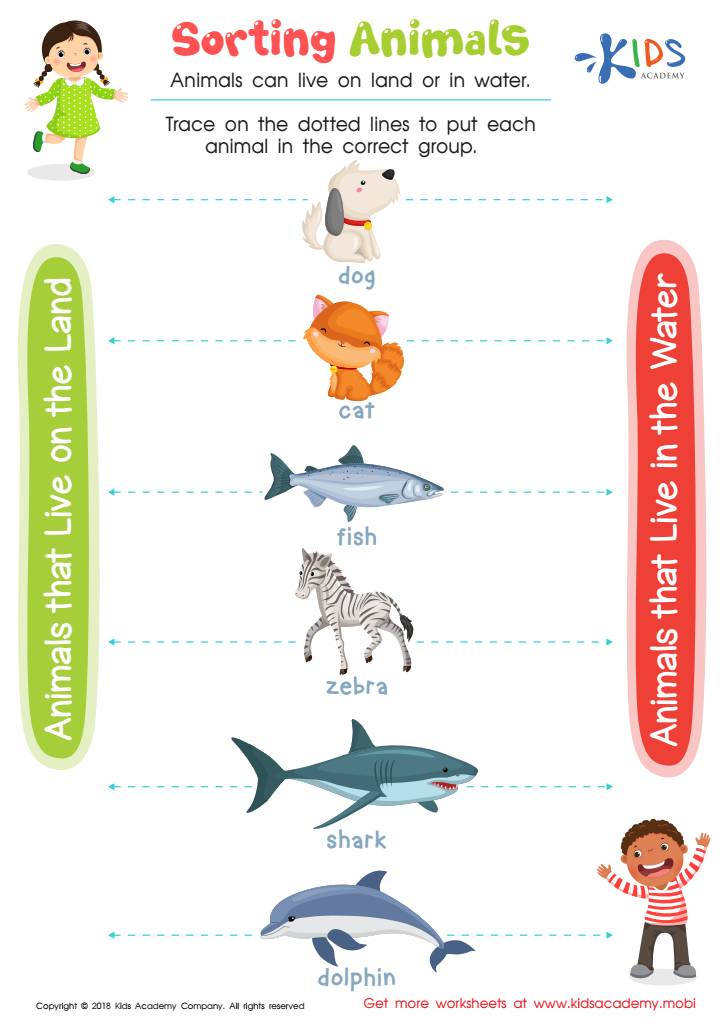
Sorting Animals Worksheet
Your kids will love this free, interactive worksheet! With image clues, they can read and trace the animal names, and then sort them into groups of land or water animals. It's an enjoyable way to boost their critical thinking, fine motor and prior knowledge skills.
 Assign to My Students
Sorting Animals Worksheet
Worksheet
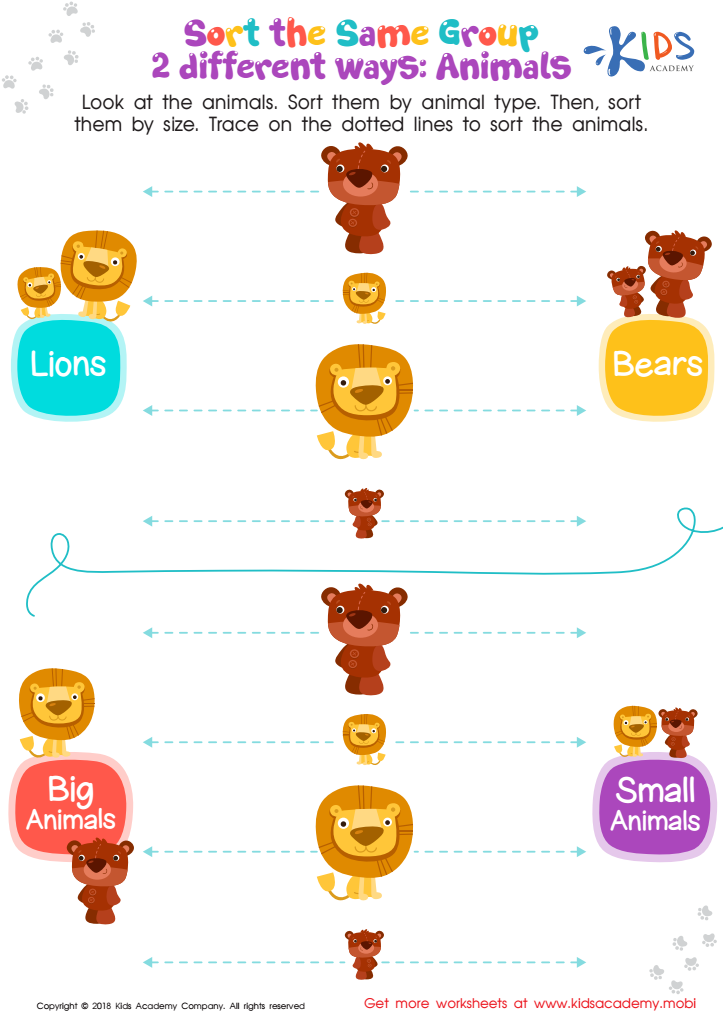
Sort the Same Group 2 Different Ways: Animals Worksheet
Look at the animals with your child. Ask them to name them, then sort them by type (e.g. lions and bears). Next, help them sort by size, tracing the dotted lines. This will teach them sorting skills.
Sort the Same Group 2 Different Ways: Animals Worksheet
Worksheet
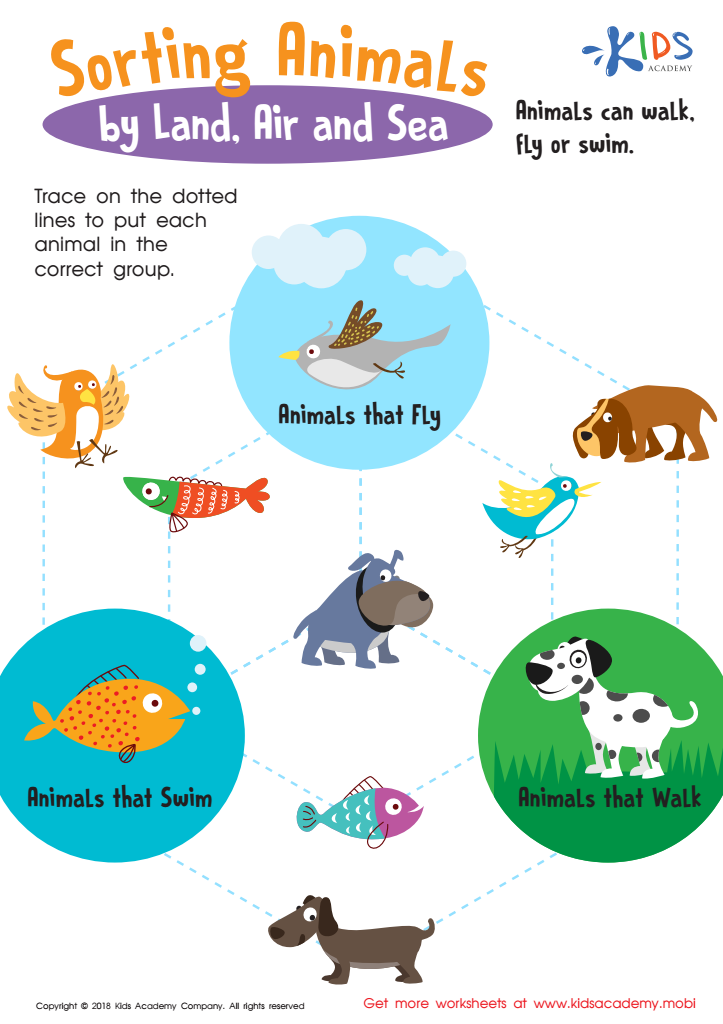
Sorting Animals by Land, Air and Sea Worksheet
Kids will use critical thinking and fine motor skills with this worksheet! They'll analyze animal traits and draw lines to sort them into groups of those that fly, swim, or walk. It's a fun way to hone skills and have a great time!
Sorting Animals by Land, Air and Sea Worksheet
Worksheet
Join Kids Academy for Free
Who is primarily going to use this learning content?








Animal Classification Normal Sorting is a foundational activity that fosters critical thinking and cognitive development in young learners aged 5-7. This educational practice encourages children to organize animals into categories based on shared characteristics, such as habitat, diet, or physical traits. Understanding classification helps children grasp basic scientific concepts and develops their observational skills.
Parents and teachers should care about this activity because it not only enhances knowledge of the animal kingdom but also promotes essential skills like categorization and reasoning. By engaging with the taxonomy of animals, children learn to recognize patterns and make connections between different species, which is fundamental in developing their inquiry-based learning. Additionally, this activity can spark curiosity about the natural world, encouraging a love for science that can span their educational journeys.
Moreover, animal classification can tie into broader themes such as environmental awareness and biodiversity, fostering empathy for living creatures. Overall, Animal Classification Normal Sorting serves as a multidimensional educational tool that empowers young minds, ignites their curiosity, and sharpens their analytical skills, making it a vital component in early childhood education.








