Understanding ecosystems Normal Animals Worksheets for Ages 5-7
3 filtered results
-
From - To
Explore the wonders of ecosystems with our "Understanding Ecosystems Normal Animals Worksheets" designed for children ages 5-7. These engaging worksheets introduce young learners to the diverse roles animals play in their environments. Through fun activities, kids will discover how different species interact, adapt, and rely on one another within their ecosystems. The worksheets encourage critical thinking and enhance literacy, making learning about nature enjoyable and interactive. Perfect for educators and parents alike, these resources provide a solid foundation in science, fostering a curiosity about wildlife and the planet. Start your child's journey into the natural world today!
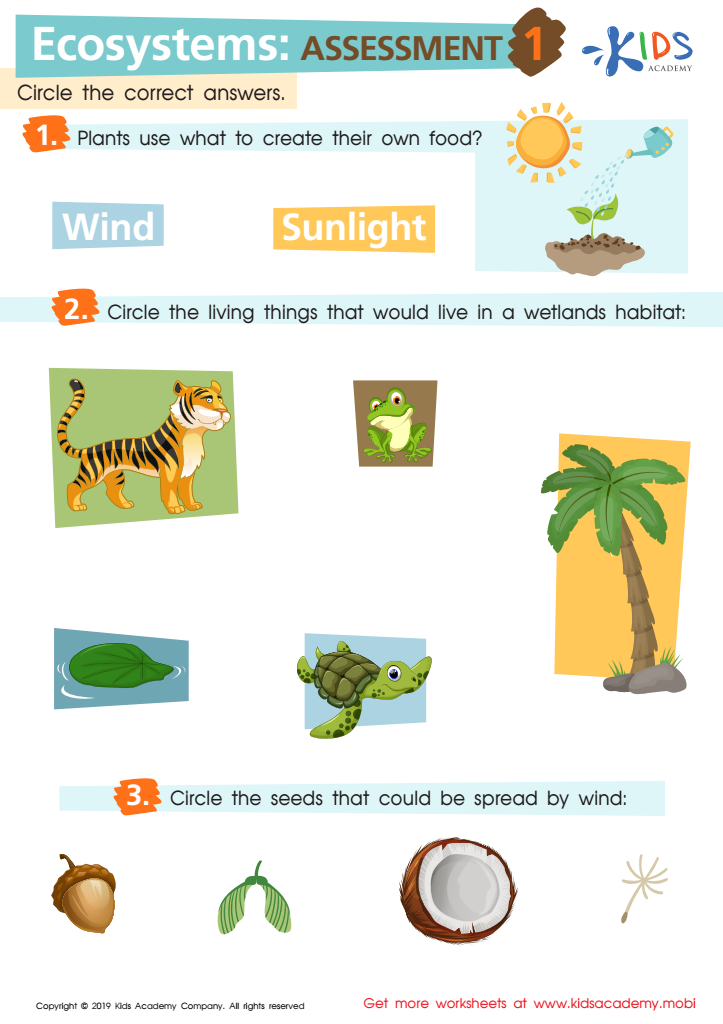
Ecosystems: Assessment 1 Worksheet
 Assign to My Students
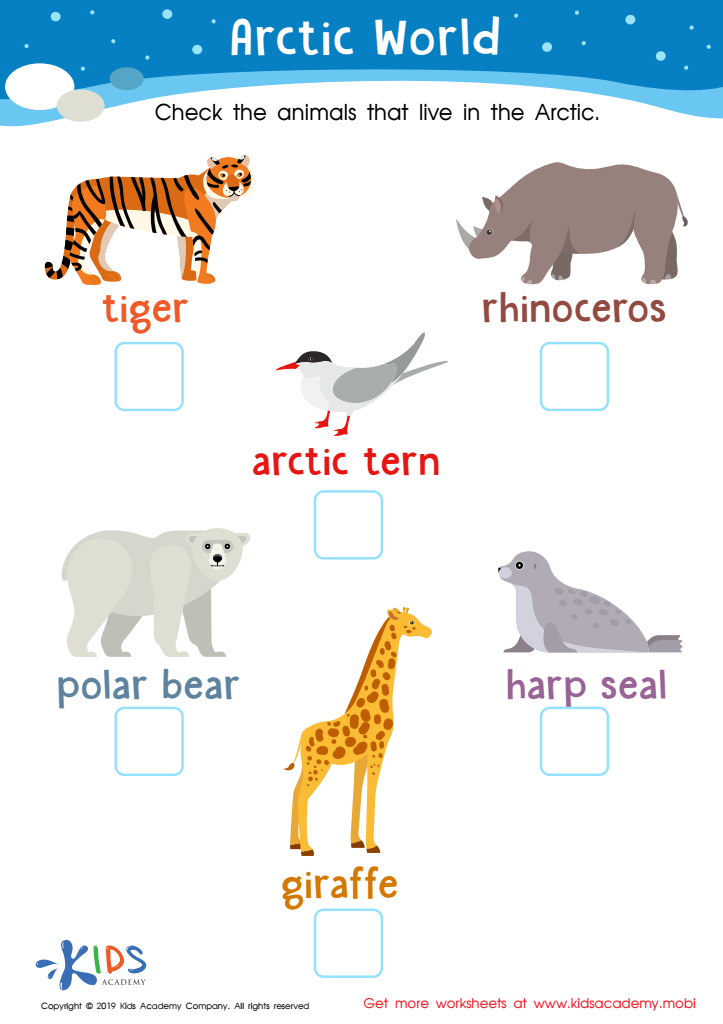
Arctic World Worksheet
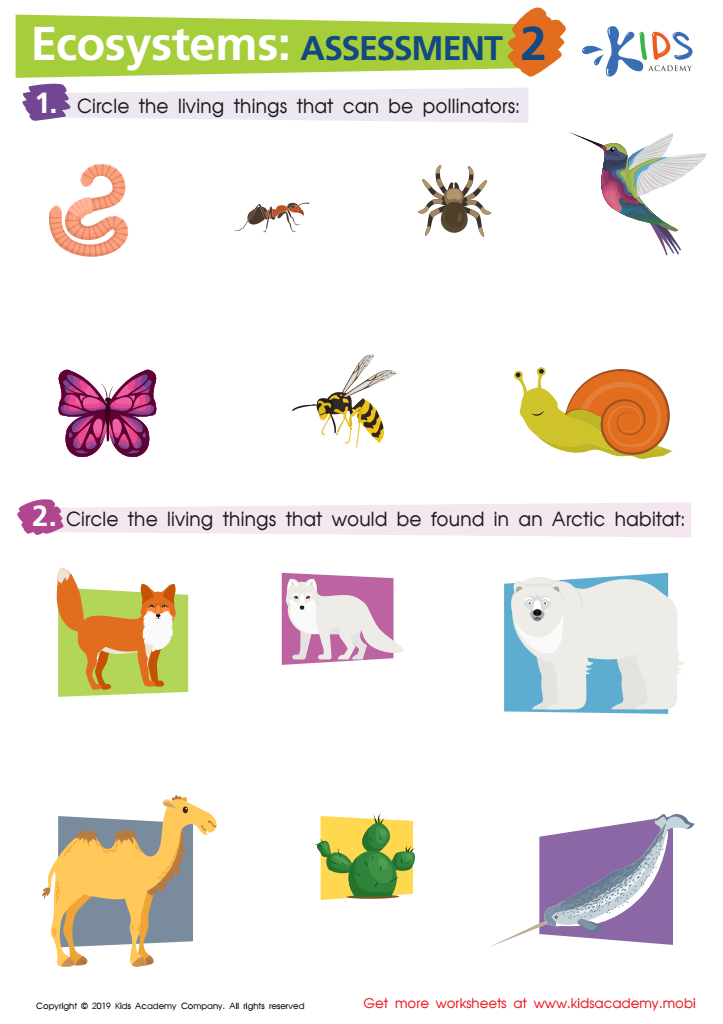
Ecosystems: Assessment 2 Worksheet


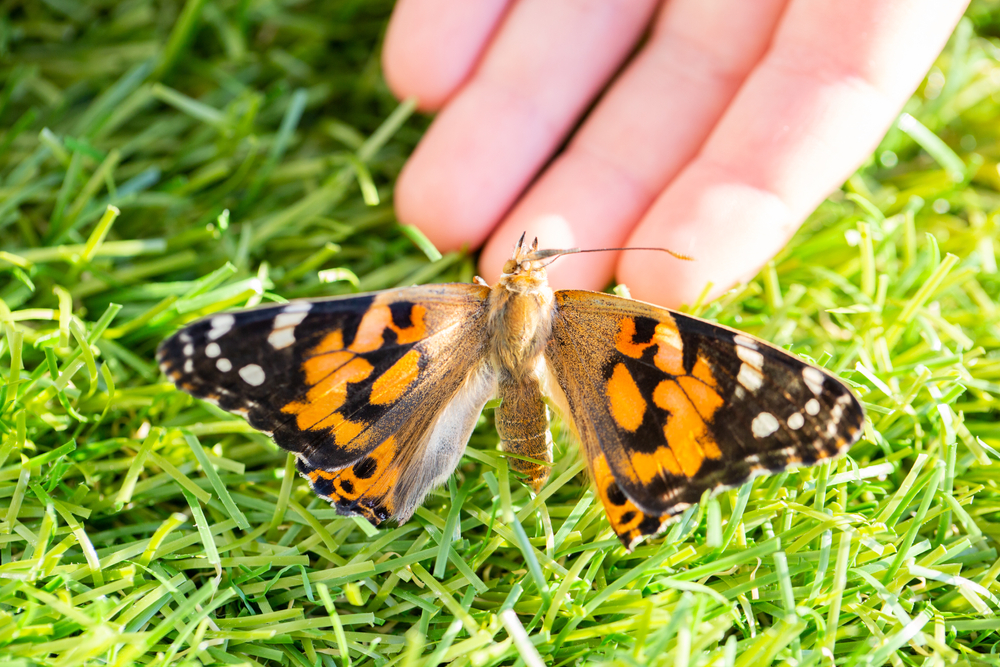




Understanding ecosystems and normal animals is crucial for children aged 5-7, and parents or teachers should prioritize this learning for several reasons. First, nurturing curiosity about the natural world helps develop critical thinking and observation skills. Young children are naturally inquisitive, and engaging them with concepts like ecosystems sparks a desire to explore and ask questions about their environment.
Second, learning about ecosystems fosters an appreciation for biodiversity. Children learn about how various animals interact with each other and their habitats, helping them to recognize the importance of every living organism. This awareness cultivates empathy towards animals and encourages a sense of responsibility for the planet from an early age.
Additionally, understanding ecosystems supports the development of science literacy, laying a foundation for future learning. Children learn essential concepts, such as food chains and habitats, which are building blocks for more advanced scientific understanding.
Finally, this knowledge helps children make connections with their own lives, promoting a sense of belonging in their community and the larger world. By caring about the natural environment, children can grow into informed and conscientious adults prepared to make positive contributions to their communities and the planet.








