Filters

8 filtered results

Clear all filters
Favorites
With answer key
Interactive

8 filtered results

Difficulty Level

Grade


Discover our engaging "Alphabet Recognition Normal ABC Order Worksheets" designed for children ages 5-8. These printable worksheets offer fun and interactive activities that help young learners master the basics of alphabet recognition and sequence. Perfect for kindergarten and early-grade students, each worksheet reinforces the order of letters through practice and repetition. With colorful designs and friendly prompts, kids can develop critical foundational skills in reading and writing while enjoying the learning process. Download, print, and watch your child's alphabetical prowess grow as they confidently recognize and arrange letters in the correct order.

Check out this FREE Trial Lesson on ABC Order for age 5-8!

M

Favorites
With answer key
Interactive
  • 5-8
  • Alphabet Recognition
  • ABC Order
  • Normal
Letter O worksheets
Letter O worksheets

Letter O Tracing Page

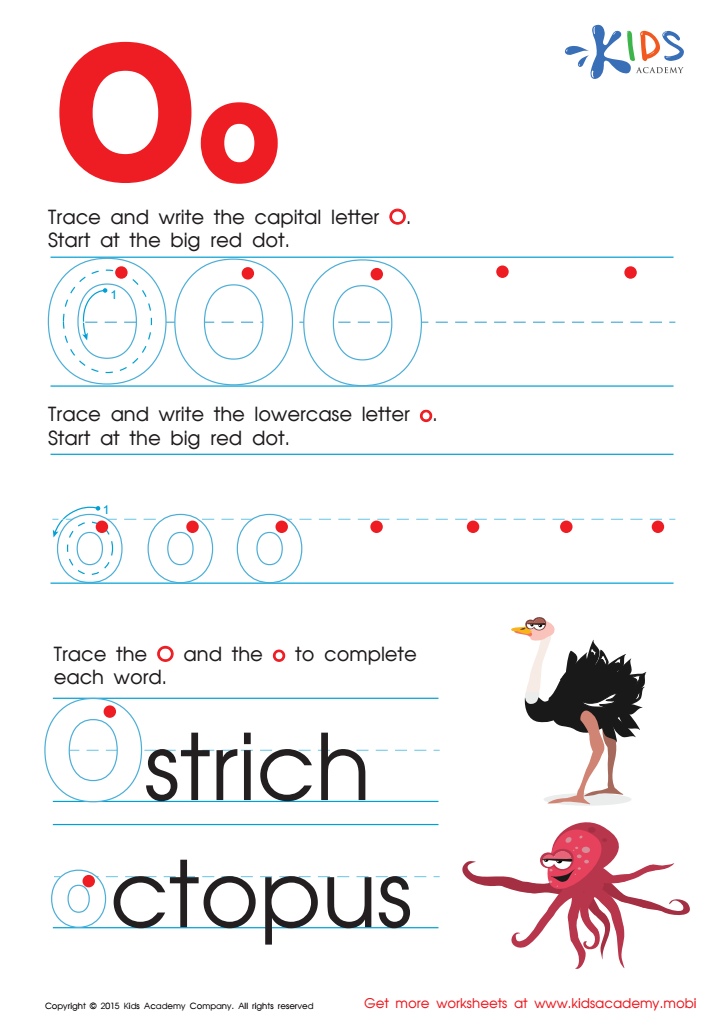
Practice writing the letter "O" with our new worksheet. Trace and write the letter several times, starting at the red dot. First do the uppercase letter, then the lowercase. Use the pictures to complete the words "Ostrich" and "octopus". Kids Academy offers more fun alphabet worksheets.
Letter O Tracing Page
Worksheet
Letter I worksheets
Letter I worksheets

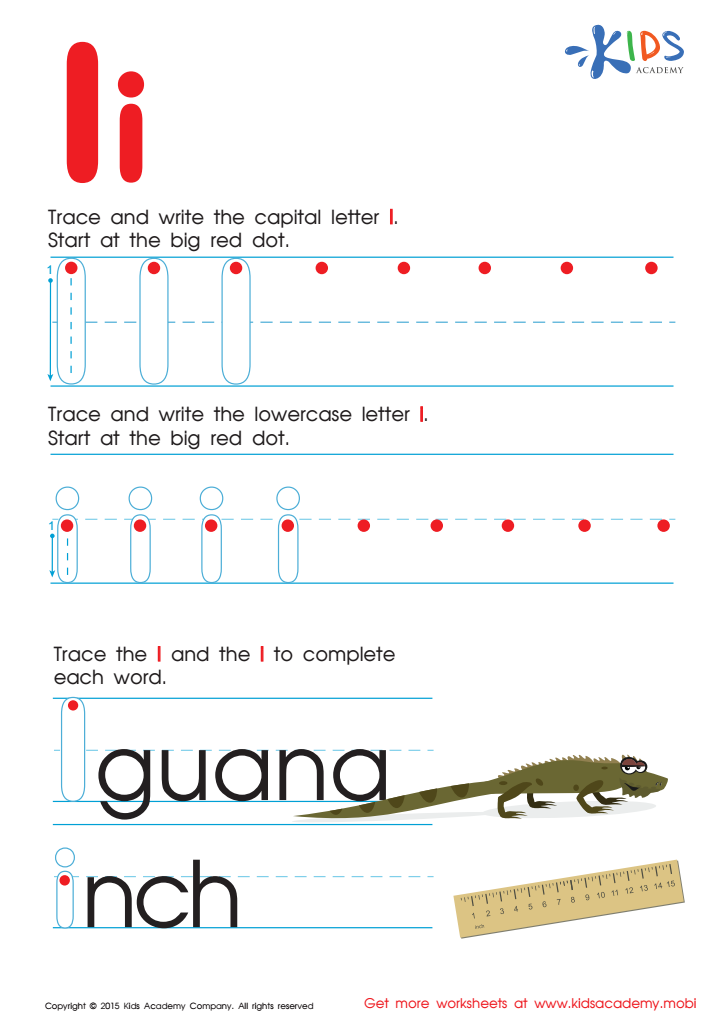
Letter I Tracing Page

Trace and write "I" uppercase and lowercase. An iguana's tail looks like the uppercase "I" and the lowercase "i" is as small as an inch. Make learning fun with Kids Academy worksheets.
Letter I Tracing Page
Worksheet
letter C worksheets
letter C worksheets

Letter C Tracing Page

Trace and write the letter 'C'! Put the pencil at the red dot then follow the lines – the capital letter first then the lowercase one. Cats love it and so will you! Get more free printables to practice tracing and writing.
Letter C Tracing Page
Worksheet
Letter М worksheets
Letter М worksheets

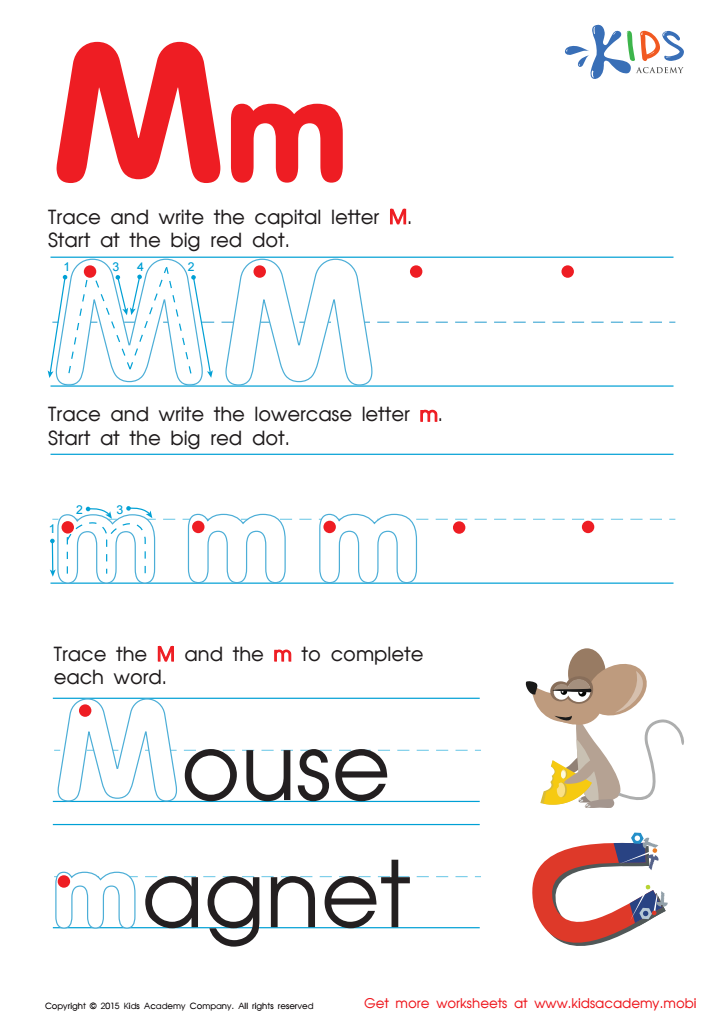
Letter M Tracing Page

Trace and write the letter "M" to help kids learn the alphabet. Start at the red dot and practice several times. Trace the capital letter first, then move on to the lowercase. Complete words like "mouse" and "magnet" in the further exercise. Get more free printables here.
Letter M Tracing Page
Worksheet
Letter J worksheets
Letter J worksheets

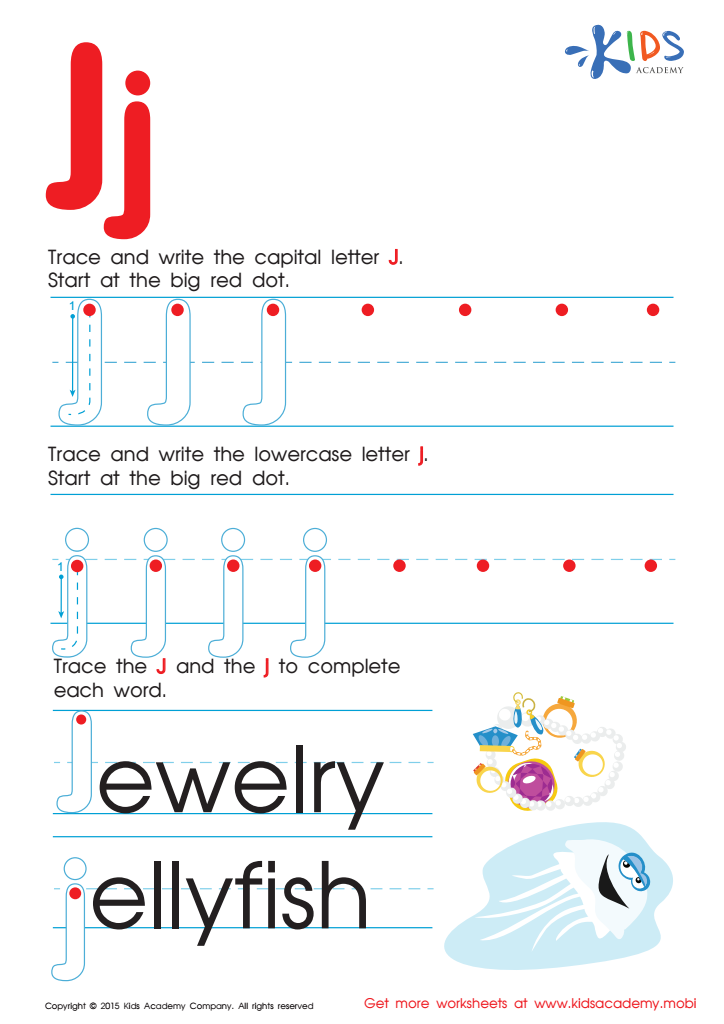
Letter J Tracing Page

Trace and write the letter "J" with our ABC worksheet - start at the big red dot! Have fun completing words like jewelry, jellyfish and more. Check out our kindergarten activities for more alphabet practice.
Letter J Tracing Page
Worksheet
Letter N worksheets
Letter N worksheets

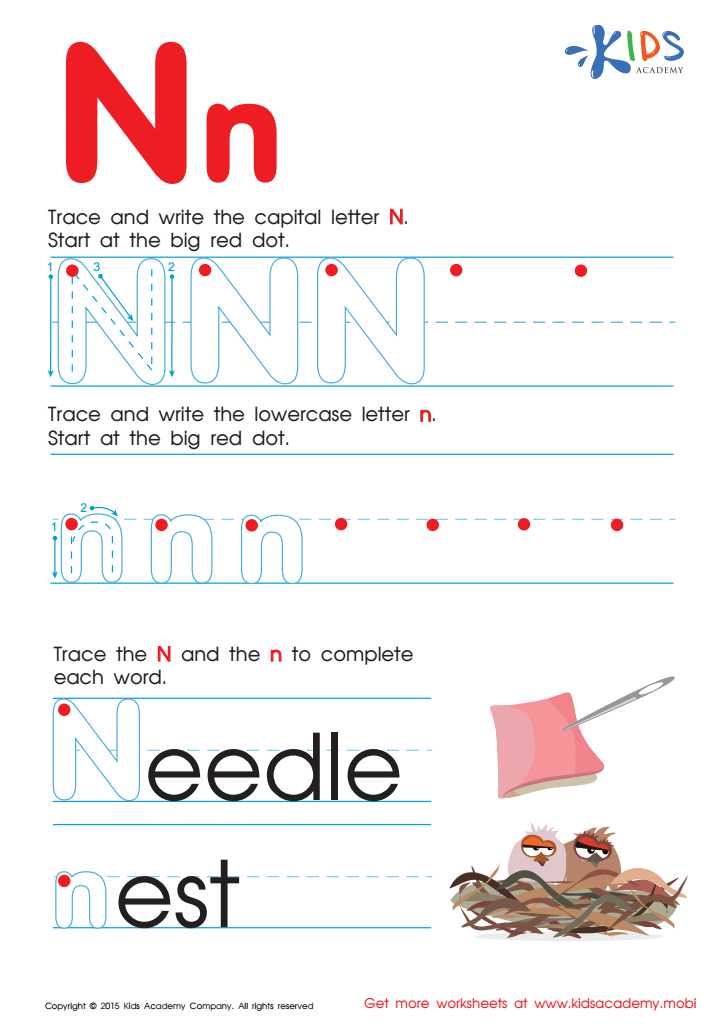
Letter N Tracing Page

Trace and write capital "N" and lowercase "n" several times. Then try forming words like "needle" and "nest". Master letter writing with Kids Academy's collection of ABC worksheets for kindergarten.
Letter N Tracing Page
Worksheet
letter b worksheets
letter b worksheets

Letter B Tracing Page

Ready to learn the Alphabet? Put your pencil on the red dot and trace & write both capital & lowercase "B". Then have a look at the pictures. Catch the bee, cross the bridge & write the letters to complete the words. More ABC worksheets for kindergarten available!
Letter B Tracing Page
Worksheet
letter e worksheets
letter e worksheets

Letter E Tracing Page

Trace and write the uppercase and lowercase "E" starting at the big red dot. Complete words to perfect letter writing. Egg and Elephant must be written carefully. More alphabet worksheets for kindergarten are available for download to spend more time with your children learning.
Letter E Tracing Page
Worksheet


Alphabet recognition in the normal ABC order for children aged 5-8 is foundational for early literacy and cognitive development. Recognizing and consistently identifying letters in their sequence helps children develop essential reading skills. When kids can effortlessly navigate the ABCs, they lay a smoother path toward decoding words, understanding letter sounds (phonics), and eventually, reading fluently.

Early alphabet recognition also aids in enhancing other cognitive skills such as memory, attention, and sequencing. Remembering the order of the alphabet helps children in learning how to organize information and follow logical patterns, which are crucial skills not just for literacy, but for overall academic achievements.

Additionally, familiarity with alphabetical order is practical for everyday tasks. Children use it to look up words in dictionaries, locate books in libraries, and understand systemized lists. By ensuring proficiency in this area, parents and teachers prepare children for these routine activities which promote independence and confidence.

Importantly, the process of learning and mastering the alphabet can be fun and engaging. Through games, songs, and interactive activities, children often enjoy their learning, fostering a positive attitude towards education at an early age. Overall, investing time in ensuring alphabet recognition provides a strong cornerstone for lifelong learning.