Alphabet tracing Normal ABC Order Worksheets for Ages 5-8
4 filtered results
-
From - To
Discover our engaging Alphabet Tracing Normal ABC Order Worksheets designed for children aged 5-8. These worksheets help young learners master letter formation and recognition through fun and interactive activities. Perfect for building foundational literacy skills, each sheet guides children to trace uppercase and lowercase letters, fostering proper handwriting techniques. Our carefully crafted resources align with early education standards, ensuring your child gains confidence in writing the alphabet in the correct order. Ideal for classroom use or home practice, our worksheets make learning the ABCs enjoyable and effective. Boost your child’s literacy journey today with our trusted teaching tools.

Letter P Tracing Page
 Assign to My Students







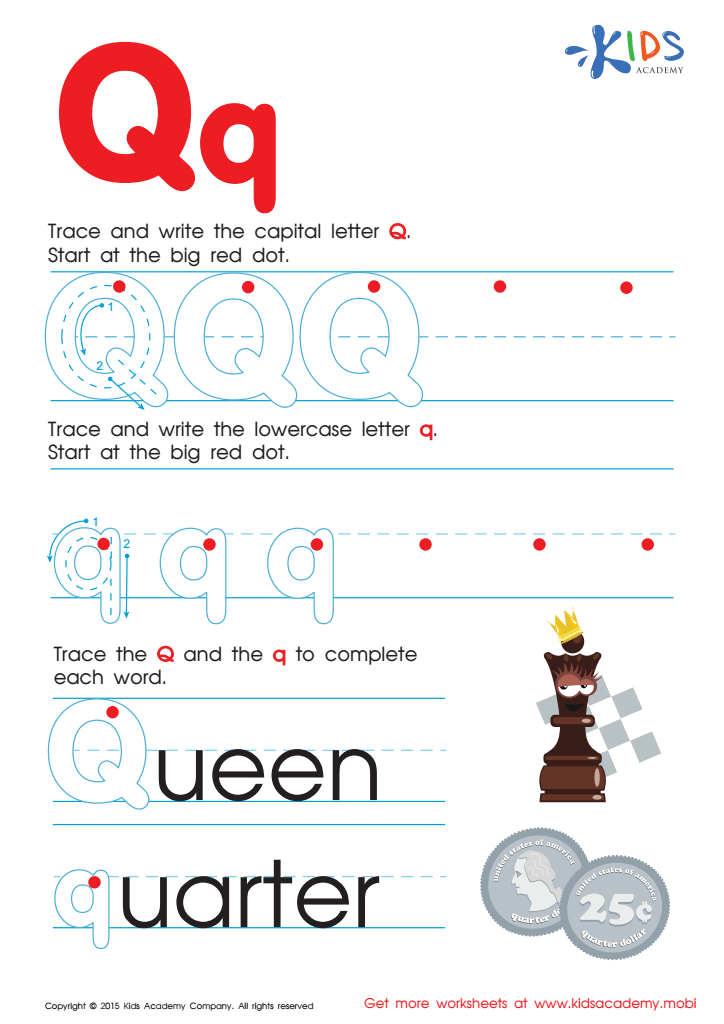
Letter Q Tracing Page

Letter H Tracing Page

Letter D Tracing Page








Alphabet tracing in normal ABC order is an essential foundational skill for children aged 5-8, and parents and teachers should place significant emphasis on it. First, mastering the alphabet in order helps reinforce letter recognition—a critical early literacy skill. Such proficiency is directly linked to effective reading and writing, essential capabilities for academic success.
By tracing letters, children develop fine motor skills crucial for writing. Holding a pencil correctly and controlling hand movements are skills that benefit overall coordination. Tracing also enhances memory, aiding children in recalling the sequence of letters. This is vital when they start to spell and read, as it allows them to quickly identify and sort letters.
Additionally, following the regular ABC order imbues a structured learning approach, reinforcing the predictable patterns that children thrive on. Knowing what comes next helps reduce anxiety and builds confidence, making learning feel more manageable and fun.
Consistency in the alphabetic sequence also aids in the use of alphabetical order for organizing and categorizing information in later life. From looking up words in a dictionary to sorting files, recognizing and applying alphabetical sequence is a lifelong skill.
Thus, regular practice of alphabet tracing benefits cognitive development, motor skills, and fosters an organized approach to learning that supports long-term academic and personal growth.