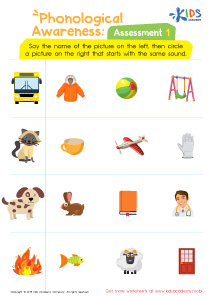
Phonics Skills Normal Elementary Phonics Worksheets for Ages 5-8
4 filtered results
Difficulty Level
Grade
Age
-
From - To
Subject
Activity
Standards
Explore our engaging phonics skills worksheets, specifically designed for children ages 5-8! These printable activities help reinforce essential language concepts while making learning fun. Ideal for normal elementary phonics education, each worksheet promotes various skills such as letter-sound recognition, decoding words, and phonemic awareness. Our colorful, interactive resources are perfect for classroom use or home practice, catering to diverse learning needs. With a focus on mastering the fundamentals of reading and literacy, these worksheets align with educational standards and provide a solid foundation for young learners. Encourage curiosity and confidence in reading today with our phonics skills worksheets!
Favorites
With answer key
Interactive
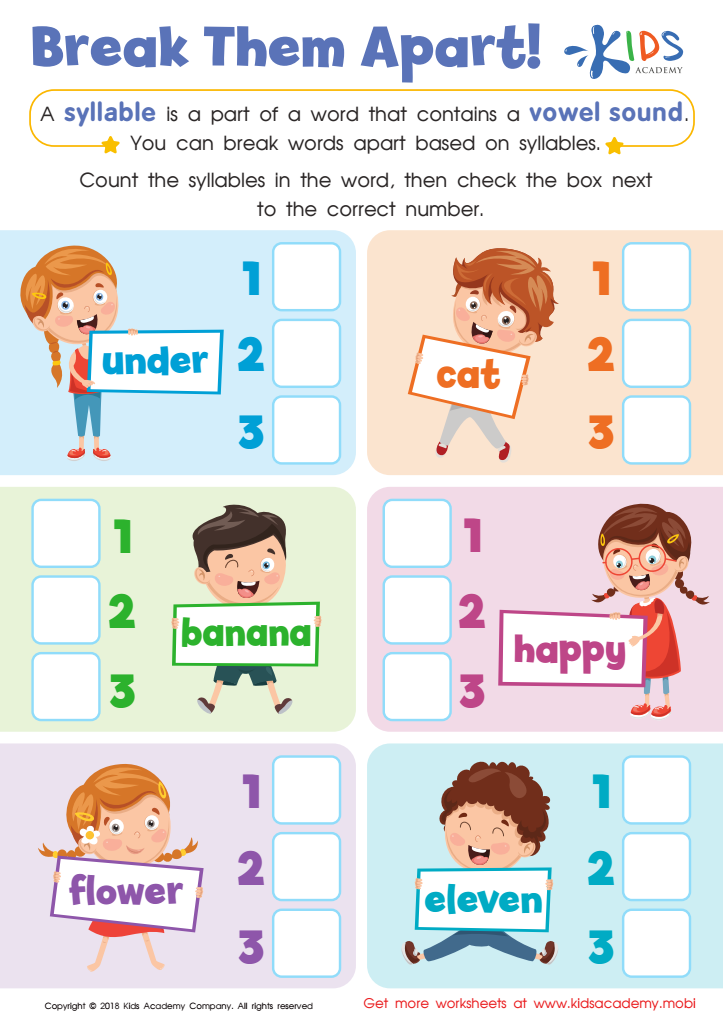
Reading: Break Them Apart Worksheet
See if students understand syllables with this fun worksheet. It teaches them that a syllable is a word part with a vowel sound. Kids read each word and choose how many parts it has. Doing this often helps them decode new words and gain confidence.
Reading: Break Them Apart Worksheet
Worksheet
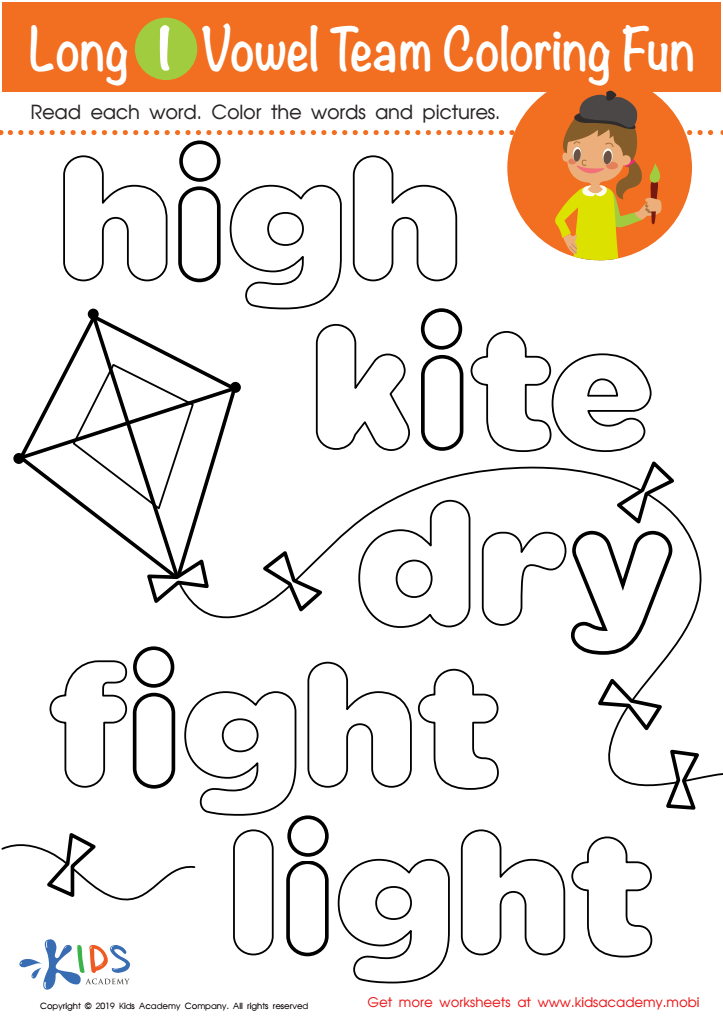
Long I Vowel Team Coloring Worksheet
This worksheet provides practice with letter combinations that make the long "i" sound while enhancing creativity and motor skills with a fun coloring activity. Unknowingly, new readers learn key phonics skills while having fun!
Download (PDF)
 Assign to My Students
Assign to My Students
Long I Vowel Team Coloring Worksheet
Worksheet
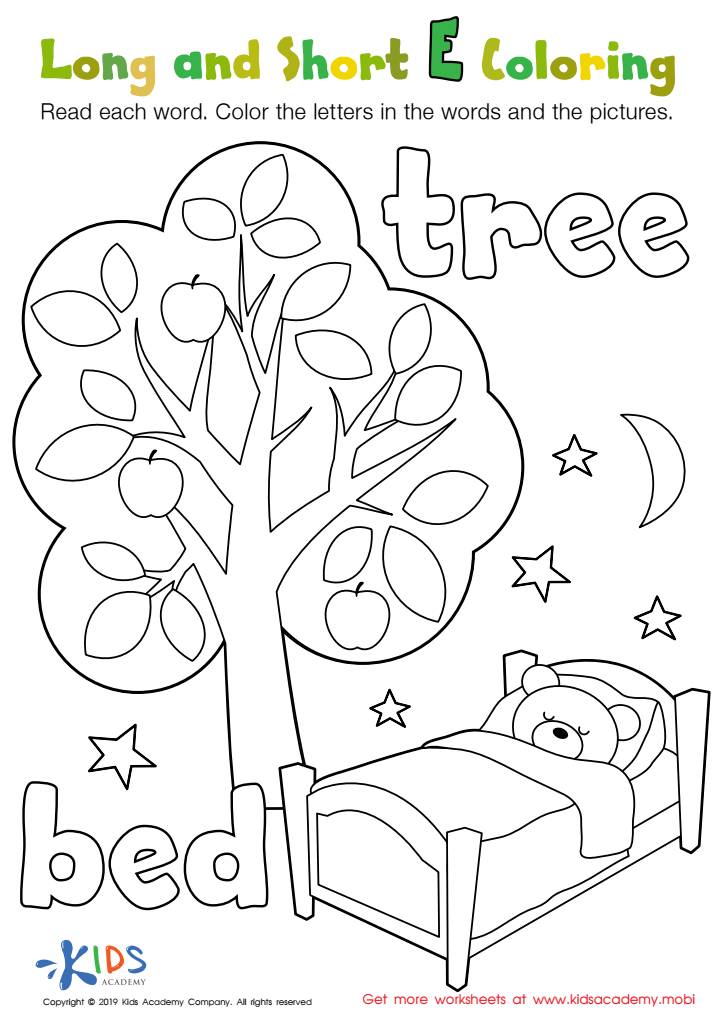
Long and Short E Worksheet
This fun printout makes learning phonics enjoyable for Grade 3 students. Get them to read the words “tree” and “bed” to recognize the different sounds of the letter “E”. After hearing the words they can color the words and the pictures to understand differences between long and short vowels.
Download (PDF)
Assign to My Students
Assign to My Students
Long and Short E Worksheet
Worksheet
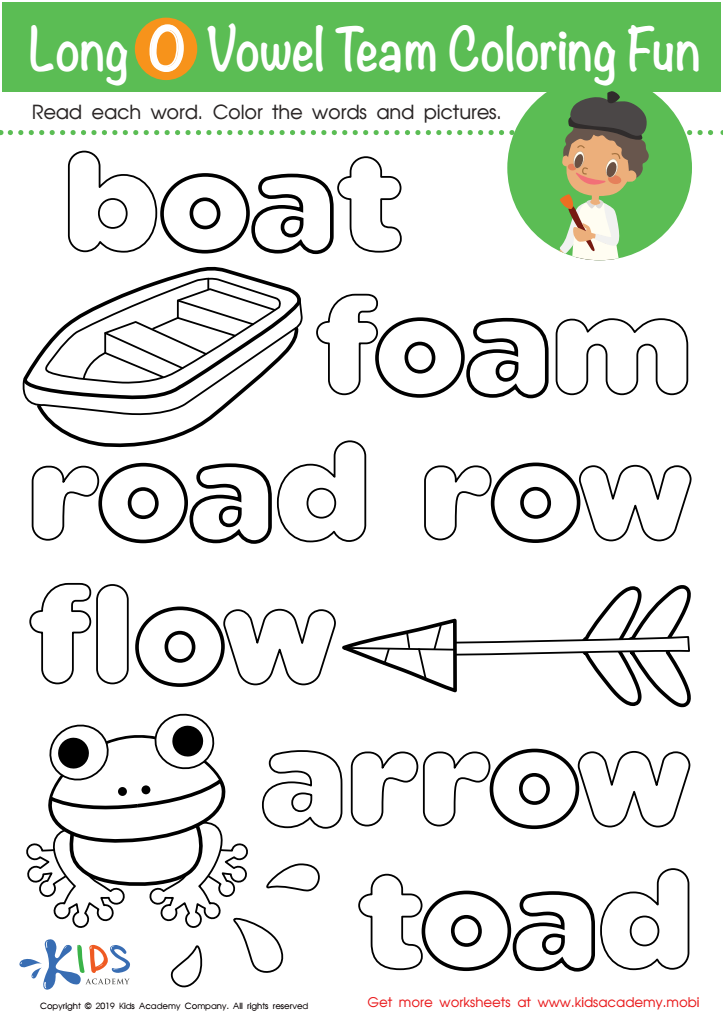
Long O Vowel Team Coloring Worksheet
Divide your class into teams and have them work together to identify and pronounce the long O sound in words like "boat" and "flow". As they read aloud, have the rest of the class listen attentively. Then let teams color in the words and matching pictures, reinforcing the lesson. This simple printout is perfect for phonics lessons and a fun way to energize your class.
Download (PDF)
Assign to My Students
Assign to My Students
Long O Vowel Team Coloring Worksheet
Worksheet
Join Kids Academy for Free
Who is primarily going to use this learning content?




Phonics skills are crucial for children aged 5-8 as they form the foundation for effective reading and writing. Understanding the relationship between letters and their corresponding sounds enables young learners to decode words independently, enhancing their reading fluency and comprehension. Early mastery of these skills significantly boosts children's confidence in reading, motivating them to explore diverse texts and cultivate a lifelong love for reading.
For parents and teachers, nurturing phonics skills in elementary students is essential for promoting literacy and academic success. Children who struggle with phonics may experience difficulties in understanding written material, which can lead to frustration and a lack of motivation. By fostering strong phonics skills, educators and caregivers ensure that children are equipped with the tools necessary to thrive in school and beyond.
Moreover, phonics instruction can easily be integrated into everyday activities, making literacy learning enjoyable and interactive. Engaging games and activities that focus on phonics can strengthen parent-child bonds while reinforcing essential skills. In a world increasingly reliant on literacy, prioritizing phonics education for young learners ensures they are prepared for the challenges of the future, laying down a foundation for effective communication and critical thinking.