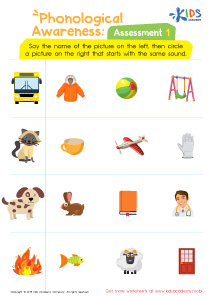
Spelling practice Normal Elementary Phonics Worksheets for Ages 5-8
4 filtered results
-
From - To
Discover engaging Spelling Practice Normal Elementary Phonics Worksheets designed for children aged 5-8! Our thoughtfully curated resources help young learners enhance their spelling skills while gaining confidence in reading and writing. Through interactive exercises, vibrant illustrations, and step-by-step instructions, these worksheets cater to various learning styles, making phonics enjoyable and accessible. Perfect for home or classroom use, our materials encourage skill reinforcement in a playful way. Help your child build a strong foundation in literacy with our comprehensive spelling practice worksheets, fostering a love for learning while they explore the magic of words and sounds. Start spelling smarter today!
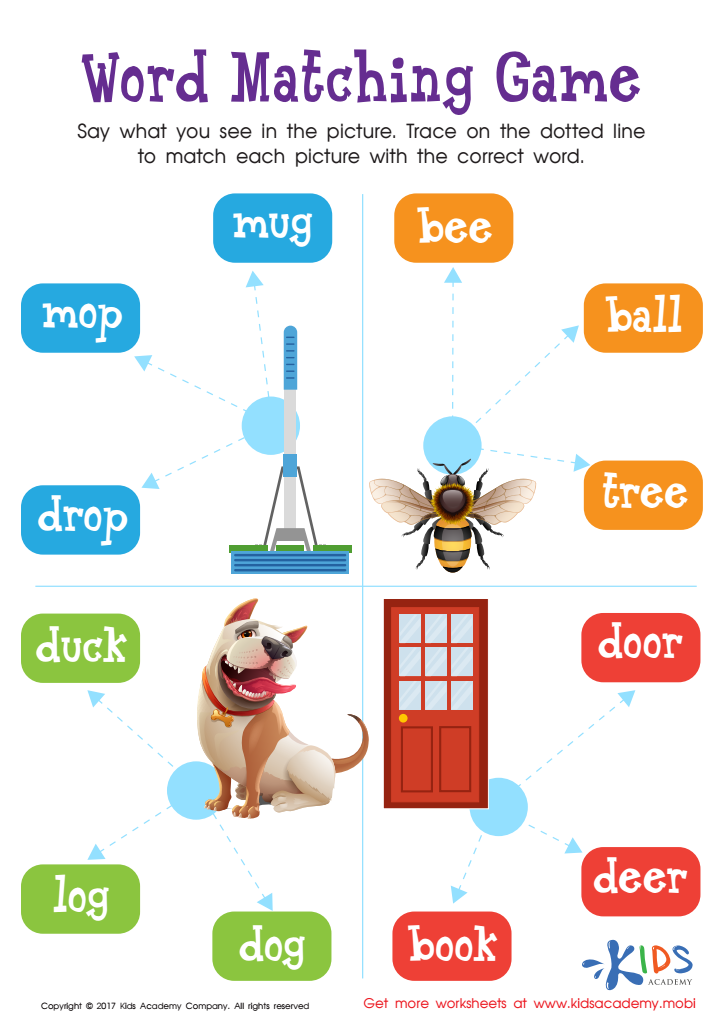
Word Matching Game Worksheet
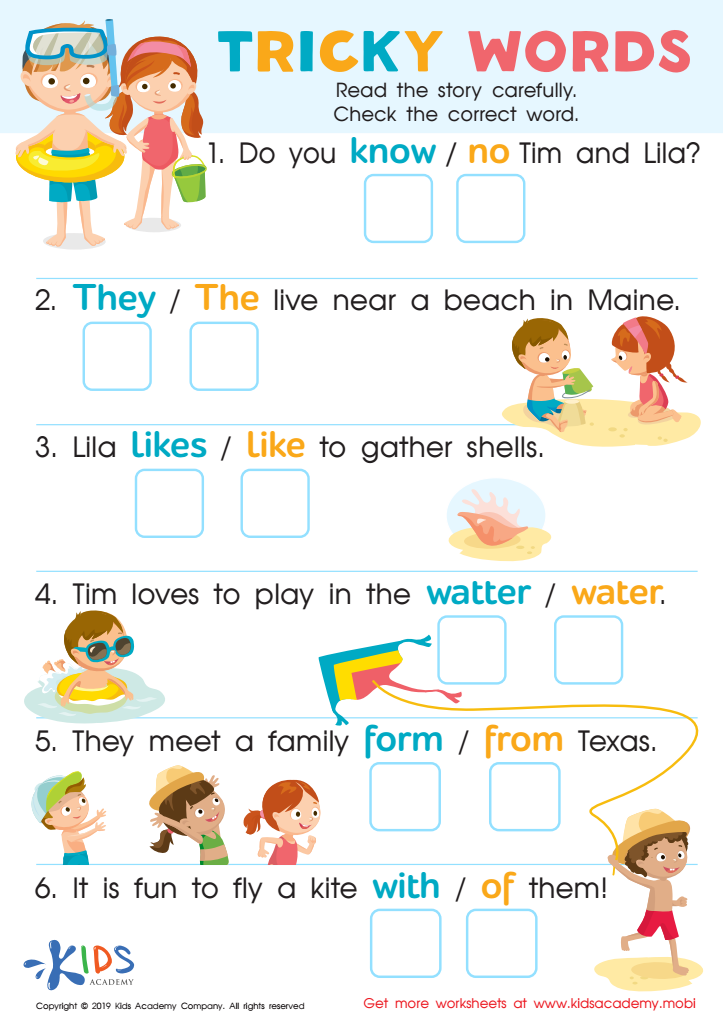
Tricky Words Worksheet
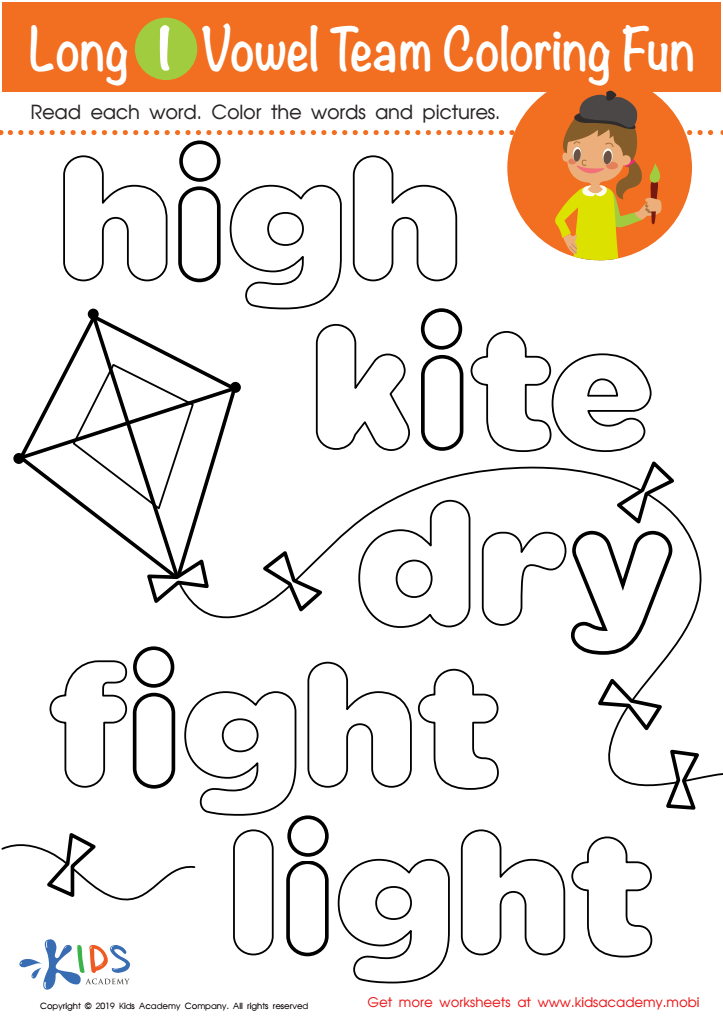
Long I Vowel Team Coloring Worksheet
 Assign to My Students
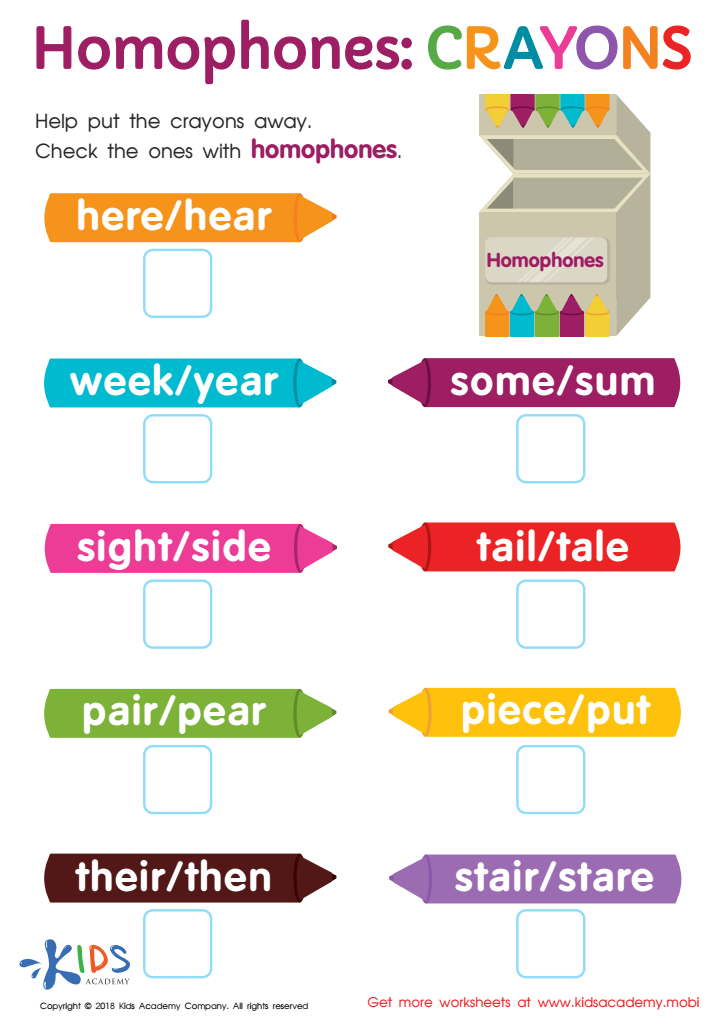
Homophones: Crayons Worksheet




Spelling practice, particularly through a structured program like Normal Elementary Phonics for Ages 5-8, is crucial for young learners. First, mastering spelling strengthens reading skills, enabling children to decode unfamiliar words and enhancing their overall literacy. Phonics emphasizes the relationship between letters and sounds, building a solid foundation for recognizing letters and improving vocabulary.
Moreover, spelling practice helps boost children's confidence in communication. As learners become proficient spellers, they can express their ideas clearly in writing, fostering a sense of achievement and motivation. This competency is vital for students during formative educational years, where they build upon their learning experiences.
Additionally, consistent spelling practice promotes cognitive development. Children engage in critical thinking as they match sounds with appropriate letters and spellings, honing their problem-solving skills essential for various academic disciplines. Teachers and parents can also create a supportive environment by celebrating spelling achievements, ensuring that children associate learning with positive experiences.
Lastly, consistent phonics practice cultivates lifelong learning skills. The ability to spell correctly and confidently sets the stage for future academic success, influencing a child’s performance in higher grades, leading to better outcomes in writing, reading comprehension, and verbal communication. Prioritizing spelling practice early on is an investment in a child’s education and self-esteem.