Word identification Normal Elementary Phonics Worksheets for Ages 5-8
3 filtered results
-
From - To
Discover our engaging "Word Identification Normal Elementary Phonics Worksheets" designed specifically for children ages 5-8. These interactive worksheets focus on enhancing essential phonics skills through fun and relatable activities. Tailored to support young learners, our resources help kids recognize and identify words, fostering confidence in their reading abilities. Each worksheet is filled with vibrant illustrations and age-appropriate exercises that stimulate interest while developing a strong foundation in word recognition. Perfect for classroom and home use, these worksheets are a valuable addition to your educational toolkit. Watch your child’s reading proficiency soar with our comprehensive, easy-to-use phonics worksheets!
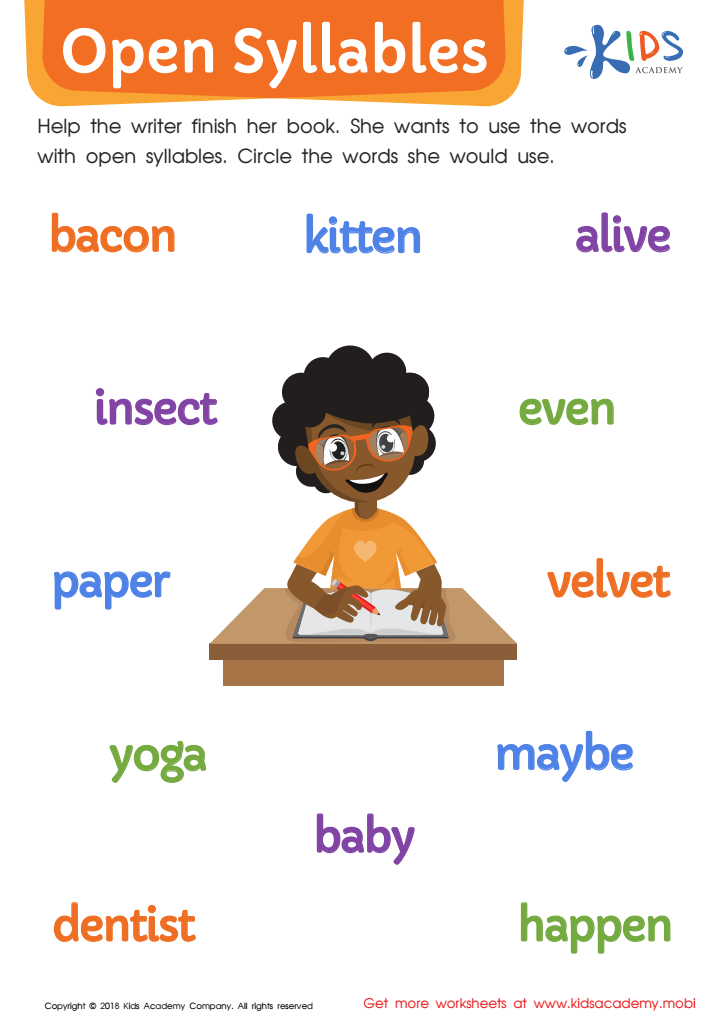
Open Syllables Worksheet
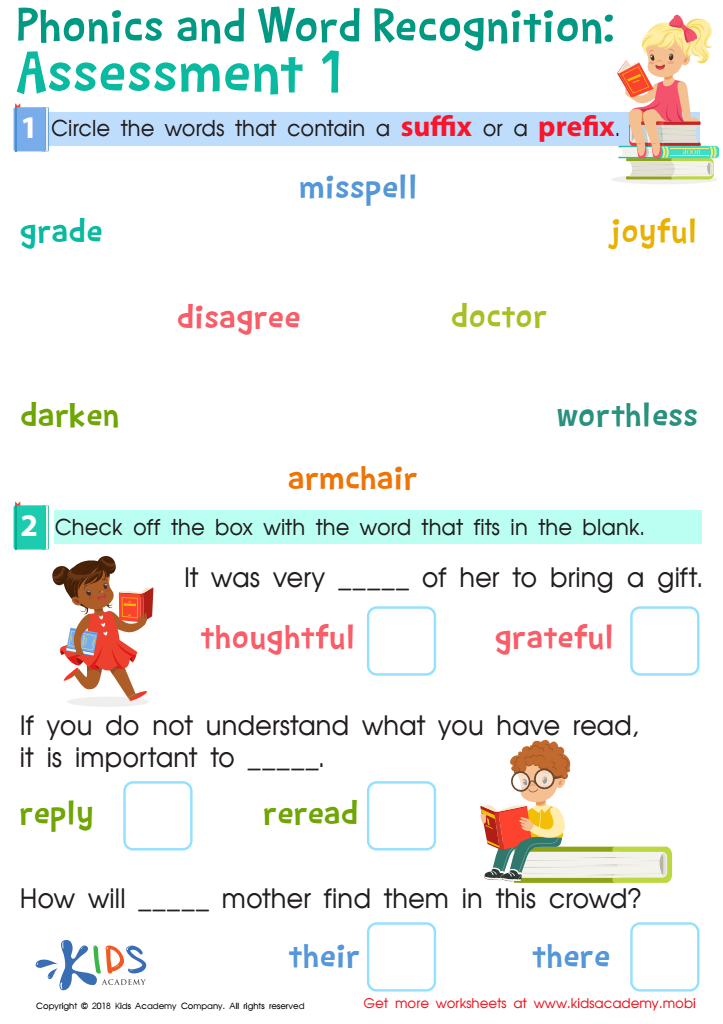
Phonics and Word Recognition: Assessment 1 Worksheet
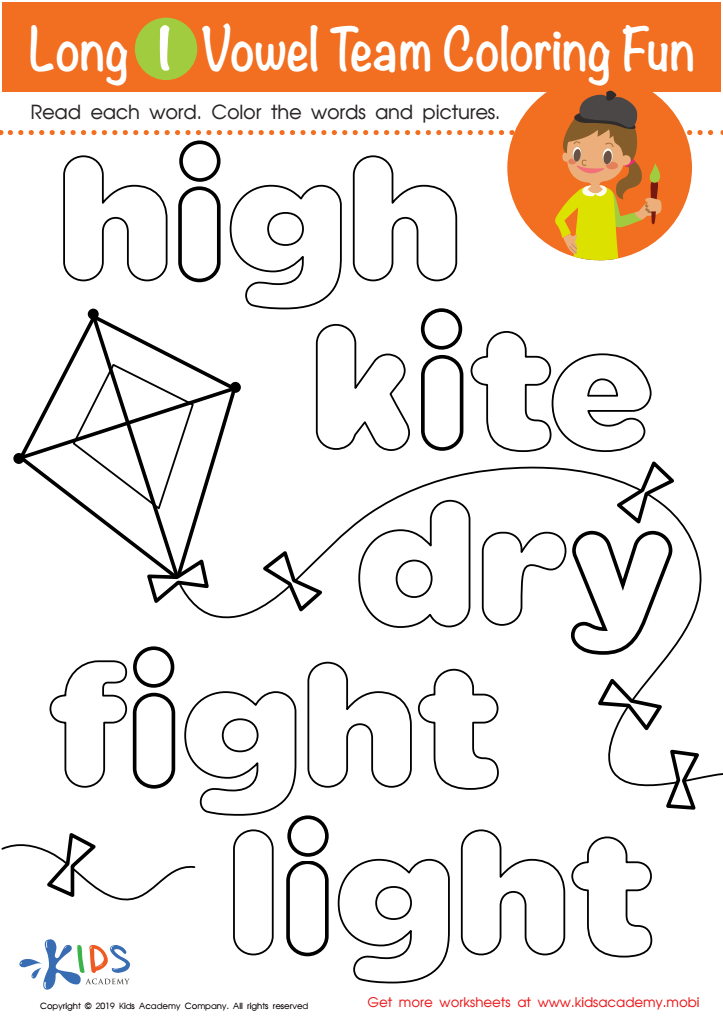
Long I Vowel Team Coloring Worksheet
 Assign to My Students




Word identification through normal elementary phonics is crucial for children aged 5-8 as it forms the foundation of their reading skills. At this stage, children learn the relationship between letters and their corresponding sounds. This process, known as phonemic awareness, enables them to decode words, which is vital for reading fluently and comprehensively.
Teachers and parents should care about phonics because it directly impacts literacy development. Proficient word identification aids children in recognizing words quickly, fostering a love for reading and enhancing their vocabulary. With a solid phonics foundation, children are more equipped to tackle more complex texts, which promotes academic success across all subjects.
In addition, the practice of phonics encourages confidence in children. When they are able to identify words independently, they feel a sense of achievement, boosting their self-esteem and motivation to learn. This positivity can translate into better engagement in classroom activities and a willingness to participate in discussions.
Moreover, understanding phonics helps parents and teachers to support children effectively. By recognizing the importance of phonics early on, they can implement strategies and interventions that will improve children's literacy, setting them on a path to lifelong learning and improved life opportunities.






