Rhyming skills development Normal Alphabet Worksheets for Ages 5-8
4 filtered results
-
From - To
Enhance your child's language skills with our Rhyming Skills Development Normal Alphabet Worksheets designed for ages 5-8. These engaging worksheets focus on nurturing phonemic awareness through playful activities that encourage children to recognize and create rhyming pairs. By combining fun illustrations with interactive exercises, young learners will develop confidence in their reading and writing abilities. Our easy-to-follow worksheets help reinforce sound patterns while making learning enjoyable. Perfect for both classroom settings and at-home practice, these resources are an effective way to support your child's literacy journey. Start fostering a love for language and rhymes today!

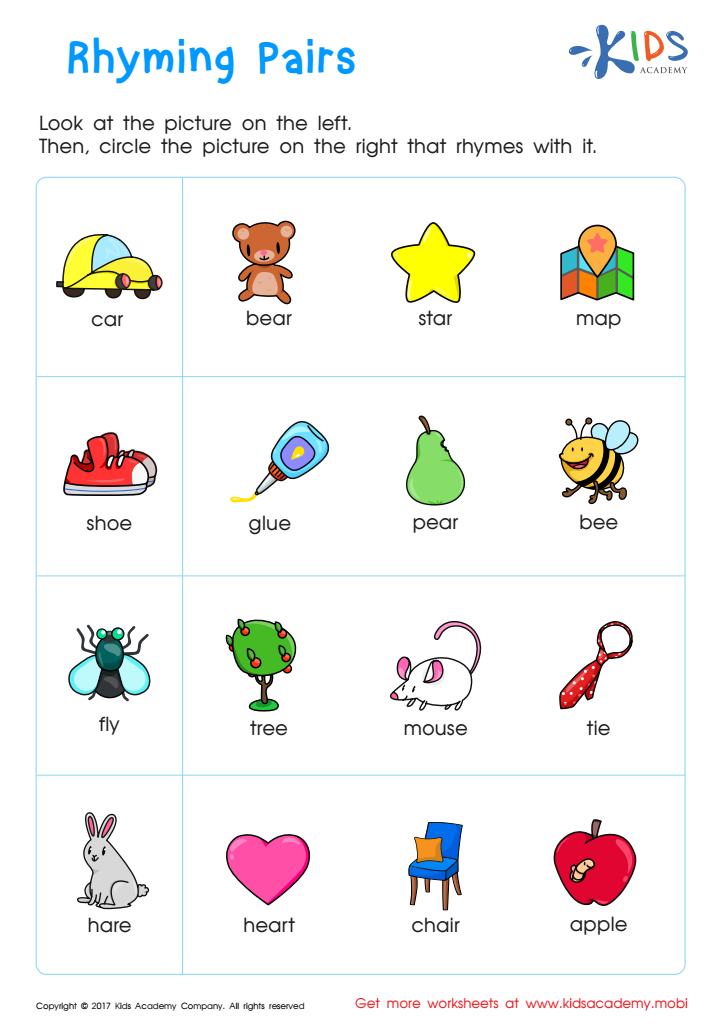
Rhyming Words Rhyming Worksheet
 Assign to My Students
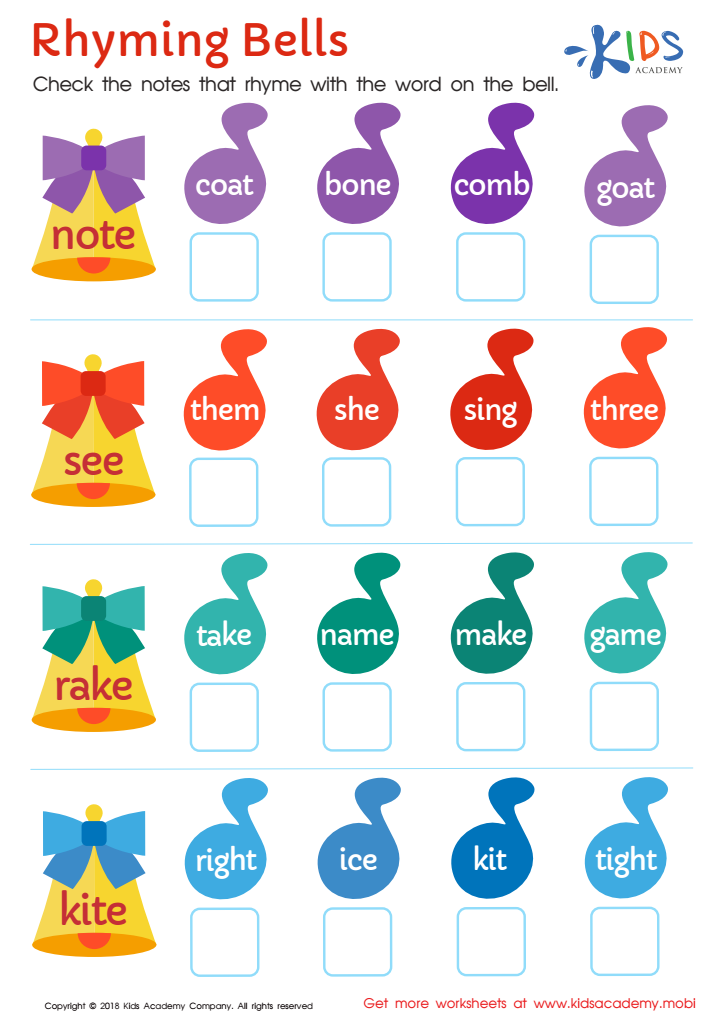
Rhyming Bells Worksheet
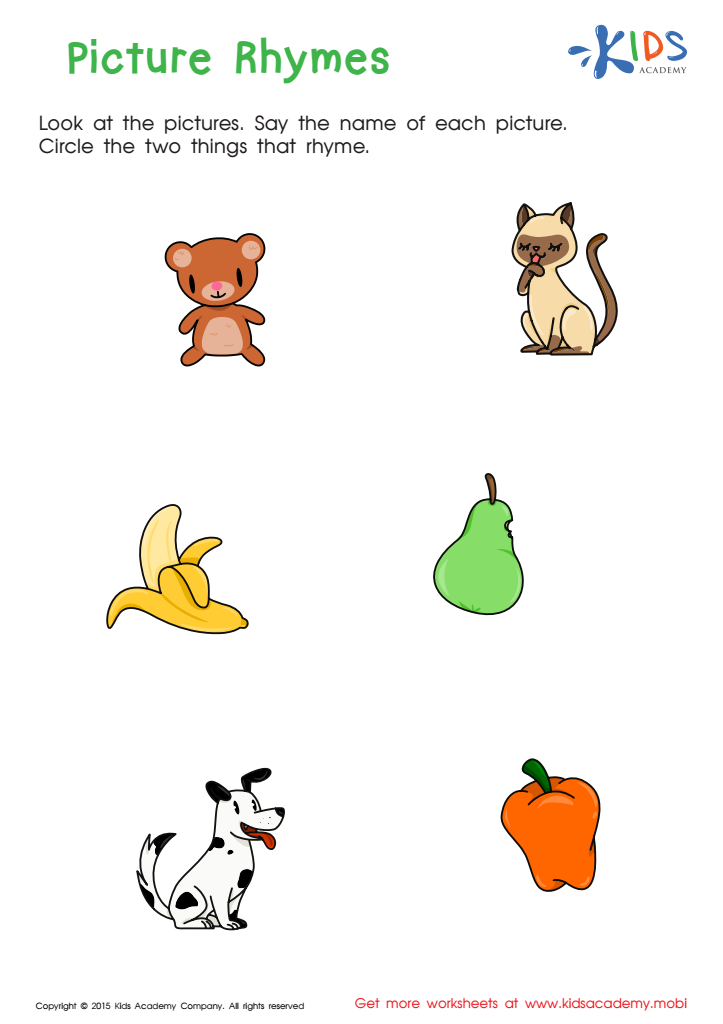
First Words: Picture Rhymes Worksheet








Rhyming skills development is crucial for children aged 5-8 as it lays a strong foundation for their literacy and language skills. First and foremost, rhyming enhances phonemic awareness, which is the ability to hear and manipulate sounds in words. This skill is essential for decoding and understanding new words, ultimately boosting reading proficiency. Since children often learn through play, engaging with rhymes teaches them about rhythm and pattern, making language fun and approachable.
Additionally, rhyming fosters vocabulary growth. When children explore different rhyming words, they expand their word bank and become more comfortable using language expressively. This exploration encourages creativity and imagination, as children invent new words or stories based on familiar rhymes.
Moreover, rhyming can strengthen memory and recall. The repetitive nature of rhymes helps children remember information better, aiding in their overall cognitive development. For parents and teachers, promoting rhyming games, songs, and activities is a simple yet effective way to support language skills.
By nurturing these skills early on, we equip children with the tools they need for successful reading, writing, and overall communication, paving the way for a lifelong love of language and literature.







